The Importance of Using the Biblical Names of Elohim

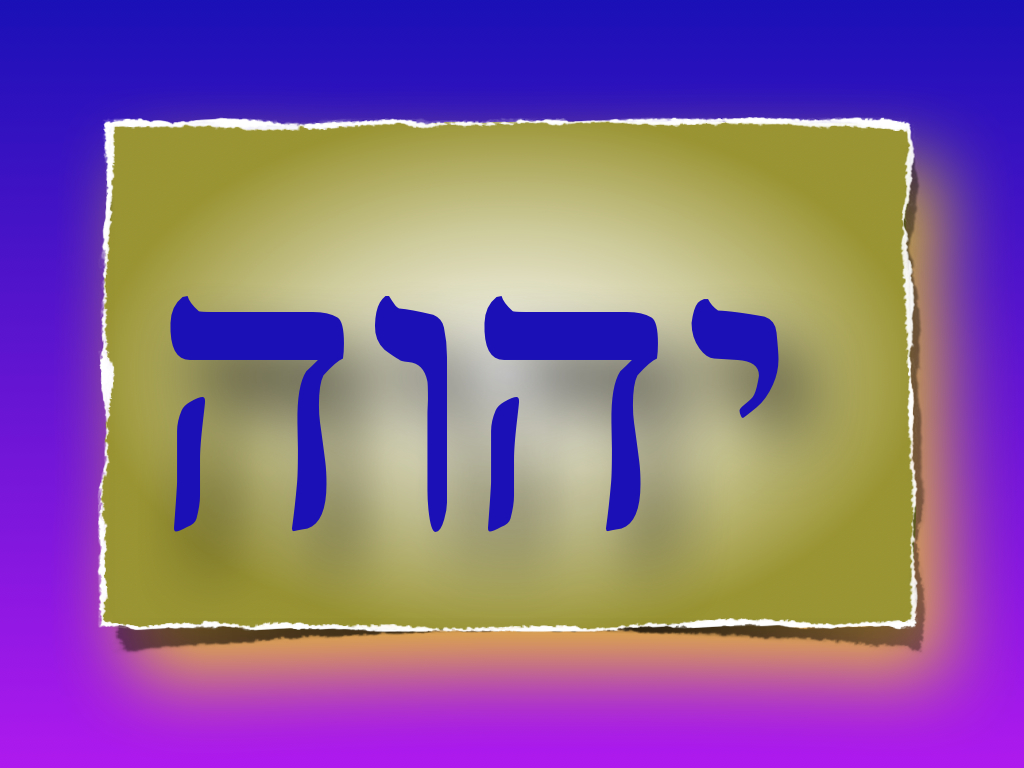
Exodus 3:14–15, I AM THAT I AM. The name YHVH is Elohim’s memorial name forever. It reflects that fact that he is; that he is undefinable in human terms, and that he has always existed. This is the name by which he is to be remembered (not forgotten as is the case with the ineffable name concept of the rabbinic Jews whereby the names of deity are forbidden to be used).

The Scriptures clearly teach us that YHVH wants his people to use his Hebrew names and titles (e.g. YHVH, Yah, El, Elohim, Adonai and Yeshua). If not, than why is “YHVH,” the personal name of the biblical deity, found in the Tanakh (or Old Testament) almost 7000 times?

Despite the proliferation of the name YHVH in the Bible, men are not to use his name carelessly as the third commandments teaches us (Exod 20:7).

The problem is that YHVH’s people have forgotten YHVH’s Hebrew names and worshipped pagan gods instead (Ps 44:20; Jer 23:27). Interesting, it’s a fact that most of our common English substitutes for the Hebrew names of Elohim derive from the names of pagan deities (e.g. God, Lord, Holy, Christ, Jesus). At the same time, the Scriptures prophesy that YHVH’s name will be restored and used again (Jer 23:6; 31:23; Ezek 39:7).

Interestingly, Satan’s name has never been changed down through the millennia from one language to another. The names of significant Hebrew biblical personalities along with Greek and Roman notable historical figures remain essentially unchanged to our day. However, the Hebrew names of Elohim and his Messiah not only have been changed, but often masked under the names of pre-exisiting pagan deities. Doesn’t this sound like a Continue reading


Do you desire to be a spiritual leader? READ THIS!

Luke 6:40, Perfectly/fully trained. Those disciples of Yeshua, the Master-Teacher, who are properly trained, fit out, prepared or equipped can become like Yeshua the Master-Teacher. Those who aren’t properly equipped or trained to teach are like the blind leading the blind and will cause others to fall into a spiritual ditch (Luke 6:39).

The person who isn’t properly trained, but who is trying to lead people spiritually, not only will be like a blind man leading the blind, but will also be hypocritical in their judgments and assessments of things. This is because they lack the experience, wisdom and skills to be able to point out the faults of others because they are still inexperienced and have too many blind spots themselves and are still like the blind leading the blind (Luke 6:41–42).

This is why Paul very carefully lays out the qualifications for those in spiritual leadership in the local congregation. A spiritual leader was not to be an inexperienced individual, a new convert or a novice (1 Tim 3:6), but well-discipled in YHVH’s truth before hand (Tit 1:9).

Paul goes on to say that it is good thing for a person to desire to be a spiritual leader (1 Tim 3:1), but it isn’t a good thing if they doesn’t meet the criteria or qualifications, which Paul then lays out (1 Tim 3:2–13).

The problem is that in our day, there are many individuals who desire to be leaders and teachers, but who are self-appointed, and who have not been perfectly or fully trained. Since the advent of the internet, such people now have an easily accessible pulpit-platform from which egotistically to influence others. Sadly, they are like the blind hypocrite in Yeshua’s parable leading many astray and causing many to stumble and to fall into spiritual ditches of false doctrines and errant teachings.

Just because someone has a website, a YouTube channel, has published a book, spoken at a conference, has academic credentials or been on radio and television doesn’t mean they have been perfectly equipped or fully trained for the position of a Bible teacher or a leader in the spiritual body of Yeshua.

We may not always know what a person’s background or qualifications are, but the spiritual fruit they produce, whether good or bad, can be an excellent indicator as to what type of spiritual tree they are, as Yeshua goes on to say in the next verses (Luke 6:43–45).

Those who sense a divine calling on their lives to teach or to lead YHVH’s people need to be first discipled and raised up by older and mature, wise spiritual leaders who have a proven track record of good spiritual fruit. This is the biblical way!


The Dunamis Power of Elohim and Divine Healing

Luke 5:17, The power [Gr. dumanis] of YHVH was present. Sometimes the power of YHVH is present to heal people, sometimes it is not. There are many factors that determine this such as the sovereign will of Elohim, the faith of the individuals performing or receiving the healing, repentance of sin or the lack thereof, whether one is a saint or not and many more of which we may or may not be aware in our limited understanding of the spiritual dimension where Elohim operates.

Let’s explore the healing activities of Yeshua. The Greek word dunamis means “strength, power, ability” or as often used in the Testimony of Yeshua, “miraculous power.” (In fact, our English words dynamic, dynamo and dynamite originate from this Greek word.) This is an interesting statement pertaining to the dynamics of Yeshua’s healing activities. Did Yeshua heal all people all the time, or only when the power of Elohim was present for him to do so? This verse, at least in this case, would indicate the latter. Elsewhere, we read that Yeshua “healed many that were sick” (Mark 1:34), but not all that were sick. On other occasions, the Gospels record indicates that Yeshua did in fact heal all the sick who were brought to him (Matt 4:23–25; 9:35; Luke 6:19).

The Gospels reveal some other interesting facts about Yeshua’s healing activities that we often pass over. On at least one occasions, Yeshua prayed to heal someone and they were only partially healed. After he prayed for them the second time, they were completely healed (Mark 8:22–25). Often Yeshua healed people after he was “moved with compassion [love and pity]” for someone who was sick (Matt 14:14; Mark 1:41; Luke 7:13–15). The Greek word for compassion, literally means “to be moved in one’s bowels,” or in the deepest areas of one’s emotions. Some people simply touched Yeshua’s clothing as he was walking by, and the miraculous power (Gr. dunamis) of Elohim flowed from him and healed them (Matt 9:20; Mark 6:56; Luke 8:44 cp. Luke 6:19).

Elsewhere, it appears that Yeshua’s healing activities were hampered by the presence of those who ridiculed him and exhibited doubt and unbelief, which is why, on one occasion, he put the unbelievers out of the room and closed the door behind them when he raised the little girl from the dead (Mark 5:40–42). Similarly, in his hometown of Nazareth, Yeshua “could do no mighty works there” except for healing a few sick people, “because of their [the townspeople’s] unbelief” (Mark 6:5–6; also Matt 13:58). Matthew’s account adds that the people of Nazareth were offended (literally, scandalized) by Yeshua, or that they stumbled over (or judged unfavorably, distrusted) Yeshua. Because of their low esteem for him, they lacked the faith to receive healing, which is why he healed so few people in that town.

When in doubt, always look for an opportunity to pray for a sick person. Before praying, one must discern the situation. Does the person have faith to be healed? Is the anointing or Presence of YHVH is there to heal the person? How is the Spirit of Elohim directing one to pray? Sometimes we sense the need to pray more authoritative prayers, other times, more pleading or intercessory prayers, and still other times prayers of agreement while asking for the healing.

What’s more, prospective converts and new believers tend to have their prayers for healing answered more quickly, since this is a demonstration of the signs Yeshua promised that would follow the preaching of the gospel. The saint can be healed, but often this will occur after having their faith stretched and refined. Therefore, the healing often takes longer to receive.


Overview of the Book of Exodus (Main Themes)

Exodus (Heb. Shemot) is the book whose principle theme is redemption—Israel’s deliverance from Egypt. Here we learn how YHVH saves his people and we are shown that his people are redeemed in order to worship him.

The Theme of Redemption

Say, therefore, to the sons of Israel, “I am YHVH, and I will bring you out from under the burdens of the Egyptians, and I will deliver you from their bondage. I will also redeem you with an outstretched arm and with great judgments. Then I will take you for My people, and I will be your Elohim; and you shall know that I am YHVH your Elohim, who brought you out from under the burdens of the Egyptians. I will bring you to the land which I swore to give to Abraham, Isaac, and Jacob, and I will give it to you for a possession; I am YHVH.” (Exod 6:6–8, emphasis added)

Worship

And he said, “Certainly I will be with you, and this shall be a token unto you, that I have sent you, when you have brought forth the people out of Egypt, you shall serve Elohim upon this mountain.” (Exod 3:12, emphasis added)

And I say unto you, “Let my son go, that he may serve me, and if you refuse to let him go, behold, I will slay your son, even your firstborn.” (Exod 4:23, emphasis added)

And you shall say unto him, “YHVH Elohim of the Hebrews has sent me to you, saying, ‘Let my people go, that they may serve me in the wilderness, and, behold, until now you would not hear.’” (Exod 7:16, emphasis added)

The Basic Outline of Exodus

Chapters 1–6 show us the need for redemption.

Chapters 7–11 show us the power or might of the Redeemer as the ten plagues are poured out upon Egypt.

Chapters 12–18 show us the character of redemption; purchased by blood and emancipated by power.

Chapters 19–24 teaches us the duty of the redeemed.

Chapters 25–40 instructs us about the restoration of the redeemed—provisions are made for the failures of the redeemed when they fall spiritually.

The Metaphors in Exodus

Egypt is a metaphor for the world, the place of sin and bondage where one is held captive before being delivered or redeemed by the power of YHVH and the blood of Yeshua, the Lamb of Elohim. It is interesting to note that ­although Egypt was the land of science and art, it was simultaneously the land of death in that their religion that is was morbidly fixated with death.

Pharaoh is a metaphor for Satan, a merciless taskmaster who opposes the people of YHVH every step of the way.

Pharaoh’s magicians represents demonic spirits that are active in the world and are doing Pharaoh’s (Satan’s) bidding in opposing Israel, the people of Elohim, and Elohim’s plans.

Moses is a prophetic metaphor for Yeshua (his first coming), the Deliverer of his people from the bondage and power of sin, death and hell, which is the power of the enemy, Satan.

The blood of the lamb on the door posts is a metaphor for Yeshua, the Redeemer, whose death on the cross atoned for man’s sins causing YHVH’s judgment against sin to pass over his people.

The crossing of the Red Sea is a metaphor the saint’s union with Messiah Yeshua in his death and resurrection via the ritual of tevilah (immersion or baptism) at a mikvah (a gathering of waters).

The journey through the wilderness is a metaphor for the trials and testing that occur during the redeemed believer’s spiritual walk through this life with YHVH’s provision to meet every need and his protection from every attack of the adversary.

The giving of the Torah represents one’s spiritual walk after having exited spiritual Egypt, and teaches YHVH’s people the importance of obedience and submission that they owe him for freeing them from Satan and the world. He is now their new Master.

The Tabernacle of Moses with its furnishings is a picture, layout or blueprint of the steps in YHVH’s plan of redemption (salvation) for mankind and the steps in man’s spiritual maturation into intimacy with the Father through Yeshua the Messiah. It is like a giant gospel tract!

 

Blog Scripture Readings for 12-31 Through 1-6-18

Aside

THIS WEEK’S SCRIPTURE READINGS FOR STUDY AND DISCUSSION:

Parashat Shemot — Exodus 1:1 – 6:1
Haftarah — Isaiah 27:6 – 28:13; 29:22-23
Prophets — 2 Samuel 10:1 – 16:23
Writings — Psalms 89:30 – 95:11
Testimony — Luke 5:1 – 8:25

Our annual Scripture Reading Schedule for 2017-2018 is available to download and print.

Most of this week’s blog discussion points will be on these passages. If you have general comments or questions on the weekly Scripture readings not addressed in a blog post, here’s a place for you to post those. Just use the “leave a reply” link below.

The full “Read Through The Scriptures In A Year” schedule, broken down by each day, can be found on the right sidebar under “Helpful Links.” There are 4 sections of scripture to read each day: one each from the Torah, the Prophets, the Writings, and from the Testimony of Yeshua. Each week, the Torah and haftarah readings will follow the traditional one-year reading cycle.

Weekly Blog Scripture Readings for 12/31/17 through 1/6/18.


Blog Scripture Readings for 12-24 Through 12-30-18

Aside

THIS WEEK’S SCRIPTURE READINGS FOR STUDY AND DISCUSSION:

Parashat Vayechi — Genesis 47:28 – 50:26
Haftarah — 1 Kings 2:1-12
Prophets — 2 Samuel 2:1 – 9:13
Writings — Psalms 83:1 – 89:29
Testimony — Luke 1:67 – 4:44

Our annual Scripture Reading Schedule for 2017-2018 is available to download and print.

Most of this week’s blog discussion points will be on these passages. If you have general comments or questions on the weekly Scripture readings not addressed in a blog post, here’s a place for you to post those. Just use the “leave a reply” link below.

The full “Read Through The Scriptures In A Year” schedule, broken down by each day, can be found on the right sidebar under “Helpful Links.” There are 4 sections of scripture to read each day: one each from the Torah, the Prophets, the Writings, and from the Testimony of Yeshua. Each week, the Torah and haftarah readings will follow the traditional one-year reading cycle.

Weekly Blog Scripture Readings for 12/24/17 through 12/30/17.


Mary and Elizabeth: Godly Women Produce Godly Sons!

A brief discussion from the Gospel of Luke about Mary (the mother of Yeshua) and Elizabeth (the mother of John the Baptist) may shed some clues on why their sons attained such high spiritual stature. Behind godly sons are often godly mothers!

Luke 1:6, Righteous…blameless. Zachariah and Elizabeth (Heb. Elishevah) were totally Torah-observant to the point of being blameless in YHVH’s eyes. This confirms Moses’ words in Deut 30:11–14 that Torah-obedience isn’t outside the realm of human possibility as some in the church erroneously teach today.

Luke 1:28, Blessed are you among women. These words of Gabriel were repeated verbatim in Elizabeth’s prophecy concerning Yeshua (verse 42). Doubtless this was a supernatural confirmation to Mary concerning her role as the mother of the Messiah, for how could her cousin have known what the angel had spoken to her previously?

Luke 1:36, Elizabeth your relative. While Mary was of the royal lineage of David through her father, she also was a relative on her mother’s side of Elizabeth, the priest-wife of Zacharias, who was a daughter of Aaron (Luke 1:5).  In Matthew one and Luke three two different genealogies are given for Yeshua, both of which  go back to King David. One is presumed to be that of Joseph and the other is that of Mary. In this way, Yeshua was a direct descendant of David legally through Joseph, his step-father, and genetically through Mary, his mother. Does this mean that Mary was of priestly as well as Davidic lineage. Yes, but not patrilineally, only matrilineally. In the Scriptures, tribal lineage was determined through the father’s family line and not the mother’s.

In the case of Mary and Elizabeth, they would have shared common grandparents making them cousins. Their grandfather would have been a priest. In the case of Elizabeth, her father—the son of her priestly grandfather—would have carried the priestly line making her a daughter of Aaron (Luke 1:5). In the case of Mary, her mother would have been her priestly grandfather’s daughter meaning that she was of priestly lineage but not her children, unless she married a priest.

It seems that Yeshua would have carried some priestly blood in his genes, but he was not legally a priest through patrilineal descent. To be sure, Yeshua was a priest, but not one of Aaronic lineage but after the order of Melchizedek, which was the priesthood of the firstborn son passed on generationally. Yeshua was the first born son of Elohim eternally, which is why he is presently at the right hand of Elohim acting as our Great High Priest (Heb 1:3 cp. 3:1; 4:4; 8:1).

Therefore, Mary laid claim to a Davidic as well as a priestly lineage (Jesus the Messiah, by Edersheim, p. 105). This means that Yeshua was not only of direct Davidic lineage but was of priestly lineage as well.

Luke 1:39, Now Mary arose. Those with similar divine missions or callings naturally want to be with others like them. Such divine encounters are too unbelievable and incomprehensible for those who haven’t encountered something similar that it is hard to relate to those who have. This is probably why, in part, the prophets of old, at times, lived together in a community. Those who see into the spiritual realm and operate by faith are constricted spiritually when they have to be around those who don’t.

Luke 1:41–45, When Elizabeth heard. During this greeting, Elizabeth had a spiritual encounter that helped her to connect the dots to understand what was going in YHVH’s divine plan for John and Yeshua. Zechariah would have revealed to her the angel’s previous message (vv. 13–17). Now when the babe leapt in her womb at Mary’s arrival and she was filled with the Spirit (a visceral experience), and then prophetic words came out of her mouth, this was evidence and confirmation to both of them of YHVH’s plans for their sons. YHVH has supernatural ways of conveying his divine will to his people, so that only people of faith will see and understand. All others, unless confronted with visible signs and empirical evidence (as verified by logic, or observable evidence or experience), will dismiss these spiritual revelations and circumstances as delusion. The unbelievers usually resort mockery and scoffing ridicule. Those who walk by faith and hear the voice of YHVH and know his ways of communication are undeterred, however, as they follow the Elohim wherever he leads them.