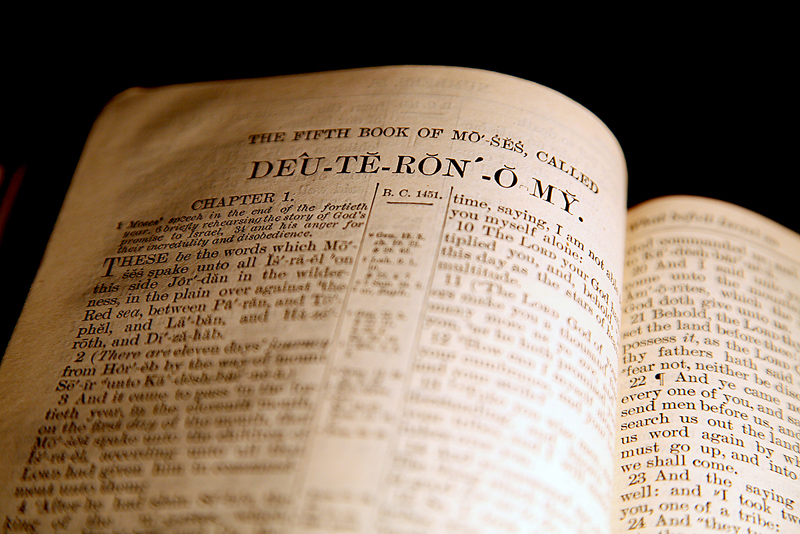
Chapter 1:1–5, Introduction
Chapters 1:6–4:40, First Discourse
Moses gives a veiled rebuke for sin and disobedience, and gives a review of the journey from Mount Sinai to Kadesh with exhortations to obedience.
Chapters 4:44–11, Second Discourse, Part 1
The religious foundations of the covenant, the spirit in which it is to be kept and the motives to right obedience are discussed. Moses shows how the covenant defines the relationship between YHVH and Israel and emphasizes the basic spiritual demands that such a relationship imposes upon Israel.
Chapters 12–26, Second Discourse, Part 2
- The code of law dealing with:
- Worship, Chapters 12:1–16:17
- Government, Chapters 16:18–18
- Criminal Law, Chapters 19:1–21:9
- Domestic Life, Chapters 21:10–25
- Rituals and the Sanctuary, Chapter 26
Chapters 27–30, Third Discourse
The enforcement of the Torah-law with its blessings and curses; establishment of a fresh covenant between YHVH and Israel (i.e., the younger generation).
Chapters 31–34, The Last Days of Moses
- Chapter 31, Committal of the law to the keeping of the priests.
- Chapter 32, The Song of Moses (a prophecy about Israel’s future).
- Chapter 33, Moses’ patriarchal blessing over the tribes of Israel.
- Chapter 34, The death of Moses.
Overview of the Book of Deuteronomy/Devarim from Various Commentators
This last book of the Torah starts out with “These are the words which Moses spoke ….” The Hebrew name for Deuteronomy is Devarim meaning “words,” which is the plural form of devar meaning “word, speech, a matter or thing, a commandment, a report, a message, promise.” Note the similarity between the Hebrew word devar and the Greek word logos from John 1:1 (“In the beginning was the Word, and the Word Continue reading