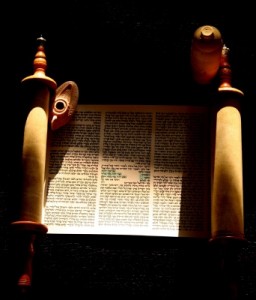
There Is Hope for the Church and Nation — Remember Samuel!

1 Samuel 3:1, The word of YHVH was rare in those days; there was no widespread revelation [open, prophetic vision]. Into this environment of spiritual laxity in Israel, YHVH introduced Samuel, a man who was single-handedly responsible for the spiritual revival of that nation.

Samuel and Eli

The regime of Eli and his wayward sons can be likened to the state of the church in these last days in America. Eli was a weak, ineffectual, compromised, lukewarm, fat and blind leader spiritual leader. The modern church is filled with leaders who like Eli have little or no backbone to stand up to evil, to denounce sin, to refuse to toy with spiritual compromise, to stand up to false leaders who are in the ministry simply for their own personal gain and physical gratification.

On the surface, Eli looked good. He sported the title of High Priest, along with all the trappings and regalia that came with that exalted office including a glorious church building, ceremonial accoutrements and robes. He even had “throne.” Yet at the same time, he was blind and grossly fat. This is the spiritual state of many leaders in the church today. For their own benefit, they have plundered the people they lead becoming financially well off in the process. YHVH denounces these phony and carnal shepherds in Ezekiel 34 who feed themselves at the sheep’s expense caring little or nothing for them. This was the sin of Eli’s sons who not only forcefully plundered the people for their own gain (1 Sam 2:2–17), but Continue reading →


Blog Scripture Readings for 11/3 through 11/9/13

Aside

Parashat Vayetzei — Genesis 28:10 – 32:3(2)*
Haftarah — Hosea 12:13(12) – 14:10(9)*
Prophets — Judges 18:1 – 21:25; 1 Samuel 1:1 – 3:21
Writings — Psalms 41:1 – 47:9
Testimony — Matthew 25:31 – 27:31

Most of this week’s blog discussion points will be on these passages. If you have general comments or questions on the weekly Scripture readings not addressed in a blog post, here’s a place for you to post those. Just use the “leave a reply” link below.

The full “Read Through The Scriptures In A Year” schedule, broken down by each day, can be found on the right sidebar under “Helpful Links.” There are 4 sections of scripture to read each day. One each from the Torah, the Prophets, the Writings, and from the Testimony of Yeshua. Each week, the Torah and haftarah readings will follow the traditional one-year reading cycle.

* Verse numbers in parenthesis refer to the verse number in Christian Bibles.

Weekly Blog Scripture Readings for 11/3 through 11/9/13.


Some Thoughts on the Rapture, the Great Tribulation and Wrath of Elohim

Matthew 24:29, 31, Immediately after the tribulation … gather the elect. If no other verse disproves the pre-trib rapture theory, this one does. Here Yeshua clearly states that the gathering of the saints to meet Yeshua as he is coming in the clouds occurs not only after the tribulation, but after the great tribulation (v. 21). The tribulation and great tribulation are separate events from the wrath of Elohim, which John describes as being part of the seven trumpet and seven bowl judgments (Rev 6:17; 11:18; 15:1; 16:1).

730255

Matthew 24:29, 30, Sun will be darkened … sign of the Son of Man. Here Yeshua tells us that certain harbingers of his second coming will occur first. These include phenomenon occurring in the heavens involving the sun, moon and the stars. After this, a miraculous sign in the heavens will occur, and then Yeshua will come. Between the signs of the sun, moon and stars and the final miraculous sign of his coming there’s a gap in time. Yeshua later revealed to John the cosmic disturbances involving the sun, moon and stars would correspond with the sixth seal (as part of the great tribulation that occurs before Elohim pours out his wrath on the earth) of Revelation 6:12–17. After this, Elohim pours out his wrath upon the earth (Rev 6:17; 11:18; 15:1; 16:1), and then the second advent of Yeshua occurs.

Does the sign of the Son of Man coming (Matt 24:30lp) occur before or after the wrath of Elohim? That’s hard to say, but since Yeshua states that between the two events that all men will mourn, perhaps this is a veiled reference to the wrath of Elohim that is to be poured out on unregenerate men during the seven trumpets, seven thunders and seven bowl judgments described in the Book of Revelation. Why else would men be mourning? The intervening time between the cosmic disturbances (the sixth seal of Rev 6:12–17) and Yeshua’s second coming during which Elohim pours out his wrath could be a year or more, since the Scriptures speak of the day (or a period of time) of YHVH’s wrath. The Hebrew word for day (Heb. yom) can mean both a day and a period of time.

The prophet Isaiah speaks in several places about “the day of YHVH’s vengeance” (or words to this effect). This is the time period when YHVH will judge the nations including Babylon the Great, which occurs at Yeshua’s second coming (see Rev 18 and 19). In three places, Isaiah indicates that the day of YHVH will last for one year (Isa 34:8; 61:2 and 63:4). Interestingly, in Isaiah 63:4, the prophet couples the idea of the day of YHVH’s vengeance being a year long with the jubilee year — “the year of my redeemed has come.” This occurs as the Messiah (the subject of Isa 63:1–6) judges the enemies of Israel (notably Edom) as he is at the same time about to redeem (i.e., regather and return scattered Israel to its Promised Land inheritance). It appears that while Yeshua is judging Israel’s enemies at his second coming, he will at the same time be regathering the lost and scattered 12 tribes of Israel. Yeshua seems to allude to this in Matthew 24:31.


What Is the Higher Torah? (part 2)

(Continued from Part 1)

The Letter Kills, But the Spirit Makes Alive

Demoting the Torah to merely a set of do’s and don’ts not only eviscerates, but it misses the heart of our Heavenly Father, the spirit of the Torah — the higher Torah. The letter of the law kills, but the Spirit of the law brings life. The letter by itself brings bondage and legalism. It can even become burdensome and grievous as the pro-Torah apostolic writers inform us.

Torah scroll 3

Who also hath made us able ministers of the new testament; not of the letter, but of the spirit: for the letter killeth, but the spirit giveth life. (2 Cor 3:6)

For this is the love of Elohim, that we keep his commandments: and his commandments are not grievous/heavy or burdensome. (1 John 5:3)

Love, Not Law-Keeping, Is What Attracts

Yeshua gives us a clue about some aspects of the higher Torah when he told his disciples that men would know they were his not because they kept the Torah scrupulously to the letter, but because they walked in love for one another.

By this shall all men know that ye are my disciples, if ye have love one to another. (John 13:35)

Paul also taught that love was the greater thing in 1 Corinthians 13. Love is above all knowledge (including Torah), and all prophecy (inspired teaching of Torah).

The Higher Torah Is About Relationship

The higher Torah is not about bondage; it is about bonding. It is about relationship. Yeshua summed up the Torah as follows:

And one of the scribes came, and having heard them reasoning together, and perceiving that he had answered them well, asked him, Which is the first commandment of all? And Jesus answered him, The first of all the commandments is, Hear, O Israel; YHVH our Elohim is one YHVH: And thou shalt love YHVH thy Elohim with all thy heart, and with all thy soul, and with all thy mind, and with all thy strength: this is the first commandment. And the second is like, namely this, Thou shalt love thy neighbour as thyself. There is none other commandment greater than these. And the scribe said unto him, Well, Master, thou hast said the truth: for there is one Elohim; and there is none other but he: And to love him with all the heart, and with all the understanding, and with all the soul, and with all the strength, and to love his neighbour as himself, is more than all whole burnt offerings and sacrifices. And when Yeshua saw that he answered discreetly, he said unto him, Thou art not far from the kingdom of Elohim. And no man after that durst ask him any question. (Mark 12:28–34)

The higher Torah is about love, mercy, and faith, which are the weightier matters of the law! It is about building relationships and about bonding with your fellow man and Elohim! We can’t be bonding in love if we are constantly walking in offence, maintaining a critical spirit toward others, judging others, are religious exclusivists, or are arrogant toward those who do not believe or act as we do whether they be Christians, or even non-Christians. Rather, we must love everyone, and by actively demonstrating that love, we show those around us the way to a higher walk or relationship Continue reading →

 

What Is the Higher Torah? (part 1)

Matthew 23:23, Weightier matters of the Torah. What are the weightier matters of the Torah? Torah is not an end-all. It is a vehicle that leads us to something. What is that? What really matters to YHVH when all is said and done???? It is the greater Torah or the higher Torah. The Gospel of Matthew (23:23) records that Yeshua rebuked the religious leaders of his day for their not following the higher Torah. What did Yeshua really mean by “the weightier matters of the Torah”?

Torah scroll 3

The Deeper Meaning of the Word “Torah”

Almost every place where you see the word “law” in the Tankah, it is the Hebrew word “Torah.” This word is used 219 times in the Tanakh or Hebrew Scriptures, and in almost every case it is translated in the KJV and in most other English Bibles as “the law.” Is this all the word law (or Torah) means? Is “law” even Torah’s main meaning?

As a test of your understanding (or, perhaps, your preconditioned biases), when you think of the term “the laws” what comes into our mind: good thoughts or bad thoughts? Do you think of a list of dos and don’ts—what you can do and cannot do? Do you think of red and blue lights flashing and a siren? Do you think of a man in a blue uniform with a badge and a gun, or judge in a black robe with a gavel, or a prison? These can be scary thoughts!

Let’s see what the word Torah really means according to the Scriptures.

Let’s start understanding the full scope of this word by first reading Proverbs 13:14. There we read that the Torah is the foundation of life.

Next start reading in Proverbs 1:7 where we read that the fear of YHVH is the beginning of wisdom. In verse 8, Solomon, the wisest man who ever lived, is talking to his son about the Torah. In a sense, he’s talking to all of us. The word law in this verse is Hebrew word Torah. Continue reading what Solomon teaches us about the benefits of YHVH’s instructions and wisdom found in the Torah. Start reading in verse 9 to the end of chapter. Then start reading in chapter three and continue to the end of chapter four. Whenever you see the words “law,” “instruction,” “wisdom,” “instructions” “commandments,” “truth,” “mercy,” “knowledge” or “words” think of Torah, for that is what these words are referring to.

Next let’s read Psalm 119. Perhaps no other passage in Scripture extols the virtues of the Torah more than this psalm of David.

Based on Psalm 119 and Proverbs chapters one through three, what are the blessings and benefits of the Torah? Continue reading →


Abraham — The Father of the Torah-Obedient

Genesis 26:5, Abraham obeyed [shema] my voice [kol], and kept [also: observe, preserve, guard; shamar, שמר] my charge [mishmereth], my commandments [mitzvah] my statutes [chuqqah], and my laws [toroti]. There are those who teach that the Torah-law does not predate Moses. Not only does this verse disprove that, but it also shows that Abraham kept the Torah-law of Elohim. In a Hebrew lexicon or word dictionary, look up each of these words and study their meanings and how they are used contextually in the Scriptures.

The Torah-Word of Elohim

The Torah-Word of Elohim

My laws [Torah]. The primary meaning of the word Torah (Strong’s H8451, TWOT 910b), according to the Theological Wordbook of the Old Testament (TWOT) is “teaching” (and not “law”). Strong’s Concordance lists the meaning of Torah in this order: “a precept, a statute.” The New Brown-Driver-Briggs-Gesenius Hebrew-English Lexicon defines Torah as “direction, instruction, law” (in that order). According to Strong’s Expanded Exhaustive Concordance of the Bible,

Torah signifies primarily “direction, teaching, instruction” (Prov 13:14). It is derived from the verb yarah [ירה] [meaning] ‘to project, point out’ (3384) and hence to point out or teach. The law of [Elohim] is that which points out or indicates His will to man … Seen against its background of the verb yarah, it becomes clear that Torah is much more than law or a set of rules. Torah is not restriction or hindrance, but instead the means whereby one can reach a goal or ideal.

The TWOT similarly states,

The word Torah basically means “teaching” whether it is the wise man instructing his son or [Elohim] instructing Israel. The wise give insight into all aspects of life so that the young may know how to conduct themselves and to live a long blessed life (Prov 3:1f). So too [Elohim], motivated by love, reveals to man basic insights into how to live with each other and how to approach [Elohim]. Through the law [Elohim] shows his interest in all aspects of man’s life which is to be lived under his direction and care. Law of [Elohim] stands parallel to [the] word of [YHVH] to signify that law is the revelation of [Elohim’s] will (e.g. Isa 1:10).

As already noted, the word Torah originates from the root word yarah ירה (Strong’s H3384), which means “to flow as water, to lay or throw as in shooting an arrow; to point out as if aiming the finger to make a point, to teach.” Another cognate (related word) of the word Torah is the Hebrew word moreh (Strong’s H4175) which means “teacher or archer (as in one who shoots at a target).” Moreh derives from the same Hebrew root word, yarah, as does Torah. Therefore, when one is walking according to the Torah of YHVH Elohim, one is walking in the light of YHVH’s truth, which is hitting the mark of righteousness. Likewise, YHVH’s teachings or instructions are a river of life flowing from his throne aimed at hitting the mark of truth and righteousness. By contrast, the Hebrew word for sin is chata (Strong’s H2298) which means “to miss the mark,” i.e., transgressing the Torah as 1 John 3:4 states, “Sin is the transgression of the Torah.”


Blog Scripture Readings for 10/27 through 11/2/13

Aside

Parashat Toldot — Genesis 25:19 – 28:9
Haftarah — 1 Samuel 20:18 – 42
Prophets — Judges 11:1 – 17:13
Writings — Psalms 35:1 – 40:17
Testimony — Matthew 22:1 – 25:30

Most of this week’s blog discussion points will be on these passages. If you have general comments or questions on the weekly Scripture readings not addressed in a blog post, here’s a place for you to post those. Just use the “leave a reply” link below.

The full “Read Through The Scriptures In A Year” schedule, broken down by each day, can be found on the right sidebar under “Helpful Links.” There are 4 sections of scripture to read each day. One each from the Torah, the Prophets, the Writings, and from the Testimony of Yeshua. Each week, the Torah and haftarah readings will follow the traditional one-year reading cycle.

Weekly Blog Scripture Readings for 10/27 through 11/2/13.