The “Sacrifice” of Isaac at Mount Moriah & Yeshua

Discussing the Prophetic Implications of the Akeidah or Binding of Isaac
i
n Genesis 22

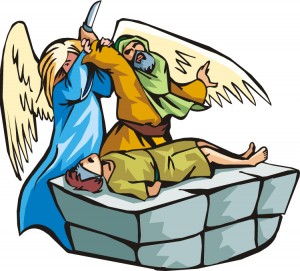
YHVH credited to Abraham’s spiritual account his willingness to sacrifice Isaac as if he had actually done so. In fact, there is an ancient rabbinical tradition that states Isaac actually died and was resurrected as the midrash comments on this passage: “As the knife reached his throat, Isaac’s soul flew away and left [e.g., he died]. But when a voice went forth from between the angels saying, ‘Do not stretch out your hand against the lad’ (Genesis 22:12), his soul returned to his body” (Pirkei DeRabbi Eliezer 31 as quoted in The ArtScroll Davis Edition Baal HaTurim Chumash Bamidbar, p. 1417) (bracketed comments are in the original).

Akediah 5-20357391

The Jewish sages also note that Scripture states that both Abraham and Isaac ascended the mountain, but that it is recorded that only Abraham descended (22:19). Isaac’s absence from the Genesis narrative until many years latter (Gen 24:62) has given rise to much speculation on the part of the sages as to Isaac’s whereabouts in the interim (The ArtScroll Bereishis Vol. 1a, pp. 812–813).

Regardless of the rabbinic interpretations, does Scripture leave Isaac out of the narrative as if to highlight his absence, and to give the impression (albeit a prophetic allegorical one) that he was actually sacrificed? After all, what was the ram caught in the thorn bush Continue reading


The Torah Foundation of the New Covenant

Understanding the Abrahamic Covenant

In Ephesians 2:12, Paul uses the phrase “covenants of promise” (plural) and relates this to the believer in Yeshua. Obviously, Paul had more than just the new covenant (singular) in his mind. In this video, we discuss how the Abrahamc and Mosiac Covenants form the foundation for the New Covenant, which is an expanded and more glorious version of the former covenants, and how the Torah relates to them all and to YOU.


Blog Scripture Readings for 11-2 through 11-8-14

Aside

THIS WEEK’S SCRIPTURE READINGS FOR STUDY AND DISCUSSION:

Parashat Vayera — Genesis 18:1 – 22:24
Haftarah — 2 Kings 4:1-37
Prophets — Joshua 22:1 – 24:33; Judges 1:1 – 4:24
Writings — Psalms 26:1 – 33:22
Testimony — Matthew 16:1 – 21:22

Most of this week’s blog discussion points will be on these passages. If you have general comments or questions on the weekly Scripture readings not addressed in a blog post, here’s a place for you to post those. Just use the “leave a reply” link below.

The full “Read Through The Scriptures In A Year” schedule, broken down by each day, can be found on the right sidebar under “Helpful Links.” There are 4 sections of scripture to read each day. One each from the Torah, the Prophets, the Writings, and from the Testimony of Yeshua. Each week, the Torah and haftarah readings will follow the traditional one-year reading cycle.

Weekly Blog Scripture Readings for 11/2 through 11/8/14.


Did Yeshua Advocate Eating Pork and Other Unclean Meats?

Matthew 15:11, see Mark 7:19, Thus He declared all foods clean. This phrase is excluded from the KJV, but is included in the NAS, NIV and some other modern translations. Some Bible teachers see this phrase as Yeshua’s endorsement for eating unclean meats such as pork. Even if this phrase were in the original  language, Yeshua would never have considered swine to be food—a very non-Jewish concept and out of context with a Torah-adherent society. Furthermore, the Jews in his audience would have strongly reacted against Yeshua saying such a thing. What’s more, earlier in this passage Yeshua upholds the Torah over men’s tradition (Mark 7:6–13), and so Yeshua wouldn’t be teaching anything against the Torah by saying we can eat swine!

Pig 33352397

The Hebrew Roots Version, which is a translation from the Aramaic, confirms the KJV rendering of this verse. However, some of the modern texts (e.g., the NIV and NAS) add the phrase to the end of this verse, “In saying this [Yeshua] declared all foods clean.” This variant phrase in the newer English translations is the source of the confusion in the minds of many who read this.

The KJV is translated from the Greek family of manuscripts called the Textus Receptus or Received Text, which until the end of the nineteenth century was accepted as the most authoritative and purest manuscripts by the Protestant church. On the other hand, the newer (e.g., the NAS and NIV) translations derive from another family of Greek manuscripts that were rejected by early Protestant scholars as being inferior to the Textus Receptus, but liberal scholars from England challenged these beliefs of earlier scholars and were instrumental in popularizing the variant and previously rejected family of Greek manuscripts (called the Western family of texts).

The debate has raged on for more than 100 years as to which family of manuscripts is the oldest and most reliable and in accordance with the actual autographs (which no longer exist). But since no one knows for sure, can we approach the issue of determining whether the added words in the newer English translations, “In saying this [Yeshua] declared all foods clean” are accurate or not per the original language? Was Yeshua saying here that the dietary laws delineated in the Torah are now nullified? If so, would this be consistent with the rest Yeshua’s teachings?

Briefly, what was Yeshua’s stand on the Torah? In Matthew 5:17–19 he said,

Think not that I am come to destroy the Torah-law, or the Prophets: I am not come to destroy, but to fulfill. For verily I say unto you, Till heaven and earth pass, one jot or one tittle shall in no wise pass from the law, till all be fulfilled. Whosoever therefore shall break one of these least commandments, and shall teach men so, he shall be called the least in the kingdom of heaven: but whosoever shall do and teach them, the same shall be called great in the kingdom of heaven.

Yeshua here instructed his followers to not think that he had come to annul the Torah-law.

Then in Mark 7:9 Yeshua rebukes the religious folks of his day for nullifying the Word of Elohim by their man-made traditions. What did he mean by the phrase Word of Elohim? When he made this statement there was no “New Testament,” but only the Tanakh (or “Old Testament”). He was rebuking the Jews for changing YHVH’s Word of which the biblical dietary laws in the Torah were a part. So for him to rebuke the Jews for changing the Word of Elohim, and then a few verses later to be advocating the annulment of the dietary laws found in that Word would have made Yeshua not only a hypocrite, but a Torah-law breaker and thus a sinner (1 John 3:4). To suggest that Yeshua was a law-breaker is utter blasphemy(!) and nullifies the entire gospel message and the rest of the Testimony of Yeshua. Therefore, he could not have been advocating the violation of the Torah-law, and at the same time be the Word of Elohim made flesh and be YHVH’s sinless redemptive Lamb, as the newer translations imply by the addition of the phrase, “In saying this [Yeshua] declared all foods clean.” Therefore, we utterly reject this phrase as it appears in our modern Bibles as a corruption of the original text.

By looking at the context, we see that the issue in these passages in Matthew and Mark was not about eating kosher versus not eating kosher, but whether it was allowable to eat with unwashed hands or not. According to Jewish non-biblical oral tradition, it was imperative for one to go through an elaborate hand washing ceremony for mystical reasons before partaking of food. These commandments were rooted in traditions of men, not in the Torah-law of YHVH. Yeshua is taking the Jews to task for placing more emphasis on man-made traditions rather than on the pure and firm Word of Elohim. This seems to be a chronic problem in many religious circles even in our day. Sunday worship replaced the seventh day Sabbath. Christmas and Easter replaced the appointed feasts of YHVH such as Passover, Pentecost and the Feast of Tabernacles. And the list goes on.

Even beyond the issue of Jewish handwashing traditions, Yeshua was using this as a teaching opportunity to instruct the Jews on the issues of the heart. Whether one eats with unwashed hands or not is of less importance to Elohim than the unwashed condition of the carnal human heart. Religion has made a fine art of addressing surface issues or gilding the proverbial “garbage can,” while overlooking the contents therein. This is what Yeshua was really addressing in this passage.

 

What is the significance of circumcision?

Genesis 17:1, 22, YHVH appears to Abraham and establishes circumcision as a sign of the covenant. 

And when Abram was ninety years old and nine, YHVH appeared [Heb. ra’ah meaning “to see, look, behold, show, appear, observe, have vision, present oneself, be seen”] to Abram, and said unto him, I am El Shaddai; walk before me, and be thou perfect.

YHVH proceeds to lay out to Abraham the terms of the Abrahamic Covenant including circumcision and the fact that Sarah would give birth to a son with whom YHVH would also establish his covenant. When YHVH was done Scripture records the following in verse 22,

And [YHVH] left off talking with him, and Elohim went up [Heb. alan meaning “to go up, ascend, climb, depart”] from Abraham. (KJV)

And when He had finished speaking with him, God ascended from upon Abraham. (The ArtScroll Stone Edition Tanach)

And He ceased speaking with him; and the Glory of the Lord ascended from Abraham. (Targum Jonathan)

And when He had ended to speak with him, the Glory of the Lord ascended up from Abraham. (Targum Onkelos)

And be left off speaking with him, and God went up from Abraham. (LXX)

This text does not state how YHVH appeared or spoke to Abraham, just the fact that he did. According to the Hebrew rules of biblical interpretation (and the rules of common logic when reading anything), a scriptural text is to be taken at its literal or plain (peshat) meaning, unless the text itself suggests an allegorical (drash) or mystical (sod) interpretation. The Talmud (the Jewish Oral Law) states this in Talmud b. Shabbath 63a ( … that a verse cannot depart from its plain meaning”) and Talmud b. Yevamoth 24a (“Although throughout the Torah no text loses its ordinary meaning …”). Therefore, it is evident that YHVH appeared to Abraham in some tangible form with which humans are capable of interacting. If he did so once, we have to ask, cannot he do it again in the Person of Yeshua of Nazereth, the Messiah?

Let’s note some reasons why YHVH chose circumcision to be the sign of the Abrahamic Covenant. Remember, physical circumcision is not passé, but is still a requirement for Continue reading


The Abrahamic Covenant: Foundation for the New Covenant & Concept of Salvation by Grace

Introduction

The Apostle Paul makes a very interesting, and often overlooked statement in Ephesians 2:12. For ­context we will quote the surrounding verses:

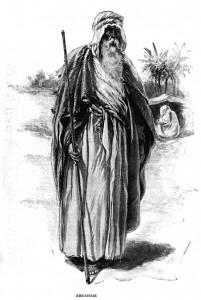
Abraham

Wherefore remember, that you being in time past Gentiles in the flesh, who are called Uncircumcision by that which is called the Circumcision in the flesh made by hands; that at that time ye were without Messiah, being aliens from the commonwealth [citizenship] of Israel, and strangers from the covenants of promise, having no hope, and without Elohim in the world: but now in Messiah Yeshua ye who sometimes were far off are made nigh by the blood of Messiah. (emphasis added)

Paul, talking to the redeemed believers in Ephesus, states that they had been (past tense) Gentiles (comprised of various ethnic or people groups) without Elohim and without hope, but now, through the work of Yeshua at the cross, provision had been made for these alienated people-groups to become citizens of the nation of Israel. Elsewhere Paul refers to these (former) Gentiles as now being Israelites and defines them as heirs to the promises YHVH made to Abraham and calls them “seed” or descendants of Abraham (Rom 4:15; 9:8, 11; Gal 3:7, 14, 29).

Paul further says that these same people had been aliens from YHVH’s “covenants of promise” and relates this to the “Gentile” believers at Ephesus. The same applies to all redeemed believers to this day. So what covenants of promise were these redeemed believers strangers to in times past, that is, prior to their conversion? Most in the church have been taught that the New Covenant is the only covenant that pertains to them, yet Paul spoke of covenants (plural) of promise. To what was he referring? The two main covenants of the Tanakh (the Old Testament) affecting the nation of Israel were the Abrahamic Covenant and the Mosaic or Sinaitic Covenant. Additionally, Jeremiah prophetically speaks of a New (or Renewed) Covenant that YHVH would make with the two houses of Israel (Jer 31:31–33); that is, a refreshed version of a former (marital) covenantal agreement which, Israel broke with YHVH (verse 32). These are the three principal covenants that the Scriptures reveals affect YHVH’s people. Clearly, Paul is referencing these three covenants in Ephesians 2:12 (see the Jewish New Testament Commentary, by David Stern, p. 583).

Which of these three covenants forms the bedrock upon which the others are based, and Continue reading


Blog Scripture Readings for 10-26 Through 11-01-14

Aside

THIS WEEK’S SCRIPTURE READINGS FOR STUDY AND DISCUSSION:

Parashat Lekh L’kha — Genesis 12:1 – 17:27
Haftarah — Isaiah 40:27 – 41:16
Prophets — Joshua 15:1 – 21:45
Writings — Psalms 18:25 – 25:22
Testimony — Matthew 12:1 – 15:39

Most of this week’s blog discussion points will be on these passages. If you have general comments or questions on the weekly Scripture readings not addressed in a blog post, here’s a place for you to post those. Just use the “leave a reply” link below.

The full “Read Through The Scriptures In A Year” schedule, broken down by each day, can be found on the right sidebar under “Helpful Links.” There are 4 sections of scripture to read each day. One each from the Torah, the Prophets, the Writings, and from the Testimony of Yeshua. Each week, the Torah and haftarah readings will follow the traditional one-year reading cycle.

Weekly Blog Scripture Readings for 10/26 through 11/1/14.