John 7:5, Even his brothers. Most don’t believe a thing until after the fact. For them, seeing is believing. This was the case with Yeshua’s brothers three of whom became apostles after Yeshua’s resurrection. It takes great faith to believe in a “God-thing” before it happens, and it also takes great faith to believe it afterwards, since the biblical record reveals that most people don’t believe either before or afterwards.
Category Archives: Weekly Scripture Readings
Use of Essential Oils in the Tabernacle of Moses
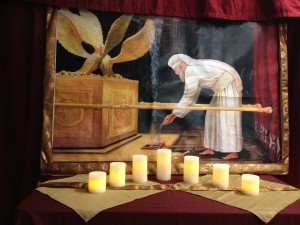
Exodus 30:34–38, Sweet spices. According to Jewish tradition (b. Talmud Keritot 6a), there were eleven sweet spices (Heb. ketoret bisamim) in the tabernacle incense, four of which are mentioned here. They were balsam, clove, galbanum, frankincense, myrrh, cassia, spikenard, saffron, costus, aromatic bark (a type of cinnamon), and cinnamon. Four thousands of years, ancient cultures relied on the medicinal properties of aromatic plants. Only in recent years, has the West rediscovered the salutary benefits of these plants. Listed below are the suggested healing properties of several of these herbs. In modern times, the oils from these plants are being extracted for use in various ways. (Sources of information is from various online sources and Aromatherapy Workbook by Marcel Lavabre.)
Galbanum (Ferula gummosa or Ferula galbaniflua) is an antiseptic (prevents the growth of disease-causing microorganisms), and helps to treat asthma, acne, coughs, cramps, scar tissue, wrinkles. Apparently, the smoke from burning the resin of this plant was used in ancient times to keep flies and snakes away.
Onycha may by cloves, which is an antiseptic, analgesic (pain relief), carminative (for relieving flatulence) or Styrax officinalis, which is a resin from this tree and is great for kidney support (edema), bronchitis, colds, sinusitis, skin conditions, and is said to relieve stress.
Frankincense is a skin tonic, heals infected wounds and is an anti-inflammatory. It helps to reprogram cellular memory thus promoting permanent healing. It is used against typhoid, allergies herpes, tonsillitis, head injuries, depression, and cancer. Research shows that it will lower cortisol by 40 percent just by deep inhalation. Elevated cortisol contributes to weight problems.
Myrrh (stacte) is a skin tonic or conditioner, anti-inflammatory, cough expectorant, vulnerary (heals wounds), fungicide, antiseptic, astringent (causes the contraction of body tissues—notably the skin). It is especially useful for mouth ulcers and throat infections. In ancient times, pregnant mothers anointed themselves with myrrh for protection against infectious diseases, and they used myrrh during labor to stretch the perineum and on umbilical cords. Myrrh has a long history of use in skin health and hygiene products, and it prolongs the life and scent of other oils. Myrrh helps to combat wrinkles, is antiseptic, aids in balancing the thyroid, clearing athletes foot, ringworm, viral hepatitis, thrush in babies, inflammation and bronchitis.
Cassia (Cinnamomum cassia)is an antiseptic, antibiotic, and immune system builder.
Spikenard is a skin tonic or conditioner.
Aromatic Bark is an antiseptic (against flu and infectious disease), stimulant (circulation, nervous system).
Cinnamon (leaf) is an antiseptic (against infectious disease), relieves skin irritants (e.g., poison oak).

Blog Scripture Readings for 3/1 Through 3/7/15
Aside
THIS WEEK’S SCRIPTURE READINGS FOR STUDY AND DISCUSSION:
Parashat Ki Tisa — Exodus 30:11 – 34:35
Haftarah — 1 Kings 18:1 – 39
Prophets — 2 Kings 19:1 – 25:30
Writings — Proverbs 1:1 – 7:27
Testimony — John 7:1 – 9:41
Most of this week’s blog discussion points will be on these passages. If you have general comments or questions on the weekly Scripture readings not addressed in a blog post, here’s a place for you to post those. Just use the “leave a reply” link below.
The full “Read Through The Scriptures In A Year” schedule, broken down by each day, can be found on the right sidebar under “Helpful Links.” There are 4 sections of scripture to read each day. One each from the Torah, the Prophets, the Writings, and from the Testimony of Yeshua. Each week, the Torah and haftarah readings will follow the traditional one-year reading cycle.
Weekly Blog Scripture Readings for 3/1 through 3/7/15.
Is there a back door around the bloody cross?
Exodus 30:15 and 16, To make atonement for your souls. Some will read these verses and conclude that one can buy their redemption through charitable giving and therefore circumvent the need to place one’s faith in Yeshua’s atoning death on the cross. Does this passage suggest a theology where man can save himself from his sins by acts of charity? Let’s dig a little deeper to see what these verses are really teaching us.
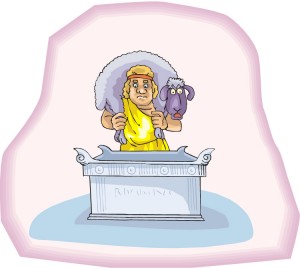
In this passage, YHVH instructed the Israelites to pay an annual half-shekel temple tax. This money went, in part, toward, the service (verse 16) and constructing of the Tabernacle of Moses (e.g., Keil and Delitzsch Commentary on the OT, vol. 1, p. 459; Exod. 38:21–31), and later toward the purchase of the animals the priests sacrificed (The Temple and Its Service, by Alfred Edersheim, p. 48). In this way, the people were participating vicariously in the act of sacrificing an innocent animal as an offering or atonement for their sins. Again, the Scriptures reveal that this sacrificial system merely pointed prophetically toward the Greater Sacrifice that would come later in the Person of Yeshua, the Redeemer of Israel. (Read Isa 53.) On the point that the paying the half-shekel was a merely a temporary solution to the problem of man’s sin, Keil and Delitzsch say in their commentary on this passage,
As an expiation [atonement] for souls, it pointed to the unholiness of Israel’s nature, and reminded the people continually, that by nature it was alienated from God, and could only remain in covenant with the Lord and live in His kingdom on the ground of His grace, which covered its sin (Ibid.).
Keil and Delitzsch’s point is further strengthened in Exodus 30:16, which says,
And you shall take the atonement money of the children of Israel, and shall appoint it for the service of the tabernacle of the congregation; that it may be a memorial unto the children of Israel before YHVH, to make an atonement for your souls. (emphasis added)
The giving of the half-shekel was a memorial to what? The Hebrew word for memorial is zikrown (Strong’s H2146) meaning “reminder, token, record.”
According to The TWOT, a zikrown is an object or act which brings something else to mind or which represents something else. It reminded them of their sinfulness and pointed prophetically to a Redeemer—Yeshua the Messiah— who would come and take away their sins once and for all (Heb 10:10). For a more detailed study of this subject, please see our teaching article entitled, “The Atonement: Bloody or Bloodless? Understanding the Concept of Atonement in the Torah” located on the Hoshana Rabbah website at http://www.hoshanarabbah.org/pdfs/atone.pdf.
The Horns of the Altar and Yeshua
Exodus 29:12, Horns of the altar. The four horns of the altar of sacrifice was the place where the blood of atonement was sprinkled (also Lev 4:4, 17, 18, 25, 30, 34; 8:15; 9:9; 16:18).
Horn in Hebrew is qeren meaning “horn, hill or ray.” This word is used to describe the rays of light rays emanating from the face of Moses after his encounter with YHVH (Exod 34:29) and the horns of an animal (Ps 69:31).
In ancient cultures, the horn was a metaphor for physical strength or spiritual power (Deut 33:17; 2 Sam 22:3; Ps 18:2).
Elsewhere, YHVH is referred to as man’s “horn of salvation” meaning he is the strength of our salvation. The Hebrew word for salvation is yesha meaning “deliverance, rescue, safety, welfare, victory, prosperity.” The root of yesha is the verb yasha meaning “to save, to deliver, to give victory.” Not only is YHVH called our “horn of salvation” in the Tanakh, but this designation is applied to Yeshua as well in the Testimony of Yeshua (Luke 1:69). Interestingly, the derivative of the Hebrew name Yeshua is Yehoshua (or Joshua), which also derives from yasha.
It should be evident from this quick study that the horns of the altar are a picture of Yeshua, who is the horn or strength of our salvation through his shedding his blood for our sins on the altar of the cross. If this is the case, then why are there four horns on the altar? This is likely symbolic of the four attributes of Yeshua, even as are the four colors of cloth used throughout the tabernacle prophetically symbolize the same thing: crimson speaks to Yeshua’s humanity, purple to his kingship, blue to his divinity, and white to his sinlessness or righteousness.
The Jewish sages view the four horns as symbolizing the four corners of the earth, for, in Hebraic thought, the earth is nothing more than a large altar dedicated to Elohim. (See The ArtScroll Tehilim/Pslams Commentary on this verse and notes at Ps 118:27.)
Are you going to heaven when you die?
John 3:13, No one has ascended to heaven. Most Christians believe that when they die, they immediately go to heaven in spite of Yeshua’s clear statement in this verse.
Many believers see this verse as referring to saints who died before his resurrection, but not true of those who died afterwards, even though Yeshua doesn’t say this. Therefore, they reason, this is why, according to Peter, David, who was born before Yeshua, is still resting in his grave awaiting the last days resurrection (Acts 2:29). If what the majority Christians believe on this subject is true, then the saints of old are second class citizens and YHVH is a respecter persons (which he is not, see Acts 10:34; Rom 2:11) in that they have to wait for resurrection day and for their ultimate reward of eternal life, while saints born since Yeshua receive their glorified bodies immediately upon death.
Laying aside all the church traditions and doctrines of men, what does the Bible in the simplest and clearest terms say about the timing of the saints receiving immortality? Paul states that the resurrection of all the dead saints and their receiving immortality occurs not at the time of their physical death, but at the second coming of Yeshua at the last trumpet (1 Cor 15:51–54; 1 Thess 4:13–18 cp. Rev 11:15, 18).
In reality, men’s eternal inheritance isn’t heaven, but the New Jerusalem, which is coming down from heaven to the new earth (Rev 21:2).
The Origins of the Ordination Ritual
Exodus 28:41, Anoint them. Ordination is a religious ritual that YHVH instituted in the Torah when he charged Moses to lay hands upon dialisos Aaron and his sons as part of the process of consecrating them to the priesthood (Exod 28:41; 29:7; 30:30). YHVH then instructed the Israelites themselves to lay hands on the Levites as part of the process of consecrating them to the Levitical service (Num 8:10). In addition, the kings of Israel were also anointed with oil (although hands were not imposed on them) to consecrate them for their kingly duties (e.g., 1 Sam 10:1; 16:13; 1 Kgs 1:39).
The laying on of hands or ordination is nothing more than earth’s confirmation of a heavenly calling. The biblical record clearly shows us that when ordinations occurred, Elohim had already chosen someone for a ministry position (e.g., high priest and his sons, the Levites, the king of Israel, or spiritual leaders in the time of the apostles), and men were simply confirming—through the anointing of oil and/or the laying on of hands—a choice that Elohim had already made. The heavenly calling comes first followed by the ordination of men. Heaven chooses who the servants of Elohim will be. Men, organizations, denominations, or churches do not.
In the Testimony of Yeshua, the eleven apostles chose Matthias to replace Judas by lot (Acts 1:15–26). The apostles believed that YHVH would supernaturally direct how the lots fell, and thus the choice would be that of heaven, not of men. In the case of Matthias, there is no mention of laying on of hands or anointing with oil. This may follow the example of Yeshua who simply called and commissioned the original twelve disciples (Matt 10:1; Mark 3:13; Luke 6:13). After all, Yeshua didn’t need a ceremony to confirm his choices, since he was heaven’s voice on earth.
After that, we have the choosing of the seven deacons in Acts 6:1. These were men who were already full of the Set-Apart Spirit and wisdom, so the apostles simply confirmed the work of the Spirit through the laying hands (verse 6).
The same is true in the other examples of ordination in the Testimony of Yeshua. Men would be mentored by a leader or an apostle, and after a period of time (“lay hands on no one suddenly,” 2 Tim 5:22), and after meeting the qualifications of eldership (see 1 Tim 3:1–12 and Tit 1:5–9), they were ordained. This period of training and probation finds its precedence in the Torah, where Levites went through five years of training (from age 25 to 30, Num 8:24) before being allowed to help the priests in the temple service. The biblical example of mentoring for ministry was less of an authoritatively-hierarchical system and more of patriarchal system with the older men lovingly overseeing, teaching and guiding those they had raised up.