The Abrahamic Covenant — Foundation of the New Covenant

The Torah, the first five books of the Bible, is the chronicle of YHVH giving man instructions to follow, and of his entering into covenantal relationships with men and men either keeping those agreements or breaking them.

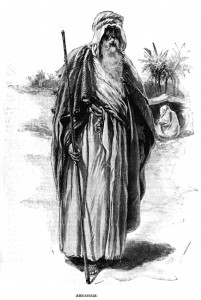
Abraham

The word Torah means “instructions, teaching or precepts; specifically in biblical context: the teachings or instructions of YHVH to lead men into a righteous relationship with him through covenantal agreement.” The Torah is a giant b’rit or covenant. The Torah in a number of places even refers to itself by the Hebrew word b’rit or covenant. We see this in the following passages:

Exodus 34:27, And YHVH said unto Moses, Write you these words: for after the tenor of these words I have made a covenant with thee and with Israel.

Deuteronomy 29:1, These are the words of the covenant, which YHVH commanded Moses to make with the children of Israel in the land of Moab, beside the covenant which he made with them in Horeb.

The Torah is not unlike an instruction manual that one might receive from the manufacturer of an automobile, computer or some such device to help the buyer to operate his new purchase in a manner that allows him to receive years of trouble-free service. The Torah is Continue reading


Did Yeshua Break the Sabbath?

Matthew 12:1–14, On the Sabbath. (See also Mark 2:23–28; also see note on John 5:18.) From this passage, many Christians reason that since Yeshua is the Lord of the Sabbath, it was therefore permissible for him to break it. Does this passage substantiate this line of reasoning from Hebraic thought? Let’s examine this issue.

First, there is no law in the Torah prohibiting picking food to eat as one is walking along the way. This is not harvesting a field — something which is work, and is thus forbidden on the Sabbath. Instead, Yeshua was violating a non-biblical, man-made Jewish legal regulation.

Moreover, this scripture teaches us that there are levels of Torah laws, and some laws take precedence over others. For example, the priests technically violated the Sabbath during the tabernacle and temple service, but were guiltless because Torah commanded them to do certain things on the Shabbat that otherwise would have been forbidden. The Talmud explains this by saying that whenever a positive commandment and a negative commandment contradict, the positive commandment takes precedence over or supersedes the negative one (b. Shabbat 133a). What Yeshua is teaching in this passage is that the temple service trumps the Sabbath, and human need or saving life (i.e., the ox-in-the-ditch scenario) trumps the temple service. This view is confirmed by the Jewish sages (b. Yoma 85b). In verse six, when Yeshua said, “But I say unto you, that in this place is one [a supplied word and not found in the Greek] greater than the temple” he is not saying that he is greater than the Sabbath, and hence it is permissible for him to break it. If this were true, then two things would be true which contradict the Scriptures: a) It is permissible for Yeshua to sin, for sin is the violation of the Torah, and b) YHVH magnifies his word above his name (Ps 138:2); therefore, he’s obeying his own word (making him a liar!) by breaking the Sabbath, which he commanded men to keep (Exod 20:8–11, the fourth commandment). What Yeshua is really saying here is that the thing greater than the temple was the hunger of his disciples.

Furthermore, Leviticus 18:5 states, “You shall therefore keep my statutes, and my judgments: which if a man do, he shall live in them.” The Jewish sages take this to mean that a commandment can be set aside to save life (again, the ox-in-the-ditch scenario). The saving of a life trumps the keeping of the commandment, since this verse says that man is to “live by [the Torah]” not die by it. Therefore, it is permissible to “violate” the Sabbath to preserve life. In fact, the sages go so far as to say that any commandment could be broken to save a life except those against murder and sexual immorality (b. Sanhedrin 74a).

This is why Yeshua quotes Hosea 6:6 that YHVH desires mercy (or loving-kindness), not sacrifice; the knowledge of Elohim, not burnt offerings (Matt 12:7). The heart and spirit of the Torah, in Yeshua’s thinking, are the weightier matters of the Torah although they do not replace the letter of the Torah. In Yeshua’s mind, to properly keep the Torah, one needs to keep both the letter and the spirit (Matt 23:23).

On several occasions, Yeshua used the Hosea 6:6 passage to teach us that love, compassion and mercy for one’s fellowman takes precedence (at times) over fulfilling the letter of the law, although this is not a justification for habitually and intentionally violating the Torah (Matt 9:12–13; Mark 12:33; Luke 10:36–37). Paul echoes this truth about the preeminence of love in the famous chapter on love in 1 Corinthians 13. There we learn that all manner of spiritual activity is meaningless in the eyes of Elohim if it is not accompanied with love.

In Mark 2:23–28 (the corollary passage to Matthew 12:1–7), Yeshua declares, “The Sabbath was made for man, and not man for the Sabbath; therefore, the Son of Man is Lord also of the Sabbath” (verses 27–28).

Yeshua is greater than the Sabbath because he is the lord of the Sabbath, for he created the Sabbath (verse 8), and because he was the perfect epitome of walking out both the letter and spirit of the Torah. Whatever he was doing on the Sabbath, it wasn’t a violation of the Sabbath’s no work principle. Also, saving life was greater than the temple service, as is Yeshua who was the Living Torah-Word of Elohim incarnate.

 

What are you still holding on to that’s keeping you from moving forward?

Genesis 12:1, Get thee out of thy country. Did Abram immediately leave his father’s house and go directly to the country that YHVH would show him, or did he fulfill YHVH’s will for his life in incremental steps? (Compare Gen 11:31 with 12:1.) Did Abram leave his father’s house completely, or take part of his father’s house with him including his father and nephew? Haran is located in northern Mesopotamia and is nowhere near Canaan. When Abram finally made his way to Canaan minus his father, did he still have part of his kindred with him, something YHVH instructed him to leave behind (Gen 12:1)? Did his nephew Lot prove to be a help or a hindrance to Abram in fulfilling YHVH’s mission for his life in a new land?

What lessons can we learn from this account? First, YHVH is gracious to us even when we don’t obey him completely and immediately. Scripture still refers to Abraham as the father of the faithful or faithfulness (Rom 4:12, 16). Second, Abram was a man of prominence in Babylon (or Chaldea), was recognized as a mighty prince (Gen 23:6), and was 75 years old when YHVH asked him to leave the comforts of life in Babylon to trek across the desert to the backwoods region of Canaan. No doubt, this was not an easy move for Abram for the reasons stated above.

What did Yeshua tell his disciples about the sacrifices that would need to be made to be a follower of YHVH? (Matt 10:35–39). What did Yeshua say would be the eternal rewards of those, who like our father Abraham, set out in faith for a new spiritual destiny? (Matt 19:29) What physical obstacles stand in your way of fulfilling YHVH’s spiritual calling, mission and destiny for your life?


Blog Scripture Reading for 10-18 Through 10-24-15

Aside

THIS WEEK’S SCRIPTURE READINGS FOR STUDY AND DISCUSSION:

Parashat Lekh L’kha — Genesis 12:1 – 17:27
Haftarah — Isaiah 40:27 – 41:16
Prophets — Joshua 15:1 – 21:45
Writings — Psalms 15:1 – 20:9
Testimony — Matthew 10:27 – 13:58

Most of this week’s blog discussion points will be on these passages. If you have general comments or questions on the weekly Scripture readings not addressed in a blog post, here’s a place for you to post those. Just use the “leave a reply” link below.

The full “Read Through The Scriptures In A Year” schedule, broken down by each day, can be found on the right sidebar under “Helpful Links.” There are 4 sections of scripture to read each day. One each from the Torah, the Prophets, the Writings, and from the Testimony of Yeshua. Each week, the Torah and haftarah readings will follow the traditional one-year reading cycle.

Weekly Blog Scripture Readings for 10/18 through 10/24/15.


The Hebraisms of Light Versus Darkness in Yeshua’s Saying

Matthew 8:12, Children/Sons of the kingdom. This is a Hebraism or biblical metaphor for the Jewish people. They are the ones who were first presented with the gospel message, but most of them rejected it. The sons of the kingdom will be cast into outer darkness because they didn’t accept Yeshua the Messiah, who is the light of the world (John 1:9; 8:12). It’s rather ironic to be cast into darkness for not accepting the light. Unrepentant sinners prefer darkness over the light because their deeds are evil (John 3:19), so in the end they get what they really wanted.

Anointing

Outer darkness. (Also 22:13; 25:30.) Ancient banquets were held at night in brilliantly lit rooms, and anyone excluded from the feast was cast outside into outer darkness. In his teachings, Yeshua’s uses this term as a metaphor for judgment in reference to those who will be excluded from his kingdom. In the oriental mind, in the days before street lights, it was a dreadful thing to be found outside, late at night no lamp or simply a small clay lamp of that day that put out a tiny, dim flame (Manners and Customs, pp. 62–63). This speaks of the fear that those whom Yeshua will reject will experience.


Noah—Prophetic Pictures of Yeshua and End Time Events

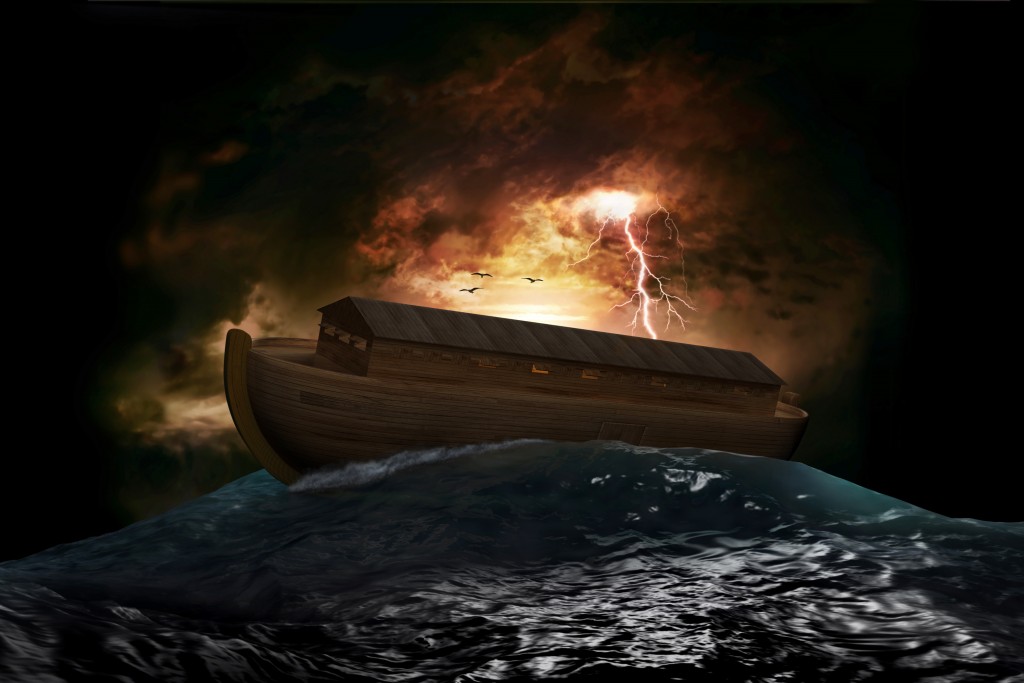
Genesis 6–8, Noah’s flood provides allegorical insights relating to end-times prophecy. In Matthew 24:37, Yeshua compares the end times to the days of Noah. The story of Noah has allegorical implications that give hints about end-times prophecy.

Noah's Ark

In 1 Peter 3:18–22, we learn that the story of Noah is also a picture of salvation and water baptism. Noah is a prophetic type of Yeshua.

To start with, Noah building the ark is a prophetic picture of the redeemed believer working out his own salvation (Phil 2:12), yet while doing so according to YHVH’s exact plans or specifications (e.g., repentance from sin, faith in Yeshua, baptism for the remission of sins, and faithful obedience to YHVH’s commandments).

Noah builds an ark of safety from Elohim’s wrath or judgments against sinful man. The ark is a metaphorical picture of the believer’s salvation, and Noah is a spiritual picture of Yeshua. The flood is also a picture of water baptism for the remission of sins, which ceremonially pictures the death of the old sinful man, and the birth of the new spiritual Continue reading


In Hebraic Thought, Who and What Is the Narrow Gate?

Quote

Matthew 7:13, Enter the narrow gate. Here Yeshua speaks of the straight gate and the narrow way that leads to life versus the wide and broad gate that leads to destruction.

Open Gates And Wall

In Genesis 28:10–22, we have the account of Jacob’s dream of a ladder reaching into heaven. The dream greatly amazed Jacob and afterwards he concluded he had had a divine encounter. He named the spot where he had the dream Beth El meaning “House of El (God)” and concluded that this spot was “the gate of heaven” (verse 17).

In Hebraic thought, “the ladder” to heaven is equivalent to the Tree of Life, which is another term for the Torah of Elohim. We know that Yeshua was the Torah-Word of Elohim made flesh ( John 1:1,14). Not only that, Yeshua likened himself to a ladder reaching to heaven ( John 1:51).

Furthermore, we see both Moses and Joshua describing the Torah-law of Elohim as a (narrow, by implication) path from which one must turn neither to the left nor to the right (Deut 5:32; 17:11, 20; 28:14; Josh 1:7; 23:6).

In Proverbs, the path of wisdom (i.e., Torah) is also likened to a (narrow, by implication) path from which one must not turn either to the left or to the right (Prov 4:27). The term “gate” (or door) itself in Matthew 7:13 is a Hebraism referring to the means by which one enters into the Tabernacle or Temple of Elohim (Exod 27:14, 16; 32: 35:17; Ezek 40:3, 6, 7, 8, 9, 10, 11, 13 etc.).

The Tabernacle (or Mishkan) of Moses was representative of the pathway to redemption or salvation. Before actually entering the tabernacle, one encountered the altar of the red heifer, which pictures the cross of Yeshua. To enter the tabernacle, one passed Continue reading