Five Old Testament Scriptures That Specifically Prophesy That Yeshua Is the Messiah

Matthew 16:16, The Son of the living Elohim. One day, Yeshua asked his disciples who they thought he was. Peter answered, “You are the Messiah, the Son of the living God. (Matt 16:15–16) How did Peter know this? Were there any hints in the Tanakh (Old Testament) that the Messiah would be the Son of Elohim, since these were the only Scriptures Peter had?

Their are numerous prophecies in the Tanakh about the Messiah. Here is a list of scriptures that prophesy specifically that he would be the Son of Elohim with some brief comments following.

Therefore Adonai himself shall give you a sign: Behold, a virgin shall conceive, and bear a son, and shall call his name Immanuel [Heb. God with us]. (Isaiah 7:14)

Many Bible prophecies have double meanings or fulfillments. Such is the case with this prophecy. It was partially fulfilled in Isaiah’s life (Isa 8:3), but not completely. Isaiah’s son was neither deity nor was he known as “God with us.” Yeshua the Messiah was (Matt 1:23).

He shall cry unto me, “You are my father, my El [God], and the rock of my salvation.” Also I will make him my firstborn, higher than the kings of the earth. (Psalm 89:26, 27)

Again, this prophecy has a double fulfillment. It was partially fulfilled by David and his sons, but not completely. Only Yeshua, who also was from David’s lineage, fulfilled the superlative aspects of this prophecy. Not only Continue reading


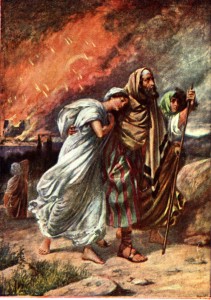
“Remember Lot’s Wife!” What We Can Learn from Lot’s Life

Lot had a lot, and cast in his lot with the lot of them and ended up losing a lot.

Is Lot a picture of the typical modern born-again believer whether Christian or Messianic? I believe so. In saying this, as a pastor and having been a watchman on the spiritual wall for many years, I see very little if any differentiation (broadly speaking) between Christians and most Messianics, for the spiritual condition of both groups is fundamentally the same.

Lot1

Primarily what differentiates the two groups is the religious jargons and nomenclatures each group uses in addition to the outward religious trapping or externals each uses to identify itself. What about Torah, you may ask? Don’t Messianics obey the Torah and Christians do not? My response is that there is not a huge difference between the two—at least not from the Creator’s perspective. YHVH looks at hearts, and not merely the superficiality of outward appearances and the religious trappings by which people identify themselves.

In reality, both born-again Christians and born-again Messianics follow Torah principles to one degree or another. The only difference is that the former group does not claim to follow Torah, but teaches that it was “done away with.” In reality, to a certain degree, many serious Christians do follow the “moral” principles of the Torah along with tithing. On the other hand, a majority of Messianics profess loudly and proudly their Torah-obedience, but largely, in practice (except for an often half-hearted adherence to the Continue reading


Biblically speaking, what is the sin of sodomy?

Genesis 18:20, Their sin [Sodom and Gomorrah’s] is very grievous. What was the sin of Sodom? Genesis 19:5 gives us the answer. The men of Sodom were so morally perverted that Paul says of such a human condition in Romans 1:24–29,

Sodom

Wherefore Elohim also gave them up to uncleanness through the lusts of their own hearts, to dishonor their own bodies between themselves: who changed the truth of Elohim into a lie, and worshipped and served the creature more than the Creator, who is blessed forever. Amen. For this cause Elohim gave them up unto vile affections: for even their women did change the natural use into that which is against nature, and likewise also the men, leaving the natural use of the woman, burned in their lust one toward another; men with men working that which is unseemly, and receiving in themselves that recompense of their error which was meet. And even as they did not like to retain Elohim in their knowledge, Elohim gave them over to a reprobate mind, to do those things which are not convenient; being filled with all unrighteousness, fornication, wickedness, covetousness …

Ezekiel 16:49–50 speaks of the symptoms of a society that has given itself over to a spirit of sodomy (homosexuality) because it has become abundantly wealthy, proud and obsessed with idleness (entertainment and pleasure). As a result it has become inwardly focused and self-absorbed, which leads to an obsession with self-gratification instead of helping the poor and needy. It shouldn’t be hard to see parallels between Sodom’s society before it was judged and the moral and spiritual decline we see occurring in America and the rest of the western world. America, for example, has become obsessed with the concept of pride—especially since September 11, 2001. Notice, for example, the many car bumper stickers expressing the idea of national “pride” since 9/11? Not only that, our culture has also become obsessed with promoting “gay” (homosexual or sodomite) rights and agendas calling it “gay pride.” It’s Sodom all over again!


Blog Scripture Readings for 10-25 Through 10-31-15

Aside

THIS WEEK’S SCRIPTURE READINGS FOR STUDY AND DISCUSSION:

Parashat Vayera — Genesis 18:1 – 22:24
Haftarah — II Kings 4:1 – 4:37
Prophets — Joshua 22:1 – 24:33; Judges 1:1 – 4:24
Writings — Psalms 21:1 – 27:14
Testimony — Matthew 14:1 – 18:20

Most of this week’s blog discussion points will be on these passages. If you have general comments or questions on the weekly Scripture readings not addressed in a blog post, here’s a place for you to post those. Just use the “leave a reply” link below.

The full “Read Through The Scriptures In A Year” schedule, broken down by each day, can be found on the right sidebar under “Helpful Links.” There are 4 sections of scripture to read each day. One each from the Torah, the Prophets, the Writings, and from the Testimony of Yeshua. Each week, the Torah and haftarah readings will follow the traditional one-year reading cycle.

Weekly Blog Scripture Readings for 10/25 through 10/31/15.


Many Called; Few Respond — Yeshua Desires Quality Over Quantity

Matthew 13:14, Hearing you will hear. In Yeshua’s Parable of the Sower (Matt 13:3–23), we are confronted with the difficult issue about who will receive the gospel message and thus enter into the kingdom of heaven and who will not. Put into modern vernacular, Yeshua is discussing who will receive YHVH’s free gift of salvation resulting in immortality and who will die in his sins to perish for eternity.

Yeshua’s discussion all started when his disciples asked him why he taught the people using parables. To them, it was as if he were deliberately obscuring the gospel message.

A superficial reading of his response in verse 15 to their question may imply not only a lack of impartiality but a brutal selectivity on the part of Elohim when it comes to determining who he will choose to receive the gift of salvation including the gift of immortality. If this is the conclusion one draws from Yeshua’s response, then what he said contradicts other scriptures that indicate Elohim’s unconditional love for the whole world and his desire that all be saved (John 3:16; 1 Tim 2:4; 2 Pet 2:9).

The fact is that a thorough reading of this passage shows us another important truth, which in no way impugns the character of Elohim, but instead leaves the onus on man.

After giving this parable, Yeshua quotes Isaiah the prophet (Isa 6:9–10), where we learn that it’s up to the individual as to how far they want to go with Elohim spiritually. All humans have eyes and ears to see and hear, but merely seeing or hearing doesn’t equate with understanding or perceiving. Sadly, many people want to dabble in religion, or to have a Continue reading


The Significance of Circumcision

Genesis 17:1, 22, YHVH appears to Abraham and establishes circumcision as a sign of the covenant. 

And when Abram was ninety years old and nine, YHVH appeared [ra’ah meaning “to see, look, behold, show, appear, observe, have vision, present oneself, be seen”] to Abram, and said unto him, I am El Shaddai; walk before me, and be thou perfect.

Circumcision 20195387

YHVH proceeds to lay out to Abraham the terms of the Abrahamic Covenant including circumcision and the fact that Sarah would give birth to a son with whom YHVH would also establish his covenant. When YHVH was done Scripture records the following in verse 22,

And [YHVH] left off talking with him, and Elohim went up [alah, to go up, ascend, climb, depart] from Abraham. (KJV)

And when He had finished speaking with him, God ascended from upon Abraham. (The ArtScroll Stone Edition Tanach)

And He ceased speaking with him; and the Glory of the Lord ascended from Abraham. (Targum Jonathan)

And when He had ended to speak with him, the Glory of the Lord ascended up from Abraham. (Targum Onkelos)

And be left off speaking with him, and God went up from Abraham. (LXX)

This text does not state how YHVH appeared or spoke to Abraham, just the fact that he did. According to the Hebrew rules of biblical interpretation (and the rules of common logic when reading anything), a scriptural text is to be taken at its literal or plain (peshat) meaning, unless the text itself suggests an allegorical (drash) or mystical (sod) interpretation. The Talmud (the Jewish Oral Law) states this in Talmud b. Shabbath 63a ( … that a verse cannot depart from its plain meaning”) and Talmud b. Yevamoth 24a (“Although throughout the Torah no text loses its ordinary meaning …”). Therefore, it is evident that YHVH appeared to Abraham in some tangible form with which humans are capable of interacting. If he did so once, we have to ask, cannot he do it again in the Person of Yeshua of Nazareth, the Messiah?

Let’s note some reasons why YHVH chose circumcision to be the sign of the Abrahamic Covenant. Remember, physical circumcision is not passé, but is still a requirement for those desiring to be priests in YHVH’s future (spiritual?) temple (Ezek 44:7, 9):

  • It is a token or sign of spiritual things—a sign that always goes before us. (Gen 17:11)
  • It signifies purification of the heart from all unrighteousness by cutting away a piece of the flesh that would otherwise be a carrier of filth and disease.
  • It is a holy seal of righteousness—the foreskin removed is round like a ring. A ring signifies a bond or union and is worn constantly even as the seal of circumcision is worn constantly.
  • Circumcision occurs at eight days of age. Eight is the number meaning new beginnings. A new heart, a consecration of the person to YHVH; the commencement of a covenant. (Gen 17:12)
  • The rite of circumcision is painful and humiliating. So is repentance and self denial of which circumcision is a picture.
  • From the penis flows the seed of life. Circumcision is a sign that the seed should and could be righteous and consecrated to YHVH.
  • In Romans 4:11, Paul teaches us that circumcision is a sign, mark or token, and a seal (placed on someone) or an impression or stamp made by a signet ring signifying ownership. Circumcision spoke of Abraham’s righteousness and the faith he had in YHVH and YHVH’s “ownership” of Abraham. A modern-day example of this would be the marriage ring. One can be legally married without wearing a ring; however, a wedding ring is an outward and visible sign of one’s marriage covenant. The same is true of circumcision. It’s not a salvational requirement, yet it’s an outward sign of an inward spiritual reality.

The Scriptures make it clear that circumcision is not a requirement for salvation (see Acts 15) or else women couldn’t be saved. Circumcision is, however, an act of obedience that indicates one’s identity with the Abrahamic Covenant model of salvation and with the people of Israel. Additionally, the Torah makes it clear that circumcision is required for all men who desire to take Passover, and those who do not keep the Passover will be cut off from Israel (Exod 12:47–48), although in the New Covenant, circumcision of the heart is now the chief requirement (Rom 2:25–29; Gal 6:15; Col 2:11).


Who is the Messenger of YHVH? Rabbinic sages obscure the truth.

Genesis 16:7–13, Hagar and Ishmael encounter Messenger of YHVH. The first place in Scripture that the term “Angel [Messenger/Malak] of YHVH is used is found in Genesis 16:7. Here Hagar flees into the wilderness with her son, Ishmael, escaping from Sarah, her mistress and is resting by a pool of water when the Heavenly Messenger/Malak of YHVH suddenly appears to her. He commands her to return to Sarah and then proceeds to pronounce a prophetic blessing upon Ishmael:

10 And the angel of YHVH said unto her, I will multiply thy seed exceedingly, that it shall not be numbered for multitude. 11 And the angel of YHVH said unto her, Behold, thou art with child, and shalt bear a son, and shalt call his name Ishmael; because YHVH hath heard thy affliction. 12 And he will be a wild man; his hand will be against every man, and every man’s hand against him; and he shall dwell in the presence of all his brethren.

What was Hagar’s response (Gen 16:13)? Christian translations of the Hebrew Scriptures (Old Testament) record that she believed that she had (incredibly) seen YHVH and lived:

So she named YHVH who had spoken with her El of Seeing, because she said, “Have I really seen the One who sees me [and stayed alive]?” (adapted from the CJB)

Then she called the name of YHVH who spoke to her, You-Are-the-God-Who-Sees; for she said, “Have I also here seen Him who sees me? (NKJV)

Then she called the name of YHVH who spoke to her, “You are a God who sees”; for she said, “Have I even remained alive here after seeing Him?” (NAS)

So she named YHVH who spoke to her, “You are El-roi”; for she said, “Have I really seen God and remained alive after seeing him?” (NRSV)

As we can see, the Christian translations give the impression that Hagar actually saw YHVH.

The ArtScroll Stone Edition Chumash (the modern Orthodox Jewish translation) translates verse 13 in this manner:

And she called the Name of HASHEM Who spoke to her “You are the God of Vision,” for she said, “Could I have seen even here after having seen?”

The Jewish Soncino Edition of the Pentateuch translates it this way:

And she called the name of the LORD that spoke unto her, Thou art a God of seeing; for she said: ‘Have I even here seen Him that sees me?’

Nineteenth-century Orthodox Jewish sage Samson Raphael Hirsch in his commentary translates this verse as follows,

And she called the name of God that spake unto her: Thou art a God of seeing; for she said: Have I then also up to here too looked after anyone who might see me? [sic]

As we can see, modern rabbinic translations of this verse are ambiguous as to whether Hagar had a vision or actually saw YHVH with her natural eyes.

The Targumim translations (Aramaic translations of the Hebrew Scriptures from the pre-Christian era made by Jewish religious officials) translate verse 13 this way,

And she gave thanks before the Lord whose Word spake to her, and thus said, Thou art He who livest and art eternal; who seest, but art not seen! for she said, For, behold, here is revealed the glory of the Shekina of the Lord after a vision. (Targum Jonathan)

And Hagar gave thanks, and prayed in the Name of the Word of the Lord, who had been manifested to her, saying, Blessed be Thou, Eloha, the Living One of all Ages, who hast looked upon my affliction. For she said, Behold, Thou art manifested also unto me, even as Thou wast manifested to Sara my mistress. (Targum Jerusalem)

And she prayed in the Name of the Lord who had spoken with her; and she said: Thou art Eloha, seeing all: for she said, I also have begun to see after that He hath been revealed to me. [14] Therefore she called the name of the well, The well at which appeared the Angel [Malak] of the Covenant. (Targum Onkelos)

These pre-Christian era Jewish translations of this passage are less obscure and ambiguous about what Hagar saw. The first says that “the Word spake to her” through his manifest Presence in a vision; the second speaks of the Word of YHVH manifesting himself to her as to Sarah; the third says that YHVH spoke to her and revealed himself to her through the Messenger [Malak] of the Covenant.

So what did the Jews believe in the pre-Christian era? Did she have a vision or see a literal Heavenly Messenger? It would appear that they were more open to the latter interpretation than are some modern, post-Christian, Jewish translations.

How do the Jewish rabbinical commentators explain this verse? Rashi, the preeminent Torah commentator of the modern era says she actually saw a messenger or an angel (Rashi: the Torah – Bereishis/Genesis, p. 159). The ArtScroll Stone Edition Chumash states that an angel or “God’s emissary” spoke to her (p. 73). Hirsch in his commentary claims that Hagar saw an angel (a Messenger or Sent One) (Genesis, p. 289). The ArtScroll Breishis/Genesis commentary also states that YHVH spoke to Hagar through an angel (p. 553).

So these commentaries unanimously agree that a literal Heavenly Messenger visited her, but upon what basis does this Messenger use the first person in pronouncing a blessing upon Ishmael? Here as in other places where the term “Angel/Malak of YHVH” is used, the Jewish sages insist that the Messenger is not YHVH and is not divine, but is only acting as an agent of YHVH and therefore is mandated by divine authority to speak in the first person, as if he were YHVH himself. As we shall see later in this work, the Jewish sages have not always had this interpretation—one which seems to have arisen during the Christian era to counteract the Christian concept of the incarnation of deity, and hence the deity of Yeshua the Messiah. (As we shall see later, the venerable Jewish Encyclopedia even admits this.) The sages of the pre-Christian era viewed this Messenger of YHVH as a manifestation of the Word or Presence of YHVH rather than as simply an angel in the common sense of the word.