The Descendants of Esau Are Ephraim and Judah’s Arch-Enemy in the End Times

The Ancestry of the Modern Arabs

Esau and his army stood in the way preventing Jacob from returning to his homeland. This event is prophetic of what will happen in the end times.

We have already identified who the sons of Jacob are, how they were divided into two camps, or two houses, and two kingdoms (the northern kingdom of Israel and the southern kingdom of Israel). But who are the descendants of Esau?

Many, if not most of the modern Moslems (especially the Arabs) trace their lineage back if not biologically then spiritually to Ishmael, the son of Abraham by Hagar. Islam in its holy book, the Koran, claims that it was Abraham and Ishmael who founded the religion of Islam and built the Kaaba, which is the small building containing a stone that supposedly fell from heaven. This shrine is located in the midst of great mosque in Mecca, Saudi Arabia. Of Ishmael and his descendents, the Bible prophesies in Genesis 16:11–12,

The angel of YHVH said to her further, “Behold, you are with child, And you shall bear a son; and you shall call his name Ishmael, because YHVH has given heed to your affliction. And he will be a wild donkey of a man, his hand will be against everyone, and everyone’s hand will be against him; and he will live to the east of all his brothers.”

The Koran has further twisted the biblical account to teach declare that the patriarchs were Mulims and that Abraham gave the birthright blessing to Ishamael instead Isaac. Both Israelites and Arabs, therefore, believe that they have a right to the Promised Land of Canaan, and, hence, this disagreement roots of the modern Arab-Israeli conflict.

The Scriptures further record that Esau (Edom), the disinherited son of Isaac, also had ought against his brother Jacob, who, in a sense, stole the birthright promise from him. Furthermore, Esau married the daughter of Ishmael (Gen 28:9). Thus, some of Ishmael’s and Esau’s descendants merged becoming a people-group who had a jealous feud with the sons of Jacob or Israel.

The Bible has more to say prophetically about the descendants of Esau, who scripturally are referred to as Edom (Esau’s alternate name) than about those of Ishmael. Edom is portrayed as an aggressive and bloodthirsty people who are opposed to Israel at every step. We will discover what the Scripture have to say about this below.

In the mean time, let’s take a closer look at Edom. Continue reading


Are you going up to Beth-El (the House of El)?

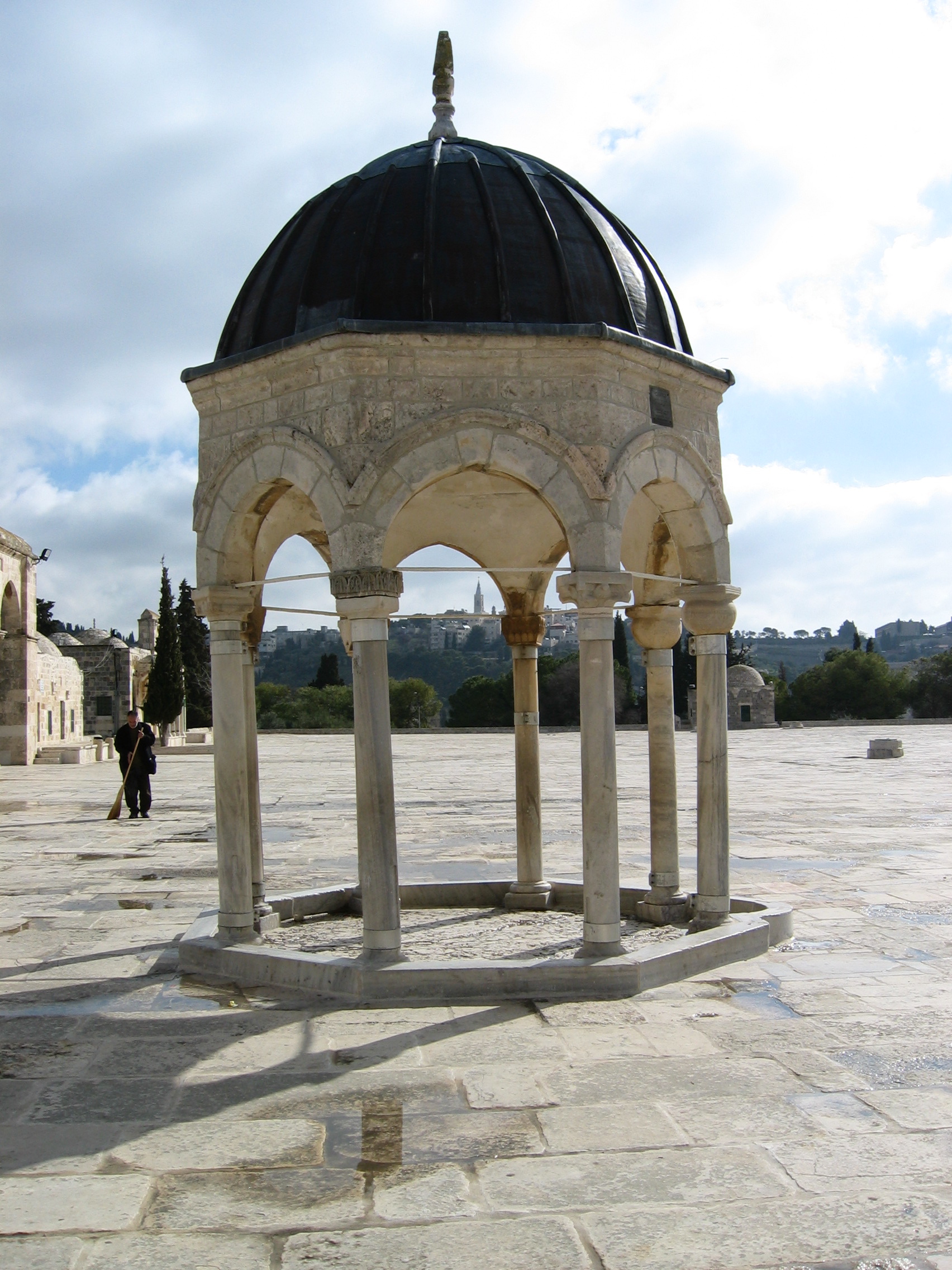
The Temple Mount or the House of El (Hebrew: Beth-El), and the likely spot where the Temple of Solomon stood, and the possible site of the actual holy of holies.

Genesis 35:1–15, Go up to Bethel. Jacob, twenty years earlier, had left Canaan in disgrace fleeing eastward into exile (as his descendants would do generations later), where in captivity to Laban he pays the price for being a deceiver.

In captivity, Jacob prospers and finally is able to return to the Promised Land.

En route westward back to Canaan, he goes through a wilderness experience, as the children of his namesake would do several generations later.

What type of individuals does YHVH not permit and permit to enter into the Land of Promise? The answers are in Hebrews 4:1–11 where the writer speaks of doubt and unbelief, faith, hardness of heart versus resting in YHVH and not in the works of our flesh. (Read it.)

To come home, like the prodigal son, to the home of his earthly parents and to that of his Heavenly Father (Beth-el or House of El) what was required of Jacob? He had to manifest brokenness, humility, a new identity, repentance, and make restitution for past sins committed against others (Gen 34).

Will YHVH similarly break our stiff necks, refine and purify us to become suitable for the Master’s use in his spiritual house? Are you fighting the process that YHVH is working in your life to prepare you for your spiritual Bethel?

Jacob got hit again and again until his carnal will was finally broken, his heart was circumcised and he died to the willfulness of his flesh and scheming to bring YHVH’s will to pass in his life. (Have other notable personages of Scripture tried the same things and had their will broken before they were useful to YHVH? Remember Moses when he murdered the Egyptian? What did YHVH do with him for 40 years?)

Remember, neither the uncircumcised in heart nor flesh will enter into the spiritual house of Elohim (Ezek 44:9), which is the ultimate Promised Land.

Where are you in this spiritual process?

The Promised Land belongs to those (i.e. the seed of Jacob) who pass the wilderness tests of YHVH (Gen 35:12).

Who is that seed? (Read Rom 4:16; 9:8, 11; Gal 3:7, 9, 14, 28, 29.)

Are we not following exactly in our father Jacob’s footsteps leaving our exile and captivity in Babylon (false religious systems, which contains a mixture of both good and evil, see Rev 18:4), returning westward across the Jordan into the land of Promise, to our spiritual inheritance, to the ancient and good paths of the Torah faith (Jer 6:16, 19), which is defined in terms of YHVH’s covenants with Israel (Eph 2:12–14)? Is not YHVH calling out a growing remnant of believers in Yeshua to do just that in our time? Do you see that Jacob’s life is a prophetic road map of what each individual believer must go through to obtain his spiritual inheritance? His life is a prophetic picture of what all Israel, collectively, must go through, as well.


Jacob learns the meaning of the expression “no pain, no gain”

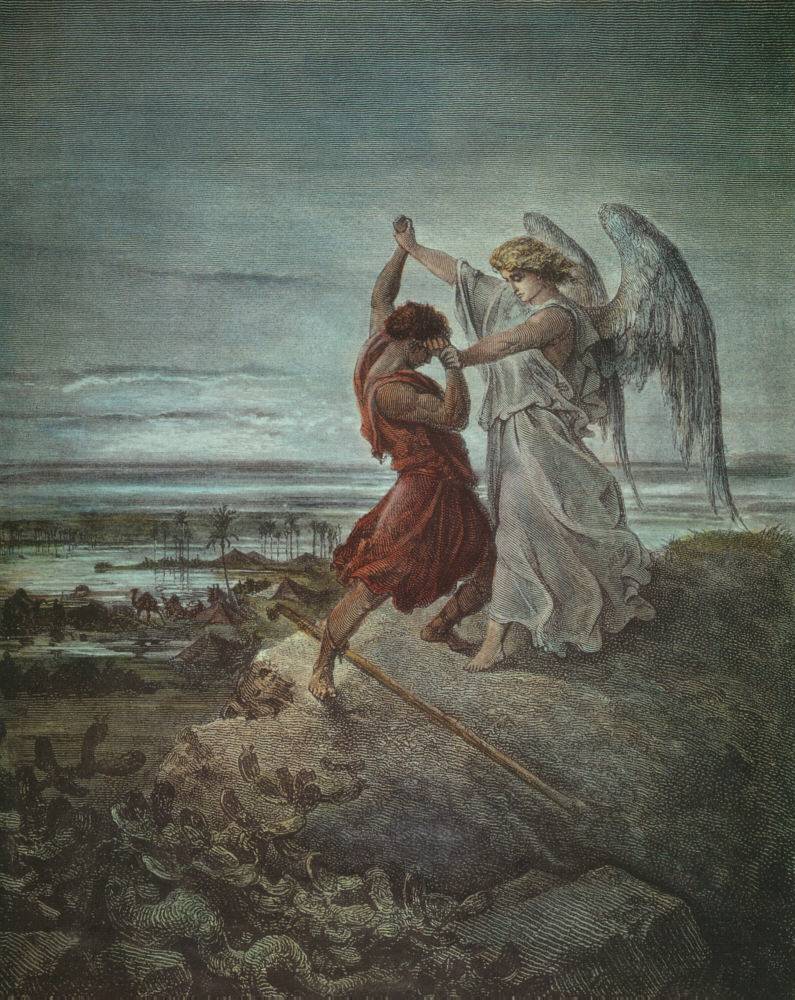
jacob-wrestles-by-dore

Genesis 32:24, Wrestled with him. Why did Elohim wrestle all night with Jacob? Why not just wound him early on and save the time and trouble?

What does this teach us about the long-suffering nature of Elohim who will continue to strive with us and our fleshy tendencies and self-reliances until we finally submit to him and recognize that only through him can we have real strength and victory, though we might end up physically lame in the process?

Why the wrestling all night “till the breaking of the day”? What does night and breaking of day represent metaphorically with regard to our spiritual walk? What does this teach us about faith, the struggles of this life and about not giving up until the very end when the blessings and dawning of a new day are about to break forth?

At the end of his struggle, Jacob received the new name of Israel (verse 28). Through this struggle, he took a quantum leap spiritually and became a new man with a new identity.

Has this ever happened to you? Don’t we progress spiritually only out of crisis? “There is no gain where there is no pain,” as the saying goes.

What were the results of Jacob’s struggle? Verse 32 says of Jacob, “as he passed over Penuel the sun rose upon him, and he limped upon his thigh.” Penuel means “faces of El.” Taking a little poetic license (at the drash, allegorical or third level of Hebraic biblical interpretation) here, we could paraphrase this verse as follows: “As Jacob emerged out of the darkness of self-reliance, the face of Elohim shined favorably upon him as he no longer relied on the flesh.” Pause to reflect on this for a moment and take quick stock of your spiritual walk in the light of these words.

Who are some other notable Biblical characters besides Jacob who struggled with trying to achieve their divine mission through human means? How about Abraham with Hagar, Moses when he murdered the Egyptian, Samson, or Peter when he cut off the ear of the high priest’s servant? Can you think of some others? What did these men learn about walking in the Spirit versus walking in the flesh?


18 Attributes of a Demonic Spirit

demon-21446002

Mark 5:1–20, The Gadarene demoniac. This encounter between Yeshua and this demon-possessed individual teaches us about the characteristics of one who is tormented or even possessed by an evil, unclean spirit.

  1. One with an unclean spirit is “unclean in thought and life” (Mark 5:2).
  2. Such an individual may have a pre-occupation with things relating to death and dying (Mark 5:3).
  3. They may possess superhuman strength thanks to the aid of the demon in him (Mark 5:4).
  4. They may act wild, and unable to be restrained (Mark 5:4).
  5. They may be prone to fits of shouting loudly (Mark 5:5), shrieking or making a shrill cry (Mark 9:18).
  6. They may cut themselves, or resort to other acts of self-mutilation (Mark 5:5) or self destruction (e.g. burning oneself by fire, Matt 17:15; Mark 9:22), or attempts at drowning (Mark 9:22).
  7. The demoniac may possess supernatural knowledge (Mark 5:7).
  8. The demon can speak through the demonized person (Mark 5:7), or cry out (Mark 9:26).
  9. A demonic spirit wants to possess or inhabit something; if not a human, then an animal (Mark 5:12), or a house, an objects like idols or books (Acts 19:19).
  10. They may be clothed improperly or scantily (Mark 5:15).
  11. They will not a possess a “right [sound, self-controlled, sober]” mind (Mark 5:15).
  12. A demonic or an unclean spirit may cause convulsions or spasmodic contractions, bodily contortions within a person, or cause a person to be hurled to the ground (Mark 1:25; 9:18, 20), wallowing or rolling around on the ground (Mark 9:20).
  13. Epileptic-type seizures or madness can be some symptoms of demon possession (Matt 17:15).
  14. A demoniac may foam at the mouth (Mark 9:18, 20).
  15. A demoniac may grind or gnash of the teeth (Mark 9:18)
  16. A demonic spirit can cause one’s body to waste away, dry up or become rigid (Mark 9:18).
  17. Demonic spirits can accompany people as they come into the congregation of YHVH (Mark 1:23; Luke 4:33).
  18. A demonic spirit can make one to be mute or unable to speak (Mark 9:17).
 

What Is Jacob’s Trouble and What Are the End-Times Prophetic Implications?

jacob-meets-esau

Genesis 32 is the story of Jacob’s return to Canaan after having been exiled from his homeland for 20 years. His exile occurred after he obtained his divinely promised birthright through shrewd if not unscrupulous means from his brother Esau resulting in his having to flee Canaan for fear of his life due to Esau’s vengeance. Jacob found refuge in the region of Babylonia at his Uncle Laban’s home where he married Laban’s two daughters, Leah and Rachel. Eventually, Jacob had to flee Babylon with Laban in angry pursuit. As Jacob and his family are returning to Canann, they encounter Jacob’s brother Esau who, along with his small army, physically stood in Jacob’s way from entering the land of his promised inheritance and wanted to kill Jacob.

This account is not only the story of Jacob’s personal, spiritual struggles, but it also has end times prophetic implications relating to the regathering out of exile of the twelve tribes of Israel (the Jews and the Christians) and their return to their Promised Land in Israel under Yeshua their Messiah at his second coming.  The Scriptures refer to this as Jacob’s Trouble (see Jer 30:7).

The Jewish sages believe that the encounter between Jacob and Esau (no doubt informed by Jeremiah’s prophecy) is prophetic in nature and will happen again in the end times, but this time on a much larger scale and this time involving the numerous descendants of Israel and Esau. The end-times Continue reading


New Video: Gen 32:3–36:43 Parashat Vayishlach


This is a gospel-oriented Torah study guide. Our goal is to connect the good news of Yeshua the Messiah (the gospel message) to its Hebraic, pro-Torah roots or foundations. The information given here is more than head knowledge. Understanding and wisdom (the right application of knowledge that is based on truth) is taught thus making biblical truth practical, relevant and applicable to your daily life. The truths of the Bible not only have the power to transform your life here and now for the better, but eventually to take you past the veil of death and into eternity.

This Torah study is subdivided in sections by topic in a magazine format thus making it easy to watch at several sittings.

May you be blessed as you watch this video.

For a free, printable adult and youth Torah study guide on this Torah portion (parashah), please go to http://www.hoshanarabbah.org/parshiot.html