Most of this week’s blog discussion points will be on these passages. If you have general comments or questions on the weekly Scripture readings not addressed in a blog post, here’s a place for you to post those. Just use the “leave a reply” link below.
The full “Read Through The Scriptures In A Year” schedule, broken down by each day, can be found on the right sidebar under “Helpful Links.” There are 4 sections of scripture to read each day: one each from the Torah, the Prophets, the Writings, and from the Testimony of Yeshua. Each week, the Torah and haftarah readings will follow the traditional one-year reading cycle.
Weekly Blog Scripture Readings for 8/11/19 through 8/17/19.
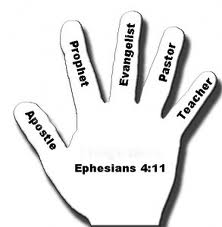
Did the so-called fivefold ministry offices cease after the New Testament era, or do they continue function in the body of Yeshua to this day? In our day, most people agree that the ministries of the evangelist, teacher and pastor are still in operation today, but many say that the offices of apostles and prophet have ceased to operate. Yet in verse 13, we read that these offices would operate “till we all come to the unity of the faith and of the knowledge of the Son of Elohim, to a perfect man, to the measure of the stature of the fullness of Messiah…,” which hasn’t happened yet. Therefore, it would stand to reason, that all these ministry offices are still needed today.
He. It must be kept in mind that Yeshua is the epitome of and over all (authoritatively) ministry offices that follow in this verse. When we ascended to heaven, he spread his own abilities out, as it were, among those he called to be leaders over his spiritual flock below (see Eph 4:8). Collectively, these ministry offices should be doing the work that Yeshua himself would be doing were he here on this earth presently.
Apostles. In addition to the twelve original apostles (including Matthias who replaced Judas Iscariot, Acts 1:26), here is a list of the other apostles, which might be called Yeshua’s ascension-gift apostles (Eph 4:8):
James, the half brother of Jesus and leader of the Jerusalem church (Gal 1:19)
Barnabas (Acts 14:14)
Paul (e.g. Acts 14:14)
Apollos (1 Cor 4:6–9)
Timothy and Silvanus (1 Thess 1:1 and 2:6)
Epaphroditus (Phil 2:25)
Titus, and other un-named apostles—at least two (2 Cor 8:23)
Andronicus and Junia (Rom 16:7)
Yeshua is the Apostle and High Priest of our confession (Heb 3:1)
Including Judas Iscariot, this makes a total of at least 26 apostles who are mentioned in the Testimony of Yeshua.
With this list in mind, it now becomes logical to divide the apostles into at least three categories or level. Yeshua is the Chief Apostle. The original 12 that Yeshua appointed (minus Judas Iscariot) and possibly Paul would be the next tier. They are the foundational apostles. Yeshua mentions that the 12 apostles will rule over the 12 tribes of Israel and that the 12 foundations of the New Jerusalem are named after the 12 apostles (Rev 21:14). It seems that Yeshua commissioned these foundational apostles in direct, face-to-face encounters. After this come the lowest tier or ascension-gift apostles (Eph 4:8), which are all the other apostles.
Apostle Defined
Apostolos means “a delegate, messenger, one sent forth with orders.” According to the Theological Dictionary of the New Testament, apostolos originally was a military or naval term relating to an expeditionary force that was sent out or dispatched. It came to be applied to a band of soldiers, or colonists and their settlement as well as to the commander of the expedition or an admiral. A common feature of all the definitions of the word was its passive character. In none of the definitions is there any suggestion of initiative on the part of the apostle. The word denotes the quality of being sent. In the New Testament, apostolos always denotes a man who is sent with full authority and is synonymous with the Hebrew word shaliach as is evidenced in John 13:16. Here is a legal term relating to one who is lawfully charged to represent the person and cause of another. This meaning is confirmed by the juxtaposition in this verse of the Greek words doulos/kurios and apostolos/pemptsas. Here the servant (doulos) stands under full jurisdiction of his master (kurios) and derives from him all that he is. Apostolos also denotes the “commissioned representative of a congregation” (Acts 13:2ff). Finally, the term signifies the “bearers or proclaimers of the NT message.” The latter meaning applied to not only the original twelve apostles that Yeshua commissioned and sent out, but to the first Christian missionaries or their most prominent representatives (Acts 14:4, 14). According to Paul, the apostles (1 Cor 12:28f) aren’t officials of the congregation, nor the chief of such officials, but are officers of Yeshua by whom the church is built (ibid. vol 1, p. 407ff).
Deuteronomy 3:22, Must fear them. The Scriptures reveal an interesting, and counter-intuitive spiritual principle that humans have a hard time wrapping their heads and hearts around. It is this: When we fear Elohim, we won’t fear our enemies. When we don’t fear Elohim, we will fear and be tormented by our enemies.
What is it to fear Elohim? It is to walk in the wisdom of his commandments or his loving instructions in righteousness. Rebellious humans have a hard time doing this, since their sin nature is opposed to submitting to YHVH legal instructions (Jer 17:9; Rom 8:7).
Once, however, one gets their sin nature under control with the help of Yeshua, and one begins to love and fear Elohim by keeping his commandments, suddenly the physical things they once feared no longer have any hold on their hearts and minds.
Having defeated the greatest enemy of all—one’s sin nature—with Elohim’s help effectively empowers and emboldens the saint. He no longer fears what other people think about him because, in the long run, all that matters is what Elohim thinks. He no longer is concerned about his future physical needs and well-being because Elohim promises to take care of us when we trust and obey him. He no longer fears those who attack and persecute him, because he knows that with Elohim’s help, he can overcome any enemy.
So now what is there left to fear? Death, which is the mother of all fears? No, for at the end of one’s life, the overcoming saint has the ultimate victory in his possession—victory over death, which is eternal life!
Deuteronomy 2:31,Begin to possess [the Promised Land]. Possession of the Promised Land was a process—a journey, at times a difficult one. This concept is as true for us as much as it was for the children of Israel. The idea in mainstream Christianity that when you receive salvation at the beginning of your spiritual walk and that’s all there is to possessing or entering the kingdom of Elohim is a seriously incomplete one. It doesn’t fit the biblical models or the teachings of the apostolic writers about the need for the believer to persevere and overcome to the end to receive his ultimate eternal inheritance.
When this verse states that Israel“began to possess [the Promised Land],” what does this mean? Why didn’t YHVH give the Promised Land to Israel all at once? What did Israel have to do to “possess” the land? What do we have to do to possess our spiritual inheritance? Does YHVH just hand it to us, or do we have to persevere, overcome and fight for it?
Leaving Egypt is a picture of a believer’s initialsalvation, while entering the Promised Land is a picture of a believer’s ultimate salvation involving his glorification or the redemption of his physical body and being granted eternal inheritance at the resurrection. It’s also a picture of rewards for obedience. Between the time of leaving Egypt and entering the Promised Land, there was a 40 year-long journey, which is a picture of our time as physical humans on this earth with all of its ups and downs, trials, victories and so on.
Much more could be said on this subject as the apostolic writers show us. Suffice it so say, the idea that the mainstream church propagates that receiving salvation is a one time event like getting your ticket punched to a movie theatre, amusement park ride or train station falls woefully short of the biblical truth about walking out a righteous and sanctified life. The failure to understand this has led many people to become discouraged and to fall away spiritually.
Yes, the initial steps in the process of salvation are relatively easy, but then there’s repenting of sin, learning how to live a sanctified life, becoming obedient to the commands and lordship of Yeshua, overcoming one’s sin nature, and using one’s spiritual talents to help advance the kingdom of Elohim. All of these are aspects of the redeemed believer’s journey through the wilderness of life en route the Promised Land of our spiritual inheritance, and how we do will help to determine the levels of one’s eternal rewards. All of these things are precursors and steps in the process to actually receiving eternal life and a resurrected glorified body.
The children of Israel’s exodus from Egypt and 40 years journey to the Promised Land is a picture of this process and all the steps in between.
The idea that the saint can have it all here and now is not a biblical one, but an ear-tickling message promoted by hireling gospel peddlers and corporate church merchandizers who have something to sell you. Beware of these false and misguided teachers who refuse to tell you the whole truth as presented in the Bible! Let the buyer beware.
When this verse states that Israel“began to possess [the Promised Land],” what does this mean? Why didn’t YHVH give it to Israel all at once? What did Israel have to do to “possess” the land? What do we have to do to possess our spiritual inheritance? Does YHVH just hand it to us, or do we have to persevere, overcome and fight for it? Leaving Egypt is a picture of a believer’s initialsalvation, while entering the Promised Land is a picture of a believer’s ultimate salvation involving his glorification or the redemption of his physical body and being granted eternal inheritance at the resurrection. It’s also a picture of rewards for obedience.
Much more could be said on this subject as the apostolic writers show us. Suffice it so say, the idea that the mainstream church propagates that receiving salvation is a one time event like getting your ticket punched to a movie theatre, amusement park ride or train station falls woefully short of the biblical truth about walking out a righteous and sanctified life. The failure to understand this has led many people astray spiritually. Yes, the initial steps in the process of salvation are relatively easy, but then there’s repentance, the sanctified spiritual walk, obedience to the commands and lordship of Yeshua, overcoming one’s sin nature, and the use of spiritual talents all of which determine the levels of eternal rewards. All of these things are precursors and steps in the process to actually receiving eternal life and a resurrected glorified body.
The children of Israel’s exodus from Egypt and 40 years journey to the Promised Land is a picture of this process and all the steps in between.
The idea that the saint can have it all here and now is not a biblical one, but an ear-tickling message promoted by hireling gospel peddlers and corporate church merchandizers who have something to sell you. Beware of these false and misguided teachers who refuse to tell you the whole truth as presented in the Bible! Let the buyer beware.
Deuteronomy 2:2–9, Edom. Edom (another name for Esau, brother of Jacob) and Moab and Ammon (sons of Lot) were blood relatives of the Israelites. Often those of our own family will stand in our way as we go in to possess our spiritual, Elohim-given inheritance and destiny.
What is the lesson from this passage of scripture on how to deal with less-than-cooperative family members who don’t acknowledge Elohim much less his spiritual calling on your life? Are we to make war with them? Are we in any way to be beholden to or dependent on them for our physical needs? If we became dependent upon them could this help or hinder our chances of entering our own spiritual destiny or “Promised Land” that YHVH has for us? Does YHVH desire our families to be saved? (See Acts 16:31; 2 Pet 3:9.) How can we be a light to our families if we are fighting and attempting to destroy those who would spiritually stand in our way? These aren’t easy questions to answer. One thing is certain though. We must put serving and obeying YHVH Yeshua above allegiance to our families. Yeshua had some pretty hard words in this regard (see Matt 10:34–39).
This passage also teaches us to avoid conflicts with family members at all costs. No good can come from such confrontations. How does verse 5 start out? Now go on to read verse 6. YHVH instructed the Israelites to treat their cousins with respect and civility—almost in a business-like manner. Nowhere does Scripture tell us that we have to like our heathen family members. But neither are we to act offensively toward them. Like the Israelites when forced to encounter long lost relative, sometimes it is best to smile, be nice, but keep moving on!
Another lesson to be learned from these verses is this: Choose your battles carefully. Avoid conflicts with others if possible. Go to battle only when YHVH tells you to. Only then will you come out victoriously, for then he will be fighting on your side and not against you. Latter in this chapter, we see that YHVH instructed the Israelites to engage certain nations and defeat them. When Israel obeyed him and fought only his battles, what was the outcome? (Read 2:24–3:11 cp. 3:22.)
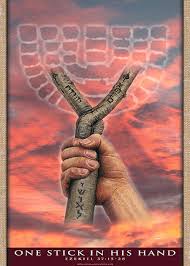
Is the commonly called “two house” or “two-stick” message” of the Bible something we should study? Are there any spiritual and prophetic benefits to understanding who the two houses of Israel are? The answer is yes. I would prefer to call it the “One House Message,” since this biblical truth involves the regathering and reunification of the Jews (the house of Judah) and the Christians (loosely speaking, the house of Israel or Ephraim) into one nation through Yeshua the Messiah. This is the one new man message Paul proclaimed in Ephesians chapter two. This is the great and largely overlooked truth behind the message of the gospel of Yeshua the Messiah. This is why it’s important to understand.
We will understand the deeper implications and background of the gospel message.
We will understand with whom YHVH is making his new covenant (Jer 31:31–33; Heb 8:8).
We will understand who YHVH’s chosen people really are (Deut 7:6; 14:2). They’re not just the Jewish people.
We will understand who Abraham’s descendants are who will be blessed (Gen 12:3; Gal 3:29; Rom 4:16; 9:8–11).
We will understand that non–Jews are no longer Gentiles (who are without God and hope), but are part of the commonwealth or nation of Israel (Eph 2:11–19).
We will understand who the Israel of Elohim really is (Gal 6:16).
This knowledge will give us a key to understanding much of biblical prophecy by knowing who the key players are in all the prophecies pertaining to Israel.
We will gain a true understanding of many biblical terminologies and Hebraisms.
We will understand who the lost sheep of the house of Israel are that Yeshua and his disciples came to regather (Matt 10:6; 15:24).
All forms of racism including racial superiority in the church will be eliminated as the unbiblical Jew-Gentile paradigm falls giving way to true unity within the body of Yeshua as the revelation of who the “one new man” really is arises.
Our love and esteem for the Jewish people and the modern day land of Israel will increase.
Paul says in a number of places that those who come to Yeshua are no longer Gentiles but are the children or seed (literally “sperm,” which is the meaning of the Greek word) of Abraham (Eph 2:11–19; Rom 4:16; 9:8–11; Gal 3:7, 9, 14, 28–29).
The word Gentiles as used in the Scriptures (both in the Hebrew and the Greek languages) simply means “ethnic groups or nations.” There are even many places in the Scriptures where Jews and Israelites are referred to as “Gentiles.” Despite this fact, there is no class of people called Gentiles in the spiritual body of Yeshua. Scripture uses the following terms for the redeemed of YHVH: the saints, the called out ones (or church), the body of Yeshua (1 Cor 10:16; 12:27; Eph 4:12) the one new man (Eph 2:15), sons of Elohim (Rom 8:14, 19; Phil 2:15; 1 John 3:1, 2), children of Elohim (Rom 8:16, 21; Gal 3:26; 1 John 3:10), or Abraham’s offspring (Gal 3:29), the bride (Rev 18:23; 21:2, 9; 22:17) for example, but the saints are technically and spiritually no longer Gentiles. This is a biblical fact that many in the church overlook when they refer to non-Jewish Christians as “Gentiles-Christians”. This is an oxy-moron: spiritually speaking, it’s impossible to be a Gentile and a disciple of Yeshua or a saint at the same time.
Any attempt by anyone to keep the Jew—Gentile division alive within the body of Yeshua is in effect keeping up the middle wall of partition that the Paul gave his ministry life and eventually his physical life to tearing down (see Eph 2:11–19). It is also going against the clear teaching of the Scriptures, which say that within the spiritual body of Yeshua, there is no longer Jew or Gentile/Greek (Rom 10:12; Gal 3:28; Col 3:11).
The Scriptures reveal that ultimately spiritually speaking there are only two classifications of people: Israelites and non-Israelites or Gentiles. The former has eternal life because of their relationship with the Elohim of Israel through the Messiah of Israel, while the latter group, unless they repent of their sin (i.e. lawlessness or Torahlessness, see 1 John 3:4), will burn in the lake of fire because their names weren’t written in the book of life (Rev 20:11–15).
Whenever Paul uses the term Gentiles, he is either referring to ethnicity, and not using the term as a spiritual designation, or he is using the term Gentile to mean “worldly.” In the latter case, it is a moniker referring to those who are carnal in that they act like gentiles (heathens) who are “without God and without hope” (Eph 2:12).