Blog Scripture Readings for 11-3 Through 11-9-19

Aside


Parashat Lekh L’kha — Genesis 12:1 – 17:27
Haftarah — Isaiah 40:27 – 41:16
Prophets — Joshua 15:1 – 21:45
Writings — Psalms 18:25 – 25:22
Testimony — Matthew 12:1 – 15:39

Our new annual Scripture Reading Schedule for 2019-2020 with daily readings is available to download and print. If you are still working through 2018-2019’s Scripture Reading Schedule, the link will still be available on the right sidebar under “Helpful Links”. If you are using a mobile device or tablet, the link may be below so you’ll need to scroll down instead.

Most of this week’s blog discussion points will be on these passages. If you have general comments or questions on the weekly Scripture readings not addressed in a blog post, here’s a place for you to post those. Just use the “leave a reply” link or the “share your thoughts” box below.

The full “Read Through The Scriptures In A Year” schedule, broken down by each day, can be found on the right sidebar under “Helpful Links.” There are 4 sections of scripture to read each day: one each from the Torah, the Prophets, the Writings, and from the Testimony of Yeshua. Each week, the Torah and haftarah readings will follow the traditional one-year reading cycle.

Weekly Blog Scripture Readings for 11/3/19 through 11/9/19.


The Hymn of a Ponderosa Pine

A year ago while in the high desert of Central Oregon during the Feast of Tabernacles (Sukkot), I wrote a hymn about a giant ponderosa pine tree, while sitting on the banks of the Deschutes Rivers. As I gazed at and pondered it, I saw it singing a silent praise hymn to the Creator, the Almighty Yehovah Elohim. You can find this psalm below.

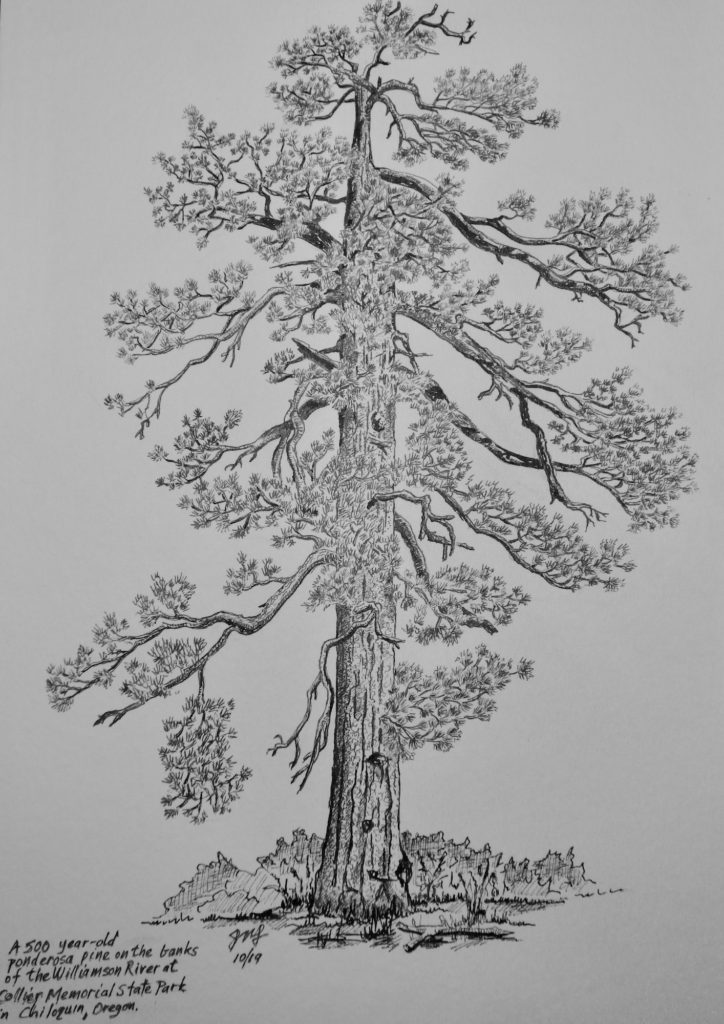
This year, I found myself at another river celebrating Sukkot with my wife, this time in southern Central Oregon being amazed by another giant, majestic and ancient ponderosa pine tree. This time, I made a pen and ink drawing of this 500-year-old behemoth.

Here are my poem and my pen and ink drawing showcased together..

Here are a couple of pictures of the actual tree.

The inspiration of this poem and its birth occurred while sitting next to the Deschutes River in La Pine, Oregon, during Sukkot (the Feast of Tabernacles) in 2018, while gazing admiringly at the mighty, towering ponderosa pine trees (Pinus ponderosa) that stand as sentinels gracing its banks. At the same time, the words of the First Psalm were floating around in the author’s mind.

La Pinus1 ponderosa2 at De Falls3 River waters4;

A weighty5 giant pondering6 heavenly matters. 

Rejecting your former blackjack7 past,

Basking now in heaven’s light at last.

Arms and trunks are tanned a bright orange hue8,

With muscular limbs upraised in praise to You9

To the Messiah, the radiant Sun of Righteousness10!

O piney tree by the rivers of water,

With crown aimed high—you’re a leafy psalter11.

The still small breath12 of heaven’s heart,

Strums happily your needley harp,

To all who’re attuned in full amaze—

And hear the Spirit’s psalm of praise.

La Pinus ponderosa by De Falls River’s edge—

Precariously planted on the sloping ledge?

Gravity inexorably can’t make you slip,

As you mock the current’s undercutting grip13.

Against the storms you’re resolute, 

Exempt from its slavish tribute.

The desert’s torrid breath can’t make you wilt14.

It underestimates how well you’re built.

For deeply rooted are your hairy feet,

As they sate their thirst from the summer’s heat14.

Anchored firmly against the gale.

From brutal breezes that do assail.

Resting on the solid Rock15,

Heat and wind they can’t you shock16.

To the bank of Truth17 you tenaciously cling,

Imbibing the Spiritual life14 the waters bring.

As Heaven’s wind18 fills your leafy sail,

You clap your hands19 as me you regale.

O Pinus preacher at the River Deschutes,

You cry aloud from roots to shoots.

A riveting sermon loud and clear

To open ears both far and near.

Quietly praising the King above,

Silent shouting of heaven’s love!

Puzzle letters from your massive girth20,

A visible testament fall to the earth.

Of heaven’s radiance they joyously glow,

Trampled by naive hikers there below.

But when combined these letters spell,

The truth of heavens evangel21.

This tree’s a wellspring of worshipful praise,

In every tongue with limbs upraised!

La Pine’s1 ponderosas who grace your river blue,

There is much for me to learn from you.

Your arms point upwards in heaven’s praise,

Past you to Him, my eyes I’ll raise22!

This is my heartfelt prayer to You:

With Your Spirit and Truth23 my heart imbue.

From Your tree of life24 I’ll always feed

Producing an abundance of living seed.

May I be too a tree of life,

That my heart-would25 with your words be rife.

Amein.

Footnotes—The Poem Explained

Continue reading
 

Unveiling the Evil Forces Behind Babylon Then and Now

Genesis 10:8–9; 11:1–9, Nimrod…Babel .Comparisons can be made between Nimrod and his rebellion against Elohim (and apostasy from the faith of his fathers) with that of the man of sin (literally, “man of Torahlessness” in 2 Thess 2:1–12) in the end times. We can also compare the formation of Babylon and the building of the Tower of Bavel to the end-time one-world system called Babylon the Great (Rev 18). For the present, let’s explore how Satan, the devil-serpent, has been the motivating force behind collectivization and organization of humans in his rebellion against YHVH Elohim, the Creator. 

Secular Humanism:
The Devil’s Original Lie and the Religion of the New World Order

We are presently watching unfolding before us an epic and cosmic struggle between the forces of evil and good. The world system or cosmos of the devil is pitted against the unalterable and immutable plans, purposes and Word of the sovereign Creator of the universe, YHVH Elohim. 

At the center of this battle is man. He was created in the image of Elohim and destined to become a son of Elohim. The Adversary, on the other hand, wants to make man into his image—a son of perdition. Man has to choose whom he will follow. To sit on the sidelines, ignore the battle and not to choose is, by default, to choose the side of the devil. Man must carefully choose his course of action, for the consequences are eternal. Inaction—not to choose—is to ignore the battle and by default to choose the side of the devil.

That battle will reach its nexus at the end of the age, just prior to the return of the Messiah. Will man fall for the lies of the counterfeit Messiah, or remain faithful to the Truth and Word of the real Messiah? To resist the deceiver and not fall for his lies one must know the face of his enemy: his tactics, game plan and the nature of his deception. The lies he will use in the end times to woo the multitudes to his side are not new. The tactics and game plan are the same, for it has never changed from the beginning. What are the lies he will use to seduce man to his side of this struggle? When did the deceiver first ply his trade? The answers are in the Book of Life.

The Big Lie and Its Origin

The Scriptures Speak of a “Lie”

There are those who turn from the revealed truth of Elohim and turn to believing a lie as Romans 1:24–25 states:

Wherefore Elohim also gave them up to uncleanness through the lusts of their own hearts, to dishonor their own bodies between themselves: who changed the truth of Elohim into a lie, and worshipped and served the creature more than the Creator, who is blessed for ever. Amen

The Man of Sin/Lawlessness will cause many to turn from YHVH’s truth and believe a lie as 2 Thessalonians 2:7–12 states:

For the mystery of iniquity does already work: only he who now restrains will do so, until he be taken out of the way. And then shall that Wicked be revealed, whom YHVH shall consume with the spirit of his mouth, and shall destroy with the brightness of his coming: even him, whose coming is after the working of Satan with all power and signs and lying wonders, and with all deceivableness of unrighteousness in them that perish; because they received not the love of the truth, that they might be saved. And for this cause Elohim shall send them strong delusion, that they should believe a lie: that they all might be damned who believed not the truth, but had pleasure in unrighteousness.

Outside of the New Jerusalem will be those wicked ones who believe a lie as the Book of Revelation states:

And there shall in no wise enter into it any thing that defiles, neither whatsoever works abomination, or makes a lie, but they which are written in the Lamb’s book of life. (Rev 21:27)

Blessed are they that do his commandments, that they may have right to the tree of life, and may enter in through the gates into the city. 15 For without are dogs, and sorcerers, and whoremongers, and murderers, and idolaters, and whosoever loves and makes a lie. (Rev 22:14–15)

The primary meaning of these passages is referring to those who have exchanged the truth of YHVH for a lie. But what lie? Who did Yeshua say was the father of lies (John 8:44)? The devil is, of course. So, ultimately all lies that humans believe had to have originate from those lies the devil through the serpent told the first humans in the Garden of Eden.

What Was This “Big Lie”?

Continue reading
 

Who are the lost sheep of Israel and 12 reasons why it’s important to know…

Matthew 10:6, Lost sheep of the house of Israel.The phrase the house of Israel is used 146 times in the Scriptures, and has several possible meanings depending on the context of the surrounding verses in which it is found. To help us to define this term, let’s discover its historical roots or how it originated. 

Prior to the division of the united kingdom of Israel after the death of Solomon, this phrase referred to all twelve tribes of Israel. Afterward the death of Solomon, the nation of Israel split into two nations—the Northern Kingdom and the Southern Kingdom. The latter was comprised primarily of the tribes of Judah, Benjamin and Levi, while former kingdom was comprised of the remaining tribes of Israel. During this time, the phrase the house of Israel as a reference to the Northern Kingdom of Israel was often used in contradistinction to the phrase “house of Judah” in reference to the Northern Kingdom of Israel.

In the Testimony of Yeshua, the Messiah makes reference to the “lost sheep of the house of Israel” (Matt 10:6; 15:54). To which tribes was he referring? All of them or only some of them? Elsewhere in the Testimony of Yeshua this term refers to all twelve tribes of Israel (Acts 2:36; 7:42; Heb 8:10), and in some references it refers just to the Northern Kingdom (Heb 8:8). The point here is that the context of the passage of scripture surrounding this phrase determines its meaning. 

Although this phrase can include all the tribes of Israel and not just the Jews who were largely from the tribe of Judah, in Matthew 10:6, Yeshua seems to equate the lost sheep of the house of Israel with the Jews who were living in the land of Israel in his day, and not to the rest of the Israelite tribes who were at that time scattered among the Gentile nations. It was Yeshua’s priority to take the gospel message first to the Jews in Jerusalem and Judea, and then to the rest of the world, and he expected his disciples to follow this same pattern (Acts 1:8). 

In the larger sense, the Scriptures reveal that all of YHVH’s people have been like sheep that have gone astray spiritually, every man to his own way, because of sin (Isa 53:6). So in the broadest sense, this phrase refers to all the tribes of Israel including Gentiles with which they have mixed themselves through intermarriage. 

Eventually, the gospel message is for everyone universally. Yeshua demonstrated this when, on several occasions, he ministered to non-Jewish Gentiles including preaching the gospel message to the Samaritan woman in John chapter four, the Syro-Phoenician woman in Mark chapter seven, and the Roman centurion in Matthew chapter eight.

Twelve Benefits of Understanding Who
the Two Houses of Israel Are
 

Is the commonly called “two house” or “two-stick” message” of the Bible something we should study? Are there any spiritual and prophetic benefits to understanding who the two houses of Israel are? The answer is yes. I would prefer to call it the “One House Message,” since this biblical truth involves the regathering and reunification of the Jews (the house of Judah) and the Christians (the house of Israel or Ephraim) into one nation through Yeshua the Messiah. This is the one new man message Paul proclaimed in Ephesians chapter two. This is the great and largely overlooked truth behind the message of the gospel of Yeshua the Messiah. This is why it’s important to understand.

Continue reading
 

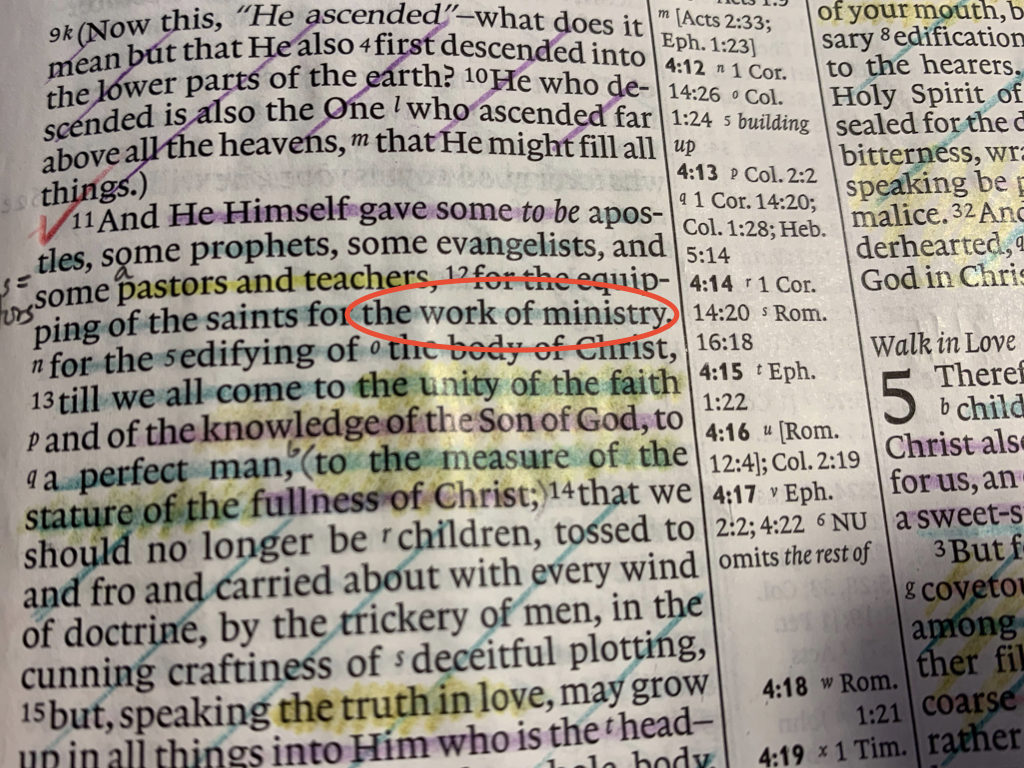
Have you been called into the ministry? Here are you marching order…

Matthew 10:5–42, Yeshua sent out. The Commissioning of the Twelve Disciples.

Do you have a ministry call on your life? If you’re a disciple of Yeshua, then you should. Yeshua has commissioned every saint to help fulfill the great commission to spread the gospel to the world. Below are some basic guidelines on how to know that you’re in the perfect will of Elohim for the ministry to which he has called you.

There are several steps one must go through when receiving a ministry commission from Yeshua. The following steps are based on Yeshua’s commissioning his disciples in Matthew 10. As modern-day disciples of Yeshua, we need to take these into consideration when assuming a ministry role. These are the requirements of his laborers who will work in his harvest field (see Matt 9:37 for context).

  • Yeshua calls one into the ministry (Matt 10:1). Some people go into the ministry as a career like they would any other job by their own choice. This is unbiblical. Involvement in Yeshua’s ministry is by his invitation only. 
  • After calling one into the ministry, there is a time of training. This is the biblical norm. For some, it was five years (e.g. the Levites), or forty years (Moses and Joshua). David had a period of training before becoming king, as did Paul the apostle and Elisha. For Yeshua’s disciples, it was three-and-one-half years. The Matthew ten account is part of the disciples’ training program.
  • After calling them, Yeshua then gave his disciples their marching orders by telling them where to go and not to go (Matt 10:5–6). They were to go to the lost sheep of the house of Israel, although, later on Yeshua instructed them to go the Gentiles. Paul even taught in several places that the lost sheep of Israel were to be found among the Gentiles, as the ancient biblical prophets predicted they would be.
  • Yeshua then instructed them what their ministry was to be (Matt 10:7–8). They were to do exactly as Yeshua himself did: preach the gospel of repentance and the kingdom of Elohim, and to heal the sick.
  • He then gave them instructions pertaining to travel arrangements—what they were to take on their journey, where they were to stay, and how to act when encountering resistance (Matt 10:9–15). This included lodging, food and financial remuneration. On the latter point, today many itinerant evangelists flagrantly violate Yeshua’s strictures in this regard and have become nothing more than travelling salesmen and peddlers always with their hands out for financial gain. They have simply become merchandisers of the gospel, sadly.
  • Next, Yeshua warned his disciples against persecution (Matt 10:16–26). He assumed that persecution would be a natural result of preaching the gospel. Conversely, it could be assumed that something is out of spiritual order when one preaches the gospel and persecution doesn’t occur. 
  • Yeshua then instructed his disciples about fear—who to fear and not to fear. They were to fear YHVH, not men (Matt 10:27–31). This is an important point, since preaching the gospel to the lost can be intimidating, which is why so few do it. Yeshua promises divine protection for his disciples who preach the gospel as he has instructed (Matt 10:29–30).
  • The workman is worthy of his hire. Yeshua promises spiritual rewards to those who preach the gospel (Matt 10:32–33).
  • For those who are called into Yeshua’s ministry, he demands total commitment. One must put Yeshua first above all other human relationships. For this, expect rejection from family and friends (Matt 10:34–39). 
  • Again, Yeshua holds out the promise of spiritual rewards for those who heed his call to become a disciple who works in his spiritual harvest field (Matt 10:39 cp. Matt 9:37).
 

Half of millennials and 75% of Gen Zers have left their job for mental health reasons

From CNBC at Half of millennials and 75% of Gen Zers have left their job for mental health reasons.

This article raises a few questions that need to be asked? Could this trend among our young people have anything to do with…

  • The purposeful and planned secularization of our society over the past few decades by the God- and Bible-hating spirit of Antichrist secular humanists, who have determinately attempted to toss Elohim and his Word out of all aspects of our society?
  • The rise of abortion that has devalued the meaning of life and has murdered the brothers and sisters of many young people leaving them to feel like survivors of a mass genocide by unloving and murderous parents?
  • The rise of the necessity of having two working parents in the home and two income families to survive in the wake of the rising costs of living (and taxation due to the rapid growth of big government and the welfare state), thus leaving no one in the home to raise the children, thus leaving them feeling disconnected and unpainted and unloved?
  • The decline of biblical morality and the preaching of the transforming power of the gospel in the church?
  • The rise of materialism in the corporate church and the hypocrisy of many so-called Bible preachers and teachers who have brought the Word of Elohim into disrepute due to their shameful and unbiblical lifestyles?
  • The rise in the power of the internet along with electronic devices and social media that distract, inoculate people against, brainwash and stupefy people away from the deeper and more meaningful activities and issues of life?

PUBLISHED FRI, OCT 11 201910:43 AM EDTUPDATED TUE, OCT 15 201911:24 AM EDTTodd Wasserman@TODDWASSERMAN

KEY POINTS

  • A recent study by Mind Share Partners, Qualtrics and SAP reveals that half of millennials and 75% of Gen Zers have left a job for mental health reasons.
  • In addition, the American Psychological Association found the percentage of people dealing with suicidal thoughts increased 47% from 2008 to 2017.
  • Companies like Cisco, which claims that 7% of its U.S. workforce is accessing some form of mental health and substance abuse treatment, is confronting the issue head-on, with several programs available to its 75,000 employees and 11,000 managers.
stressed female worker with pile of folders

Christopher Robbins | Photodisc | Getty Images

Cases of burnout have been increasing at an alarming rate in recent years among millennials and Gen Zers. It’s a growing problem in today’s workplace because of trends like rising workloads, limited staff and resources and long hours.

It’s no surprise, then, that a recent study by Mind Share Partners, Qualtrics and SAP reveals that half of millennials and 75% of Gen Zers have left a job for mental health reasons.

Continue reading
 

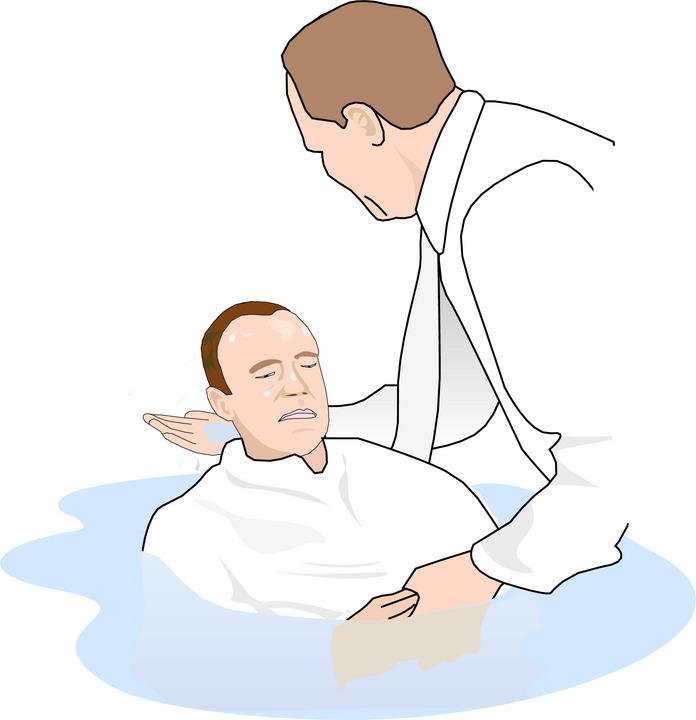
Understanding the Biblical Ritual of Water Immersion from a Hebraic, Whole Bible Perspective

To understand the biblical ritual of water baptism for the remission of sins, which is one of the first acts of faith that a new  disciple of Yeshua must take as he begins his spiritual walk (Acts 2:38; Matt 29:19; Mark 16:16), we must first define our terms, and then we can look into the biblical Hebraic origins of this ancient rite to discover the spiritual relevance and significance of it to a modern disciple of Yeshua the Messiah. 

So what is immersion or baptism? The traditional Hebrew word for immersion is mikveh (or mikvah), which literally means “a gathering of waters.” Next we have the Hebrew word tevilah, which is analogous to the New Testament Greek word baptidzo from which the English word baptize derives. Tevilah means “immersion or baptism in water.” So technically, when one is baptized for the remission of sins, one does a tevilah at a mikvah

Baptism is an ancient Hebrew custom that carried over into the apostolic era as sanctioned by Yeshua himself. What are the origins of this ancient custom, and what is its significance and applicability to a modern follower of Yeshua the Messiah?

Tevilah is an ancient custom that goes back to the Levitical or Aaronic priesthood. There YHVH Elohim required the priests to wash themselves in water at the bronze laver in the Tabernacle of Moses before they were allowed to perform their ministerial duties before YHVH Elohim. This was the third step in the seven step process of consecrating a new priest (Exod 29:4). After that, they confessed their sins over a bull, which was then sacrificed (Exod 29:10–11, the fifth step), then Moses anointed them with oil (the sixth step, Exod 29:21). These seven steps are a prophetic picture showing us how one comes to faith in Yeshua the Messiah by confessing his sins, accepting Yeshua’s sin-atoning death on the altar of the cross, then being immersed in water as a sign of spiritual cleansing and rebirth, and then receiving the oil of Elohim’s Spirit consecrating them for becoming part of the royal priesthood of Elohim (1 Pet 2:9; cp. Rev 1:6; 5:10; 20:6). After the initial cleansing ceremony for the consecration of a new priest, YHVH also instructed the priests to wash each time they come into the tabernacle to serve him (Exod 30:18–21). This ritual cleansing was so important that if the priests of old failed to come into the presence of Elohim without first washing, the priest was sentenced to death (v. 20). This step teaches us that once we come to faith in Yeshua, we must be continually being washed in the water of Elohim’s word (Eph 5:26) and the blood of Yeshua to keep us cleansed from the defilement of ongoing sin (Rev 1:5; 1 John 1:7–9), lest we die in our sins. Thus, the consecration process for service to YHVH that the priests went through during the time of Moses is a prophetic picture of what a one must also go through to become a disciple of Yeshua the Messiah; therefore, baptism is a picture of spiritual cleansing and consecration or being set-apart (from the world) for spiritual service to Elohim. This concept is elucidated on in various places in the Testimony of Yeshua (the New Testament).

Continue reading