Listen to your fathers, so your ashes won’t be trampled on!

Genesis 50:11, Beyond the Jordan. Beyond is the Hebrew word eber meaning “across.” This was the roundabout way of reaching Machpelah. The Jewish and Christian commentaries I have studied don’t give a good reason for Jacob’s burial entourage taking this most indirect route to the burial cave of the patriarchs. It’s possible that Jacob was, out of faith in the promises of Elohim, prophetically tracing the steps that his descendants would take several generations later in entering the Promised Land. It’s almost as if Jacob was showing the future generations of Israelites the route he wanted them to take from Egypt to the Promised Land to fulfill biblical types and shadows.

If Jacob’s intent was to show future generations of his descendants the route to enter the Promised Land, this begs a question for us. Do you have righteous parents? How about righteous spiritual fathers—the fathers of our faith such as the biblical apostles and prophets, Yeshua himself, and, of course Moses and the patriarchs? They have laid out the route for us to take to reach the Promised Land of our spiritual inheritance—the kingdom of Elohim or heaven. Are we following this path, or have we chosen another path? 

Malachi was the final prophet to close out the Old Testament or Tanakh before the coming of the promised Messiah. He uttered a strong warning to all who have ears hear and a heart to understand lest the fiery judgments of YHVH Elohim come upon you and your ashes be trampled under the feet of the righteous.

Remember the Torah-law of Moses, My servant, Which I commanded him in Horeb for all Israel, With the statutes and judgments. Behold, I will send you Elijah the prophet Before the coming of the great and dreadful day of YHVH. And he will turn The hearts of the fathers to the children, and the hearts of the children to their fathers, Lest I come and strike the earth with a curse. (Mal 4:4–6)

These are the final warning words and wise admonitions that close out the Tanakh. Let’s heed these wise words and turn our hearts back to the righteous fathers of our faith. Maybe they knew something that we don’t—the way to Elohim!


 

John the Baptist: Chop down that tree of religious pride!

And now also the axe is laid unto the root of the trees: every tree therefore which bringeth not forth good fruit is hewn down, and cast into the fire. (John the Baptist in Luke 3:9)

Luke 3:7–17, John takes an ax to the tree of religious pride. What’s really going on in this exchange between John the Baptist and the religious folks of his day? Let’s step back and look at the bigger picture.

YHVH sent John to prepare the way for Yeshua the Messiah. As if he had a giant ax in his hand (Luke 3:9), his preaching was aimed at chopping down the tree of human pride, misdirected religious zeal and lack of love for one’s neighbor of which these Torah-obedient Judeans were guilty. John spared no words in forcefully commanding them to repent of their sins. 

In our day as we await the second coming of our beloved Messiah, are many of us not guilt of the same sins as those who went out to hear John the Baptist’s preaching? How many of us have unknowingly exchanged our love for Yeshua and his gospel message, and a love for our neighbor for a self-righteous and legalistic Torah-obedience along with a devotion for rituals and traditions of men? How many of us are proud of our obedience, while sneering at those who aren’t walking in the light of Truth that we have? How many of us would rather argue, split and divide over doctrine rather than reach out to a lost and hurting persons regardless of his or her beliefs. What does John have to say about this? Let’s hold up the same mirror of the Word and heart of Elohim into which John forced the people of his day to look to see what we really look like. Then let’s ask ourself the following question: is this the bride that Yeshua the Messiah really wants to come back for?

The multitudes of Jews had to make the long, hot and arduous journey through the Judean mountains down to the Jordan River, which was the lowest spot on earth, to hear John the Baptist, who was the latest fad preacher to come on the scene. However, when they arrived at his lonely wilderness pulpit, instead of stroking their egos by complimenting them for their religious zeal, he excoriates them and calls them a brood of vipers. John confronts them by saying that if they don’t repent, the fires of YHVH’s judgment will consume them (John 3:7–9). John’s preaching pierces their hearts, and lays them low spiritually. In a proper response, they ask him what he expects them to do (John 3:10). John then preaches a message of social justice involving giving to the poor, being fair and honest in one’s business dealings, and if one is a government worker, then treat the citizens one serves with respect (John 3:11–14).

Continue reading
 

The Law of YHVH or the Law of Moses?

Luke 2:24, Law of the Lord/YHVH. This phrase is found only three times in the Testimony of Yeshua—here and in vv. 24 and 39. The same phrase is additionally found 18 times in the Tanakh and obviously refers to the Torah (e.g. Pss 1:1; 19:7; 119:1). Meanwhile, the phrase the law of Moses is found a similar number of times in the Bible: 15 times in the Tanakh and seven times in the Testimony of Yeshua. Obviously the phrases the law of YHVH and the law of Moses are synonymous terms in that they refer to the same thing: the Written Torah. 

From the obvious meanings of these two terms, we learn that YHVH Elohim is the divine source or origination of the Torah, while Moses was merely the one who first wrote it down or codified it, and as the leader of the nation of Israel, he administered it. 

In light of these facts, it is interesting, if not ironic, how the mainstream church chronically refers to the Torah as “the law of Moses,” when Scripture refers to the Torah as “the Torah of YHVH” the same number of times less one. The mainstream church’s choice of one term over the other seems to reveal, sadly, its apathy, if not, at times, its outright antipathy, toward YHVH’s Torah. To justify this ungodly attitude, it has chosen to use the term that casts the Torah-law of Elohim in the most negative light possible by inferring that its source is man and not Elohim. This furthermore underscores the truth of Paul’s words in Romans 8:7 about the carnal mind of man being at enmity with the laws of Elohim in that it refuses to be subject to them.


A Gift for Yeshua: Why I Love Him—Reflections on His Nativity

In December, many people think of the birth of Jesus (Yeshua). Most people who are knowledgable know that he wasn’t born in December, but in the early fall. But nine months before the actual time of his birth puts us at the end of December when Yeshua was conceived—when the life of our Savior began in Mary’s womb. It was at this time that the heaven-sent Yeshua, miraculously pierced the spiritual darkness of the this world at the darkest time of the year. This divine spark of life in the womb of a woman would become the spiritual light of this world to lead men out of the darkness of sin and evil and to the supernal light of his Father, Elohim, and to eternal life.

Whether you celebrate the birth of the babe in the manger in December or in the fall, Yeshua’s arrival is still heaven’s ultimate love gift to humanity as John 3:16 says. “For Elohim so loved the world that He gave His only begotten Son, that whoever believes in Him should not perish but have everlasting life.” Please stop for a moment and quiet your heart and mind to reflect on the significance of this momentous event that occurred in the tiny town of Bethlehem some 2000 years ago.

For years since I was a child, my mind fully believed what the Bible tells us about the birth of Yeshua. But it wasn’t until much later, as an adult, that, while I was alone one night and quietly seeking Elohim, that the revelation of the priceless nature of Elohim’s love gift to me literally pierced my heart like a lightening bolt from heaven. As a result of this supernatural revelation and an overwhelming sense of Elohim’s love that accompanied it flowing through me like warm oil, I fell to my knees in worshipful and reverential awe as my heart came alive to just how much Elohim loved me personally—a sinner who deserved death. That night changed my life forever. They say that the eighteen inches between the head and the heart is the greatest distance in existence. My head and heart know this is to be true. Now they were united!

Continue reading
 

Ephraim and Manasseh in End Times Prophecy

Genesis 47:28–49:28, Jacob’s end times prophecy. The Jewish sages recognize that this final portion of Genesis chronicles Jacob’s wish to reveal to his sons some prophetic understandings pertaining to Israel’s long and numerous exiles, culminating in “the Final Redemption” or “the Second Exodus” (i.e. the return of Israel [all twelve tribes, not just the Jews] from her exile in “Babylon” at the end of the age just prior to and after the return of Messiah at which time the two houses of Israel will be reunited under Messiah Son of David).

Jacob states the timing of his prophecies regarding his sons in Genesis 49:1 when he predicts what will befall them “in the last days.”

The Jewish sages believe that prior to the establishment of the Messianic Age (or Millennium), all Israel will go into a time of darkness, gloom and exile.

The sages deduct the timing and tenor of this prophecy from the fact that the Torah scroll fails to place the customary nine spaces between the last word of the previous parashah (or Torah portion), which ends in verse 27 and the next parashah, which begins in verse 28. There is only a one space gap in the Hebrew letters between these two Torah portions, which predicts the “closing in” of Israel as they go into exile and captivity in Egypt.

The sages believe that these prophecies not only predicted Israel’s first exile into  and redemption from Egypt but also a latter, end times one as well because biblical history often repeats itself. This is evident by the fact that some of these prophecies weren’t fulfilled until Messiah came the first time and afterwards..

Genesis 48:5, Ephraim and Manasseh. Here Jacob gives Joseph’s two sons the first born status and blessing. Reuben and Simeon were disqualified because of sins they committed (see 1 Chr 5:1–2).

Continue reading
 

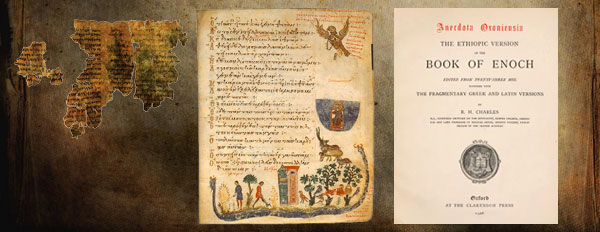
What about the book of First Enoch?

In the comments section of this blog, one of our readers asked an excellent question that I asked myself for years.

I’m having trouble taking Enoch 1 seriously. Is there some compelling evidence that makes it seem to be authentic?

Here is my answer just for Coleen, and hopefully you’ll find it enlightening as well.


The Book of First Enoch Validated with Cautions

I appreciate your concerns about the book of First Enoch and am happy to address them. For many years, I was extremely skeptical about its authenticity, and have even expressed these reservations in times past on this blog. However, when I’m not sure about something, I try to keep an open mind realizing that new information on a subject may change my understanding of it. This has been the case with the book of First Enoch. Let me briefly explain.

There are a whole boatload of folks out there in the Biblical truth restoration movement who have a little information, have done a little study on a subject for several years, and because of easy access to mass audiences on the internet and through social media, they put out a whole plethora of ideas about anything and everything. Because they may know a little more than the next guy, who is tuning in for the first time, they’re perceived as being experts. A third grader is an expert in the eyes a first grader. But now where is that same third grader when placed up against a person who has a doctorate on that same subject? Sadly, we have a lot of third graders running around trying to teach us a lot of things about subjects they know little or nothing about. This includes the book of First Enoch.

With regard to the book of First Enoch, let me confess that I’m not an expert. I’m the third grader in the room on this subject. But as Henry Ford once said when challenged about his lack of formal education, “I may not be the smartest, but I can hire the smartest to work for me.” In my case, I can read what the experts scholars have to say on the subject of First Enoch, and as well-exercised biblical lay scholar, researcher, prolific writer and teacher for decades, hopefully by now I can get to the truth of a matter.

Continue reading
 

Blog Scripture Readings for 1-5 Through 1-11-2020

Aside

Parashat Vayechi — Genesis 47:28 – 50:26
Haftarah — 1 Kings 2:1-12
Prophets — 2 Samuel 2:1 – 9:13
Writings — Psalms 83:1 – 89:29
Testimony — Luke 1:67 – 4:44

Our new annual Scripture Reading Schedule for 2019-2020 with daily readings is available to download and print. If you are still working through 2018-2019’s Scripture Reading Schedule, the link will still be available on the right sidebar under “Helpful Links”. If you are using a mobile device or tablet, the link may be below, meaning you’ll need to scroll down instead.

Most of this week’s blog discussion points will be on these passages. If you have general comments or questions on the weekly Scripture readings not addressed in a blog post, here’s a place for you to post those. Just use the “leave a reply” link or the “share your thoughts” box below.

The full “Read Through The Scriptures In A Year” schedule, broken down by each day, can be found on the right sidebar under “Helpful Links.” There are 4 sections of scripture to read each day: one each from the Torah, the Prophets, the Writings, and from the Testimony of Yeshua. Each week, the Torah and haftarah readings will follow the traditional one-year reading cycle.

Weekly Blog Scripture Readings for 1/5 through 1/11/20.