Blog Scripture Readings for 12-25 Through 12-31-16

Aside

THIS WEEK’S SCRIPTURE READINGS FOR STUDY AND DISCUSSION:

Parashat Miketz — Genesis 41:1 – 44:17
Haftarah — Numbers 7:48-59; Zechariah 2:14 – 4:7**
Prophets — 1 Samuel 19:1 – 25:44
Writings — Psalms 72:1 – 78:39
Testimony — Mark 11:19 – 14:52

Our new Scripture Reading Schedule for 2016-2017 is available to download!

Most of this week’s blog discussion points will be on these passages. If you have general comments or questions on the weekly Scripture readings not addressed in a blog post, here’s a place for you to post those. Just use the “leave a reply” link below.

The full “Read Through The Scriptures In A Year” schedule, broken down by each day, can be found on the right sidebar under “Helpful Links.” There are 4 sections of scripture to read each day. One each from the Torah, the Prophets, the Writings, and from the Testimony of Yeshua. Each week, the Torah and haftarah readings will follow the traditional one-year reading cycle.

** A different Haftarah is read when it is a special sabbath in Jewish tradition. This week it is the 7th day of Chanukah on the traditional calendar. Otherwise, I Kings 3:15 – 4:1 would be read.

Weekly Blog Scripture Readings for 12/25/16 through 12/31/16.


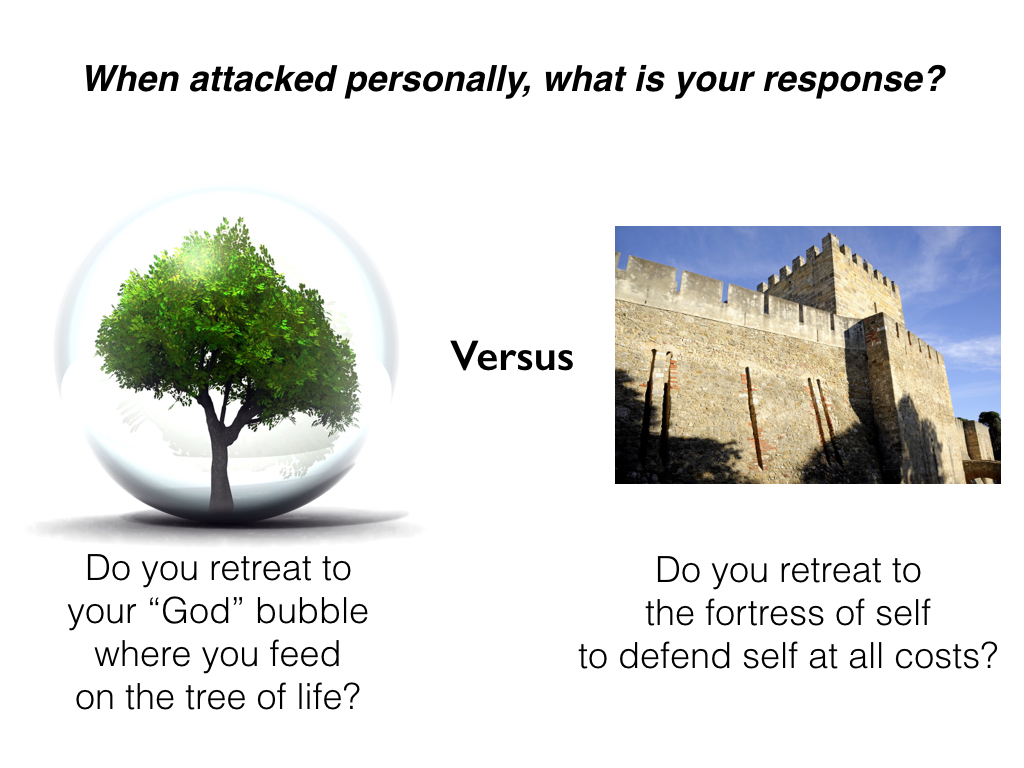
Do you live in a “God” bubble or a fortress of Self?

How to Create Your Own “God” Bubble to Deal With Life’s Attacks


May everyone reading this take careful note and pay close attention to the following: Creating a “God”-space bubble around you is a biblical strategy to protect yourself from the attacks of our spiritual enemy. Without it, you may not survive theses attacks.

Who is the enemy of our soul that is hell-bent on turning each of us into a spiritual casualty and a notch in his gun belt? Who is the one who is inexorably determined to pull you off the straight and narrow path that leads to Yeshua and his eternal kingdom? Who works tirelessly to pull your spiritual focus off Yeshua and his Word? Actually, the Bible reveals that the disciple of Yeshua the Messiah has three such enemies: the world, the flesh and the devil.

How do we deal with such rabidly determined enemies? There is the natural way and the supernatural way.

Most people choose the natural way to deal with adversity. It’s the default mode that, because of man’s fallen sin nature, one automatically and involuntarily chooses. It’s the way of self and flesh. The natural reactive tendency of humans when attacked is to create around themselves a fortress of pride, self-justification, self-righteousness where they blame others and seek pity as a form of defensive protection. The focus of this self-defensive strategy is on self and simply yields to path of least resistance dictated by one’s sinful nature. It is merely a natural, automatic and thoughtless default response of man’s fallen sin nature. If we don’t catch ourselves, we will automatically find ourselves doing this.

When attacked, instead of creating a defensive fortification where a focus on self forms the foundation stones in our defensive fortress wall, we need to run to the Rock of our Salvation who is our High Tower in times of trouble. David, a man after Elohium’s heart, writes about this many times in his psalms. David shows us to make YHVH and not self the focus when our enemies attack us, and how to  find refuge in our personal “God” bubble. A bubble seems a fragile, an almost invisible thing with a very thin wall—something that pops easily. So get that image out of your mind. Instead, think of an invisible force-field that can easily repel any incoming projectile no matter its size, speed or destructive capabilities.

Such a bubble or force field will shield and protect us from any of our enemy’s attacks. It will insure that we weather the ferocious storms of life that blow against us. In that place, we are relying on the unlimited power and wisdom of YHVH to aid us in our time of need instead of the weak, faulty and deceptive arm of the flesh. The former leads to light and life; the latter leads to darkness and death. The former brings healing and strength; the latter glosses over pain and is merely weakness feigning as strength.

Since each person is different, each one will furnish their “God” bubble differently depending their spiritual orientation and makeup, tastes and interests. In my times of trouble, I take put up a spiritual force field and take refuge in my won spiritual bubble. This involves turning to the Scriptures for guidance, wisdom and encouragement. Prayer—talking to Elohim—is a vital component of my spiritual bubble or force field. Often I visualize myself either at the foot of Yeshua’ cross or at the before the throne of my Heavenly Father. Often I will myself involve hard physical work (to settle my emotions and to help clear my mind, which helps to destress and get my mind off the problem, so I can think and pray clearly). Many times, I listen to beautiful and spiritually uplifting music, which again helps me to elevate my spiritual focus. Often I find a Garden of Eden in nature where I can imbibe in the beauty of nature. There I can talk with the Creator and find healing. To accomplish this, often I will work in my garden. Sometimes I write Elohim-centered psalms and poetry. David wrote many of his psalms in times of distress—even when his life was in danger. This helped him to get his mind off of his circumstances and onto YHVH, who was is salvation and deliverer. Whatever I do, in all cases, I try to get my mind off myself and onto Elohim who is my source of wisdom, hope and guidance, and my ultimate Savior and Deliverer. Often, I imagine myself falling down at the foot of the cross where I find my strength at the feet of Yeshua. I tell myself that if he endured that for me, then I can endure this for him.

This is what my “God” bubble looks like and what helps me to deal with spiritual attacks. What does your “God” bubble look like?

If you don’t have a “God” bubble, how about making one to help you deal with the pain, stressors and attacks of life?


Yeshua on Divorce

Mark 10:2–10, (cp. Matt 5:31–32 and 19) Is it lawful for a man to divorce his wife? Yeshua confirms the fact that divorce wasn’t part of YHVH’s original marriage plan, but that Moses allowed divorce only for a specific reason.

In the Torah, divorce was permitted for lack of virginity at the time of marriage, and for specific sexual sins committed that violated the marriage covenant (note Deut 22:13–14 cp. Deut 24:1–4), yet eventually (by the time of Yeshua), among some of the Jews, the divorce laws had become so relaxed that a man could put his wife away for any reason (Matt 19:3). To those Jews who had such a liberal interpretation of the Torah’s divorce laws, Yeshua was addressing not what the Torah specifically said, but what the religious-legal interpretations had become of those laws.

To bring the concept of marriage and divorce back to the Creator’s original design, Yeshua upheld that, according to the Torah—YHVH’s master plan, marriage between a man and a woman was inviolable and that divorce was permissible only for certain gross sexual sins and for (irreconcilable) hardness of heart (see more at Matt 19:8–9).

The bottom line of what Yeshua is saying is this: YHVH’s highest ideal is for a man and woman to marry and become one, as YHVH Elohim (the Godhead—the Set-Apart Spirit [the feminine side of Elohim], and the Son) is one, of which the marriage is to be a reflection. Sadly, because of the hardness of the sinful human heart, divorce happens, which Moses permitted under certain circumstances, but not for just any reason. Divorce, though permissible, is YHVH’s lowest ideal for the family, since it leaves in its wake so much ruination.

Mark 10:10–13, Divorces…little children. The proximity to Yeshua’s teaching on divorce with his blessing the little children presents us with an interesting juxtaposition of ideas. It’s as if the Gospel writer is obliquely conveying to us the fact that divorce is detrimental to families—especially to children.

Mark 10:11, Divorces his wife and marries another. Tertullian (A.D. 160–220), the early church father, understands this to mean that he who divorces his wife in order to marry another does so unlawfully and is thus an adulterer. He concedes that Moses allowed for divorce and that Yeshua accepts this provision in the Torah, but not if it’s done for the wrong reasons and, therefore, unlawfully (Ante-Nicene Church Father, vol 3; “Tertullian Against Marcion”; Book 4, chap 34; pp. 404–405; Hendrickson, 1995).


The Love of the Truth Vs. the Truth of Love


Shabbat shalom to everyone!

Many people lack the love of the truth, while many lack the truth of love. Or stated otherwise, some have a love of the truth, but lack the truth of love.

The following was written by Jerry and posted in the comments section of this blog in response my recent post on Mark 9:38–50 entitled, “Elohim Hates Contention and Strife.”

His comments speak such profound spirit and truth truths in such a simple way that I felt compelled by the Ruach to share them here for all to read. This is the heart of Yeshua and the Father. Thank you Jerry for transmitting to us what YHVH has given to you. This is the body of Yeshua edifying itself.

Please read and ponder. — Natan

Here is another clear and simple admonition to add to the other good references you have provided:

PURSUE SHALOM WITH EVERYONE, and the holiness without which no one will see the Lord. (Heb 12:14)

Many lack a LOVE OF THE TRUTH, while many others lack THE TRUTH OF LOVE. It used to be my nature, and is still the nature of many, to presume I was pursuing a love of the truth, while I was yet falling far short of the truth of love.

True love pursues shalom with everyone, even as it pursues and defends a love of the truth.

We must not compromise His truth OR His love. We must grow up and be mature in the likeness the character of His love – humility, meekness, patience, and kindness – even as we are to grow up and be mature in the knowledge of and obedience to His truth. This is true strength! It is not strength being an arrogant “big mouth”! It is weakness! Being free from the fear of man does not mean being free from the fear of Adonai.

I think the following admonitions of Messiah are quite applicable:

You have heard that it was said, ‘An eye for an eye, and a tooth for a tooth.’ But I tell you, do not resist an evildoer. You have heard that it was said, ‘You shall love your neighbor and hate your enemy.’ But I tell you, love your enemies and pray for those who persecute you…Therefore be perfect, just as your Father in heaven is perfect. (Mat 5:38-39a, 43-44, 48)

If we are commanded by Messiah to even love our enemies who persecute us, how much more are we to love those who are our “neighbors ” who only disagree with us?

It is a shame and a misrepresentation of His name that many who seem to so highly esteem themselves in their knowledge of “the truth”, so lowly esteem Him in their knowledge of His character. Maybe this is some of what the commandment means, “You shall not take the Name of Adonai your Elohim in vain” — supposing one is defending His truth while not displaying His character.

After all, being that He is “the TRUTH” while also being the “Prince of SHALOM”, should we not also be ambassadors of not only “the Truth”, but SHALOM to all, as well?

However, having said this, it must also be qualified that we are not to pursue “shalom” at all costs, for that would ultimately mean to compromise the truth and, in fact, that would not be true shalom at all. That would be the shalom as the world gives it and not truly His shalom (John 14:27). In this sense, we must also remember that Messiah said, “Do not think that I came to bring shalom on the earth; I did not come to bring shalom, but a sword [truth that divides and separates]” (Mat 10:34).

 

25 Reasons I Don’t Celebrate Christmas

  1. Christmas is not the day on which Yeshua the Messiah (Jesus Christ) was born. He was likely born in the autumn during the biblical Feast of Tabernacles. In ancient times, December 25 was considered the birthday of the demon-sun god by many heathen religions. This was definitely not the birthday of Yeshua!
  2. There’s no biblical command to celebrate Christmas.
  3. Christmas has become a pagan substitution for YHVH’s true biblical holidays or festivals, which are listed in Leviticus 23. These are the same biblical festivals that Yeshua and his apostles celebrated. They never celebrated the Messiah’s birth.
  4. Christmas is the Christianization of various ancient pagan sun god, sex-worship rituals having to do with the winter solstice. “Cleaning up” a pagan custom is contrary to the biblical truth of turning away from the practices of the heathen and having nothing to do with them after one chooses to follow Elohim and his Word as found in the Bible.
  5. Christmas is laced with heathen and Satanic rituals and traditions. These are things the saints should have nothing to do with!
  6. The Bible forbids placing any trees or tree-like objects near an altar (or in a church building), since this is a heathen practice (Deut 16:21).  Most Christians violate this command when they place Christmas trees in their church sanctuaries near their altars every year at Christmas.
  7. The Bible forbids the heathen practice of incorporating trees into any religious service (Deut 12:1–4). Elohim hates pagan religious practices that happen under trees (Isa 57:5; Jer 3:6).
  8. Celebrating Christmas is friendship with the world which is an act of hatred toward Elohim. In this area, it makes one a friend of the world and an enemy of Elohim (Jas 4:4).
  9. Elohim condemns, forbids and calls an abomination bringing any pagan items into our houses (Deut 7:24–26), of which Christmas trees and nearly all Christmas’ associated accoutrements, paraphernalia and traditions are associated.
  10. The Bible commands the saints not to put up anything that even remotely resembles a Christmas tree. Jeremiah 10:1–5 is almost a perfect description of a modern Christmas tree — and it was a pagan custom 1000 years before Christmas became a Christian holiday in the Catholic Church.
  11. Christmas perpetuates the lie of Santa Clause to one’s children. Lying is not a value one wants to pass on to their children. Lying is a violation of the ninth of YHVH’s ten commandments and is a sin.
  12. The Bible commands the saints not to learn or practice the ways of the heathens (Jer 10:2; Lev 18:3; 20:23).
  13. Christmas is about syncretizing biblical truth (i.e., the birth of Yeshua) with pagan and satanic customs. In the Bible, YHVH commands his people not to be like the heathens, turn from evil, and don’t learn their evil customs. Yeshua commanded his disciples to be in the world, but not to practice its evil ways (John 17:11, 14). Christmas is practicing the evil ways of the heathens.
  14. For many, the main focus of Christmas is on self (“What gifts am I getting?”), rather than on Elohim’s gift to mankind, which was Yeshua the Messiah (who wasn’t even born in December). Christmas generally promotes a culture of selfishness and self-centeredness. These are values that were antithetical to everything that Yeshua and his disciples lived and taught.
  15. Christmas promotes an atmosphere of greed, covetousness and materialism. 
  16. Christmas is a tradition started by the Catholic Church, and I’m not a Catholic and I don’t take my spiritual marching orders from any pope —  especially when he tells me to do something contrary to the Bible, the Word of Elohim.
  17. Christmas is a short, one day long holiday. Too much emphasis is placed on this one day. The devil has tricked and shortchanged Christians into substituting Christian holidays like Christmas for the biblical ones. YHVH gives his saints seven biblical holidays with two of them lasting for seven days each (see Lev 23). These biblical holidays are called feasts, and they are spiritual and guilt-free celebrations focusing on rejoicing and righteously partying with family, friends and Elohim around godly and biblical themes all involving the gospel’s plan of redemption. They are totally righteous with no paganism mixed in. This can’t be said about Christmas.
  18. Do your homework. You will find that even the phrase “Ho, ho, ho, merry Christmas” is sacrilegious and blasphemous.
  19. If Christmas day turns sour for people (e.g., because of bad family experiences and unfulfilled expectations), then one’s year is ruined until next Christmas when one gets another shot at it in hopes it’ll be better the next go around. How pitifully sad!
  20. Christmas as celebrated by the majority of people ends up taking the focus off the glorious event of the Savior’s birth, trivializes it and then places the emphasis on gift-giving, partying and mindless unbiblical pagan traditions and rituals.
  21. The Bible commands us to abstain from all appearances of evil (1 Thess 5:22). There is much evil, Satanic and idolatrous baggage associated with Christmas; therefore, those who are serious about their biblical walk of righteousness and want to be obedient to YHVH Elohim should not be going near it.
  22. Those who celebrate Christmas in the traditional way are honoring or worshipping pagan deities. Anytime anyone puts a pagan practice or tradition ahead of obedience to Elohim and his Word, this is, by biblical definition, idolatry. Whether it’s Christmas lights on the house, wreaths, evergreen foliage, mistletoe, the Christmas tree with its red balls, gifts under the tree, Santa Clause, or even the Christmas greeting of “Ho, ho, ho, merry Christmas,” it all originates from ancient Satanic, idolatrous and lewd sex worship practices originating from pagan religions. This is not something with which the true saints of YHVH Elohim wants to be involved.
  23. Christmas puts a lot of people into financial debt. Debt is bondage and evil.
  24. Christmas was become a major money-making venture for merchants, and I refuse to be suckered in by their marketing schemes to purchase their products.
  25. Celebrating Christmas is following a multitude to do evil — something YHVH forbids (Exod 23:2).

Now that you have received the light of the truth about Christmas, you are responsible before Elohim to live up to that truth. Will you put obedience to the Word of Elohim and his truth first in our life, or continue to walk in sin? To obey Elohim means to cast out of your life all idolatrous practices and cease doing that which is evil and sinful. This is then followed by choosing to obey YHVH Elohim in Spirit and in truth (John 4:23–24). “Therefore to him that knoweth to do good, and doeth it not, to him it is sin” (Jas 4:17).

Come out of [Mystery Babylon the Great], my people, lest you share in her sins, and lest you receive of her plagues. For her sins have reached to heaven, and Elohim has remembered her iniquities. (Rev 18:4–5)

And what agreement has the temple of Elohim with idols? For you are the temple of the living Elohim. As Elohim has said: “I will dwell in them And walk among them. I will be their Elohim, And they shall be My people. Therefore “Come out from among them and be separate,” says Adonai. “Do not touch what is unclean,  and I will receive you.” (2 Cor 6:16–17)


Elohim hates contention and strife!

Mark 9:38–41, Yeshua forbids sectarianism. Though someone may not be in our spiritual camp, if they are doing good and are not against us, we’re to give them credit of the good they are doing. This is the high road of love, mercy and grace that Yeshua expects his disciples to follow in regards to those of other congregations, denominations or ministries.

Mark 9:38–50, Avoid strife and contention. This is a very enigmatic passage that commentators struggle with trying to explain, since Yeshua links together so many seemingly disparate concepts. I say “seemingly,” since there is nothing average about the Master’s intellect, or his knowledge of spiritual truth. Our inability to comprehend his sayings should only spur us onward to dig all the more into their heights and depths of meaning, thus uncovering the nuggets of truth from within the transcendent intellect of our Master and Creator!

Yeshua the Master begins his discourse by discouraging sectarianism. “Those who aren’t against us are for us.” He then promises rewards to those who are kind to his disciples, implying that his disciples should in turn be kind to others who, though they may not be a part of your particular group, they may not necessarily be working against you, for they may also be kingdom workers but with a different assignment than yours (vv. 38–41).

Next, our Master warns against offense—especially those who offend (or cause to stumble) the little ones who are still young and tender in their faith. Linked with the preceding thought, the implication may be that Yeshua’s servants need to beware of not offending any of his kingdom workers whether they are part of “our group” or not. Only the Almighty sees the larger picture much as a general oversees his troops. The individual soldier knows his own marching orders, and may be oblivious to the orders of other soldier’s elsewhere, and is thus in no position to judge another soldier who has other marching orders.

Yeshua then issues a strong warning against any actions (the hand), or any directions of our lives (the foot), or any perspective (the eye) that may lead us to sin in causing one of YHVH’s kingdom workers elsewhere to stumble spiritually. Such an offense may bring us under the severe and unquenchable fires of YHVH’s eternal judgment. In other words, when we, through offensive actions and perspectives, cause one of YHVH’s kingdom workers who is operating outside of our limited view of things to stumble, we may be doing irreparable damage to the advancement of the kingdom, thus risk bringing the wrath of Elohim squarely down upon us (vv. 42–48).

Yeshua concludes his discourse with an even more mysterious statement that commingles a variety of biblical concepts. Many biblical commentators admit the difficulty of understanding this passage (e.g. Matthew Henry, Adam Clarke, Beale and Carson). He indicates that his disciples, as living sacrifices (Rom 12:1), must allow themselves to be laid on the altar of YHVH’s service like the animal sacrifices of old. As these sacrifices went through the sprinkling of salt (Lev 2:13; Ezek 43:24) and the burning of fire on the altar of sacrifice, even so, as living sacrifices doing YHVH’s kingdom work, Yeshua’s disciples must be willing to endure the fires of trials and adversity. Fire both consumes and purifies, while salt both preserves and seasons—two activities that are continually needed in the disciple’s life as part of their spiritual refinement in order for them to become perfect and sin-free like their Master.

Yeshua ends with the admonition to be salty or spicy (in our words and actions) as we advance his kingdom. But we mustn’t be offensive in our demeanor such that it causes others to stumble, thus breaking the peace between our fellow coworkers, since we are all working together for the same Master. No matter what, maintain peace one with another (vv. 49–50)!

This final admonition brings us full circle back to Yeshua’s initial point in his instructions to his disciple to avoid sectarianism and to be a peacemaker among spiritual brethren. YHVH hates division and strife within the congregation of the righteous and calls it an abomination (Prov 6:16–19). Those who cause it are to be avoided (Rom 16:17; 2 Thess 3:6) if not excommunicated (Tit 3:10)!