Was Solomon’s Porch Where the Acts Two Pentecost Occurred?

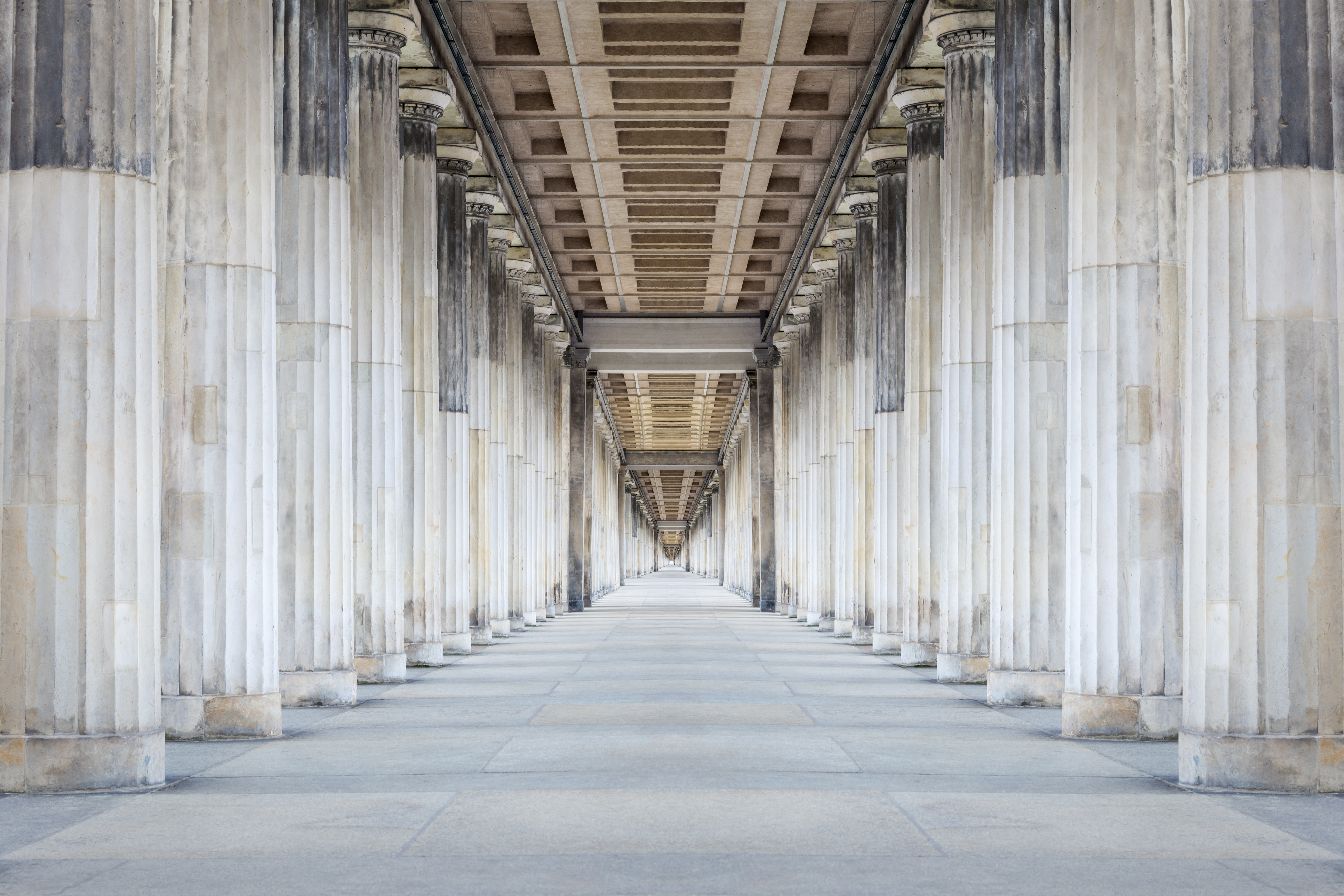
Acts 5:12, Solomon’s porch/portico/colonnade. This was a large covered area supported by marble columns which supported a wooden roof structure and was located on the east side of the temple mount area along the eastern wall that overlooked the Kidron Valley and faced the Mount of Olives just above the Garden of Gethsemane. This portico was built so that pilgrims and Levites visiting the temple would have a place to gather that was protected from the weather. Meetings and gatherings occurred here, and this was a gathering place of the early disciples as noted in Acts 3:11. There Yeshua taught and debated with the Jews (John 10:22–29). Here, the disciples were gathered in one accord (Acts 5:12). This is likely the spot where the Acts 2 Pentecost gathering occurred.

This portico (colonnade or cloister) that was located on the eastern wall and that existed in the time of Yeshua and the disciples was originally constructed by King Solomon according to Flavius Josephus.

These cloisters belonged to the outer court, and were situated in a deep valley, and had walls that reached four hundred cubits [in length], and were built of square and very white stones, the length of each of which stones was twenty cubits, and their height six cubits. This was the work of King Solomon, who first of all built the entire temple. (Josephus Flavius Ant. xx.9.7)

While the Babylonians destroyed the temple in their conquest of Jerusalem in about 586 B.C., if we are to believe Josephus, they apparently left Solomon’s Portico intact.

In the description of Solomon’s Temple and the complex including not only the temple itself, but its adjacent houses, upper chambers or rooms and inner chambers we read the following:

Then David gave to his son Solomon the plan of the porch of the temple, its buildings, its storehouses, its upper rooms, its inner rooms and the room for the mercy seat; and the plan of all that he had in mind, for the courts of the house of the LORD, and for all the surrounding rooms, for the storehouses of the house of God and for the storehouses of the dedicated things… (1 Chron 28
11–12; NASB)

We don’t know where these upper rooms were located in the temple complex, but if they were located in what later became known as Solomon’s Porch, which was still in existence in the first century, then this may give us a clue where the upper room that is mentioned in the Book of Acts was located, and where the gathering of the saints on the day of Pentecost occurred. In addition to Solomon’s Porch on the east side of the Temple Mount area, additional porticos were constructed subsequently by King Herod (in 16 B.C.) on all the other sides of the Temple Mount along the outside walls (Smith’s Bible Dictionary, p. 681; The International Standard Bible Encyclopedia, vol 4, p. 772). The portico on the south side was larger and taller than the others and was called the Royal Portico (ibid.; Jospephus’ Ant. xv.11.5).

 

What Is a “New Testament” Church Supposed to Do?

Acts 2:42, 46, They continued. This passage along with 1 Tim 4:13 is a list of activities the early saints did when they gathered together. This included continuing steadfastly in the apostles’s doctrine, which includes “reading [the “Old Testament” Scriptures], exhortation, [studying or teaching] doctrine” (1 Tim 4:13), fellowshipping, eating meals together, praying and praise [and worshipping] Elohim.

Expounding on this further, we read in 1 Cor 14:26, “Whenever you come together, each of you has a psalm, has a teaching, has a tongue, has a revelation, has an interpretation. Let all things be done for edification.” Spiritual gifts should be exercised when the saints come together as well (1 Cor 14:12).

How many modern church gatherings habitually incorporate these elements into their weekly meetings?


Baptisms—Plural?!

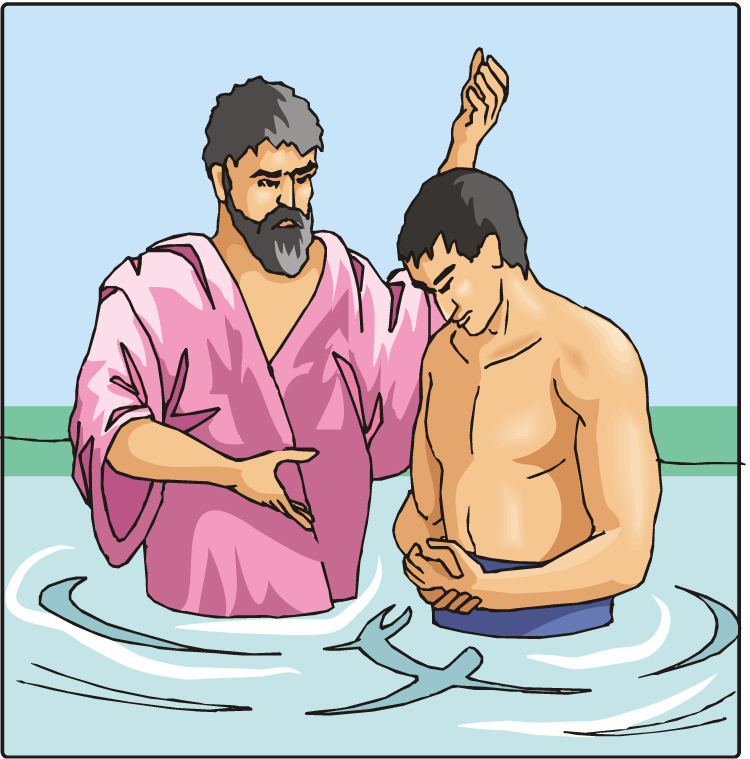
Acts 2:23, Be baptized. (Also see notes at Matt 28:19.) The term baptism in Hebrew is tevilah meaning “immersion,” which occurs at a mikveh meaning “a gathering of waters.” For those coming from a Christian background baptism is something that occurs at the beginning of a believer’s spiritual walk and involves baptism (immersion) in water for the remission of sins (Acts 2:38; 22:16; Rom 6:3–6; 1 Cor 15:29; Gal 3:27; Eph 4:5; Col 2:12; 1 Pet 3:21). Yet Paul the apostle talks of baptisms (plural) in Heb 6:2. What are these other baptisms? Evidently, in biblical thought immersion for the remission of sins is but one of many such ritual immersions.

Indeed, in the Testimony of Yeshua we not only read about baptism for the remission of sins, but the baptism of repentance of John the Baptist (Acts 1:5; 10:37; 13:24; 19:4), baptism (immersion) of the Set-Apart Spirit (Luke 3:16; Acts 1:5; 8:16; 11:16), and baptism with fire (Matt 3:11; Luke 3:16). Here we see the four types of immersions spoken of in the Testimony of Yeshua.

The concept of ritual immersion for a variety of reasons stems from commands in the Torah relating to ceremonial washings signifying spiritual and physical cleansing (Lev 14:1–4, 7, 9; Exod 19:10; Lev 8:6; 15:5, 8, 10–13, 16–18, 21; 16:4).

Moreover, the prophet Ezekiel speaks of YHVH sprinkling his people to cleanse them from their impurities, which is a picture of the new spiritual life of which immersion is e a type (Ezek 36:25).


Blog Scripture Readings for 3-25 Through 3-31-18

Aside

THIS WEEK’S SCRIPTURE READINGS FOR STUDY AND DISCUSSION:

(No Parasha This Week. See **note below.)
Haftarah — Joshua 5:2 – 6:1**
Prophets — Isaiah 27:1 – 35:10
Writings — Proverbs 29:1 – 31:31; Job 1:1 – 4:21
Testimony — Acts 3:1 – 7:16

Our annual Scripture Reading Schedule for 2017-2018 is available to download and print.

Most of this week’s blog discussion points will be on these passages. If you have general comments or questions on the weekly Scripture readings not addressed in a blog post, here’s a place for you to post those. Just use the “leave a reply” link below.

The full “Read Through The Scriptures In A Year” schedule, broken down by each day, can be found on the right sidebar under “Helpful Links.” There are 4 sections of scripture to read each day: one each from the Torah, the Prophets, the Writings, and from the Testimony of Yeshua. Each week, the Torah and haftarah readings will follow the traditional one-year reading cycle.

** A different Haftarah is read when it is a special sabbath in Jewish tradition. This week it is Shabbat Pesach on the traditional calendar with a special Haftarah reading of Malachi 3:4-24 and special Parasha reading of Exodus 12:21-51 & Numbers 28:16-25.

Weekly Blog Scripture Readings for 3/25/18 through 3/31/18.


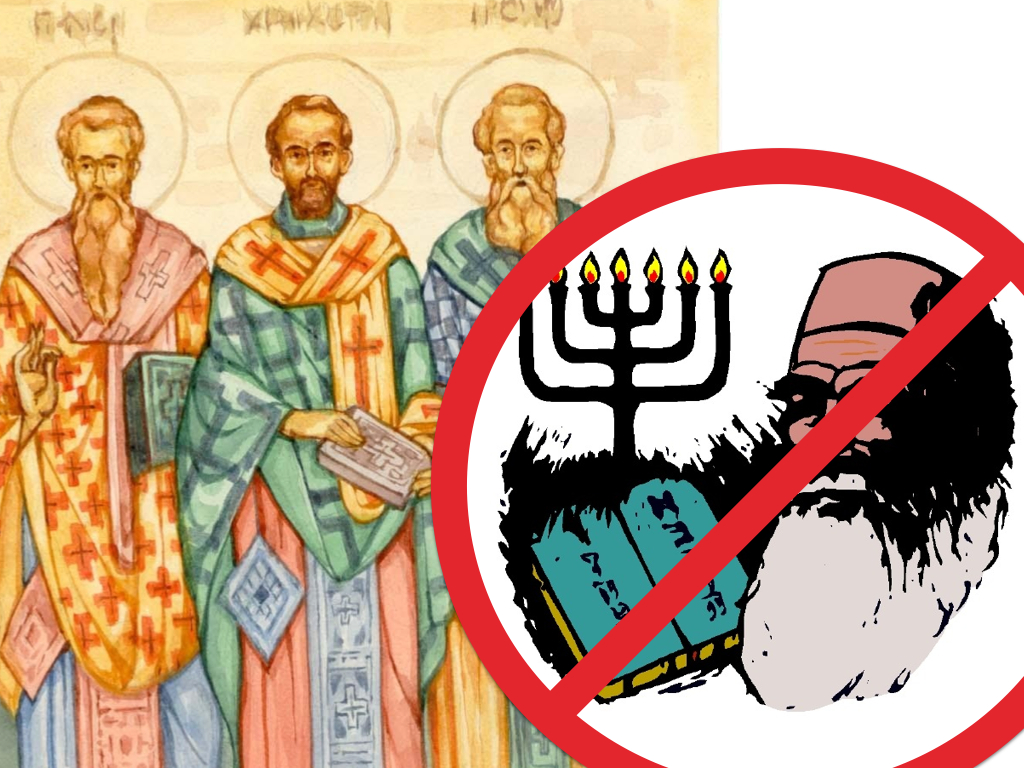
From A.D. 70 to A.D. 135 — How the Church Became Divorced From Its Hebraic Roots

What is called Christianity today in many ways is very dissimilar, and in many respects, outright antagonistic to the religion of the first-century, book of Acts believers. How did this come to be?

Many modern Christian churches prides themselves on being “a New Testament church, yet what they practice and believe is often very different from and even opposed to the teaching and practices of the apostles and primitive, first century church. For example, life for the apostolic believers in Jerusalem revolved around the temple (Acts 2:46; 3:1; 5:19-21; 5:42; Acts 21:26; 22:17; 24:18; 25:8; 26:21), and for those outside of the land of Israel, on most Sabbaths, they attended the local synagogue (Acts 13:14; 14:1; 17:1–2; 18:4, 7, 8, 19, 26; 19:8). Not only did the first apostles and early believers not celebrate any pagan influenced holidays such as Easter, Christmas, Halloween, Lent, and the rest, but they adhered to the Torah or law of Moses (see references below). The Book of Acts record is also clear that early believers kept the Bible festivals (as outlined in Lev 23; Acts 2:1; 18:21; Acts 27:9; 1 Cor 5:8; Jude 12) of Passover, Unleavened Bread, Pentecost, Day of Trumpets, Day of Atonement, Feast of Tabernacles, and the Eighth Day.

What’s more, the book of Acts records that both Stephen and Paul were falsely accused of teaching that the laws and customs of Moses were nullified, and, as a result of this false accusation, both lost their lives defending Torah-obedience.

A hundred other examples could easily be given showing how the Christian church has veered away from the Hebrew or Jewish roots of its faith, but hopefully, the reader gets the point.

So what happened to cause Christianity to veer so widely from the Hebrew or Jewish roots of its faith and to arrive at the place where it hardly resembles that religious faith from which it sprang? This is not an easy question to answer since one must look back nearly 2000 years and attempt to reconstruct the times in which our spiritual forefathers lived. Moreover, we must understand what was transpiring politically, religiously, and socially at the time to answer this question properly. It is also imperative that we understand the contextual social and linguistic fabric, the backdrop of history, and the parade of political Continue reading


The Anointing Oil: Differentiating Between the Sacred and the Profane

Leviticus 8:12, Anointing oil … consecrates [Heb. kadash]. The Hebrew word kadash signifies the state of something that belongs to the realm of the sacred, and which is set-apart for divine use and has been separated from the sphere of the secular, common or profane. The Bible often uses the term holy (meaning “set-apart”) to signify this state of being. The word of Elohim designate many things as set-apart:

  • The ground upon which YHVH is standing (Exod 3:5; Josh 5:15)
  • The people of Israel (Exod 19:6; Deut 14:21; 26:19)
  • The Sabbath (Exod 16:23; 20:8)
  • The Tabernacle of Moses (Exod 26:33)
  • The garments worn by the high priest (Exod 28:2)
  • The altar of sacrifice (Exod 40:10)
  • The offerings made on the altar (Lev 6:18)
  • YHVH’s feast days (Lev 23:2)
  • The camp of Israel (Deut 23:14)
  • Heaven as the abode of Elohim (Deut 26:15)
  • YHVH Elohim (Job 6:10; Pss 22:3; 78:4; 99:5)
  • Zion and Jerusalem (Ps 2:6; Matt 27:53; Rev 22:19)
  • The Spirit of Elohim (Matt 1:20)
  • The angels (Matt 25:31)
  • The servants of Elohim (Mark 6:20)
  • The name of YHVH (Luke 1:49)
  • Yeshua (Acts 2:27; 3:14)
  • YHVH’s prophets (Acts 3:21)
  • The saints (1 Pet 2:9; Rev 22:11)
  • The Torah (2 Pet 3:21)

YHVH’s people are to learn to make a difference between that which he designates as being kadash (holy) and that which is profane (Lev 10:10). In order to do this, one must know what YHVH defines as set-apart and then align our thinking and lifestyle with that.

The act of consecrating someone (or something, e.g. Exod 30:26), as occurs in Leviticus 8:12, often involves the ritual of pouring olive oil on them to signify their being set-apart for a special work or service. This is called anointing (see Exod 28:41; 29:7; 1 Sam 16:12; 1 Kgs 1:34; Isa 61:1; 2 Cor 1:21).

Yeshua’s title is Messiah (Heb. Mashiach) literally meaning, “one who is anointed, smeared or consecrated with (olive) oil.” The English word Christ derives from the Greek word Christos, which is the Greek equivalent of the Hebrew word mashhiach. In biblical thought, the Messiah would be One coming from heaven who would possess a super-anointing of the Spirit of Elohim (Isa 11:1–10; 42:1–21; 61:1–3; John 3:34) to accomplish the purposes of Elohim on earth.

Have you placed your trusting faith in Yeshua the Messiah, the Anointed One from heaven? He is the only one who can take away the shame, guilt and penalty of your sin, and the only one who defeated death and can lead you past the veil of death and into immortality.


Who originally canonized the NT? Definitely not the Roman Catholic Church!

John 21:24, We know. What now follows is discussion of the “we” passages in the writings of John.

James, the brother of John had been martyred in Jerusalem in the early sixties a.d., Peter in Rome in the mid to late sixties, and now it was left up to John, the remaining apostle, to finalize the New Testament canon. What is the proof of his hand in this task, and did he do it alone or did he have helpers—an editorial staff, if you will?

“John did not create the New Testament on his own. He had helpers. If one will read the writings of John carefully, these assistants can be recognized, and they played a very important part in the overall canonization. References to them are found from time to time cropping up within the contexts of John’s compositions. The elders who helped John were very important. … [M]any of them were eyewitnesses to the teachings of [Yeshua] in Judaea and they also saw him alive after his resurrection from the dead. They were a part of those 500 people still alive in a.d. 55 who Paul said were witnesses to [Messiah’s] resurrected body (1 Cor 15:6). This means that they were certainly Jewish Christians” (Martin, p. 398). At this point, Martin directs our attention to the “we” passages in John’s Gospel and epistles.

The first instance of a “we” passage is at the beginning and at the end of John’s Gospel. Chapter one starts with a “we” passage, and then throughout the 21 chapters of this Gospel John has recorded what Yeshua taught him, but then in John 21:24 there is a remark in the text that interjects what others besides John had to say about the Gospel of John. (ibid.)

John 1:14, And the Word was made flesh, and dwelt among us, (and we beheld his glory, the glory as of the only begotten of the Father,) full of grace and truth. (emphasis added)

John 21:24, This is the disciple which testifies of these things, and wrote these things: and we know that his testimony is true.

“Notice the abrupt change from the third person singular to the plural. The last part of this verse is introducing further witnesses, other than John (who are identified only by the pronoun “we”). Who were these men? In the Gospel they are not identified, but it can reasonably be assumed that the first readers of John’s Gospel must have been aware of their identities. They must have represented an officially recognized body of men since they boldly gave their witness to John’s written word, “And we know that the witness he [John] gives is true” (ibid., pp. 398–399).

This is just the beginning of the “we” passages. They occur numerous times in John’s short epistle to testify to the veracity of what John is saying pertaining to his recording of the Gospel account. In these writings, we see that in the middle of John’s narrative there will suddenly be an inclusion of a “we” passage as if to lend credibility to what he is saying. Examples of this are:

1 John 1:1–4, 1 That which was from the beginning, which we have heard, which we have seen with our eyes, which we have looked upon, and our hands have handled, of the Word of life; (for the life was manifested, and we have seen it, and bear witness, and show unto you that eternal life, which was with the Father, and was manifested unto us😉 that which we have seen and heard declare we unto you, that ye also may have fellowship with us: and truly our fellowship is with the Father, and with his Son Yeshua Messiah. And these things write we unto you, that your joy may be full. (emphasis added)

1 John 4:11, And we have seen and do testify that the Father sent the Son to be the Savior of the world. (emphasis added)

3 John 12, … and we also bear record; and ye know that our record is true. (emphasis added)

“It is clear that a body of men, other than John himself, was telling the readers of his [First and] Third Epistle[s] that they too were witnesses to the truth that John was stating. These Continue reading