Blog Scripture Readings for 6-3 Through 6-9-18

Aside

THIS WEEK’S SCRIPTURE READINGS FOR STUDY AND DISCUSSION:

Parashat Sh’lach L’cha — Numbers 13:1 – 15:41
Haftarah — Joshua 2:1-24
Prophets — Jeremiah 38:1 – 44:30
Writings — Ecclesiastes 8:1 – 12:14; Esther 1:1 – Esther 2:23
Testimony — Romans 10:1 – 16:27

Our annual Scripture Reading Schedule for 2017-2018 is available to download and print.

Most of this week’s blog discussion points will be on these passages. If you have general comments or questions on the weekly Scripture readings not addressed in a blog post, here’s a place for you to post those. Just use the “leave a reply” link below.

The full “Read Through The Scriptures In A Year” schedule, broken down by each day, can be found on the right sidebar under “Helpful Links.” There are 4 sections of scripture to read each day: one each from the Torah, the Prophets, the Writings, and from the Testimony of Yeshua. Each week, the Torah and haftarah readings will follow the traditional one-year reading cycle.

Weekly Blog Scripture Readings for 6/3/18 through 6/9/18.


Blog Scripture Readings for 5-27 Through 6-2-18

Aside

THIS WEEK’S SCRIPTURE READINGS FOR STUDY AND DISCUSSION:

Parashat B’ha’alatkha — Numbers 8:1 – 12:16
Haftarah — Zechariah 2:14 (10)* – 4:7
Prophets — Jeremiah 31:1 – 37:21
Writings — Ecclesiastes 1:1 – 7:29
Testimony — Romans 3:1 – 9:33

Our annual Scripture Reading Schedule for 2017-2018 is available to download and print.

Most of this week’s blog discussion points will be on these passages. If you have general comments or questions on the weekly Scripture readings not addressed in a blog post, here’s a place for you to post those. Just use the “leave a reply” link below.

The full “Read Through The Scriptures In A Year” schedule, broken down by each day, can be found on the right sidebar under “Helpful Links.” There are 4 sections of scripture to read each day: one each from the Torah, the Prophets, the Writings, and from the Testimony of Yeshua. Each week, the Torah and haftarah readings will follow the traditional one-year reading cycle.

* Verse numbers in parenthesis refer to the verse number in Christian English Bibles when they differ from Hebrew Bibles or the Tanakh.

Today is the 50th day of the counting of 
50 days from the day of the waving of 
the Omer on the morrow after the Shabbat. Today is the morrow after the 7th Shabbat. Chag Shavuot — Feast of Weeks —Pentecost is fully come. HalleluYah!

Weekly Blog Scripture Readings for 5/27/18 through 6/2/18.


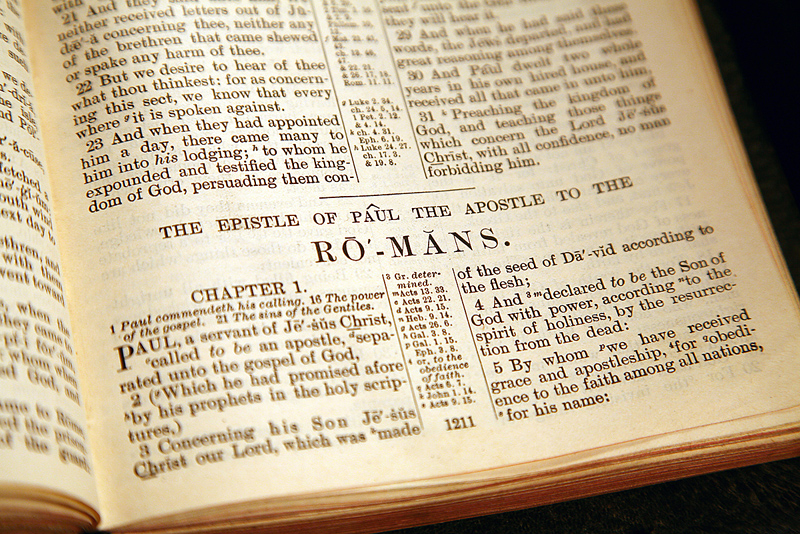
Overview of Paul’s Epistle to the Romans

The Gospel, the Torah, & the Israelite Nation Reunited

The following overview of Romans is a radical departure from what the mainstream church teaches. Read it and see if what follows doesn’t unite the truth of the Bible from beginning to end, instead of pitting one section of the Bible against the other, which is  approach the church typically takes when presenting the teachings of Paul.

The Main Themes of Romans

This is perhaps the only book in the Bible that is organized systematically like a theological textbook from beginning to end with each point leading to the next. This is not how biblical books are typically arranged.

In this epistle, there are several main themes.

Pre-eminently, Elohim is the Just Judge of the universe to whom all are accountable (both Jews and Gentiles). This concept alone is huge, since most humans don’t want to believe they’re accountable to anyone except their own egos.

The Torah is Elohim’s standard of righteousness by which he will judge the deeds of all men (both Jews and Gentiles) fairly. If people can accept the fact that there is a supreme Being to whom they’re accountable for their actions, then it’s a short next logical step to accept that such a Being (Elohim) has laws that man must follow if he’s not to run afoul of that Being.

Next, Paul counters a religious system that purported to explain who that Being was and what he required of sinful man. This was Judaism. The problem is that Judaism had perverted the truth of Elohim into a racially exclusive, legalistic, works-based salvational system. Paul attempts to correct this error, and restore this religion to its original truth.

Paul then presents the gospel message of salvation by grace through faith in Yeshua the Messiah is at the center of YHVH’s process to redeem sinful man.

Before Elohim, the Creator of the universe, there is no racial inequality between Jews and Gentiles. Elohim isn’t a racist. All are equal before him. All are sinners, and all need Yeshua. 

Paul’s Epistle to the Romans keeps Yeshua and the gospel message front and center, Continue reading


Blessings from Heaven Through the Priestly Blessing

Numbers 6:22–27, The Aaronic or Priestly Blessing. The Aaronic Blessing is about the power of blessing and the power of our words. The Scriptures teach us that our words can heal, build up and encourage, or kill, tear down and curse, that the power of life and death is in the tongue. What kind of words come from your mouth—especially to your spouse and children? Charity begins at home. How often do you speak blessings over your children and spouse? Do you bless those who curse you as Yeshua instructed his disciples to do?

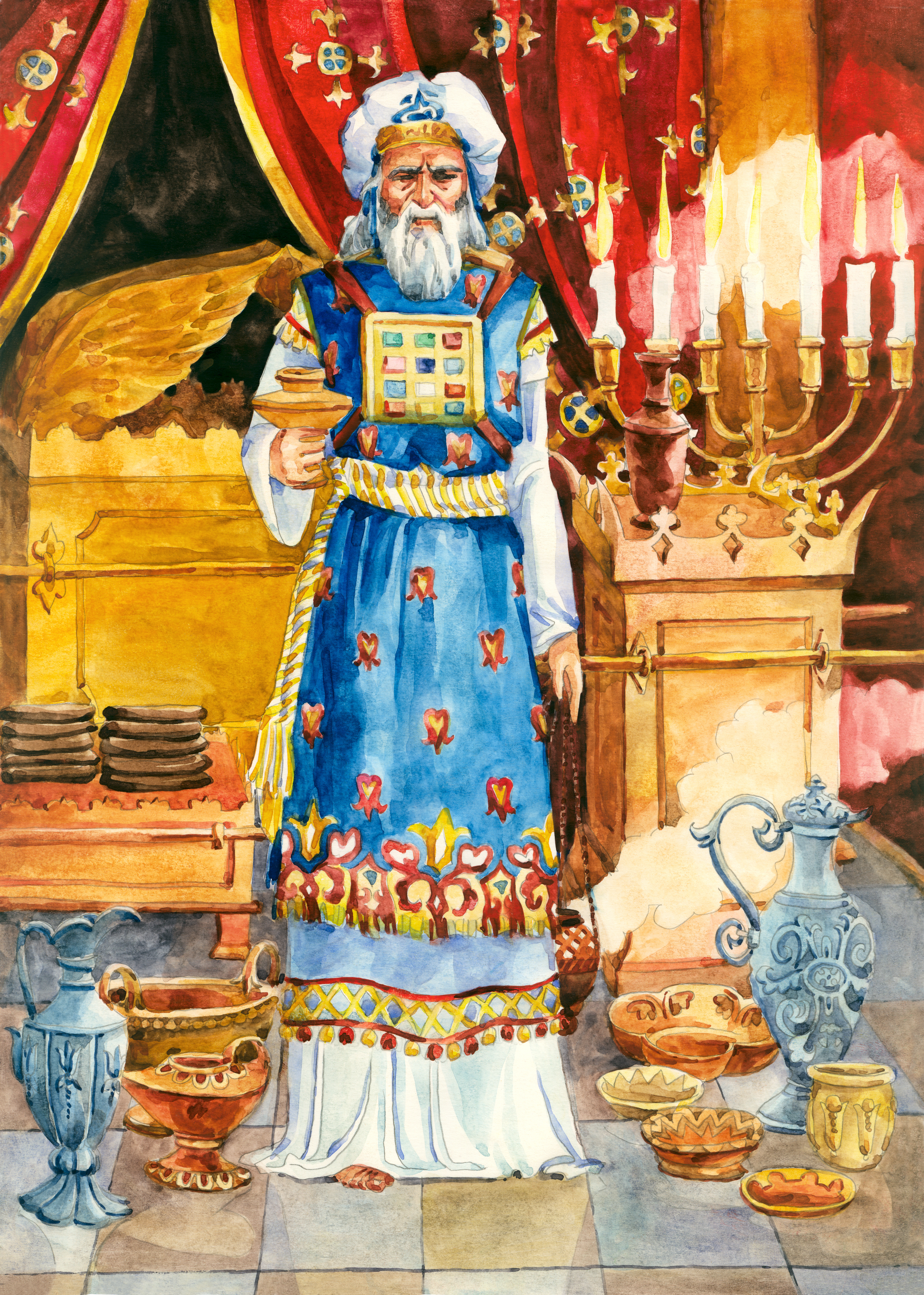
The Levitical priesthood was one of YHVH’s blessings or marriage gifts to his bride, Israel. It was given to her at the time of their marriage to him at Mount Sinai. The Aaronic or Priestly Blessings of Numbers 6:22–27 indicate that the priests were to be a conduit of YHVH’s blessings to his people. The ArtScroll Stone Edition Chumash correctly states it this way: “[The priests did not] have any independent power to confer or withhold blessings—only God can assure people of success, abundance, and happiness—but that part of their Temple service is to be the conduit through which God’s blessing would be pronounced on His people” (p. 762). Hirsch in his commentary on the priestly blessing states that it is Jewish tradition for the human instrument conveying the blessing to raise his hands (vertically and not horizontally) to heaven while reciting this blessing so as not to give the people the impression that the priest is conveying the blessing, but that it is coming from heaven (The Pentateuch Numbers, p. 99, Judaica Press). The Jewish sages further note that in Numbers 6:22–23, the Torah uses the word saying three times to emphasize the fact that the blessings flow from YHVH to the Israelites and are to be passed on to subsequent generations. The saints are YHVH’s priesthood now (“a chosen generation, a royal priesthood, a kadosh nation, a peculiar people,” 1 Pet 2:9). Are you an instrument of blessing everywhere you go? Do you ask YHVH to use you every day to spread the light of his truth and his love to others?

The Aaronic Blessing can be subdivided into three sections:

(a) The First Blessing: May YHVH bless you and safeguard you. The Jewish sages take this to refer to the material and physical blessings that Torah obedience brings as enumerated in Deuteronomy 28:1–14. This includes good health, wealth, divine protection and victory over enemies. YHVH’s blessing and his safeguarding of those blessings from those who would kill, steal and destroy them go hand-in-hand. The sages teach that “the best way for someone to preserve his wealth is to use it for charity and good deeds. That assures him of God’s continued blessing” (ibid. p. 763).

(b) The Second Blessing: May YHVH illuminate his countenance for you and be gracious to you. The sages teach that this illumination refers to the light of the Torah and they cite Proverbs 6:23, “For the commandment is a lamp and the Torah is a light.” Compare this with what John said about Yeshua in John 1:1–14; 8:12; 9:5 about Yeshua being the Light of the world. YHVH’s grace also involves him granting his people Torah knowledge, wisdom and understanding to utilize Torah properly and fully; to use the insights gained therefrom to comprehend his purposes (ibid. p. 763).

(c) The Third Blessing: May YHVH lift his countenance and establish peace/shalom for you. In Hebraic poetic symbolism, the idea of YHVH’s face or countenance shining toward his people is a metaphor of divine grace and favor. Contrariwise, when his face is turned against his people, this represents divine disapproval and shame upon his people (For examples of this in the Scriptures see Pss 4:6; 31:16; 67:1 cp. Lev 17:10; 20:5, 6, 17; Deut 31:17; 2 Chron 30:9; Ps 34:16 ; Jer 44:11; Ezek 7:22.). The sages note that peace is an essential component of the other blessings, for what good is physical blessings and spiritual insight if one’s life is devoid of peace? What is the Jewish concept of peace? It is balance, which is the absence of strife between the opposing forces in one’s life. Sin disrupts this balance and causes strife and warfare as well as creating a barrier between YHVH and his people (Read what Yeshua, the greatest and only true Rabbi of all, taught about this in Matthew 5:23–24.). When such strife and barriers exist causing the negation of peace, what are some things one must do to restore the peace? After all, Yeshua said, “Blessed [Happy] are the peacemakers …” Does peace just happen or is it necessary to exert effort to create it? Can there be peace where there is sin (i.e. Torahlessness)? Does it logically follow that the more our ways line up with the Torah of YHVH, the more our ways are pleasing to him, the more peace we will experience in all our relationships? (Read Proverbs 16:7.)


 

The Adulterous Woman, Yeshua, the Cross and YOU

Numbers 5:11–31, The adulterous woman. This passages deals with a curious ritual involving wives suspected of adultery called the Law of Jealousies whereby the woman is hauled before the priest, her head is uncovered and, according to Jewish tradition, her dress is ripped open just above her breasts (b.Talmud Sota 7a). She then has the choice to drink a concoction of earth from the floor of the tabernacle mixed with the set-apart (kadosh) water from the bronze laver into which is dipped a piece of paper that contains the curses written on it. If she is guilty of the charges of adultery when she drinks the bitter waters, her belly shall swell and her thigh (Heb. yarek or side or loins,which are the seat of procreative power) shall rot as a result of a divine judgment. If she is guiltless, the bitter waters will have no effect on her. If she refuses to drink the bitter water and her husband still suspects her unfaithfulness, then he is free to divorce her, even though she has admitted no guilt. According to Jewish tradition, this legal procedure was carried out by Israel’s highest court in Jerusalem (Sota 7b).

Some biblical commentators see a parallel here between the adulterous woman and the trial and execution of Yeshua at the cross. After only a casual reflection on the issues, this may seem unlikely. But ponder this for a moment. Did YHVH liken his relationship to Israel as a marriage? (See Ezek 16.) Did Israel (both houses) remain faithful to her (their) marriage covenants? (See Ezek chapters 16 and 23; Jer 3; the entire book of Hosea.) Under the Torah, adultery was a capital offense (Lev 20:10). Was YHVH faithful to his marriage covenants with Israel? Of course. He is not a sinner (i.e., a violator of his own Torah, 1 John 3:4). With whom was the fault then? It was with the house of Israel and the house of Judah! (See Heb 8:7–8.) Have we all sinned (violated YHVH’s Torah) and fallen short of his glory? (See Rom 6:23.) What are the wages of sin? (See Rom 3:23 and Ezek 18:4.)

“But I am a Gentile Christian, not an Israelite,” you may respond. “Neither I nor my ancestors was ever an Israelite who was spiritually married to YHVH. Therefore, I am not guilty of spiritual unfaithfulness. I have not broken any marriage covenants with YHVH.” In response, first, who did Yeshua come to redeem? (See Matt 15:24.) Are we all not likened to the lost sheep of the house of Israel? (See Isa 53:6.) Did not Paul equate Gentile believers with the house of Israel? (See Rom 9:25–29 and compare with Hos 2:23; Isa 10:22–23.) Who did Jacob prophesy that the descendant of Ephraim and Manasseh would be? (Read Genesis 48:14–16.) In this scripture passage, Jacob speaks of a Messenger from heaven who redeemed him from all evil, he makes the sign of the Paleo-Hebrew letter tav over his grandsons, which is the sign of the cross. He then speaks of them growing into a multitude in the midst of the earth, or becoming like fish in the sea of humanity (see the Orthodox Jewish ArtScroll Stone Edition Chumash/Tanach translation of this verse). Who are these descendants who have the sign of the cross, the fish as their symbol and speak of a Redeemer or Savior? Spiritually speaking, are you not that adulterous woman? Furthermore, does Paul not clearly state that ALL those who have put their trusting faith in Yeshua the Messiah are Israel and Abraham is their father? (Read Rom 4:16; 9:8–11; Gal 3:7, 9, 14, 28, 29.)

Now that we have established this point, let’s ask the next question. At the cross did Yeshua bear upon himself all of our sins? (See Isa 53:4–6.) Did he even bear upon himself our guilt for committing spiritual adultery? Did he die in our place by becoming like the adulterous woman that we were? Was the crucifixion like drinking a bitter cup for him? (Matt 26:39,42; John 18:11). Was Yeshua hauled before the highest religious court in the land of Israel in Jerusalem to stand trial prior to his death? (See Matt 26:57–68.) Was he stripped of his garments? (See Matt 27:31.) Was his side ripped open by the Roman soldier’s spear? (See John 19:34.) As a substitution for us, he took the curses against us for adultery that in times past would have been written down on paper (Num 5:23). In light of this, what does Paul say in Colossians 2:12–15, with special emphasis on verse 14, that Yeshua did with those curses against us? For those who are washed in Yeshua’s redeeming blood and have been buried with him in water immersion or baptism (Col 2:12 cp. Rom 6:3–11), does the devil, who is the accuser of the brethren, have any charges to lay against us any more? (Read Col 2:15!)


What does badger skin have to do with love and Torah?

Numbers 4:6, Badger skin [Heb. tachash]. When being transported, the ark of the covenant was covered with a tachash skin, which, according to rabbinic tradition was an unusually beautiful color of turquoise blue made from the hide of a now extinct animal. According to The ArtScroll Stone Edition Chumash, this striking color of blue invited one to keep YHVH’s Torah-commandments by clothing them in physical beauty thus showing that obedience to them would be enjoyable (p. 745). Is obeying YHVH, keeping his commands, inviting and enjoyable, or is it a burden? In 1 John 5:1–3 we read:

Whosoever believes that Yeshua is the Messiah is born of Elohim, and every one that loves him that begot loves him also that is begotten of him. By this we know that we love the children of Elohim, when we love Elohim, and keep his commandments. For this is the love of Elohim, that we keep his commandments: and his commandments are not grievous [burdensome, severe, cruel, heavy].

John the apostle clearly states that obedience to Torah is centered on love—a love relationship between man and his Creator. John, in his Gospel, records Yeshua, the Living Torah-Word of Elohim, saying,

If you love me, keep my Torah-commandments (John 14:15).

Other scriptures that say the same thing in a different way include,

Owe no man any thing, but to love one another: for he that loveth another hath fulfilled the law.…Love worketh no ill to his neighbour: therefore love is the fulfilling of the law. (Rom 13:8, 10)

And now I beseech thee, lady, not as though I wrote a new commandment unto thee, but that which we had from the beginning, that we love one another.

And this is his commandment, That we should believe on the name of his Son Jesus Christ, and love one another, as he gave us commandment. (1 John 3:23)

By this we know that we love the children of God, when we love God, and keep his commandments.

For this is the love of God, that we keep his commandments: and his commandments are not grievous. (1 John 5:2–3)

And this is love, that we walk after his commandments. This is the commandment, That, as ye have heard from the beginning, ye should walk in it. (2 John 5–6)


The Healing Power of Nature

Yesterday, on Shabbat, Sandi I went for a walk in our local nature park. We just sat together listening to the sounds of nature, watching the birds, and watching the varying sunlight patterns highlight the trees in different ways. Through this, Sandi and I connected with each other, with the creation and with the Creator.

The healing and restorative value of these quiet times in nature can’t be overstated. Like taking an energizing vitamin B 12 shot, our need for spending time in nature increases as the world around us gets more frantic and crazy!

Here’s a video I did a couple of years ago on the healing power of nature. May it bless you!