Let it rain on the dry ground of our lives!

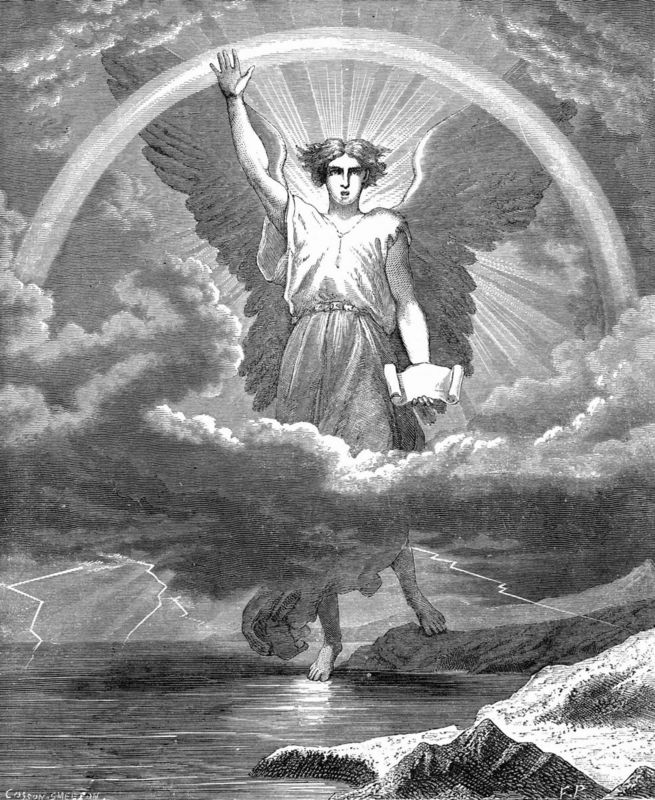
Deuteronomy 32:1–2, Note the phrases: “words of my mouth,” “my doctrine,” “rain,” “my speech shall distill as the dew,” “small rain” and “showers.” Now read compare these phrases with Eph 5:26. What is Scripture talking about here?

Israel spent 40 years in a dry wilderness. By contrast, the Promised Land was a land flowing with milk and honey and was well-watered. Immediately before and after the giving of the Torah at Mount Sinai (Exod 20), there are references to human thirst and YHVH providing water for his people (Exod 15:22–27; 17:1–7 Num 20:2–1

3). During the Messianic Age (the Millennium), living waters will flow from Jerusalem (Zech 14:8) and those who refuse to come up to Jerusalem for the Feast of Tabernacles (Sukkot) will receive no rain on their land (Zech 14:16–19).

As you relate all these scriptures together, what is the bigger lesson YHVH is trying to teach us here pertaining to water and the word of YHVH?


Blog Scripture Readings for 9-16 Through 9-22-18

Aside

THIS WEEK’S SCRIPTURE READINGS FOR STUDY AND DISCUSSION:

Parashat Ha’Azinu — Deuteronomy 32:1-52
Haftarah — 2 Samuel 22:1-51
Prophets — Haggai 1, 2; Zechariah 1:1 – 8:23
Writings — 2 Chronicles 23:1 – 29:36
Testimony — Revelation 9:1 – 15:8

Our annual Scripture Reading Schedule for 2017-2018 is available to download and print.

Most of this week’s blog discussion points will be on these passages. If you have general comments or questions on the weekly Scripture readings not addressed in a blog post, here’s a place for you to post those. Just use the “leave a reply” link below.

The full “Read Through The Scriptures In A Year” schedule, broken down by each day, can be found on the right sidebar under “Helpful Links.” There are 4 sections of scripture to read each day: one each from the Torah, the Prophets, the Writings, and from the Testimony of Yeshua. Each week, the Torah and haftarah readings will follow the traditional one-year reading cycle.

Weekly Blog Scripture Readings for 9/16/18 through 9/22/18.


A Wake-Up Word to the Seven Churches of the Last Days

Will you pass the test and make it into YHVH kingdom? 

Life is a series of tests. We either pass or fail them. YHVH is the school teacher who determines whether we will pass or fail, not us. His Word is our text book that tells us how to pass. If we learn the lessons and put to practice the things we have learned, we will pass. If not, we will fail. 

The problem is that we’re not just in a regular school classroom where if we fail, it’s really not a big deal in the bigger scope of life. Our classroom is this life. Whether we pass or fail will determine not only whether we will obtain eternal life or eternal damnation, but if we pass, the grade we get will determine our level of rewards in YHVH’s eternal kingdom. There are a couple of things going on here.

When YHVH calls us with his holy calling and we respond, we have a choice. The choice we make will determine whether we will be the least or the greatest in his kingdom (Matt 5:19). If we choose to obey him only a little, we will be least in his kingdom. If we choose to obey him all the way, we will be the greatest in his kingdom. Our level of obedience to his commandments determines our level of rewards in his kingdom.

If we give YHVH our all, like Ruth did when she chose to forsake the world and follow Naomi, we can become the bride of Yeshua. Ruth is a prophetic picture of Yeshua’s bride. The heart-attitude of the bride is: your people will be my people, your Elohim will be mine, and where you go, I will go.

Yeshua refers to his bride in the book of Revelation. She is unreservedly faithful to him. Yeshua’s bride is comprised of those who are follow the Lamb of Elohim wherever he goes; they don’t just follow him only when it’s convenient!

And I looked, and, lo, a Lamb stood on the mount Sion, and with him an hundred forty and four thousand, having his Father’s name written in their foreheads. And I heard a voice from heaven, as the voice of many waters, and as the voice of a great thunder: and I heard the voice of harpers harping with their harps: and they sung as it were a new song before the throne, and before the four beasts, and the elders: and no man could learn that song but the hundred and forty and four thousand, which were redeemed from the earth. These are they which were not defiled with women; for they are virgins. These are they which follow the Lamb whithersoever he goeth. These were redeemed from among men, being the firstfruits unto God and to the Lamb. And in their mouth was found no guile: for they are without fault before the throne of God. (Rev 14:1–5)

Yeshua demands total and unreserved commitment from his disciples. He said that his followers would need to love him more than anyone else including one’s closest family Continue reading


Double-Speak and Double-Think in Christian Theology

Deuteronomy 31:10–13, You shall read this Torah before all Israel. Verses like this tend to expose the theological confusion that occurs in the minds of many Christian Bible teachers. For example, Christian commentator Matthew Henry on this verse writes about the need to read the Word of Elohim and that doing so will “help us to keep his commandments.” Yet elsewhere he says in the same commentary about the same laws that the commandments or laws of YHVH “are done away with.”

Statements like these are representative of a split and incongruous, double-speak and double-think on the part of many mainstream church teachers and people when it comes to the commandments or laws of Elohim. Some laws, they say, we are to keep (e.g. thou shalt not murder, lie, commit adultery, etc.), but other laws we can disobey (e.g. the Sabbath, dietary laws, and biblical feasts).

Is it possible to have it both ways: to believe that we need to keep his commandments, yet teach they are done away with? If so, then what is the meaning of such biblical phrases pertaining to YHVH’s Torah or Word as “forever,” “for a thousand generations,” “the same yesterday today and forever,” “till heaven and earth pass away,” “I change not,” and “think not that I came to destroy the Torah-law?” Is ­YHVH’s Word inconsistent and contradictory, or is this, instead, the case with the thinking of men? Is YHVH’s immutable character flawed with regard to keeping his Word, promises and standards or is man the one at fault?

Do we have a high enough view of YHVH Elohim and fear him and tremble at his Word (Isa 66:2), or have we, in reality, to demoted the veracity of his Word by contorting YHVH and his Word to fit the mindset of changeable and inconsistent man (which the Scriptures define as idolatry)? Have we bought into the lie that the serpent proffered at the tree of knowledge in the Garden of Eden when he told the man and the woman that YHVH really did not mean what he said and that humans can take the “have it your own way” and “pick and choose” approach when it comes to obeying the Word of YHVH (a philosophy that forms the basis for the religious movement called secular humanism, which is at the heart of all the religions of the world—including much of Christianity—except the true religion of the Bible)?

How many aspects of Christian theology are no more than a thinly veiled version of the religion of humanism in disguise? These are tough questions that we as redeemed Israelites need to ponder seriously. Let’s not forget the words of Yeshua in John 14:15, “If you love me, keep my [Torah] commandments” and the words of the apostle in 1 John 2:5–5, “He that says, ‘I know him,’ and does not keep his [Torah] commandments is a liar and the truth is not in him. But whosoever keeps his Word in him truly is the love of Elohim perfected: hereby know we that we are in him.”

The bottom line as to why man has a hard time submitting to all of YHVH’s commandments is nowhere stated more concisely in the Bible than in Romans 8:7,

[T]he carnal mind is enmity against Elohim: for it is not subject to the law of Elohim, neither indeed can be.


Yom Teruah 2018— My Ponderings

The Good Ancient Paths Are Stepping Stones to the Future

Following Torah is an ancient river path that leads back thousands of years to the beginning of humanity and forward to eternity. It’s a true path that won’t lead us astray, because it’s divine Truth. At the same time, it’s a path that is greatly disparaged and hated by the devil and those who wittingly or unwittingly follow him. Why? Because it leads to Elohim and to eternal life. The biblical feasts are like the skeletal framework, blueprint or outline of the Torah and the whole Bible. They’re Elohim’s ancient plan of salvation and redemption for humans.

 Thus saith YHVH, Stand ye in the ways, and see, and ask for the old/ancient/eternal [Heb. olam, also everlasting, perpetual, unending future] paths [Heb. nathiyb, also footpath, trodden, traveller] where is the good way [Heb. derek, also journey, direction, manner, habit, way, of course of life (fig.), of moral character (fig.)], and walk therein, and ye shall find rest for your souls. But they said, We will not walk therein. (Jer 6:16)

Because my people hath forgotten me, they have burned incense to vanity/worthless idols, and they have caused them to stumble in their ways from the ancient paths, to walk in pathways and not on a highway, to make their land desolate and a perpetual hissing… (Jer 18:15)

Elohim’s ways are high ways as opposed low ways or to the other lower paths that most humans find themselves walking on.

Don’t Forget!

Remember the days of old, consider the years of many generations: ask thy father, and he will shew thee; thy elders, and they will tell thee. (Deut 32:7)

Remember ye the law of Moses my servant, which I commanded unto him in Horeb for all Israel, with the statutes and judgments. Behold, I will send you Elijah the prophet before the coming of the great and dreadful day of YHVH: And he shall turn the heart of the fathers to the children, and the heart of the children to their fathers, lest I come and smite the earth with a curse. (Mal 4:4–6)

Humans tend to forget their past history and YHVH’s ancient Torah-ways, which is why humans continually repeat the same mistakes of the past. Each present generation thinks that it’s wiser and smarter than the previous one and that they won’t make the same mistakes of the past, but they invariably do. This is because of human pride and ego. The feasts and Sabbath help to keep us on track spiritually, so that we won’t keep making the same mistakes over and over again. They help man to evolve spiritually to a higher level. The feasts are essential in that they help us so that we don’t forget who we are, where we’ve come from and where we’re going.

Choose the Upward, Less Travelled Path, Not the One of the Majority

Tell me, O thou whom my soul loveth, where thou feedest, where thou makest thy flock to rest at noon: for why should I be as one that turneth aside by the flocks of thy companions? (Song 1:7)

Each of us is continually confronted with two choices; we have to make a decision many times every day. Will I choose to go up to where my heavenly bridegroom feeds his flocks on the mountaintops, or am I going to hang out with my companions and peers? The former is a highway; the latter is a low way.

The Biblical Feasts—The Aerial View

The biblical feasts are moedim or divine appointments when Elohim meets with his people—when heaven and earth meet at a high place spiritually and kiss each other. When this happens, the mundane, secular, earthly or horizontal plane meets or bisects the heavenly, divine vertical plane. This is the place of the holy of holies, heaven on earth and the way of the cross (two beams meeting—a horizontal and vertical one).

The biblical feasts and weekly Sabbath are when YHVH gathers his sheep together to restore, refresh, encourage, energize, correct, unite them and to point them to the higher way. The feasts are like a mini Garden of Eden as well as a New Jerusalem, heaven on earth events. They keep us in touch with our sorry past and our potential glorious future.

The feasts and Sabbath help keep us on track spiritually (since they are the seven steps in Elohim’s plan of redemption or salvation for mankind) and are links to connect us to our corporate past and to the future. They help to provide us with a greater context to our lives, so that we will better understand the present—who we are individually and collectively, where we’ve come from, where we’re at and where we’re going. The fall feasts especially help us to understand where we’re going and what the future holds for us. Everyone wants to know what the future holds for them. Celebrate the feasts and find out!

The feasts reaffirm and reestablish the special relationship that man has with Elohim. Only men who were made in Elohim’s image have that relationship. Plants, animals, rocks, fungi and atoms don’t.

The feasts make us remember that we’re dependent on Elohim as our sustainer and creator and that Elohim has chosen in his sovereignty to be dependent upon us because he has allowed us to make his presence known and felt in the world. Without us, Elohim, in a sense, couldn’t exist on this planet, so our mutual relationship is a very big two-way street. We are Elohim’s light to the world, the ambassadors of his kingdom. We reflect him in the darkness of this world, which is why it’s important that we stay on his path of light, and in his ancient river of life that flows from the distant past into eternity. Since we represent the Creator, we need the Creator to show us the upward path, and the Creator needs us in the this world not only to represent him, but to reveal him to the world. It’s impossible for him to just come into this world with all of his power and glory without instantly destroying it. Imagine the earth being a few degrees closer to the sun. Now imagine this by a gazillion percent! That’s what would happen to the earth if Elohim were to show up as he is. That’s one reason he, in a certain sense, “needs” us in order to fulfil his purposes on this earth.

Yom Teruah—The Aerial View

The bottom line of Yom Teruah is that it points us to two very important things that are our great hope for humanity and the future: the coming of the Messiah and resurrection and glorification of the righteous dead. Until Yeshua the Messiah actually comes, Yom Teruah points us to the third most important thing: teshuvah or repentance. We need to stay humble and repentant, so that when he comes, he will find us in a spiritual state that will qualify us either to be resurrected from the dead or, if we’re alive at his return, to be immortalized and glorified in the moment of a twinkling of an eye as we meet him in the air.


Will you be one who is “worshipped” in Elohim’s kingdom?

Revelation 3:9, Worship/bow down before your feet. This scripture has puzzled many. Who are these saints before which those who are of the synagogue of Satan will at some time in the future bow down in worship? Who are those who are of the synagogue of Satan?

First, the saints are wearing crowns (verse 11) and they have the name of Elohim written upon them (verse 12). We know that a group of saints will be ruling with Yeshua in his millennial kingdom (Rev 1:6; 5:10). These same will be part of the first resurrection (Rev 20:6), which occurs at Yeshua’s second coming.

Secondly, not all the saints will be kings and priests. There are levels of rewards (and responsibilities) in YHVH’s kingdom depending on how obedient one has been to his Torah-commandments. This Yeshua teaches in Matthew 5:19. Some saints will be the least in his eternal kingdom, while some will be the greatest depending on their level of Torah-obedience.

Similarly, Yeshua identifies two groups in his Parable of the Ten Virgins (Matt 25:1–13). The wise virgins will go into the wedding supper of Yeshua, and presumably will become his bride.

In Revelation chapter three, Yeshua further identifies two groups of believers: those who are spiritually lukewarm and those who are spiritually hot (Rev 3:14–22). It is not a stretch to connect those who are spiritually on fire in Laodicea with those in Philadelphia who have Continue reading


Is “The Lord’s Day” a Proof of Sunday Observance?

Revelation 1:10, The Lord’s Day. This verse is one of the cliche biblical passages that mainstream church scholars use to “prove” Sunday’s replacement of the Sabbath. The problem with this position is that there’s no clear scriptural proof that the apostles ever changed the Sabbath to Sunday. What’s more, to view this passage as referring to Sunday is to take a phrase the early church fathers used as a euphemism for Sunday when pushing for Sunday in place of Sabbath observance and to retroactively apply this meaning to John’s use of the phrase. Frankly, it is biased and dishonest scholarship to take the phrase “the Lord’s day” with its second century colloquial meaning and then to back-apply this meaning to John’s use of the phrase when there’s no reason to believe this was John’s intended meaning.

Alternatively, the phrase, “the Lord’s day, can be a reference to the biblical term “the day of the Lord’s wrath” when YHVH, in the end times, will judge the nations for their wickedness. This is a point that several biblical scholars have made (see From Sabbath to Sunday, by Samuele Bacchiochi, p. 111; E. W. Bullinger’s Companion Bible footnote on Rev 1:10; The Jewish New Testament Commentary on this verse, p. 791, by David Sterns).

There is actually more scriptural proof that the phrase “the day of the Lord” is a reference to the seventh day Sabbath than to the first the week. In Isaiah 58:13, the prophet YHVH refers to the Sabbath as “my holy day…the holy day of the Lord.” So conceivably, it could have been on the Sabbath day itself that John received his vision on the island of Patmos about that great and terrible day of YHVH’s wrath that is to come on the earth just prior to the Messiah’s second coming.