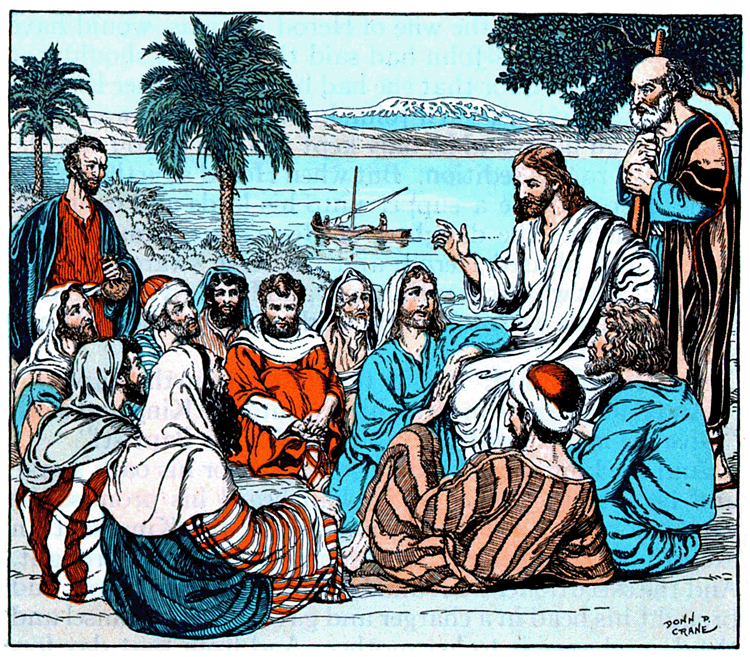
The Eight Blessings and Eight Curses of Yeshua

Matthew 23:13–33, The Eight Woes. There is a one-to-one correlation between the eight benediction of the beatitudes of Matthew 5:3–12 and the eight maledictions or woes Yeshua pronounces on the hypocritical religious leaders of his day in Matthew 23:13–33.

  1. The kingdom of heaven is opened to the poor, humble or contrite in spirit (Matt 5:3), while the door to kingdom of heaven is shut by and to the prideful and exclusive religious hypocrites (Matt 23:13).
  2. Those who mourn will be comforted (Matt 5:4), while greedy and pretentious religious hypocrites bring grief and sorrow to those they rule over (Matt 23:14).
  3. The meek will inherit the earth (Matt 5:5) versus religious zealots who compass the earth to expand their own kingdoms to make new converts, all of whom are shut out of the kingdom of Elohim and will inherit hell (Matt 23:15).
  4. Those who hunger and thirst for true righteousness will be filled (Matt 5:6) versus those who pursue a false, man-made religious system that involves twisting YHVH’s word for their own carnal purposes (Matt 23:16–22).
  5. The merciful will obtain mercy (Matt 5:7), while the religious hypocrites major in spiritually minor things and overlook mercy and the weightier matters of the Torah (Matt 23:23–24).
  6. The pure in heart will see (the heart of) Elohim (Matt 23:8), while hypocritical religionists put on an outward or superficial show of “purity,” but in reality, they overlook and neglect the inward purity of the heart. This equates to Torahlessness, which is equivalent to spiritual blindness and misses the heart of Elohim (Matt 23:25–26).
  7. The peacemakers will be called the sons of Elohim (Matt 5:9) versus Torahless religious hypocrites whose actions cause strife, confusion leading to spiritual uncleanness and death, which is the opposite of peace or shalom,which is physical and spiritual well-being in all areas of life (Matt 23:27–28).
  8. Those who are persecuted for righteousness’ sake will inherit the kingdom of Elohim (Matt 5:10–12) versus religious hypocrites, while claiming to be followers of Elohim, are themselves the persecutors of YHVH’s righteous saints (Matt 23:29–33).
 

Was Abraham saved by faith or by works or both?

Genesis 26:5, Because. Based on Paul’s teaching in Romans 4, we see that the Abrahamic Covenant is the model for salvation, which is salvation by grace through faith leading to or resulting in good works or righteousness (Eph 2:8–10).

From this verse, it might appear the Abrahamic Covenant wasn’t a faith-based covenant at all, but a works based one. In other words, Abraham had to do something to be counted righteous or to come into good standing with Elohim—a concept which is commonly referred to as “earning one’s salvation through one’s good works.”

The fact is that in the Abrahamic Covenant, Abraham only had to have faith and believe in YHVH to be justified or to be considered righteous by Elohim (Gen 15:6). It was on this basis that YHVH granted him “salvation.”

But this initial step of faith on Abraham’s part and the righteousness Elohim attributed to him was but the first step in Abraham’s faith walk. From that point, he had to walk out his faith and continue trusting YHVH (see also Gen 19:5).

The apostolic writers present the idea that one’s spiritual journey is a walk, not a one time event that occurs at the beginning of that walk. Our faith walk is more than just mental assent with a few emotions thrown in for good measure. It’s more than just following the golden rule about loving our neighbor in some nebulous sort of way. It involves faithfulness to YHVH’s instructions. James clearly states in his epistle that this is how one demonstrates the legitimacy of one’s faith when he declares that faith without works is dead (Jas 2:18, 20, 26; see vv. 12–26 for context).

Abraham demonstrated his faithfulness by his obedience to YHVH’s Torah or YHVH’s Word or voice. Furthermore, as a result of this obedience, YHVH promised to bless him beyond simply being granted initial salvation or righteousness.

This two-step approach or model still holds true in the Testimony of Yeshua. One is saved or delivered from the wages of their past sin (Rom 3:25), which is death (Rom 6:23) by their faith (initial salvation), and then one ceases from that sin by continuing in the good works of Torah obedience (Eph 2:8–10).

Moreover, Yeshua and the apostolic writers in numerous instances reveal that future rewards (both temporal and eternal rewards) come as a result of one’s good works (e.g. Matt 5:19). The ultimate reward is being granted eternal life and inclusion in the family of Elohim.


What is the difference between the Torah and the law of Moses, if any?

This question from on of our loyal readers just came in about my recent post on Acts 15.

Great teaching Natan, but one question…I never thought of there being both a Torah law and a law of Moses that was custom rather than law. So circumcision isn’t a Torah Law but Law of Moses that is a custom rather than law. How does one tell the difference between what Moses commanded that is a Torah law and what he commanded as his customary law? Referring to this: ” Rather, what he was referring to was the customs Moses established (which become known as the law of Moses), which exceed the basic requirements of the Torah. In this case, it was the custom the circumcision as a requirement for inclusion in the nation of Israel and is based on the Passover requirements found in Exod 12:43–49. “

Here is my response—

What is the difference between the Torah and the Law of Moses?

Is there a difference between the Torah and the law of Moses? Technically, no, since the Scriptures use the terms law of Moses and the law (i.e. Torah) interchangeably in many places.

However, many people think that the law of Moses or the Torah originated with Moses. I have emphatically taught over the years, and the Scripture is clear on the fact, that the Torah didn’t originate with Moses, but from eternity or from heaven where Elohim exists. How can we assert this? This is because the Torah is a reflection of the heart, mind, will and righteous character of Elohim. It is spiritual and is thus eternal as Paul states in Romans 7:14.

At the same time, and in a sense, Moses is the originator (by the hand of Elohim) of the law of Moses as a opposed to the eternal principles of the Torah, which, again, are a reflection of the heart, will, character, holiness and righteousness of Elohim. What do I mean? Moses is the first person to have written the Torah down (perhaps that’s one reason he needed to be educated in Egypt, so he was capable of such a task). He put the Torah into a form that had not existed before: a national constitution for a physical nation state. For the first time, he codified the Torah or turned it into a written legal code. This was necessary because Israel was now a nation with physical borders and not just a large nomadic family or tribe. As such, Israel needed a system of written laws by which to govern their nation. Therefore, Torah had to be expanded and more clearly defined, if you will, to meet those requirements. The laws of Elohim had to be specifically spelled out and put into a written form. In this form, political leaders, judges, priests and people would know what the law was, so that could be studied, obeyed and adjudicated. Furthermore, the nation could pass no new laws that in any way would contradict the Written Torah, which was the supreme law of the land.  

Consider this. The principles of the Torah are eternal, spiritual and endless because Torah Continue reading


Acts 15 Explained (The mainstream church has lied to you!)

Is YHVH Elohim’s instructions in righteousness or Torah an unbearable yoke that Christian are free from making it now alright to murder, steal, lie, commit adultery and break the Sabbath? That’s what some misguided people want you to believe!

Oy vey! There is so much confusion, misunderstanding and false teaching out there in the church world. For example, the mainstream church has taught (or brainwashed) its constituents into believing that according to Acts 15, Gentiles are free from all of the requirements of the Torah-law of Moses, except for the four things mentioned in Acts 15:20.

What this means is that I guess it’s now all right for Gentiles to murder, steal, lie, worship idols, violate the Sabbath and you don’t have to tithe either (oops, there goes the pastor’s salary, retirement and building fund down the drain, and denominations are a thing of the past, as well, with their financial base gone), as long as we do the four requirements stipulated by the apostles in Acts 15:20. That means we have to do kosher slaughter of clean animals and make sure we get the blood out of the meat. Oh, I just remembered, the church doesn’t even teach these basic things, much less practice them. Now I’m really confused…so what’s really going on here? Well, it’s a heart of man thing! Paul summed it up in Romans 8:7,

Because the carnal mind is enmity against Elohim: for it is not subject to the law of Elohim, neither indeed can be.

Jeremiah had something to say about this as well,

The heart is deceitful above all things, and desperately wicked: who can know it? (Jer 17:9)

Human nature hasn’t changed much from the time these words were penned until now. To wit, someone just wrote the following in the comments section of this blog:

I heartily disagree. One need only look to what the Jewish apostles taught their goyim charges (from the Council at Jerusalem – Acts15, specifically verses 28 & 29));

It seemed good to the Holy Spirit and to us not to burden you with anything beyond these essential requirements: You must abstain from food sacrificed to idols, from blood, from the meat of strangled animals, and from sexual immorality. You will do well to avoid these things.

Not a word about the “Law”. Rather listen to what Jesus’ closest friend had to say, “Now then, why do you test God by placing on the necks of the disciples a yoke that neither we nor our fathers have been able to bear?”

Evidently, some feel that they know more than the Holy Spirit, and Peter.

I responded as follows:

Yes, yes, yes, those of us who’ve been around the block a time or two over the past few decades have heard this argument more than a few times. It’s not that someone is claiming to know more than Peter or the Holy Spirit, as you suggest. Rather, it’s that someone is failing to understand the Acts 15 passage in its full context and has defaulted to believing the traditions of men by which the Word of Elohim has been made of non-effect. Please allow me to explain.

First, let me thank you for allowing me to address this sadly misunderstood passage of Scripture that has confused many people and led many folks, such as yourself, to come to a totally wrong and unscriptural conclusion. To take the position you are positing totally contradicts hundreds of other verses in both the OT and NT. Yeshua himself said that the scripture cannot be broken (John 10:35). To say that Scripture contradicts itself is, honestly, to call the Bible a lie and the Author of it a liar. Hard words, but the truth. Sadly, this is the majority position of the mainstream church. YHVH Elohim will straighten out this mess in due time. Many Christian teachers who have taught this and who have led YHVH’s people astray will be proven to be false and will have to answer before Elohim’s throne of judgment for it.

I will post the counter argument to your position on my blog. Those who are not afraid of the truth can read the truth here:

Now here’s my commentary on Acts 15.

Acts 15:1–29, See notes at Matt 11:29. (Posted below)

Acts 15:1, Custom of Moses. This is based on Exodus 12:48 which requires all males to be circumcised before being allowed to partake of Passover. To be part of Israel, one had to become circumcised and observe the Passover and all Israel was required to do so (Exod 12:47). Foreigners were forbidden from keeping the Passover (Exod 12:43) until they were circumcised. From this, the Pharisees got the idea that circumcision is a prerequisite for salvation—or inclusion in spiritual family of redeemed Israel. As Paul points out in Romans chapter four, Abraham was justified by faith, not by the rite of circumcision. Therefore, the custom of circumcision as a prerequisite for inclusion within the nation of Israel (a metaphor for salvation) is unique to the law of Moses, and not to the over-arching and eternal principles of the Torah (as demonstrated by the fact that Abraham come into a relationship with YHVH 24 years before being circumcised) to which the law of Moses is subservient. This custom was necessary in order to protect the sanctity and integrity of the physical nation of Israel from foreign and pagan influences and was not prior to or subsequent to the physical nation of Israel intended to be a prerequisite for eternal salvation as Paul, again, makes clear in Romans chapter four.

Acts 15:10, Yoke on the neck. Many Christian commentators teach that Peter is making a reference to the Torah when he speaks of a yoke being put around the neck of the people of Israel meaning that Torah-observance was an impossibility. Yet, Moses told the Israelites that Torah-obedience wasn’t impossible (Deut 30:11–14), and that it would be a source of life to them (v. 19), and would be a source of wisdom and understanding for them, thus eliciting the curiosity of the surrounding nations (Deut 4:6–8). Were Moses and Peter at odds with each other thus violating the unity of Elohim’s Word (John 10:35)? Or Continue reading


Blog Scripture Readings for 11-4 Through 11-10-18

Aside

THIS WEEK’S SCRIPTURE READINGS FOR STUDY AND DISCUSSION:

Parashat Toldot — Genesis 25:19 – 28:9
Haftarah — Malachi 1:1 – 2:7
Prophets — Judges 11:1 – 17:13
Writings — Psalms 35:1 – 40:17
Testimony — Matthew 22:1 – 25:30

Most of this week’s blog discussion points will be on these passages. If you have general comments or questions on the weekly Scripture readings not addressed in a blog post, here’s a place for you to post those. Just use the “leave a reply” link below.

The full “Read Through The Scriptures In A Year” schedule, broken down by each day, can be found on the right sidebar under “Helpful Links.” There are 4 sections of scripture to read each day: one each from the Torah, the Prophets, the Writings, and from the Testimony of Yeshua. Each week, the Torah and haftarah readings will follow the traditional one-year reading cycle.

Weekly Blog Scripture Readings for 11/4/18 through 11/10/18.


What does hosanna in the highest mean?

Matthew 21:9, Hosannah in the highest. The simple Hebrew phrase hoshana rabbah has more depth and spiritual significance than first meets the eye. Let’s explore it.

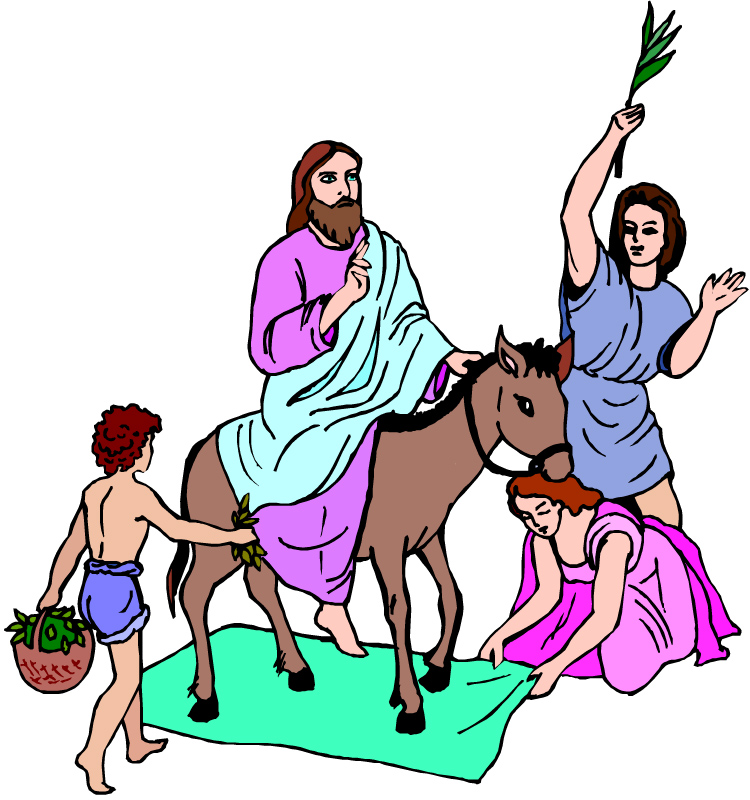
First of all, it was this phrase—hosanna in the highest—(Heb. hoshana rabbah) that the crowds of Jews exclaimed as Yeshua entered Jerusalem riding a colt in Matthew 21:9 (also Mark 11:9; Luke 19:38). This event has become known as Yeshua’s “Triumphal Entry.”

The phrase hoshana rabbah, in part, derives from Psalm 118:25, a psalm which is called the Great Hallel (Heb. meaning “praise”), and was the climax of a series of psalms that the priests would proclaim or sing from the temple in Jerusalem on various feast days including the Feast of Tabernacles.

Psalm 118 is a prophetic psalm, which speaks of the coming Messiah who was the hope of the Israelite people. The words of this psalm prophetically points to Yeshua the Messiah in every way. That’s why the crowds proclaimed “hoshana in the highest, ” at Yeshua’s entry into Jerusalem, for upon him, they had pinned their highest hopes of a Messianic figure who would deliverer them from their oppressors (in this case, the Romans).

The actual Hebrew words in Psalm 118:25 are ana YHVH hoshiah na, which can be translated as “I beg you YHVH save now,” (Green’s Interlinear), “Save now, I pray, O YHVH” (KJV), or “O [YHVH], please save us!” (The ArtScroll Stone Edition Tanach).

The phrase “Hosanna in the highest” was an added exclamation of the people, and is not a direct quote from the Tanakh. In Hebrew it would be hoshiana rabbah or hoshanna rabbah, which, according to Jewish understanding, is the name of the seventh or last day of the fall biblical Feast of Tabernacles (or Sukkot).

It was on this “last great day” of the Feast that the joyous water pouring ceremony occurred, and when the Jews prayed to receive rain from heaven to water their crops including the latter (spring) rains and the former (fall) rains. In the arid region of the land of Israel, rain was received as a gift and a favorable blessing from heaven, since it meant that the crops would flourish and famine would be averted.

Prophetically, the rains of Hoshana Rabbah speak of a time when during the Millennium (of which Sukkot is symbolic picture) YHVH will pour out the rain of his Spirit (along with his Torah and his glory) upon the world, thus spiritually cleansing and refreshing mankind resulting in a great harvest of souls into the kingdom of heaven. When this occurs, the nation of Israel will be walking in spiritual communion with its Creator. This is why the Jews sang Isaiah 12:3 on Hoshana Rabbah,which declares “Therefore with joy we will you shall draw water out of the wells of salvation.” 

Similarly, it was on Hoshana Rabbah (“the last day of the feast,” John 7:37–39) that Yeshua encouraged his followers to come to him as the spiritual River of Life. This would result in the dry ground of their spiritual lives being quenched, and in their becoming a river of life like him resulting in abundant spiritual fruits of salvation of lost souls coming to Yeshua (i.e. the regathering of the lost sheep of the house of Israel, Matt 10:6; 15:24).

This phrase hoshana rabbah can also mean, “save us O great one,” since the Hebrew word rabbah can mean “great one.” The term rabbi (the title for a Jewish Bible teacher) originates from this word. Rabbi literally means, “my great one,” which is why Yeshua forbad his disciples (and us) from taking this word as an ecclesiastical title for themselves, or from calling someone else by that title (Matt 23:8). This is a title that should be reserved only for Yeshua himself (Matt 23:10)!

Hoshana rabbah in its fullest sense means “I pray, I beseech thee to open wide, free, succor, deliver,help, preserve, rescue, bring salvation, bring victory, save greatly, in abundance, increasingly, or please deliver us Great One.”


Focus on Isaac and Rebekah—Who Were They?

Isaac—A Character Sketch

He was successful and blessed. (Gen 26:12)

He was obedient to his father.

  • At age 37 Abraham bound Isaac to the altar (in Heb. called the akeidah, Gen 22).
  • Isaac was obedient to marry Rebekah, his parents’ choice, unlike Esau who married a heathen girl.
  • He trusted and had faith in his parents even as he trusted his life with his father at the akeida.
  • He had deep and personal relationship with YHVH.
  • Here we learn that obedience to and faith in and love for parents leads to devotion to YHVH. Honoring one’s parents is the key to honoring YHVH and entering into relationship with him. That is why the fifth commandment to honor one’s parents is placed after the commands to love Elohim. In Genesis 24:63 and 25:21, (see The Stone Tanach rendering of this verse in addition, The ArtScroll Beresheis, p. 1048, which says Isaac prayed abundantly and urgingly, i.e. persistent prayer, a penetrating prayer or request), we see that Isaac had a deep and personal relationship with his Creator.

He had strong faith.

  • Though childless and barren, Isaac and Rebekah kept their faith in the promises of YHVH alive (Gen 25:19–26). In verse 21 we see Isaac seeking YHVH for the answers to life’s dilemmas and tough problems (he had a vibrant and abiding relationship with his Heavenly Father). The same can be said of Rebekah (v. 22).
  • He was a peacemaker with his neighbors to his own hurt in that he didn’t assert his personal (even legal) rights.
  • Though opposed in the digging of wells, he refused to feud over his legal rights to these wells. He avoided strife and quarreling with his neighbors. After digging the third well, YHVH brought comfort to Isaac’s weary soul (Matthew Henry’s Commentary, p. 38).
  • He was charitable toward his unsaved neighbors. Though Abimelech and his people had wronged Isaac, he did not rebuke them for stealing the first two wells. Was this a sign of Isaac’s meekness or weakness? Some biblical scholars say no (e.g., Matthew Henry) and some say yes (e.g., Gleanings in Genesis by Arthur Pink, p. 233).

What are some comparisons between the three patriarchs?

  • Abraham was the man of the altar. He built altars as a form of worship to YHVH. The altar is mentioned more times in connection with Abraham than the other two patriarchs.
  • Isaac was the man of the well. Wells are mentioned seven times in connection with Isaac.
  • Jacob was the man of the tent. ­The tent is mentioned more times in connection with Jacob.

What are the spiritual implications of the altar, the well and the tent?

The Abrahamic Covenant is the covenant of salvation (by grace through faith, see Rom 4). The spiritual significance of the altar, well and the tent are expressed in the layout of the Tabernacle (or tent) of Moses in the wilderness, which is a picture of the steps one must take to receive YHVH’s free gift of salvation or redemption from sin’s death penalty. In one’s Continue reading