A Prayer, “Abba Father, stir us up…”

A prayer:

Yehovah Elohim, the disciples of Yeshua were so energized spiritually by his convincing bodily appearance to them after his resurrection that they immediately began preaching the gospel far and wide, and did so selflessly in the face of persecution, imprisonment, torture and even martyrdom. Prior to this, they ran away in fear from doing doing the great commission.  Similarly, Yehovah Elohim, may Yeshua become so real to each of us, your end time servants, that we will follow in the disciples’ same footsteps of passionate and death defying zeal at sharing the message of Yeshua to those around us. Yehovah, give each of us a fresh revelation of Yeshua, and may this somehow empower us, stir up and set ablaze our lassitudenous, obdurate, tepid and, at times, effete hearts to fearlessly and enthusiastically proclaiming Yeshua the Messiah and his coming kingdom. Amein.

As a side note, I have  more than 430 videos on the Hoshana Rabbah YouTube channel (https://www.youtube.com/user/HoshanaRabbah?feature=mhee), most of which are my own teachings. Some years back, I made a couple of short videos with tips on how to share the gospel with those around us via friendship or relational evangelism. Sadly, these videos are at or near the bottom of the list of the least watched videos on my channel. Enough said.


May the Force Be With YOU in 32 Ways!

Luke 24:49, Endued with power from on high. What is the most powerful Force in the Universe? It is Holy Spirit of YHVH Elohim — the Almighty Creator God of the Bible! 

By the force of Spirit and Word of Elohim, the universe and earth were created. With his hands, Elohim shaped man out of earth and by the Force of the breath of his Spirit, he breathed life into that lump of earth and man became a living being. That same spiritual Force impregnated the womb of the virgin Mary and Yeshua the Messiah, the Son of Elohim, was clothed in humanity and became the Elohim-Man and Savior and Redeemer of humanity. 

Yeshua the Messiah promised to send that same Force of the Spirit of Elohim to live inside Continue reading →


“Father, forgive them…”—Let the Healing Process Begin

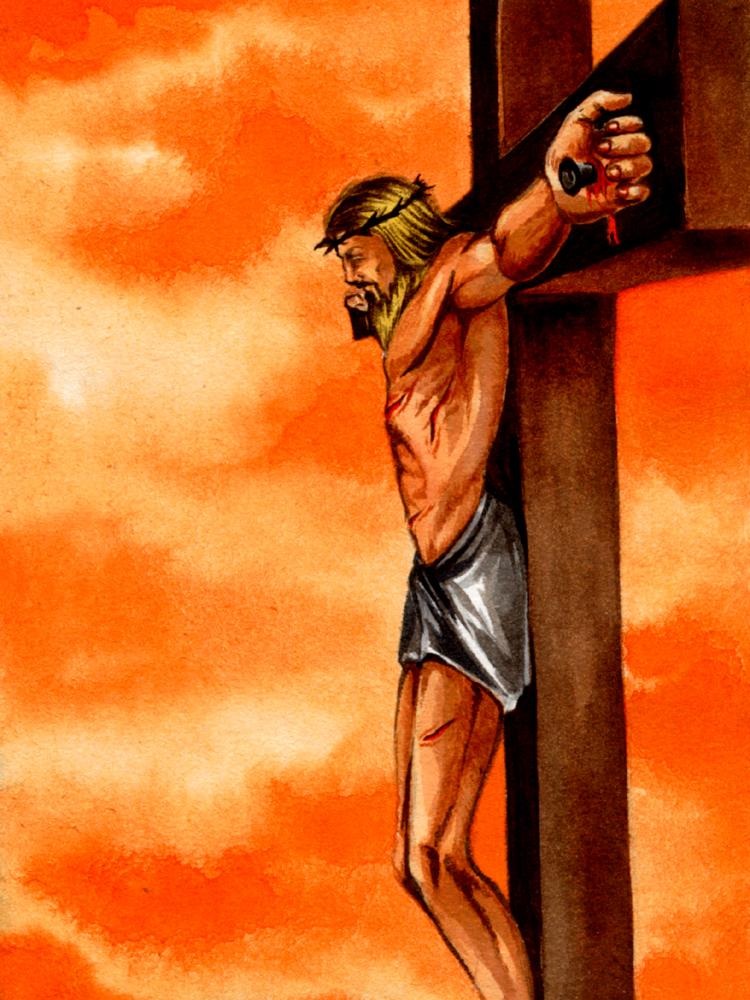
Luke 23:34, Father, forgive them. Yeshua said this for his and our benefit, and not because it made any difference in the lives of those who crucified him. It was for his benefit, so that the sin of bitterness and unforgiveness wouldn’t take root in him. It is for our benefit, so that we’d have his example to follow when dealing with our enemies. 

There is a deep and transformative truth in the power of forgiveness. When we forgive our offender (it doesn’t matter whether they know about it or not), it prepares the way for the relationship to be restored. The miracle and beauty of the forgiveness process is that now we get to help those who have  sinned against us in the healing of their own sin. 

Like so many of Elohim’s truths and Yeshua’s practices, this is counter intuitive to the natural way man thinks. When sinned against, man’s natural, knee-jerk response is to hold on proudly to bitterness and offense in hopes the other person will recognize their error and humbly repent of their sin to us, the offended party. This is delusional thinking on the part of the one sinned against, since it seldom works this way. 

Because of human pride, both the sinner and the one sinned against—if each follows their own natural and self-defensive inclination—will usually dig in and fortifies the position of  their own self-rightness. The sinner is certain he is justified in his actions against the one he sinned against, while the offended party feels it is his right to walk in offense until the sinner admits his sin and repents. As such, each party remains frozen and polarized in his position and the break in the relationship is never resolved. Division and strife becomes the etched-in-stone norm. This is all based on human pride, which heads the list of the seven deadly sins that YHVH hates the most and views as an abomination (Prov 6:16) resulting in division between brethren (Prov 6:19). 

It is the devil who is our adversary, is the one who destructively divides (John 10:10) and accuser of the brethren (Rev 12:10), and the one who comes to kill, steal and destroy loves this. When we hold on to bitterness and unforgiveness against someone, we become their adversary and accuser. This results in strife and division between people.

This prideful division between people is not resolved until one of the parties chooses to follow the instructions and example of Yeshua to become a blessed peacemaker (Matt 5:9) and humbles himself and forgives his neighbor, so that the healing process can occur. On the cross, Yeshua initiated this process of relationship restoration in preparation for his role in heaven as our Great High Priest to act on our behalf  before his Father to reconcile sinful man through himself to Elohim.

 

The Horns of the Altar and Yeshua

Exodus 29:12, Horns of the altar. The four horns of the altar of sacrifice was the place where the blood of atonement was sprinkled (also Lev 4:4, 17, 18, 25, 30, 34; 8:15; 9:9; 16:18). 

But there’s more. Horn is the Hebrew word qeren meaning “horn, hill or ray.” This word is used to describe the rays of light rays emanating from the face of Moses after his encounter with YHVH (Exod 34:29) and the horns of an animal (Ps 69:31). In ancient cultures, the horn was a metaphor for physical strength or spiritual power (Deut 33:17; 2 Sam 22:3; Ps 18:2). Elsewhere, YHVH is referred to as man’s “horn of salvation” meaning he is the strength of our salvation. The Hebrew word for salvation is yesha meaning “deliverance, rescue, safety, welfare, victory, prosperity.” The root of yesha is the verb yasha meaning “to save, to deliver, to give victory.” Not only is YHVH called our “horn of Continue reading →


The Seven Steps in Consecrating a Priest and the Royal Priesthood of the Believer

The Gospel Message in the Priestly Consecration Ritual
(from Exodus 28–29 ; Lev 8)

Now let’s note the seven steps of consecrating the priests and compare them with the steps a believer goes through to become a “chosen generation, a royal priesthood, a set-apart nation, a peculiar people that you should show forth the praises of him who has called you out of darkness into his marvelous light” (1 Pet 2:9). Notice how these seven steps relate to the steps a new believer takes in his conversion process and how they relate to one’s spiritual journey from outside the mishkan where the altar of the red heifer is located representing the cross of Yeshua, then into the door of the tabernacle (i.e. Yeshua who is the door), to the altar of sacrifice (i.e. a prophetic picture of communion) to the bronze laver (i.e. immersion for the remission of sins and being washed in the water of the Word of YHVH), into the set-apart place where the Ruach (Spirit of Elohim) is and onward and upward spiritually into intimate relationship with the Father. In Exodus chapters 28 and 29 we find the following:

Step One: They were taken from among the children of Israel ( Exod 28:1). This prefigures divine election (see John 15:16). YHVH calls or chooses each person. Yeshua called his disciples. They did not call or choose him, but they had to respond to that call.

Step Two: They were brought into the door of the tabernacle (Exod 29:4). The door of the tabernacle is Messiah Yeshua who is the door to the sheepfold. No man comes to the Father except through Yeshua (John 10:1–5, 7, 9) The door is four colors which speak Continue reading →


The Torah Origins of the Ordination Ritual

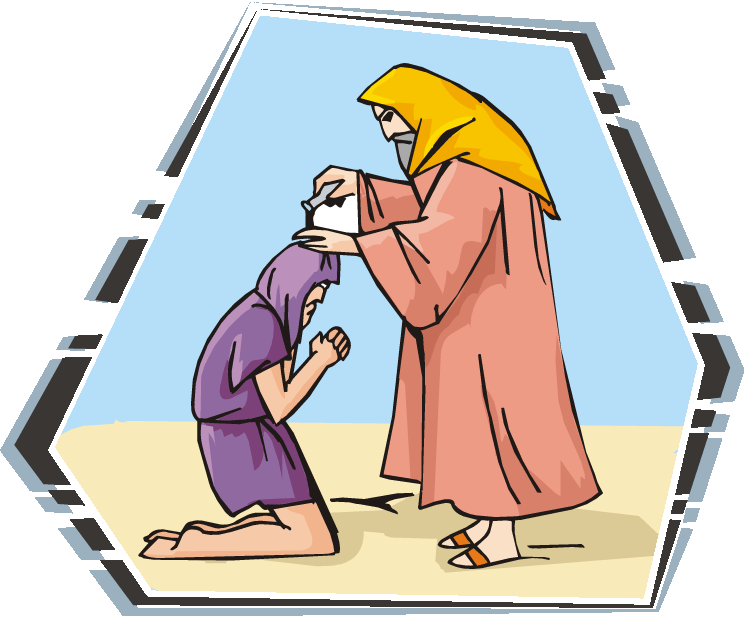
Exodus 28:41, Anoint them. Ordination is a religious ritual that YHVH instituted in the Torah when he charged Moses to lay hands upon Aaron and his sons as part of the process of consecrating them to the priesthood (Exod 28:41; 29:7; 30:30).

YHVH then instructed the Israelites themselves to lay hands on the Levites as part of the process of consecrating them to the Levitical service (Num 8:10). In addition, the kings of Israel were also anointed with oil (although hands were not imposed on them) to consecrate them for their kingly duties (e.g. 1 Sam 10:1; 16:13; 1 Kgs 1:39).

The laying on of hands or ordination is nothing more than earth’s confirmation of a heavenly calling. The biblical record clearly shows us that when ordinations occurred, Continue reading →


Olive Oil and the Saint

Exodus 27:20–21, They shall bring pure oil. Olives, olive oil and the olive tree are very significant ancient biblical symbols. Most notably, olive oil was used for anointing and for burning in the seven-branched menorah—a picture of redeemed Israelite believers comprised of many different congregations (Rev 1:12–13). This olive oil was pure and the olives were beaten or pressed to produce oil for light (Exod 27:20). 

How does this relate to the believer’s life, so that one can be the light of the world that Yeshua commanded us to be? (See Matt 5:14–16 cp. Acts 14:22; Rom 8:17; 2 Tim 3:12; 1 Pet 4:12–14; Jas 1:2–3.)

The priests attended to the menorah to keep it burning continually from evening till morning. This reminds us of Yeshua’s Parable of the Ten Virgins (Matt 25:1–13), where Yeshua’s exhorted his disciples to be like the wise virgins who kept their lamps trimmed and full of oil as they were watching and waiting for their bridegroom to come.

In the Parable of the Ten Virgins, the level of oil in each virgin’s lamp was the factor that determined whether they would be allowed entrance into the bridegroom’s wedding or Continue reading →