
Leviticus 1–7

An Overview of the Sacrificial System
Although Jewish and Christian scholars disagree about whether the sacrifices were to cease after the coming of the Messiah, as Edersheim points out, all agree that the object of a sacrifice was substitution for the offender (The Temple—Its Ministry and Service, p. 90). He also notes that the Jewish fathers along with the Scriptures that all of these substitutionary sacrifices pointed to none other than the Messiah. This understanding is especially expressed in the proto-rabbinic biblical Aramaic commentaries or Targumim (e.g., Targum Jonathan and the Jerusalem Targum; ibid., p. 92). Later rabbinic sages, in light of the rise of Christianity, were loath to accept this interpretation and, to this day, pretend it was never the belief of their ancient predecessors.
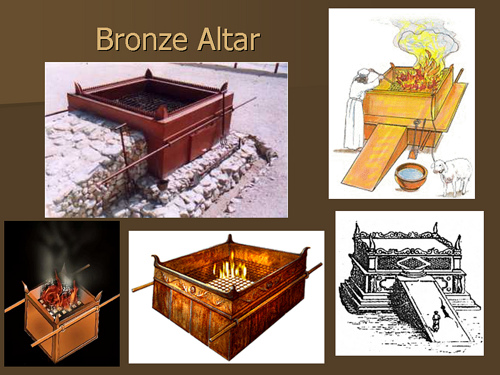
As the Tanakh progresses, the concept of the substitutionary sacrifice as it relates to the sinner and to the Messiah expands and unfolds. The unity of the Tanakh in this regard and its progression of revelation on this subject must be taken into consideration when studying the sacrifices listed in Leviticus and the rest of the Torah if we are to understand completely the biblical concept of substitutionary sacrifice as well as the Messianic prophecies. The concept of sacrifice in the Tanakh point us prophetically in progressive stages to the sin-atoning death of the Messiah on behalf of sinners. Such passages in the Tanakh as Psalms chapters 2, 22, 35, 69, 72, 89, 110, 118 along with Isaiah 52:13–53:12 (many other scriptural passages could be cited here as well) point undeniably to the Person and work of Yeshua the Messiah including his suffering and glorification. The apostolic writers understood these prophecies and how Yeshua fulfilled them perfectly (e.g., Isa 52:13–53:12 cp. Heb 9:11–15; 10:4–7, 1; etc.), and this understanding forms the basis for the New Testament, which the authors thereof refer to as The Testimony of Yeshua (Rev 1:9; 6:2; etc.).
All the animals slaughtered in the sacrificial system were similar, in modern terms, to the minimum amount due on a credit card statement of a bill so huge one cannot possible pay the balance; therefore, one is able only to afford to pay the minimum amount due until somehow, miraculously, someone will step in to pay the full amount. Yeshua paid that monstrously huge sin debt for each of us at the cross. All of the sacrifices in the Tabernacle of Moses were merely tiny down payments on the vast sin bill that each sinner owed for his sins and which would ultimately be paid by Yeshua’s death on the cross. The penalty for sin is death, and this debt can only be paid by the death of the sinner. Once he is dead, then what? No more life. This is why Yeshua had to pay the price for man, so that we might live forever and not die forever. How could Yeshya’s death pay for all of humanity? After all he was only one man. This is possible only because the Bible reveals in numerous places that Yeshua was the Creator of man (John 1:3, 10; Heb 1:2, 10; Col 1:16) thus making his death life more valuable than all that he ever created, even as the builder of the house is more valuable than the house he builds (Heb 3:6).
Six Types of Offerings (Heb. korban) Offered on the Altar (Lev 1-7)
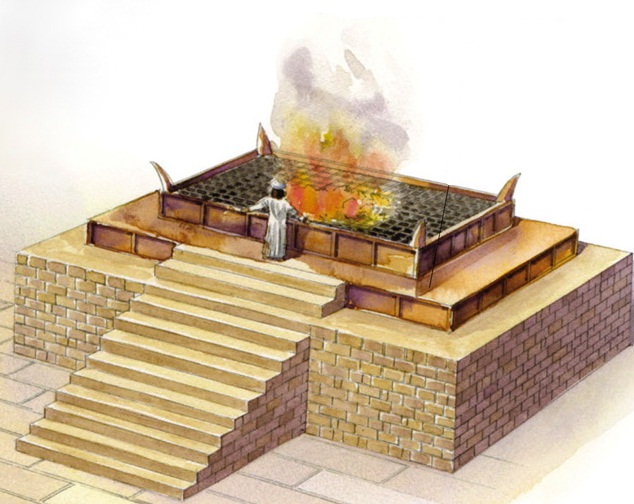
Burnt or Elevation (Heb. Olah) Offering (Lev 1:3–17)
The olah or ascending offering signified the offerer giving himself up totally, wholly ascending or complete surrender to Elohim. The priests offered up this sacrifice twice daily—the morning and evening (Exod 29:38–42; Num 28:1–8). This offering was always a male animal whose blood was to be sprinkled around the altar. The offerer was to lay his hands on the head of the animal before it was slaughtered symbolizing substitutionary atonement for sins. The offering would be accepted as a sweet aroma by Elohim.
The daily burnt offering was made in conjunction with a meal or grain offering and a wine libation (Exod 29:38–42; Num 28:1–8). Burnt offerings (along with the grain offering and wine offering or libation) were also made on the weekly Sabbath, at the new moon, on the all of the biblical feasts. These burnt offerings (including the one offered on Passover day) were in addition to the twice daily burnt offerings. This was a perfect prophetic picture of Yeshua’s death on the cross and of the communion cup, which memorializes our Savior’s death.
Meal, Grain or Meat, (Heb. Minchah) Offering (Lev 2:1–16; 6:14-23)
This offering was brought in conjunction with the burnt and peace offerings or by itself. The name minchah implies a gift, present or a tribute to a superior and proclaimed the offerer’s acknowledgement that his life is in Elohim’s hands. This offering was made of finely ground flour mixed with oil, salt and frankincense (and water) and could contain no leavening or honey. When part of the burnt offering, it was combined with the drink offering or wine libation, which was poured out on the altar (Exod 29:38; Num 28:5–7).
It was brought by people too poor to afford anything else as a trespass offering (Lev 5:11).
Fine flour represents Yeshua and oil symbolizes both the Set-Apart Spirit of Elohim and the Torah (i.e., Spirit and Truth). This offering could be baked or fried. If fried it was done so in oil and broken into three pieces with oil poured over it. This offering speaks of Yeshua’s death, burial and resurrection with which the believer must identify when he eats the elements of communion.
Sin (Chatat) Offering (Lev 4:1–35; 6:24–30)
This offering was made for general sin (violation of any of YHVH’s commandments), and not specific or special offences (as was the case with the trespass offering). The sin offering symbolized general redemption or atonement for the individual offender (including rulers, priests or common people) or for the whole congregation of Israel, and like the trespass offering, was for only for sins committed in ignorance, unintentionally or because of weakness as opposed to wilful sin or presumptuous sin In all cases, the offender would lay his hands on the head of the animal victim before it was slaughtered as a symbolic act of transferring the person’s sin guilt to the animal.
This offering involved a bull or a lamb offered on the altar and was eaten by the priests. Sin speaks of man’s sinful nature leading to sinful (unintentional) deeds for which man (including believers) needs atoning on an ongoing basis (1 John 1:9).
Trespass or Guilt (Asham) Offering (Lev 5:14–19; 6:5–7; 7:1–7)
This offering was made for specific transgressions committed in ignorance, weakness or unintentionally as a result of one voluntarily confessing his guilt. If one were too poor to bring a lamb, he could bring two turtle doves or pigeons, or on minchah or meal offering.
Peace or Fellowship (Shelam) Offering (Lev 3:1–7; 7:1–36)
This was a joyous sacrifice intended to celebrate one’s happy fellowship with Elohim through covenantal relationship. It’s as if YHVH is the guest of honor at the meal. It was offered voluntarily out of thanksgiving or in honor of a vow made to Elohim (Lev 7:12, 16). The peace offering may be what the psalmist had in view when he speaks of a sacrifice given in grateful fellowship with Elohim (Pss 54:6; 116:12).
This was a voluntary offering expressing the offerer’s desire to express thanks to Elohim and to seek friendship or communion with him. The priests and the offerer consumed the flesh of this offering in a meal that also included unleavened bread with oil and fine flour. This offering was a sign of a healthy and loving relationship between the offerer, the priests and Elohim.
Drink Offering (Gen 35:14; Exod 29:40–41; Num 28:7–10, 14–15, 24, 31)
This offering was poured out upon an existing offering such as the twice daily burnt offering. This offering can signify consecrating to Elohim or pouring one’s life out for his service (Phil 2:17).
Leviticus 1
Leviticus 1:1, Moses ends the word vayikra with a small aleph out of humility before YHVH (Tikkun, p. 225).
Herd…flock.The Hebrew means a herd of cattle (defined in v. 3, 5) or a flock of sheep or goats (defined in v. 10).
Leviticus 1:3, Of his own free will. Acknowledgement of sin, repentance and acceptance of Yeshua the Messiah’s atoning death on the cross, which the burnt offering symbolically represented, is an act of a person’s free will. No one, including YHVH, compels a person to choose the path of redemption, salvation and life that YHVH has offered to humans. Each person has to make that spiritual transaction himself of his own volition, even though YHVH loves the whole world (John 3:16) and desires all to be saved (2 Pet 3:9).
The door of the tabernacle. This is a symbolic and prophetic metaphor for Yeshua the Messiah, who is the door to salvation (John 10:7–10).
Leviticus 1:4, Put his hand on. Acknowledgment and confession of sins is an individual matter.
To make atonement for him. Atonement and salvation is an individual matter.
Leviticus 1:5, He shall kill. In ancient Israel, a sinner was kill the animal to be sacrificed as an atonement for his sin. This act reinforced upon the individual’s heart and mind the gravity of his sin and the consequences there of upon an innocent animal, which symbolically pointed to the death of Yeshua, the Lamb of Elohim, upon the cross, who had to die for each person’s sins. If killing an innocent animal brings grief to a person’s heart, then how much more the death of Yeshua, the Son of Elohim?
Sprinkle. Heb. word zaraq means “to scatter, sprinkle, toss, throw, scatter abundantly, strew.” The sprinkling of the blood of the sacrificed animal on and around the altar of sacrifice (and elsewhere in the tabernacle as well) is mentioned numerous times in the Torah (e.g. Exod 24:6; 29:16; Lev 1:11; 3:2, 8, 13; 4:6,17; 5:9; 7:2). The blood was even sprinkled on the people (Exod 24:8), and on Aaron and his sons (Exod 29:20–21). This is a prophetic picture of Yeshua bleeding, while dying on the cross and shedding his blood as an atonement for our sins. Yeshua’s sprinkling his blood on the cross fulfilled the sprinkling of blood under the sacrificial system in the following ways:
Continue reading