Here are some free resources from Hoshana Rabbah to help you to understand the past, present and future significance of this day as it relates to you and your spiritual walk.
https://www.hoshanarabbah.org/pdfs/yom_kippur.pdf


Here are some free resources from Hoshana Rabbah to help you to understand the past, present and future significance of this day as it relates to you and your spiritual walk.
https://www.hoshanarabbah.org/pdfs/yom_kippur.pdf
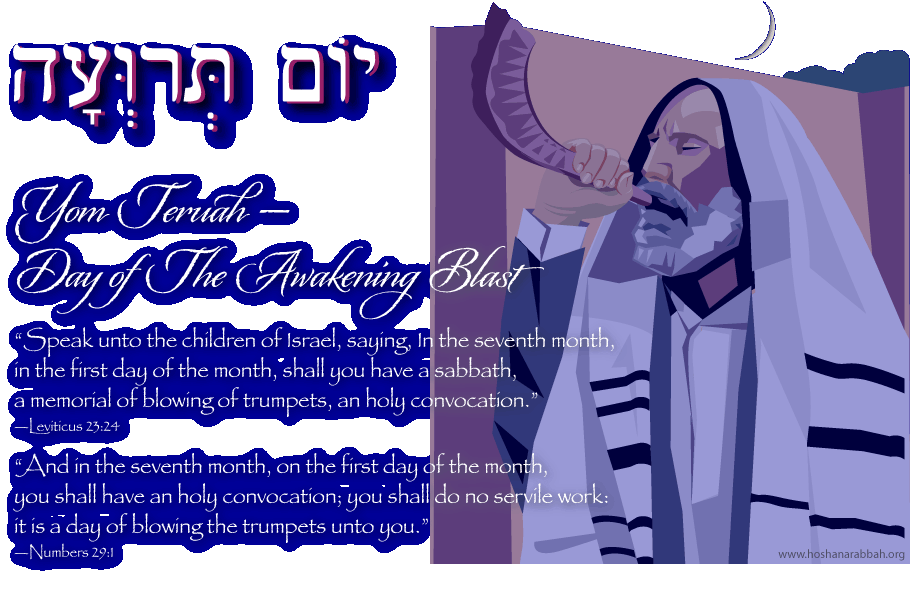
Here are some free resources to help you have a most meaningful and joyous Yom Teruah with understanding of YHVH Elohim’s divinely revealed Truth. What is the past, present and future significance of Yom Teruah and what does it have to do YHVH’s end time saints? Read Nathan’s teaching article on the subject at https://www.hoshanarabbah.org/pdfs/yom_teruah.pdf.
Check at the several videos teachings that Nathan has given on Yom Teruah when he was pastoring a local congregation at by see his playlist on The Biblical Feasts and the Sabbath at https://www.youtube.com/HoshanaRabbah or https://www.youtube.com/watch?v=Yk1gzbYEFuE&list=PL5EzE5DQnrHfWWbczzkRo6IOnglxhbRfM&index=12&t=591s.
From Genesis to Revelation, the Bible is full of prophecies about the people of YHVH—i.e., Israel. He revealed his Truth to Israel, he made covenants with Israel that revealed His path to physical blessings and spiritual redemption or salvation through the promised Israelite Messiah. Those who are outside of Israel (i.e., the Gentiles) have no such blessings or covenants, for they are without God and without hope (Eph 2:12). The Bible is clear. ALL those who are IN Yeshua the Messiah, that is, who have a spiritual relationship with Him, are now the offspring of Abraham and are no longer are Gentiles (Gal 3:28–29). The fact is that Yeshua is coming back for one bride—an Israelite bride, NOT two brides—a Jewish bride and a Gentile bride. He is not a polygamist. Furthermore, there is no Gentile gate in the New Jerusalem (Rev 21:12)—Gentiles WILL NOT be there—only redeemed Israelites who are in Messiah and part of the nation of Israel and within the covenant promises that YHVH made to of Israel. Learn about this and more in this video.
Nathan Lawrence, along with co-leader Donna Nash (from North Carolina), is hosting a regular online Shabbat gathering via Zoom. If you are interested in joining the group, please send me a request at nathan@goodnewstree.com.
This online gathering is only open to those who are serious about living in accordance with YHVH’s written Torah, and who are believers in and lovers of Yeshua the Messiah, the Living Torah.
If you make a request to join the group, please share with Nathan your personal testimony of your salvation (how you came to faith in Yeshua the Messiah) and a statement about your basic biblically-based beliefs. Nathan may then ask you a few questions follow-up questions via email or by phone if clarifications are necessary.
To date, we have a wonderfully geographically eclectic group of polite and respectful folks from all over the U.S. and some foreign countries as well. Nathan (and sometimes Donna) gives a Bible teaching, and there is plenty of questions and answers as well as discussions where folks share their edifying insights on various biblical topics as led by the Spirit of Elohim. We also pray for one another and sometimes even have a little praise and worship.
Shalom.

Daniel Chapter Two Overview
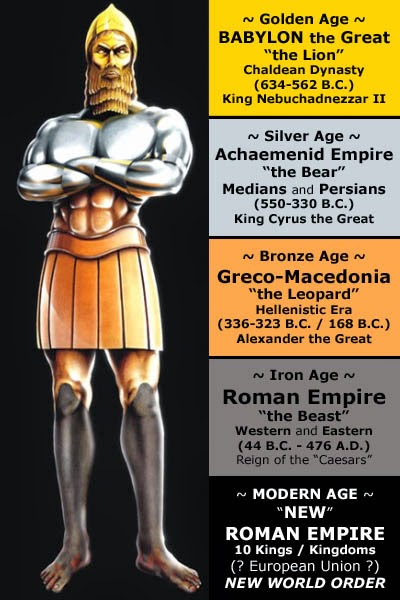
In this chapter, YHVH arranges circumstances for Daniel to be introduced to Nebuchadnezzar, the king of Babylon, through the revelation and interpretation of dreams. A similar event occurred with Joseph to the Pharaoh of Egypt.
At the same time, Daniel is revealed to be a superior counselor to the king over his pagan advisors, magicians, astrologers, sorcerers and Chaldean priests.
Through Daniel’s interpretation of the king’s dream, a future history is revealed of the kingdoms that will rule in Europe and the Near East until the end of the age, when Yeshua will return and establish his world-ruling millennial kingdom. This historical overview begins the Neo-Babylonian kingdom and empire under Nebuchanezzar II and ends with what is revealed in the book of Revelation to be a world ruling geopolitical, economic and religious system which it refers to as Mystery Babylon the Great.
Daniel 2:1, In the second year of Nebuchadnezzar’s reign. Shortly after arriving in Babylon, YHVH opened the door for Daniel’s divine mission.
Daniel 2:2, Chaldeans. These were the “Levitical” priests of Babylon.
Daniel 2:28, In the latter days. The latter days of what? Nebuchadnezzar’s reign, the kingdom of Babylon or the latter days of as in the end times when Yeshua will return? As we proceed, we see that Daniel interpretation of the king’s dream, spans a period from that time until the second coming of Yeshua.
Daniel 2:31–35, A great image. The head of gold is Nebuchadnezzar and his Babylonian Empire. Daniel says this. The chest and arms of silver were the Persian Empire that succeeded Babylon and which Daniel records occurred. After that, are the belly and thighs of bronze which was the Greek Empire under Alexander the Great. Following that were the two legs of iron and clay or the Roman Empire, which eventually subdivided into two empires: the eastern and western empires. Out of the remnants of this grow ten subdivisions, which will exist when Yeshua—the Stone that was cut without hands—will utterly destroy this system that had its roots in ancient Babylon and in the end times is referred to in the book of Revelation as Mystery Babylon the Great. After this, Yehsua will establish his millennial kingdom and will rule over all the earth (Rev 20:2, 3, 4, 5, 6).
Daniel 2:34, Struck the image. This event is recorded in Revelation chapter 18. How the destruction of the end times Babylon the Great occurs is recorded in Revelation 19 culminating in the commonly-called Battle of Armageddon, when King Yeshua and his heavenly army will destroy once and for all the military arm of this world ruling Satanic system (Rev 19:17–21).
Daniel 2:35, A great mountain. In biblical prophecy, a mountain is often a poetic Hebraism for a government.
Daniel 2:41, Toes. If the legs are the Roman Empire the western leg of which fell in A.D. 456 and the eastern leg of which fell in 1453 with the fall of Constantinople to the Muslims, then the ten toes must somehow originate out of the two legs of the Roman Empire. The western or Rome-based leg continued to rule as a politico-religious entity under the Roman Catholic Church and it Holy Roman Empire exercising influence over Europe and its colonies for hundreds of years after the fall of Rome in the fifth century. Meanwhile, after 1453, Islam ruled most of the lands of the ancient Roman Empire in the east.
Two Legs (one possible understanding of the metaphorical meaning). Until recently, the idea that somehow the “Christian” western leg of the old Roman Empire would in some way unite with the eastern Muslim leg of the old Roman Empire seemed impossible and ludicrous. However, this is no longer the case. West and east began coming together through their mutual economic interests in oil along with advent of the petrodollar. After that, the Roman Catholic Church has began making ecumenical overtures to Muslim world over the past few decades. Finally, with the hordes of Muslim refugees fleeing into Europe, it is projected that in some countries in a decades the demographics will switch to a Muslim majority as native European birth rates continue to decline steadily. Already, more and more Muslims are assuming the reigns of political leadership in various European countries (e.g. the current mayor of London).
In light of these recent developments, it is not surprising to see the two legs of the ancient Roman Empire cooperating, yet remaining separate (iron and clay). Each has its own goals of world domination, yet each is united in its hatred of Israel and the Jews, and of fundamental Christianity. The current pope, for example, has blatant Marxist leanings and is openly pushing a globalist, Antichrist agenda at many levels. Similarly, Islam is akin to Marxism in its fascistic approach to governance and its Antichrist beliefs. In fact, Islam more than any other religious system on earth best fits the John’s five criteria that define the spirit of Antichrist in his first and second epistles.
Two Legs (another possible understanding of the metaphorical meaning). The two legs are one single kingdom (vv. 40, 41, 42) with two subdivisions reprented y the two legs which are still one in that they are joined at the hip. The two legs are the two subdivisions of the ancient Roman Empire into east and west as described above. The one leg represents the West, most notably, Europe and North America and its traditional allies, while the other leg is East, most notably the Islamo-fascist countries along with Russia and China. Even though each leg appears to be separate, they are still connected at the hip (economically). In a sense, they represent the yin and yang of the New World Order by which the globalist exercise dominion over the earth through controlled opposition. Both sides are economically tied, so behind the scenes they need each other, while on the surface and in public view, they are in open opposition to and even, at times, at war with each other. It is a fragile alliance that is held together through a somewhat tennuous global technocracy.
Ten toes. This is likely the subdivision of the nations of the earth into ten semi-autonomous regions under the control of a world-ruling government, and which is something that the United Nations has publicly proposed in the past.
Daniel 2:41–43, Iron mixed with ceramic clay…mingled with the seed of men. The understanding that has come to me as to the meaning of the enigmatic symbols of the iron and clay in Daniel 2:43 follows. If I am correct, the meaning of this prophetic passage written nearly 2,500 years ago will a have profound impact on our every day lives very soon.
This prophetic passage reads,
Whereas you saw the feet and toes, partly of potter’s clay and partly of iron, the kingdom shall be divided; yet the strength of the iron shall be in it, just as you saw the iron mixed with ceramic clay. And as the toes of the feet were partly of iron and partly of clay, so the kingdom shall be partly strong and partly fragile. As you saw iron mixed with ceramic clay, they will mingle with the seed of men; but they will not adhere to one another, just as iron does not mix with clay. (Dan 2:41–43)
Iron is an obvious metaphor for machines, technology and ultimately a global technocracy that will attempt to totally control all humans. Clay seems to be a less obvious metaphor for humanity who, we are told, the Creator made from the earth or clay. After all, the first man was named Adam, which is a Hebrew wordmeaning “red or ruddy” and is a cognate of the Hebrew word adama meaning “earth.” All humans innately yearn to be free and will resist being controlled or even superceded by robotic machines, technology and artificial intelligence. Let me explain.
The iron appears to be a symbol of machines (which are largely metallic in composition) that will be used not only to control, but in many cases, to replace man with a technocracy (a governmental system that involves controlling humans through technology) involving robots, artificial intelligence, biometric data tracking, the internet of things and transhumanism, which will be the globalists’ attempt to fascistically impose their will on the human population, through governmental control, for the purposes of the acquisition of total power and all of the earth’s wealth. The more machines replace or are melded generically with humans (to create a race of super humans, see Dan 2:42 cp. Gen 6:2–4), the fewer humans (or non-genetically engineered humans) will be needed to perform normal work-a-day tasks in the factories of the global puppet masters. Therefore, the reduction of the human population has been the long-proposed goal of the Malthusian-inspired globalists. What better way to do this then to force humans to take a pharmaceutical injection that ostensibly purports to be for the betterment of their health, but in reality and in many cases often maims or kills them—especially the weaker, less useful, members of the human species?
Continue reading
Good old YouTube is at it again! I’m in their bad boy doghouse because of my video exposing the Satanic Babylon the Great New World Order in light of end Bible prophecy as it pertains to my belief that the COVID injection is psychologically preparing people to take the mark of beast. They are accusing me of violating their medical misinformation policy. (These satanists and their Antichrist big-pharma overlords are determined to kill us off! It’s no wonder, for Yeshua declared that Satan comes to kill, steal and destroy, and Peter informs us that the devil goes about as a roaring lion seeking whom he may devour.)
By banning videos like mine, the people of YouTube have blood on their hands, and they will answer to YHVH Elohim for their murderous actions as they squelch the truth about the COVID injections.
Interestingly, in their COVID information below, they promise to ban anyone who recommends drugs like Ivermectin and Hydroxychloroquine—drugs that have proven to help in curing COVID in many cases. Can anyone see how these people are under the thumb of the sorcerers of big pharma (read Rev 18:23)? I could go and on, but I’ll stop. I know that I’m preaching to the choir.
Anyway, here’s the link to the video on this week’s Torah portion: https://rumble.com/v1jkcmh-deuteronomy-26-ki-tavo26-blessings-of-torah-obedience.html
If you’re curious about YouTubes policy and have the stomach to read it, this is what they sent me:
YouTube doesn’t allow content that poses a serious risk of egregious harm by spreading medical misinformation about currently administered vaccines that are approved and confirmed to be safe and effective by local health authorities and by the World Health Organization (WHO).
If I keep violating YouTube’s policies, they threaten to terminate my channel forever.
YouTube goes on to say:
The safety of our creators, viewers, and partners is our highest priority. We look to each of you to help us protect this unique and vibrant community. It’s important you understand our Community Guidelines, and the role they play in our shared responsibility to keep YouTube safe. Take the time to carefully read the policy below. You can also check out this page for a full list of our guidelines.
YouTube doesn’t allow content about COVID-19 that poses a serious risk of egregious harm.
YouTube doesn’t allow content that spreads medical misinformation that contradicts local health authorities’ (LHA) or the World Health Organization’s (WHO) medical information about COVID-19. This is limited to content that contradicts WHO or local health authorities’ guidance on:
Note: YouTube’s policies on COVID-19 are subject to change in response to changes to global or local health authorities’ guidance on the virus. There may be a delay between new LHA/WHO guidance and policy updates given the frequency with which this guidance changes, and our policies may not cover all LHA/WHO guidance related to COVID-19.
Our COVID-19 policies were first published on May 20, 2020.
Don’t post content on YouTube if it includes any of the following:
Treatment misinformation:
Prevention misinformation: Content that promotes prevention methods that contradict local health authorities or WHO.
Diagnostic misinformation: Content that promotes diagnostic information that contradicts local health authorities or WHO.
Transmission misinformation: Content that promotes transmission information that contradicts local health authorities or WHO.
Content that denies the existence of COVID-19:
This policy applies to videos, video descriptions, comments, live streams, and any other YouTube product or feature. Keep in mind that this isn’t a complete list. Please note these policies also apply to external links in your content. This can include clickable URLs, verbally directing users to other sites in video, as well as other forms.
Here are some examples of content that’s not allowed on YouTube:
We may allow content that violates the misinformation policies noted on this page if that content includes additional context in the video, audio, title, or description. This is not a pass to promote misinformation. Additional context may include countervailing views from local health authorities or medical experts. We may also make exceptions if the purpose of the content is to condemn, dispute, or satirize misinformation that violates our policies. We may also make exceptions for content showing an open public forum, like a protest or public hearing, provided the content does not aim to promote misinformation that violates our policies.
If your content violates this policy, we’ll remove the content and send you an email to let you know. If this is your first time violating our Community Guidelines, you’ll likely get a warning with no penalty to your channel. If it’s not, we may issue a strike against your channel. If you get 3 strikes within 90 days, your channel will be terminated. You can learn more about our strikes system here.
We may terminate your channel or account for repeated violations of the Community Guidelines or Terms of Service. We may also terminate your channel or account after a single case of severe abuse, or when the channel is dedicated to a policy violation. You can learn more about channel or account terminations here.
The Scriptures reveal that the Torah is much more than a list of dos and don’ts as many people have been led to believe, and is therefore, in their mind, a negative thing. Deuteronomy 4:6 says that the Torah is our wisdom and understanding before the nations of the world. In Deuteronomy 11:8, we learn that the Torah makes us strong. The word strong in Hebrew is chazaq meaning “to be strong, grow strong, to prevail, to be firm, be caught fast, be secure, to grow stout, grow rigid, to restore to strength, give strength, sustain, encourage, make bold, encourage, to repair or to withstand.” This sounds like a good thing!
Sadly, most Christians have been told again and again ad infinitum and ad nauseam that the law of Moses or God’s Torah-law is against us, that we are not under it, that it was nailed to the cross or done away with. Nothing could be further from the truth as we shall see below.
Contrary to what most people have been told, YHVH’s Torah is not against man; rather, it might be said that God’s (Elohim’s) Torah-law itself is neutral; neither positive nor negative. In reality, it is like a mirror that simply reflects the image portrayed in it. Torah reacts according to human action. Those who obey it are blessed and those who disobey it are cursed. For example, just as the law of gravity is also neutral. Even as it benefits humans by keeping them from floating off to a certain death in outer space, so the same law is against us should we choose to jump off a bridge, a high building or a cliff; the results are death. Again, Elohim’s Torah-law, like his law of gravity is neutral. It can be for or against us depending on whether we acknowledge, respect and then obey it or not. To ignore it is called sin and results in death, for the wages of sin (i.e., the violation of Torah; 1 John 3:4) is death (Ezek 18:4; Rom 6:23).
The following lists delineate the few aspects of the YHVH Elohim’s Torah-law that are “against” us (that is, against sinners), and them the many aspects of YHVH’s Torah-law that are for man’s blessing and benefit.
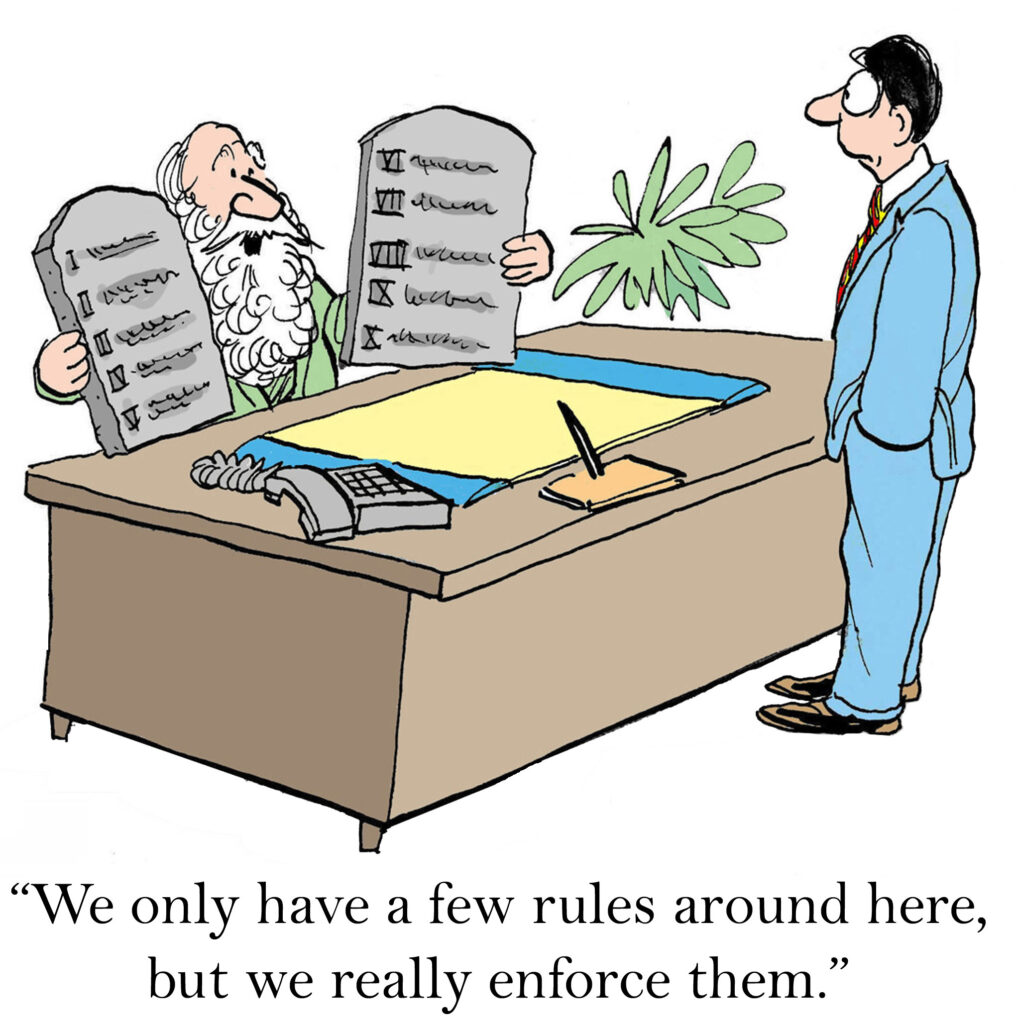
On the negative side, when we disobey the Torah…

1) The Torah has the capacity to stir up sin in an individual. This is not the fault of YHVH’s instructions in righteousness or Torah-law, but our fault because we have chosen to go against YHVH’s life-giving commandments. A healthy person thrives in an environment deadly to someone who is ill; likewise, the Torah is beneficial to a righteous person who is living by it and in loving obedience to Yeshua as guided by his Set-Apart or Holy Spirit. Other hand, the Torah is an instrument of death to those who are controlled by their sinful nature.
2) YHVH’s Torah-law acts as a guide to man’s inner spirit or conscience and produces guilt feelings and shame when we violate it, that is, when we sin. The remedy for the guilt and shame that sin brings on is once-and-for-all trust in Yeshua the Messiah’s final atonement for sin (Rom 3:21–26), followed by ongoing confession of and repentance from sins (1 John 1:9).
3) The Torah also provides a framework of justice by which Elohim, the Just Judge of the universe, will judge the actions of men to determine both their level of punishment for its violation and their level of reward for obedience to it.
4) The Torah sets out righteous standards for the sinner to follow, and it points out the fact that they have sinned and how far they have fallen short of the glory of YHVH (Rom 3:23) and hence their need for a Savior or Redeemer. The Torah actually leads us to Yeshua as Paul points out in his epistle to the Galatians (Gal 3:25).
5) The Torah delineates the curses that automatically come as a cause-and-effect judgment against a person or a group of people (e.g., a family, nation or the whole earth) when they fail to live up to its righteous standards (Deut 28:15–68; Ps 119:21) and, instead, give into the negative influences of their fallen sin nature or the influences of the world and the devil. The law of gravity, like YHVH’s Torah, does not harm us until we choose to ignore it and jump off a cliff. It is only then that we feel its negative effect. Until then, gravity keeps us grounded to the earth, so we don’t float off into space. Similarly, the Torah keeps us on YHVH’s straight and narrow path of righteousness and life so that we don’t float off into all sorts of weird notions and beliefs that cause us to sin resulting in death.
On the positive side, when we obey the Torah…

1) YHVH’s Torah shows us what the Truth is (Ps 119:142, 151).
2) The Torah defines YHVH’s standards of righteousness—what YHVH expects from his people (Ps 119:172; Deut 10:12).
3) The Torah defines what sin (1 John 3:4) and righteousness are (Ps 119:172).
4) The Torah provides a framework of grace in which one can live. YHVH’s people are to live within the framework of Torah, so that they will not come under the penalty of Torah as a consequence of violating it. YHVH’s giving of the Torah was in itself an act of grace that the Testimony of Yeshua compares with his sending of Yeshua (John 1:17 cp. Rom 10:1–13).

5) YHVH’s Torah functions as a protective border for the people of Elohim in that the Torah save us from much harm (Ps 119:146, 170). It’s like a fence around a flock of sheep that keeps predators out and from attacking the sheep as well as keeping the sheep from straying into dangerous areas outside of the safe confines of the sheep pasture. The Torah is also like the guardrail on a mountain road that protects motorists from veering to their death over a steep embankment or cliff.
6) The Torah, as written in man’s heart and in union with faith in Messiah, produces love (Rom 13:8–10; 1 John 2:3–6; 5:3), joy (Pss 19:8; 119:24, 47, 70, 77, 82; 14, 174), peace and hope (Pss 119:81, 114; 130:5–6) resulting in an abundant life. Paul declared that he “was under the law toward Messiah” or literally “in/subject to the law toward Messiah,” (2 Cor 9:21), and this is an aspect of the gospel message of salvation (vv. 22–23).
7) Obeying the Torah brings us physical blessing in this life (Deut 28:1–14; Ps 119:50) as well as eternal rewards (not eternal life, which is by grace through faith alone, see Eph 2:8) in the world to come (Matt 5:19).
8) Obeying the Torah helps deepen our loving and intimate relationship with YHVH-Yeshua and helps us to abide in Yeshua (John 14:15; 1 John 2:3–6).
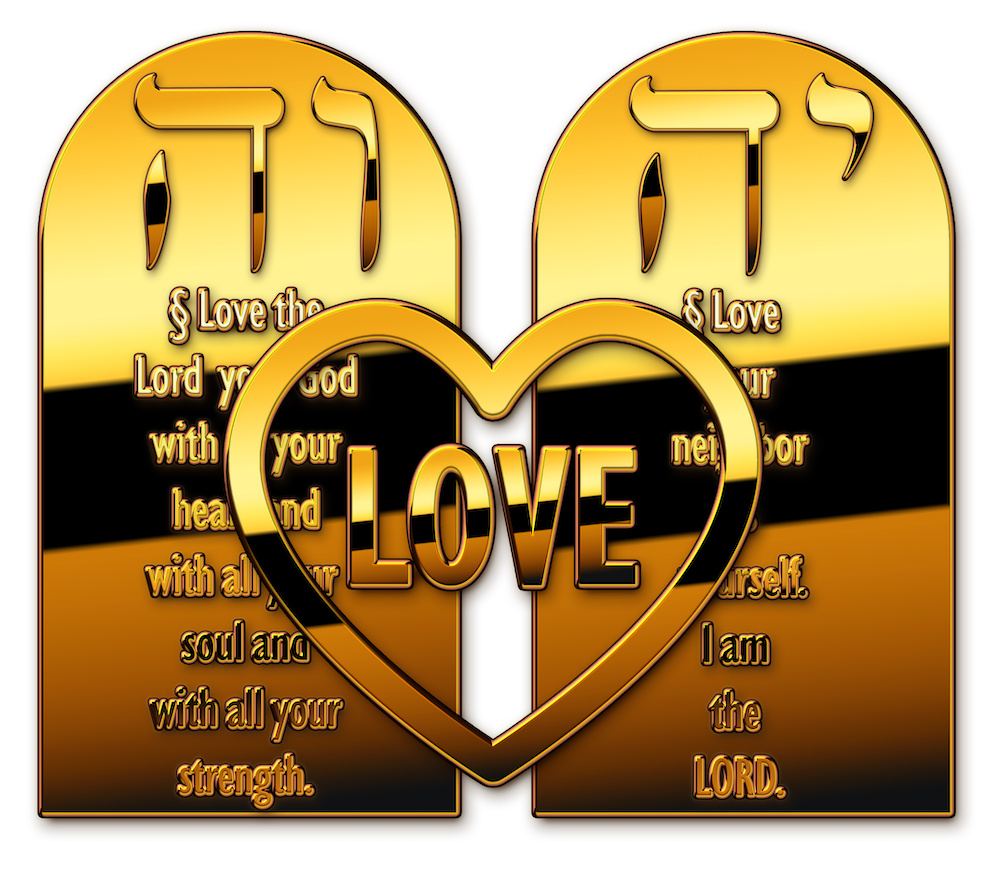
9) Obeying the Torah helps us to maintain a loving and civil relationship with Elohim (Mark 12:29–30; 1 John 2:3; 5:3) our fellow man, for it shows us how to love one another as ourselves (Mark 12:31; Rom 13:8–10; 1 John 3:23).
10) Obeying the Torah helps to keeps our ways clean (Ps 119:9) by keeping us from sinning (Ps 119:133), for sin is the violation of the Torah (1 John 3:4).
11) Obeying the Torah helps us to stay spiritually pure (1 John 3:3–6).
12) Obeying the Torah protects us from the influence of the devil (1 John 3:8).
10) Obeying the Torah-Word of YHVH helps to perfect YHVH-Yeshua’s love in us (1 John 3:6).
13) Torah-obedience strengthen’s man’s spiritual immune system to protects us from the lethal spiritual disease called sin.

14) YHVH’s Torah-Word acts as the rails to keep a train on its track, or like the rudder of a ship to keep it on course, or like a compass or map to guide an explorer or traveler to his intended destination, or like the radar system on a ship or plane to help it through the fog and to keep it from smashing into the rocks or crash landing, or like a flashlight to reveal one’s path through the darkness of the night (Ps 119:105).
15) The Torah reveals to man how to know Elohim intimately (1 John 2:3), for the Torah is a reflection of the heart, mind, will and character of our Creator. It shows us how to abide in him (1 John 3:24
16) The Torah unifies both the Old and New Testaments (1 John 2:2, 7).
15) The Torah keeps YHVH’s people in the light of Truth (Pss 19:8 119:129–130; Prov 6:23; 1 John 2:9).
17) Obeying YHVH’s Torah helps to insure that our prayers are answered (1 John 3:22).
18) The Torah makes us wiser than our teachers and the ancient sages and philosophers (Ps 119:98–100).
19) Obedience to YHVH’s gives us greater wealth than any money or material possessions can give (Ps 119:14, 72, 127).
20) Torah obedience revives us spiritually (Pss 19:10; 119:40; Prov 3:13–14; 8:10–11; 16:16 cp. Matt 13:44–46).

21) Our Torah-obedience is a spiritual light to those around us, for they will see us as a wise and understanding people, and perhaps, thanks to our good example, that will draw into or least toward the kingdom of Elohim (Deut 4:6–8).
22 The Torah unifies or binds YHVH’s people together relationally (Ps 119:63).
23) YHVH’S Torah shows his servants how to outwit their enemies (PS 119:98).
24) The Torah helps us to have compassion for those who are unsaved, who do not have the light of YHVH’s Torah-Truth (Ps 119:136).
25) The Torah provides a framework or basis for YHVH’s divine justice or judgment (Deut 17:11; John 12:48; Heb 4:12 cp. Rev 1:16; 2:16; 18:15, 21).

26) The Torah forms the basis for the jurisprudence system of civil government (Deut 17:11).
27) The Torah is heaven’s revelation of divine grace. It reveals how sinful man can be reconciled to a righteous Elohim; it reveals the path of redemption or salvation from slavery to sin through the idea of substitutionary sacrifice. This all points to Yeshua the Messiah, the Redeemer or Savior of the world.
28) The Torah reveals the concept of covenant between YHVH and man involving YHVH’s chosen people—the nation of Israel. Only through covenantal relationship with the Elohim of Israel and by being grafted into the Israel of Elohim can one have eternal life (Eph 2:11–19).
29) The Torah—both the Written Torah and Yeshua the Living Torah-Word of Elohim in flesh—is our light in a dark world; the answer to life’s questions and dilemmas (Ps 119:99, 105; Prov 6:23).
31) Obeying the Torah-Word of YHVH helps to perfect YHVH-Yeshua’s love in us (1 John 3:6).
32) The Torah convicts man of sin or lawlessness and brings us to Yeshua by way of the cross (Gal 3:24).YHVH’s Torah points us to Yeshua who is our salvation (Ps 119:174; the word salvation in this verse is the Hebrew word Yeshua).