
Exodus 28:1–29:46, Note the seven steps required to consecrate the priests for service in the tabernacle. Let’s compare them with the steps a believer goes through to become a “chosen generation, a royal priesthood, a set-apart nation, a peculiar people that you should show forth the praises of him who has called you out of darkness into [Yeshua’s] marvelous light” (1 Pet 2:9). These steps relate to the process a believer goes through from initial salvation to his ultimate glorification.
- The priests were taken from among the children of Israel (Exod 28:1). This prefigures divine election. YHVH calls or chooses each person. Yeshua called his disciples (John 15:16–19). They did not call or choose him, but they had to respond to that call.
- They were then brought into the door of the tabernacle (Exod 29:4). The door of the tabernacle is Messiah Yeshua who is the door to the sheepfold. No man comes to the Father except through Yeshua (John 10:1–18 and 14:6). The door is comprised of four colors, which speak of the person and work of Yeshua: blue, scarlet, white and purple. It also speaks of the four Gospels, which are the door to understanding the Person and work of Yeshua.
- They were washed (Exod 29:4). Upon accepting the work and Person of Yeshua, one must be immersed for the remission of sins (Acts 2:38) to identify spiritually with the death, burial and resurrection of Yeshua (Rom 6:3–14), and the washing of the water of the Word (Eph 5:26).
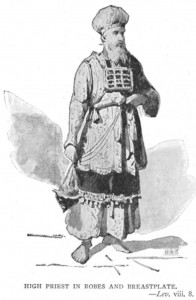
- They were clothed in their official garments (Exod 29:4–9). The redeemed believer is to put on the robes of righteousness. (Gal 3:27, “For as many of you as have been baptized into Messiah have put on Messiah.”) Paul talks about fruits of righteousness through Yeshua in Philippians 1:11. Righteousness is Torah obedience (Ps 119:172) and is a mark of the end-time believers/saints (Rev 12:17 and 14:12) and of the bride of Messiah (Rev 19:8).
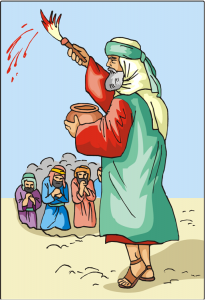
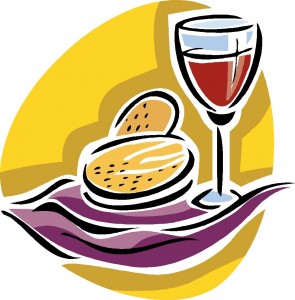
- They laid their hands on the head of the animals that were sacrificed, blood was shed and sprinkled on Aaron and his sons, matzoh (unleavened bread) was waved and burnt, and they ate the flesh of the ram and the matzoh (Exod 29:10–26, 32–33). Each believer has to take personal responsibility for his own sins. The sacrifice of Yeshua, the Lamb of Elohim, at the cross must become personal to each person each must have his own personal relationship with Yeshua. Each must “eat” the flesh and “drink” the blood of Yeshua individually (John 6:35–58). Communion pictures this and is a personal and individual matter.
- They were anointed with oil (Exod 29:21). Each person must receive the Set-Apart Spirit (Ruach) of Elohim
- They are sanctified or set-apart for a special, divine purpose (Exod 29:44). Only after going through these steps is one set apart unto YHVH as a set-apart priesthood doing the set-apart work of YHVH.
Only on the basis of following YHVH’s steps, as outlined above in a spiritual manner, can one have fellowship with the Father. And what was the result? Relationship with the Father! Read Exodus 29:44–46 below,
And I will sanctify the tabernacle of the congregation, and the altar. I will sanctify also both Aaron and his sons, to minister to me in the priest’s office. And I will dwell among the children of Israel, and will be their Elohim. And they shall know that I am YHVH their Elohim, that brought them forth out of the land of Egypt, that I may dwell among them: I am YHVH their Elohim. (emphasis added)
This is all accomplished through Yeshua living in us spiritually. Yeshua is the Chief Cornerstone of the spiritual building of which the saints are a part (Eph 2:20). He is the end result or goal of the Torah (Rom 10:4). He is the Author and the Finisher of our Faith (Heb 12:2), the Beginning and the End, the Aleph and Tav (Alpha and Omega, Rev 21:6; 22:13) of everything. He is calling us to be his “royal priesthood.”
But you are a chosen generation, a royal priesthood, a holy nation, a peculiar people; that ye should shew forth the praises of him who has called you out of darkness into his marvelous light, which in time past were not a people, but are now the people of Elohim, which had not obtained mercy, but now have obtained mercy. (1 Pet 2:4–10, emphasis added)
Our faith in Yeshua stays alive and vibrant because of the sacrifices of devotion and praise we offer up daily—morning and night as did the priests of old.

 What Yeshua was breaking was the Jews’ extra-Torah legal traditions that made the Sabbath a burden by prohibiting the alleviation of human suffering and need on this day (John 5:8–10). He was in no way violating the Torah, since there is no Torah prohibition from healing on the Sabbath or carrying one’s bed roll.
