Does Elohim Hate?

Another can of worms…

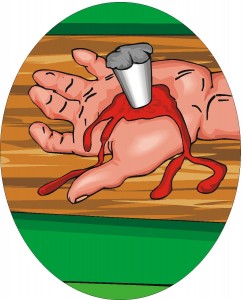
Psalms 5:5, You hate. The idea of Elohim hating is anathema to the sensibilities of most Christian-minded people. After all, doesn’t the Bible declare that “Elohim is love” (1 John 4:8,16)? How could he also hate anything, much less people? Yet this is what this verse says, “[YHVH] hates all workers of iniquity.” Let’s explore this concept and try to understand how this could be so.

But first, let’s define the word hate. According to Webster’s New World Dictionary, hate means “to have a strong dislike or ill will for; to wish to avoid.” According to Strong’s Exhaustive Concordance, the word hate in the Tanakh (or Old Testament) means “to hate as an enemy or foe, to be utterly odious.” As used in the Testimony of Yeshua, hate means “to detest.”

Here are some examples of certain things that Elohim hates, and of Elohim commanding his people to hate certain things as well.

Your throne, O Elohim, is for ever and ever…. You love righteousness, and hate wickedness… (Ps 45:6–7) 

Here we see that Elohim loves what is good and detests that which is evil or sinful (or Torahless).

The foolish shall not stand in your sight; you hate all workers of iniquity. (Ps 5:5)

Workers of iniquity is a biblical expression referring to “those who walk contrary to Torah.”

YHVH tries the righteous, but the wicked and him that loves violence his soul hates. (Ps 11:5)

These six things does YHVH hate, yes, seven are an abomination unto him: a proud look, a lying tongue, and hands that shed innocent blood, an heart that devises wicked imaginations, feet that be swift in running to mischief, a false witness that speaks lies, and he that sows discord among brethren. (Prov 6:16–19)

Continue reading →


The Sprinkling of Blood & Yeshua’s Crucifixion

More Passover meditations—

Leviticus 1:5, Sprinkle. The Heb. word zaraq means “to scatter, sprinkle, toss, throw, scatter abundantly, strew.” The sprinkling of the blood of the sacrificed animal on and around the altar of sacrifice (and elsewhere in the tabernacle as well) is mentioned numerous times in the Torah (e.g. Exod 24:6; 29:16; Lev 1:11; 3:2, 8, 13; 4:6,17; 5:9; 7:2). The blood was even sprinkled on the people (Exod 24:8), and on Aaron and his sons (Exod 29:20–21). This is a prophetic picture of Yeshua bleeding, while dying on the cross and shedding his blood as an atonement for our sins. Yeshua’s sprinkling of his blood on the cross fulfilled the sprinkling of blood under the sacrificial system in the following ways:

  • On the altar, which is a picture of the cross (Exod 24:6–8).
  • All around the altar (Exod 29:12–16) including on the earth beneath the altar (Lev 7:2). Yeshua’s blood covered himself and the entire area around
    the cross.
  • On the high priest’s garments (Exod 29:20–21). Yeshua is our Great High Priest who was covered in his own blood during his crucifixion.
  • The blood was sprinkled seven times for perfection (Lev 4:6–7). Yeshua bled from seven areas of his body (his head, back, two hands, two feet, and his side).
  • At the bottom of the altar (Lev 4:6–7). Yeshua’s blood would have dripped down and pooled at the base of the cross.
  • On the side of the altar (Lev 5:9). The cross was entirely covered in blood.
  • Sprinkled seven times before the door of the tabernacle (Num 19:4). Yeshua died (probably on the Mount of Olives) on the hill of Golgotha (or Calvary) in view of the temple in Jerusalem just outside the city gates (Heb 13:12).

The Scriptures tell us that the life of the flesh is in the blood, and that YHVH has given it to us upon the altar as an atonement for sins, for it is the blood that makes atonement for our soul (Lev 17:11). Additionally, without the shedding of blood, there is no remission for sins (Heb 9:22).

All the religions of the world (including rabbinic Judaism), except those that have faith in Yeshua, are bloodless and have no provision to save man from his sins.

Let’s ponder Yeshua’s death on the cross and his shedding his blood to make atonement for (or to cover) our sins as we approach Passover.


Blog Scripture Readings for 4/1–4/7/12 Midrash

Aside

Leviticus 3–9; Isaiah 39–52; and Psalms 3–9

Most of this week’s blog discussion points will be on these passages. The full year’s Bible Reading Schedule can be found on the right sidebar under “Helpful Links.”

If you have general comments or questions on the weekly Scripture readings not addressed in a blog post, here’s a place for you to post those. Just use the “leave a reply” link below.


The Glory Cloud … and YOU

Exodus 40:34–38. The glory of YHVH filled the tabernacle. This has to be one of the most beautiful passages in the Scriptures.

After YHVH lovingly leads his people out of Egypt, his first job assignment for them was to make him a tabernacle that he might “dwell with them” (Exod 25:8). Those who were of a willing heart (Exod 35:21–22) contributed to the effort, and approximately $4 to 5 million in material costs alone was spent building the tabernacle—all donated by the people.

The Israelites spent some nine months working on the project and the tabernacle was consecrated on New Year’s day of the second year out of Egypt.

YHVH expressed his approbation of his new house in a most tangible way. His manifest glory filled the tabernacle (Exod 40:34). From that point on, YHVH’s glorious Presence led his people through the wilderness into the Promised Land.

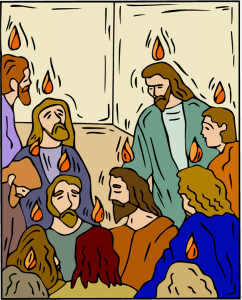
On the Day of Pentecost, the fire of Elohim’s Spirit came down and indwelt all those in the upper room.

We as redeemed believers are now the temples of the Holy Spirit, which is how Elohim’s glorious Presence now dwells in us.

Now for the tough question. On a scale of 1 to 10, how much are you walking a Spirit-led life now? How can we walk a more Spirit-led walk? Please share your thoughts and insights.


How Yeshua Perfectly Fulfilled the Passover

Hey folks, Passover is less than two weeks ago. It’s time to start thinking about it! Let’s jump in…

How did Yeshua the Messiah perfectly fulfill the Exodus Passover?

According to the laws of statistical probability, what are the chances of an event happening and then fifteen hundred years later another event occurring bearing an uncanny resemblance to the first one? Now suppose that not only did fifteen hundred years separate the two events, but that they occurred in two different countries several hundred miles apart. Further suppose that the second event involved the death of a person, and that the events leading up to their death including the manner and timing of that death was beyond the control of the individual dying so that in no way could the person dying stage his death to mirror the first event. In fact, those killing the individual possessed no foreknowledge of the event that had occurred fifteen hundred years earlier. What are the chances of this occurring?

This is not a fictional story! Truth is stranger than fiction. The details of these two events are chronicled in the pages of the Bible. The first event occurred in ancient Egypt and is recorded in the Book of Exodus chapters eleven and twelve. There we find recorded the details of the Children of Israel’s first Passover while they were yet slaves in the land of Egypt. A whole series of events led up to this first Passover, which culminated with each family’s ritual killing of a lamb, smearing its blood on the frame of their doors, roasting the lamb, and then eating it. Doing this insured that YHVH would pass over their homes leaving those inside alive. The firstborn of those whose homes did not have the blood painted on the door frames were killed.

Continue reading →


Blog Scripture Readings for 3/25–3/31/12 Midrash

Aside

Exodus 36–40; Lev 1–2; Isaiah 25–38; John 17–21 and Psalms 1–2

Most of this week’s blog discussion points will be on these passages. The full year’s Bible Reading Schedule can be found on the right sidebar under “Helpful Links.”

If you have general comments or questions on the weekly Scripture readings not addressed in a blog post, here’s a place for you to post those. Just use the “leave a reply” link below.


Vine … Branches: A Lesson From Tree Anatomy

John 15:5, I am the vine, you are the branches. Yeshua likened his followers to tree branches that when attached to him will produce much fruit. Let’s examine tree biology to see what we can learn spiritually from how trees operate.

Trees are phototropic. Tropism is the orientation of the direction of the tree’s growth in response to external stimulus. The leaves of a tree are phototropic. They orient themselves to catch the maximum energy from the sun’s light.

  • Spiritual parallel: Yeshua is the Sun of Righteousness (Mal 4:2) whose face shines like the sun (Rev 1:16), and the righteous man orients himself to catch the light and energy from Yeshua.

Trees are geotropic. They grow away from the earth and toward heaven.

  • Spiritual parallel: The spirit of righteous man must reach toward Elohim in heaven, though he came from the earth and the feet of his flesh are planted firmly in this world. His soul is in the middle with both heaven and earth battling for control over it.

Continue reading →