What Is the Abrahamic Covenant?

A Closer Look at the Abrahamic Covenant

Let us now take a closer look at the Abrahamic Covenant, which, as we have already noted, is a subdivision of the Torah Covenant itself and forms the basis for the New Covenant revealed in the Testimony of Yeshua. What are the unique aspects and provisions of this covenant?

In the Abrahamic Covenant, YHVH made promises to Abraham and all that YHVH expected of Abraham was faith. How do we know this? First we see that YHVH called Abraham to leave the comfort and wealth of Babylon (Ur of the Chaldees) and by faith to go to Canaan (Gen 12:1). There YHVH made many promises to Abraham about his progeny concerning their wealth, their numbers and their land inheritance. Abraham, though he personally never saw most of these promises fulfilled, nevertheless believed in YHVH and it was counted to him for righteousness’ sake (Gen 15:6, Heb 11:6–19).

Next we see the unconditional nature of the Abrahamic Covenant in how YHVH executed it with Abraham. In all agreements, there are at least two parties who determine the conditions of the agreement and then sign papers or shake hands. Each does something or brings something to the table. It was no different when two ancient near-Eastern parties would make an agreement or covenant. They would go through an elaborate bloody ritual to underscore the seriousness of the blood oath into which they were about to enter. In his book, The Miracle of the Scarlet Thread, Richard Booker describes a nine-step process that was lengthy and involved, like a Hebraic wedding ceremony, where each party was required to perform a number of rituals. One of the steps involved “cutting the covenant.” Booker explains that in this step the parties would take an animal, cut it in half down the middle and split it in two. The two bloody halves would be separated and laid aside after which each party would walk through the two halves. This ceremony represents each party giving up his rights to his own life, dying to self and beginning a new walk with one’s new covenant partner unto death. Each half of the animal represents one of the covenanting parties. And by walking through the middle each party was saying, “Elohim do so to me and more if I ever try to break this covenant. Just split me right down the middle and feed me to the vultures because I tried to break the most sacred of all compacts” (pp. 28–29).

Did YHVH and Abraham go through such a solemn, bloody ritual? Yes. We read about it in Genesis 15:9–18, but with one very interesting change. Instead of both walking through the two animal halves, YHVH put Abraham into a deep sleep and YHVH walked through the middle for both of them. What is the point? Abraham could not enter into a covenantal agreement with YHVH Elohim and thereby be reconciled to YHVH through his own works or efforts. What this clearly shows us is that man can neither earn nor work out his salvation. Salvation occurs only when man totally surrenders to and rests completely in YHVH. Salvation is by grace through faith and not of works, lest any man should boast (Eph 2:8–9). The Abrahamic Covenant is an unconditional covenant. YHVH did all the work for man. His love was unconditional. All man has to do was to believe or have faith in YHVH.

Next we will take a closer look at what Paul had to say about the Abrahamic Covenant and our salvation.

 

Is God Speaking to America?

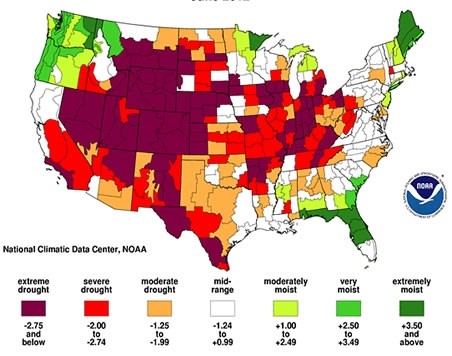
Is Elohim trying to get America’s attention?

Here are some recent headlines form July 2012:

Worst drought since 1950s in continental U.S.

http://www.washingtonpost.com/blogs/capital-weather-gang/post/worst-drought-since-1950s-in-continental-us/2012/07/16/gJQAbeKApW_blog.html

U.S. drought biggest since 1956, climate agency says

http://www.cnn.com/2012/07/16/us/us-drought/index.html?iref=allsearch


Intense Storms Called a “Derecho” Slam 700 Miles of the US

Rare ‘Derecho’ Storm Ravaged Washington Area

http://abcnews.go.com/US/derecho-storm-ravaged-washington-area/story?id=16696593#.UAY__Y7Po20

Stacking lightning bolts over Washington, D.C.

For some incredible photos of multiple lightening bolts striking various national monuments around Washington D.C. during the July 2012 storm, go to:

http://www.washingtonpost.com/blogs/capital-weather-gang/post/stacking-lightning-bolts-over-washington/2011/10/06/gIQAln7nSL_blog.html

Is the Creator of the Universe speaking to America. If so, what is he saying, and what should we do? Your comments please.


What Is the Torah Covenant?

The Torah Covenant Is the First or Former Covenant;
The Abrahamic and Mosaic Covenants Are Subsections of the Torah Covenant

The Torah, the first five books of the Bible, is the chronicle of YHVH giving man instructions to follow, and of his entering into covenantal relationships with men and men either keeping those agreements or breaking them.

The word Torah means “instructions, teaching or precepts; specifically in biblical context: the teachings or instructions of YHVH to lead men into a righteous relationship with him through covenantal agreement.” The Torah is a giant b’rit or covenant. The Torah in a number of places even refers to itself by the Hebrew word b’rit or covenant. We see this in the following passages:

Exodus 34:27, And YHVH said unto Moses, Write you these words: for after the tenor of these words I have made a covenant with thee and with Israel.

Deuteronomy 29:1, These are the words of the covenant, which YHVH commanded Moses to make with the children of Israel in the land of Moab, beside the covenant which he made with them in Horeb.

The Torah is not unlike an instruction manual one might receive from the manufacturer of an automobile, computer or some such device to help the buyer to operate his new purchase in a manner that allows him to receive years of trouble-free service. The Torah is YHVH’s instruction manual to help man to live in a way that brings life and blessing; it helps man to enter into a loving relationship with his Creator and to have a trouble-free relationship with his fellow man.

Within the first five books of the Torah-covenant are several smaller covenantal subdivisions such as the Abrahamic and the Sinaitic or Mosaic Covenants. The Theological Wordbook of the Old Testament (TWOT) describes this as follows, “Deuteronomy 29:13-14 shows the Sinaitic Covenant was an extension of the Abrahamic ­Covenant…. The Sinai renewal merely stressed man’s responsibility where the Abrahamic Covenant emphasized Elohim’s promise… The Priestly Covenant of Num 25:12-13, the Davidic Covenant of 2 Sam 7 and the New Covenant of Jer 31:31 are all administrative aspects of the same covenant, Elohim’s Covenant of grace. This covenant reaches its climax at the Incarnation where [Messiah] representing his people fulfilled all the stipulations of the covenant and bore the curse they deserved for breaking it” (p. 129).

The Torah is a covenant with various “administrative aspects” or subdivisions. Each succeeding covenant builds upon the previous covenant without canceling out the requirements or provisions of the previous covenant. Such is consistent with the character and nature of YHVH Elohim. He is not a man that he should lie (Num. 23:19). When he gives his word he keeps it, even up to 1000 generations (that is 40-50,000 years!) (Ps 105:6-11). He declares that he does not change (Mal 3:6) and that he is the same yesterday, today and forever (Heb 13:8). He is not a respecter of persons who makes a covenant with one people-group (e.g. the Jews) and another covenant with another people-group (e.g. the Gentiles) each with its own contradictory set of salvation requirements and standards of righteousness (Acts 10:34). In YHVH’s spiritual economy, there is one law, one set of standards, one covenant for both the Israelite and the Gentile (Exod 12:49; Num 15:16; Eph 2:11-16). Again, his laws and covenants are a reflection of his divine nature and character. He cannot oppose himself. He is not double-minded, like man. He is not the sort of (spiritual) well that spouts forth both salty and fresh water to which the Apostle James makes reference in his epistle. YHVH is perfect, righteous and immutable.

Next, we will briefly discuss the uniqueness of the New Covenant as it relates to the Torah Covenant(s).


Blog Scripture Readings for 7/15 through 7/21/12

Aside

Genesis 14–20; Job 21–34; and Psalms 108–114

Most of this week’s blog discussion points will be on these passages. The full year’s Bible Reading Schedule can be found on the right sidebar under “Helpful Links.”

If you have general comments or questions on the weekly Scripture readings not addressed in a blog post, here’s a place for you to post those. Just use the “leave a reply” link below.


The Foundation for the New Covenant: The Covenants of Salvation

The Apostle Paul makes a very interesting, and often overlooked statement in Ephesians 2:12. For ­context we will quote the surrounding verses:

Wherefore remember, that you being in time past Gentiles in the flesh, who are called Uncircumcision by that which is called the Circumcision in the flesh made by hands; that at that time ye were without Messiah, being aliens from the commonwealth [citizenship] of Israel, and strangers from the covenants of promise, having no hope, and without Elohim in the world: but now in Messiah Yeshua ye who sometimes were far off are made nigh by the blood of Messiah. (emphasis added)

Paul, talking to the redeemed believers in Ephesus, states that they had been (past tense) Gentiles (comprised of various ethnic or people groups) without Elohim and without hope, but now, through the work of Yeshua at the cross, provision had been made for these alienated people-groups to become citizens of the nation of Israel. Elsewhere Paul refers to these (former) Gentiles as now being Israelites and defines them as heirs to the promises YHVH made to Abraham and calls them “seed” or descendants of Abraham (Rom. 4:15; 9:8,11; Gal. 3:7,14,29).

Paul further says that these same people had been aliens from YHVH’s “covenants of promise” and relates this to the “Gentile” Believers at Ephesus. We know that the principles laid out in this teaching apply to all the redeemed believers down through the ages. So what covenants of promise were these Believers strangers to in times past prior to their conversion? Most in the church have been taught that the New Covenant is the only covenant that pertains to them, yet Paul spoke of covenants (plural) of promise. To what was he referring? The two main covenants of the Tanakh (the Old Testament) affecting the nation of Israel were the Abrahamic Covenant and the Mosaic or Sinaitic Covenant. Additionally, Jeremiah prophetically speaks of a New (Renewed) Covenant that YHVH would make with the two houses of Israel (Jer 31:31-33); that is, a refreshed version of a former (marital) covenantal agreement which Israel broke with YHVH (verse 32). These are the three principal covenants that the Scriptures reveals affect YHVH’s people. Clearly, Paul is referencing these three covenants in Ephesians 2:12 (see the Jewish New Testament Commentary, by David Stern, p. 583).

Which of the three covenants forms the bedrock upon which the others are based, and upon which Elohim predicated his glorious plan of redemption for mankind? In Romans four, Paul references the Abrahamic Covenant in discussing the means by which one is saved. In his discussion of the Abrahamic Covenant, Paul gives us no indications that the provisions of the Abrahamic Covenant are passé or invalid as pertaining to believers in Yeshua as relating to the New Covenant. He clearly shows us that this covenant forms the basis for man’s redemption (salvation) and subsequent relationship with his Creator. With this thought in mind, let us proceed into a study of the Abrahamic Covenant and learn how it relates to the New Covenant.

In my next blog post, we will explore this subject further. Please stay tuned!


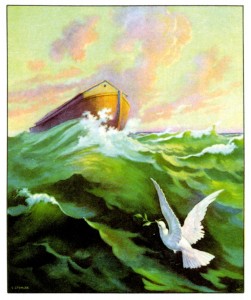
Noah—A Prophetic Picture of the End Times

Genesis 6–7, Noah’s flood provides allegorical insights relating to end-times prophecy. In Matthew 24:37, Yeshua compares the end times to the days of Noah. The story of Noah has allegorical implications that give hints about end-times prophecy.

In 1 Peter 3:18, we learn that the story of Noah is also a picture of salvation and baptism. Noah is a type of Yeshua.

Noah building the ark is a prophetic picture of the redeemed believer working out his own salvation all the while following the exact plans or specifications of YHVH.

Noah builds an ark of safety from Elohim’s wrath or judgments against sinful man. The ark is a metaphorical picture of the believer’s salvation; Noah is a spiritual picture of Yeshua. The flood is also a picture of water baptism for the remission of sins, which ceremonially pictures the death of the old sinful man, and the birth the new spiritual man (Rom 6:3–6). The unregenerated sinful or carnal men perished in the floodwaters in Noah’s day, while the new, redeemed man (as pictured by Noah and his family) who had found grace in the sight of Elohim found refuge on the ark. While the flood is a judgment against sinful man who has violated the Torah-laws or divine instructions of YHVH, the ark is a picture of the grace that YHVH offers to those who will repent of their sins (i.e. Torahlessness) and turn to him through Yeshua. As Noah found grace in the eyes of YHVH because he was “perfect in his generations” (Gen 6:8, 9), he was spared from the wages of sin which is death, and YHVH offers the same grace to all men to this day (2 Pet 3:9).

Continue reading →


Blog Scripture Readings for 7/8 through 7/14/12

Aside

Genesis 7–13; Job 7–20; and Psalms 101–107

Most of this week’s blog discussion points will be on these passages. The full year’s Bible Reading Schedule can be found on the right sidebar under “Helpful Links.”

If you have general comments or questions on the weekly Scripture readings not addressed in a blog post, here’s a place for you to post those. Just use the “leave a reply” link below.