Nuggets From Song of Solomon Chapters 1 and 2

Song of Solomon chapter 1

Song 1:2, Kisses of his mouth. This is referring to the tokens of Yeshua’s love for his bride: his grace and pardon, the joy and peace that comes from knowing him, the hope he has given us for the present and the future, and the fruits and gifts of his Spirit.

Your love is better than wine. Though wine joys the heart and calms the nerves, it is but a temporary and superficial fix to life’s problems. Like a band-aid on a wound, it doesn’t get to the cause of the problem. The love of Yeshua, on the other hand, is a river of life that is a never-ending source of joy, which strengthens and heals us at the deepest levels.

Ephesians 5:18 says, “Be not drunk with wine … but be filled with the Spirit,” which is Yeshua’s love gift or mohar to his betrothed bride. The Set-Apart Spirit — its fruits and gifts — is Yeshua’s engagement ring, down payment, guarantee, pledge or earnest money (2 Cor 1:22; 5:5) of our future inheritance (i.e., marriage to him) until the full redemption (or glorification of our bodies at the resurrection) of the purchased possession (the redeemed believer, Eph 1:14).

Song 1:3, Your name is better than ointment poured forth. (Heb. sheman: oil.) Is the name of Yeshua better than any ointment? Ointment or olive oil soothes and heals wounded, chaffed, burned, and aching flesh. When you are wounded emotionally and spiritually, there is always a place of healing and comfort for you at the foot of Yeshua’s cross, the foot of Yeshua’s throne, and in the arms of the one whose arms were open wide in loving acceptance of you at the cross. There is healing, forgiveness, power, victory and healing in the name of Yeshua. Faith in him overcomes all fear and anything that the world, the flesh and the devil would throw at us.

The virgins love you. Those undefiled by the world have their eyes only on Yeshua and are not drawn away by the passions of this world. They follow Yeshua the lamb, their Bridegroom, wherever he leads them (Rev 14:4). Why? Because they have not grown cold in their love for Yeshua. He is still their first love  (Rev 2:4).

Song 1:4, Draw me away. Are our (virgin) hearts drawn away from Yeshua by the world, the flesh or the devil, or are we totally dedicated to him? Do we long to be with and to know Yeshua and his love?

We will run. (Daughters of Jerusalem speaking). Are those around us drawn to Yeshua because they see our unreserved and undefiled love for him? Are we a light to our children, to our unbelieving family members, to our neighbors and work associates? Yeshua speaks of two classes of virgins: those who are wise and are prepared for Yeshua, the Bridegroom, and those who are not (Matt 25:1–13); those who are on the inside with Yeshua at his wedding feast because they love and prepared, and those on the outside who are looking in because they did not prepare themselves for him. They love Yeshua too, but not as much as the Shulamite. That’s why they were not brought into his chambers. The daughters of Jerusalem are immature, carnal believers who are not yet established in their faith and wholly serving and walking with Yeshua.

Song of Solomon chapter 2

Song 2:1, Rose of Sharon. Sharon means “plain” and is the region lying between the mountains of central Israel and the Mediterranean Sea north of Joppa and on the east side of the Jordan near Gilead and Bashan. The flower itself is not the Rose of Sharon we know, which is native to China, but is believed to be the saffron, tulip, anemone, or crocus. The redeemed bride of Yeshua is to view herself in this manner. Coming into spiritual relationship with Yeshua should cause one to have a higher view of oneself than they did while they were an unrepentant and unredeemed sinner. Coming to Yeshua greatly improves one’s self worth and self esteem.

Lily of the valley. Heb. shushan, lit. “big flower, water lily;” from suws meaning “exult, rejoice, display joy.” According to The TWOT, these were the lilies carved as a motif in the stone pillars in Solomon’s temple. It is used several times in the Song with reference to the bride. The woman’s name Shoshana (or Susanna) derives from this. This is a tall flower with a weak stem. As the tall, weak-stemmed lily that has a beautiful but heavy flower may need a stake to support it, the believer needs Yeshua to support him.

Song 2:2, Thorns. Heb. chowach meaning “to pierce, brier, thorn bush, thicket, hook, ring, fetter.” Believers are lilies among the thorny wicked of this world. Yeshua said that his followers though in the world, they were not to be of the world (John 17:10, 15). The wicked can be like thorns in flesh of the righteous. Thorns are worthless, dangerous and noxious and are good only for burning. Likewise, the wicked unrepentant will burn in the lake of fire.

Song 2:3, Apple tree in the trees of the woods. This is another analogy like the lily among the thorn simile. Yeshua’s people are to bear fruit for him. They are to be his personal garden bearing the fruit of the Spirit, and to be like the trees planted next to Yeshua who is the river of life (Ps 1:1–3). The trees of the world are barren and fruitless. This is not the case with the trees of Yeshua who bear fruit through him.

Song 2:4, Banqueting. Heb. lit. wine/yayin meaning “effervesce, wine.” Torah commands that Israelites drink wine and strong drink during the three pilgrmage festivals (Deut 14:26). This speaks of the joy of the biblical Hebrew wedding that culminates in a great wedding feast, prophetically pictured by the Feast of Tabernacles, which is a picture of the wedding supper of the Lamb.

Banqueting house …his banner over me was love. Is the groom giving her a glimpse of his house, and what she can expect once they are fully married? Does not Yeshua do this with us by giving us glimpses into the future spiritual glory he has in store for his bride in the world to come?


 

Are You Under the Law? I Hope Not!

Romans 3:19,  Under [the] Torah-law … all the world guilty before Elohim. Paul uses the term “under [the] law” (also found in 6:14) twelve times in his writings. In this case he is referring to those who are under the penalty for violating the Torah (the penalty of which is death, Rom 6:23; 1 John 3:4). This we know, for he speaks of guilt in the latter half of this verse: “and all the world may become guilty [subject to the judgment of Elohim] before Elohim.” 

The bottom line of what Paul is saying here is that all humans (both Jews and Gentiles) are guilty before Elohim. This is the point he is driving at, as we stated above.

Paul is breaking up the fallow ground of men’s hearts, showing them their sinfulness (unrighteousness), that they have violated the holy and righteous standards of Elohim’s law (the Torah) and in this condition need a Redeemer (a message Paul preaches more strongly later in the book of Romans).

It is Paul’s mission to bring the two opposing sides (Jew and Gentile) together, to show them their common state of sinfulness and their common need for Yeshua, the Redeemer, and their common need to dwell together in Torah-community as the body of believers in Yeshua. This is indeed the tall order to which Paul dedicated his life’s efforts and that he terms “the ministry of reconciliation” to which he has been called (2 Cor. 5:18).


The Giving of the Torah at Mount Sinai on Pentecost

On Pentecost (Heb. Shavuot), YHVH gave his chosen people the Torah. Also on Shavuot, YHVH “married” Israel (Ezek 16:1–13) when he formulated a covenantal agreement with her to which she agreed when she said “I do” three times (Exod 19:8; 24:1–8). The Torah was the basis of that covenant, or the marriage vows, if you will, to which Israel swore allegiance.

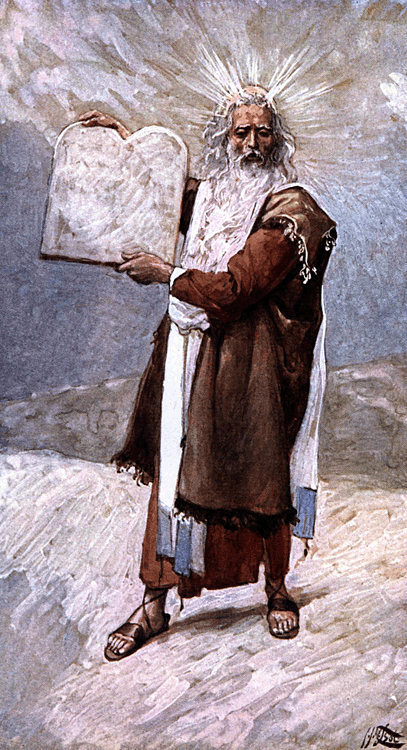
Moses' shining face

YHVH gave his people the words of life to live by, but because of the hardness of their hearts they were not able to be faithful to his Torah. Like a wife who says “I do” in response to her wedding vows, but cannot remain faithful to her marriage covenant, so Scripture likens Israel to such a woman who became a spiritual harlot (Ezek 16:14–34).

In spite of Israel’s apostasy and spiritual whoredoms, YHVH had made promises to Abraham and to his descendants that were unconditional in nature. Whether Abraham’s descendants remained faithful to YHVH or not, YHVH’s promises to Abraham were inviolate. Though the Israelites had violated the vows they made to YHVH at Mount Sinai, he revealed to the ancient Hebrew prophets that he would eventually formulate a second renewed covenant with Israel, and this time he would pour out upon them his Spirit and write his Torah-laws in their hearts (Jer 31:31–33; 24:7; Ezek 11:19; 36:25–27).

On Passover at the last supper, YHVH-Yeshua betrothed himself to Israel all over again (Matt 26:28; 1 Cor 11:25). As a seal or pledge of this betrothal, he promised to send to his Continue reading →


Understanding Pentecost (Pt 2)

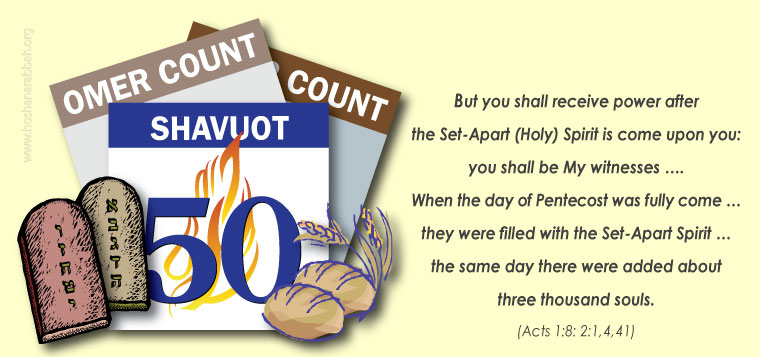
Shavuot is the third festival in YHVH’s cyclical parade of annual sacred appointed times. It is also known as the Feast of the Harvest of the First Fruits (Exod 23:16), Day of First Fruits (Num 28:26) and the Feast of Weeks or Shavuot (which is Hebrew for weeks, Exod 34:22; Deut 16:10, 16; 2 Chr 8:13). Shavuot falls fifty days “from the day after the [weekly] Sabbath” (NKJV) that falls during the Days of Unleavened Bread, and hence the derivation of the name Pentecost (meaning “to count fifty”) as recorded in the Testimony of Yeshua (or New Testament/NT, Acts 2:16).

Shavuot_banner

YHVH through his Torah (the law of Moses) instructed his people that Shavuot was…

  • a day of rest where laborious or servile work was prohibited (Lev 23:21)
  • a commanded assembly (Lev 23:21)
  • a time when the priests offered up offerings and sacrifices (Lev 23:18–20)
  • a time when all males were to bring the tithes of the increase of their income (Exod 23:14–17; Deut 16:16)
  • a time when the priests were to offer up as a wave offering to YHVH two loaves of leavened bread made of the freshly harvested wheat (Lev. 23:17)
  • to occur where YHVH would place his name and all were to go there to celebrate it (Deut 16:11)
  • a time of rejoicing (Deut 16:11)
  • to be forever (Lev 23:21)

An Agricultural Festival With Prophetic Implications
Ancient Israel was an agricultural society that had a spring harvest of grain and a fall harvest of fruit. The spring harvest consisted of the smaller barley harvest, which began during the Days of Unleavened Bread, and the much larger wheat harvest occurring fifty days later at Shavuot. Both the barley and wheat harvests were prophetic pictures symbolizing new life and new creation, and both were presented to YHVH by the priests for his acceptance—a sheaf of barley on First Fruits Day on the Sunday during Hag HaMatzot (the Feast of Unleavened Bread, Lev 23:10–11), and two loaves of leavened wheat bread on Shavuot (Lev 23:17).

On First Fruits Day, the priests of Israel would raise the newly harvested barley and wave it Continue reading →


New Video: The Feast of Pentecost Unveiled

Many people have only  a vague understanding of Pentecost, even though some churches have incorporated this term into their name. The early church celebrated this biblical feast, so why don’t we?

What are the deeper implications of this biblically commanded assembly?

In this video, learn how Pentecost relate to the grace of Elohim, the former and latter rain, the bride of Yeshua, YHVH’s instructions in righteousness and the second coming of Yeshua.


Understanding Pentecost / The Feast of Weeks

The Feast of Pentecost or Feast of Weeks  (Heb. Shavuot) is nearly upon us. This year it will occur on Sunday, May 19. Over the next few days, I will be posting some information on this third of seven biblical feasts of YHVH Elohim.

Shavuot_banner

In the roughly 49 days between Passover (Pesach) and the Feast of Pentecost (Chag Shavuot), a momentous spiritual dynamic occurs. This period of time is comprised of forty-nine days or seven days of seven weeks, which is seven times seven—the biblical number for complete or full perfection. Add one day and you arrive at Pentecost. Fifty is the biblical picture of jubilee picturing redemption from the enslavement to this world.

Historically, the children of Israel were redeemed from their sins by the blood of the lamb on the first Passover in Egypt. At this time, YHVH betrothed himself to Israel (Exod 6:7). YHVH then led them out of Egypt into the wilderness, and on Shavuot he married them at Sinai (Exod 24 cp. Ezek 16:8; Jer 2:2; 31:32). At the same time, YHVH gave them his Torah, which was their ketubah or marriage vows.

Shavuot is a picture of the bride of Yeshua the Messiah coming into full maturity spiritually and coming to marriageable age. She has gone from being a spiritual child and slave in Egypt to becoming the fully mature spiritual bride and queen of the King of the universe.

At the time of Yeshua, he betrothed himself to both houses of Israel on Passover. Then, on Pentecost, he then sent his Spirit, the Comforter, as a seal of this covenant. He hasn’t married this bride (that’s you and me) yet — something that occurs at his second coming. In the mean time, he has placed her in a 2000-years-long wilderness to get ready for him — to fall in love with him (to love him by keeping his Torah commands; John 14:15) by receiving his Torah into their hearts.

In the end times, he’s going to bring his bride (the saints) out of the wilderness of Babylon (called the Second Exodus), and they will repent of their Torahless ways. We are now getting ready for this day.

Understanding the prophecies of the Bible that speak of these end-time events, and understanding who the principal players are (the two houses of Israel) is the key to insure that we’re ready for our Messiah — that we’ll be wise and not foolish virgins who have our lamps full of oil (the Torah and Spirit of Elohim).

Shavuot, along with Passover (Pesach) and the Feast of Tabernacles (Sukkot) are three times each year when YHVH commands his people to gather together to celebrate before him (Exod 23:14–17).

Stay tuned. There’s more to come on this subject!


Blog Scripture Readings for 5/12 through 5/18/13

Aside

Parashat Nasso — Numbers 4:21 – 7:89
Haftarah — Judges 13:2-25
Prophets — Jeremiah 32:1 – 38:28
Writings — Job 37:1 – 42:17; Song of Songs 1:1 – 2:17
Testimony — 1 John 5:1-21; 2 John; 3 John; Jude; Romans 1:1 – 4:25

Most of this week’s blog discussion points will be on these passages. If you have general comments or questions on the weekly Scripture readings not addressed in a blog post, here’s a place for you to post those. Just use the “leave a reply” link below.

The full “Read Through The Scriptures In A Year” schedule, broken down by each day, can be found on the right sidebar under “Helpful Links.” There are 4 sections of scripture to read each day. One each from the Torah, the Prophets, the Writings, and from the Testimony of Yeshua. Each week, the Torah and haftarah readings will follow the traditional one-year reading cycle.

Weekly Blog Scripture Readings for 5/12 through 5/18/13.

We are instructed in Vayikra/Leviticus 23:15-16: “You shall count for yourselves – 
from the morrow after the Shabbat, 
from the day when you bring the Omer of the waving – seven Shabbatot [weeks], they shall be complete. 
Until the morrow after the seventh Shabbat 
you shall count fifty days; 
and you shall offer a new meal offering to YHVH.”

This is the 7th week of the counting of 7 complete weeks.