The Final Redemption of the 12 Tribes

Genesis 47:28, The Jewish sages recognize that this final portion of Genesis chronicles Jacob’s wish to reveal to his sons prophetic understandings pertaining to Israel’s long and numerous exiles, culminating in the final redemption (return of Israel from her exile in “Babylon” at the end of the age prior to the return of Messiah at which time the two houses of Israel will be reunited under Messiah Son of David). Jacob states this in 49:1 when he gives his prophecies relating to what will befall his sons “in the last days.” Prior to the establishment of the Messianic Age (Millennium) all Israel would go into a time of darkness, gloom and exile. The sages teach that this idea is implicated in the fact that the Torah scroll fails to place the customary nine spaces between the last word of the previous parashah and the first word of the present one. There is only a one space gap in Hebrew letters which predicts the “closing in” of Israel as they go into exile and captivity in Egypt.
21892838

Here’s an excerpt from a larger, yet unpublished, article on the timing of the return of the 12 tribes to the land of Israel in the last days. This extract deals with the concept of redemption in Israel’s long history, and specifically with the final redemption of the last days.

I hope you enjoy this Shabbat-day study.

The Repeating Paradigm of Israel’s Redemption

Biblically, the concept of the return of exiled and scattered Israel (including Ephraim) to the land of Israel is tied to the idea of redemption. Biblically, the concept of redemption involves a stronger person (the redeemer) intervening on behalf of a weaker person (the enslaved, i.e., the one needing redemption), defeating the captor of the slave thus allowing the enslaved to go free.

The first biblical example of this process occurred when Elohim redeemed Israel out of Egypt. The biblical prophets compared this first exodus to a greater, or second exodus that is yet to occur in the future. In Jewish thought, the exodus out of Egypt is called the first redemption, yet the biblical prophets also speak of Israel going into captivity again — this time not to Egypt, but into the exile of the nations. From this place of exile and spiritual Continue reading →


Are You ‘Not Far From’ the Kingdom or ‘In’ the Kingdom?

Mark 12:34, You are not far from the kingdom. Yeshua makes this complimentary statement to the scribe who had correctly and succinctly summarized the message of the Torah (both its letter and spirit intent) in verses 32–33.

However, note that Yeshua didn’t say, “You are in the kingdom of Elohim (i.e., you have eternal life).”

15226456

What was the one thing that kept the scribe from being in the kingdom? It was doubtless the same thing that kept the rich young ruler from obtaining the eternal life that he sought (Matt 19:16).

After having obeyed the Torah the best he could, the young ruler still needed to surrender all to Yeshua the Messiah, and to follow him unreservedly (Matt 19:18–22).

Not only is it difficult for humans to surrender all to the Master, and then to follow him wherever he leads, but having followed the Torah the best we can, we must still humbly recognize that without the righteousness of Yeshua in the equation, our best efforts at Torah-obedience will still miss the mark of YHVH Elohim’s acceptable standard of righteousness, thus leaving us maybe not far from the kingdom, but definitely not in the kingdom of Elohim.


Don’t Ever, Ever, Ever Lose Faith and Give Up!

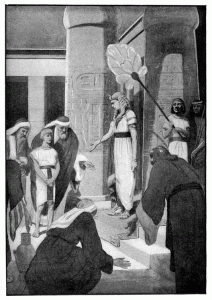
Genesis 45:5, 7, 8, Elohim sent me. Joseph was sold into slavery at age 17, was freed from prison and made ruler of Egypt at age 30, then seven years of plenty followed, and two years of famine had passed by the time he was reunited with is brothers. Only after 22 years in Egypt did Joseph finally figure out Elohim’s grand and wonderful plan for his life, and how it involved the saving of his family.

Joseph in prison

Had Joseph lost faith along the way, become embittered over his misfortunes, and turned from Elohim, the nation of Israel may have never been preserved.

Keeping one’s eyes on Elohim, and refusing to lose faith during the dark times can yield some amazingly triumphant outcomes, as we learn from the life of Joseph.


New Video: Hanukkah—The Deeper Meaning

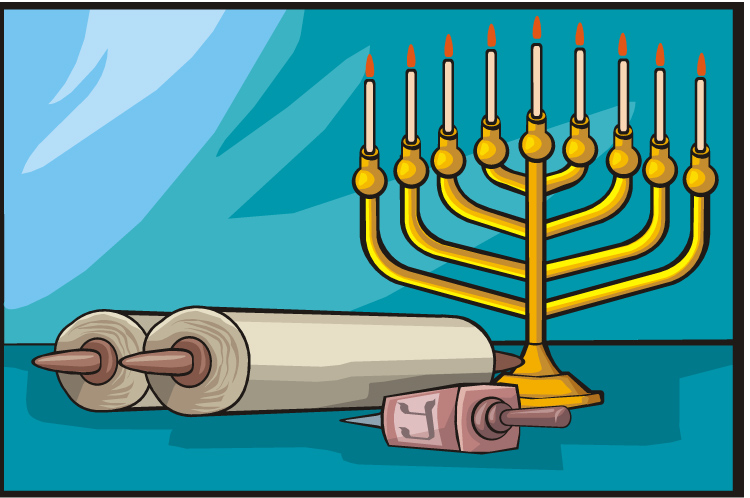
Though Hanukkah is a non-commanded man-made biblical holiday, it is still rich in spiritual meaning for the redeemed follower of Yeshua. Though it falls during the Christmas season, it, in many ways is the opposite of Christmas, yet shares a common theme with Christmas. Learn about these and more in this video.


Blog Scripture Readings for 12/1 through 12/7/13

Aside

Parashat Vayigash — Genesis 44:18 – 47:27
Haftarah — Ezekiel 37:15 – 37:28
Prophets — 1 Samuel 25:1 – 31:13
Writings — Psalms 69:1 – 75:10
Testimony — Mark 10:35 – 10:52

Most of this week’s blog discussion points will be on these passages. If you have general comments or questions on the weekly Scripture readings not addressed in a blog post, here’s a place for you to post those. Just use the “leave a reply” link below.

The full “Read Through The Scriptures In A Year” schedule, broken down by each day, can be found on the right sidebar under “Helpful Links.” There are 4 sections of scripture to read each day. One each from the Torah, the Prophets, the Writings, and from the Testimony of Yeshua. Each week, the Torah and haftarah readings will follow the traditional one-year reading cycle.

Weekly Blog Scripture Readings for 12/1 through 12/7/13.


More on Hanukkah (aka Chanukkah or Chanukah) — part 2 or 3 or whatever…

Hanukkah is a traditional, non-biblical Jewish holiday that falls in December and commemorates the Jews’ military defeat of the pagan Greeks and their dedication of the temple in Jerusalem after the heathens had desecrated it through idolatry and forbidden biblical practices. According to tradition, as part of the rededication ceremonies,  some holy olive oil was needed to light the temple’s menorah, yet none could be found, until someone found a small vessel containing only enough oil to last for a day. This oil was poured into the menorah, and miraculously the oil burned for eight days, which is why Hanukkah is celebrated for eight days. The historical events behind Hanukkah are chronicled in the apocryphal Book of First Maccabees (chapters one and two). These events occurred about 160 years before the birth of Yeshua (Jesus).

19972353

Though Hanukkah is a minor holiday, and is not a commanded biblical festival, there is record in the Testimony of Yeshua (New Testament) that Yeshua was at the temple in Jerusalem during Hanukkah (a Hebrew word meaning “to dedicate”), also known as the Feast of Dedication (John 10:22).

Hanukkah should not be viewed as a replacement for Christmas and in fact pre-dates the Christian Christmas by hundreds of years. It is a stand-alone holiday that has nothing to do with Christmas. In reality, Christmas is the melding together of some Biblical beliefs (i.e., the birth of Yeshua, although he wasn’t born in December!) with many traditions that are undeniably pagan in origin (see any encyclopedia on the subject of the origins of Christmas), including the biblically forbidden and idolatrous heathen practice of cutting, setting up and decorating a tree (Jer 10:1–8), which Scripture refers to as a vanity tree and regards as a foolish heathen activity (Jer 10:8). On the other hand, Continue reading →


Joseph, Ephraim, Manasseh & Benjamin in End Times Prophecy

Here are a few of my thoughts on who Joseph, Ephraim, Manasseh and Benjamin represent in end times Bible prophecy.

In studying the Jewish sages of old, I am amazed at how prescient they were about end time events. They gained this understanding often as they studied the lives of notable biblical characters.The sages had the strong sense that history would repeat itself— often again and again for the people of Elohim. This they observed in the cyclical patterns of Israel’s own history where YHVH gave them the truth, they remained faithful to it for a while, and turned from it, were punished and then returned to Elohim only to have the cycle repeat itself again and again.

As I have studied their method of predicting the future based on past events in Israel’s history, this has led me to some of my own speculations, which I present to you below.

Joseph as ruler1

There is much more to learn on this subject and I try to remain teachable.

Joseph, Ephraim and Manasseh Antetypical of Christianity

Joseph’s wife was the daughter of an Egyptian priest. Jospeh married into the religious system of Egypt. He is a picture of Christian church, which has married itself to Babylon by syncretizing itself with certain pagan traditions and belief systems. Joseph is a picture of the end time lukewarm church. Ephraim and Manasseh were products of the union of Joseph (an Israelite) and Potifera (an Egyptian). Though they were Israelite, they were genetically a mixture of both Israelite and Egyptian blood. In fact, they resembled Egypt so much that Jacob, when blessing them, didn’t even recognize who they were. They were strangers to him. Though they were spiritual mulattos, their spiritual destiny was to identify wholly with their Israelite heritage, which would necessitate their renunciation of their Egyptian ties. In the end times, YHVH is calling Christians to renounce the pagan ties they Continue reading →