Why Count the Omer?

It’s a biblical command:

And you shall count for yourselves from the day after the Sabbath, from the day that you brought the sheaf of the wave offering: seven Sabbaths shall be completed. Count fifty days to the day after the seventh Sabbath; then you shall offer a new grain offering to YHVH. (Lev 23:15–16)

Other than the fact that YHVH commands us to do so, why do we count the omer each day as we count down 49 days or seven weeks to the Feast of Weeks (Heb. Shavuot) or Pentecost? What can we learn from fulfilling this command?
omer_count

  • We are counting down with excitement and anticipation the 49 days until Shavuot, which is the anniversary of our forefathers receiving YHVH’s instructions in righteousness (the Torah) at Mount Sinai. For us, it’s like experiencing the joy of receiving the Torah all over again for the first time.
  • We are counting down with excitement and anticipation the 49 days until Shavuot, which is the anniversary of our forefathers receiving YHVH’s instructions in righteousness (the Torah) at Mount Sinai. For us, it’s like experiencing the joy of receiving the Torah all over again for the first time.

    Each person individually is to participate in the counting of the omer, since the Torah commands us to “count for yourselves” (Lev 23:15). This teaches us that each individual is to count down with anticipation the days toward Shavuot — the anniversary of the day that YHVH gave his Torah to Israel. Each person should be excited about receiving the Torah — YHVH’s divine instructions on how to live abundantly both physically and spiritually. YHVH gave his people 49 days to prepare themselves to meet him on this momentous occasion. The children of Israel met YHVH at Mount Sinai and were given the Torah, and the early book of Acts believers met YHVH in the upper room on the day of Pentecost when they received the Holy Spirit and had YHVH’s Torah written on their hearts. We celebrate this anniversary each year when we count the omer. This further teaches us that as the counting of the omer is an individual experience, even so, obedience to the Torah is an individual experience. Each of us must obey YHVH’s commandments, and YHVH will eventually judge each of us individually on how obedient we were in keeping his laws, which will determine our level of rewards in his kingdom (Matt 5:19; 16:27; Rev 22:12).

  • We are counting down with anticipation seven weeks until Shavuot, which is the anniversary of the disciples of Yeshua receiving the power of the Holy Spirit (Heb. Ruach HaKodesh) on the day of Pentecost in Jerusalem. On this day, the Torah was written on their hearts thus empowering them to love Elohim and one’s fellow man more fully by keeping his Torah commands both in the letter and in the spirit (heart and mind).
  • We are counting the omer in anticipation of the late spring wheat harvest in the land of Israel, which occurs at Shavuot. Most of us aren’t wheat farmers, but there’s still a spiritual lesson to be learned from this. The wheat harvest is a picture of the spiritual harvest of souls during this age, and our need to be filled with the Holy Spirit and equipped with its powerful gifts to more effectively reach out to those around us with the message of the gospel and the kingdom of Elohim. Yeshua has commissioned us to help bring that spiritual harvest of people into his kingdom.
  • The counting of the omer is about spiritual refinement. When the children of Israel were enslaved in Egypt, they became defiled with the ways of that pagan nation. At Shavuot, the Israelites become a holy nation before YHVH and become the bride of YHVH in a spiritual sense.  On Passover, the Israelites came under the blood of the lamb, which is a picture of their sins being cleansed by Yeshua, the Lamb of Elohim. This was accompanied by their putting leaven out of their homes, which is a biblical metaphor for sin — something we must put out of our lives. On the next day, the first day of the Feast of Unleavened Bread, they left Egypt — called the Exodus. This is a picture of leaving  the world and sin behind as we set out on a journey to meet Elohim and to become his holy and righteous people. It’s about going from spiritual slavery to sin, the devil and this world to become Elohim’s chosen people.

Here is the blessing for the counting of the omer:

Baruch atah A-donai E-loheinu Melekh Ha-olam asher kid’shanu b’mitzvotav v’tzivanu al S’firat Ha-omer.

Blessed are You, Lord our God, King of the Universe, Who has sanctified us with His commandments and commanded us to count the Omer.

To help you count the omer, print off a monthly calendar that conveniently has each day of the omer count listed on it. Go to http://hoshanarabbah.org/calendars.html


New Video: What Is the Second or Greater Exodus?

The Bible talks about an end times exodus of God’s people that will make the first exodus of the children of Israel from Egypt look small and forgettable. This will be an exodus from enslavement to the Babylon the Great world system and will be the greatest spiritual revival in the history of the world to bring Elohim’s people back to him and back to their promised inheritance in the land of Israel. In this video, learn how this event relates to the second coming of Yeshua the Messiah.


Chag Sameach!

Happy last day of the Feast of Unleavened Bread (Chag HaMatzot) — a high holy day Shabbat (Sabbath) to you all!

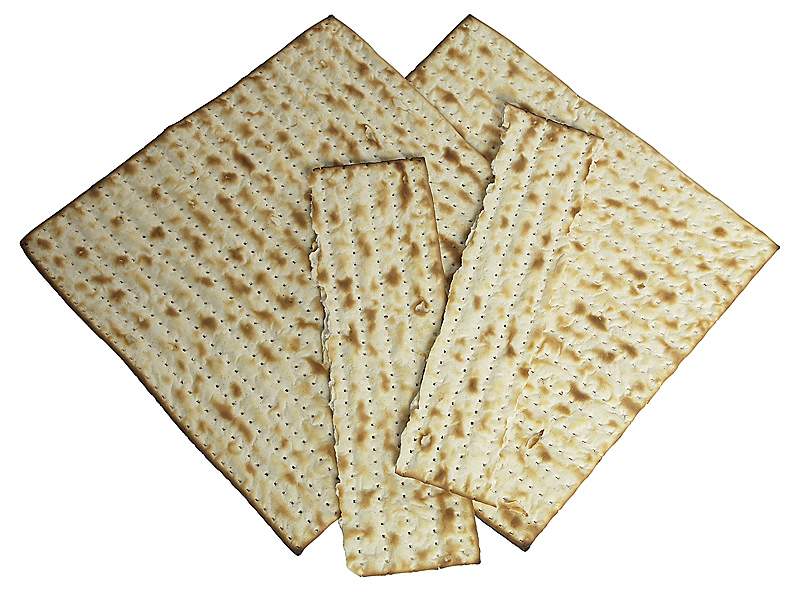
matzah

We are in the first week of seven weeks of the counting of the omer. Today is the second day of 50 days in the counting of the omer leading up to the biblical Feast of Weeks (Pentecost). (Lev 23:15:16)

omer_count


Blog Scripture Readings for 4-20 through 4-26-14

Aside

THIS WEEK’S SCRIPTURE READINGS FOR STUDY AND DISCUSSION:

Parashat Kedoshim — Leviticus 19:1 – 20:27 
Haftarah — Amos 9:7–15
Prophets —Isaiah 62:1 – 66:24; Jeremiah 1:1 – 2:37
Writings — Job 13:1 – 19:29
Testimony — Acts 19:1 – 22:30

Most of this week’s blog discussion points will be on these passages. If you have general comments or questions on the weekly Scripture readings not addressed in a blog post, here’s a place for you to post those. Just use the “leave a reply” link below.

The full “Read Through The Scriptures In A Year” schedule, broken down by each day, can be found on the right sidebar under “Helpful Links.” There are 4 sections of scripture to read each day. One each from the Torah, the Prophets, the Writings, and from the Testimony of Yeshua. Each week, the Torah and haftarah readings will follow the traditional one-year reading cycle.

Weekly Blog Scripture Readings for 4/20 through 4/26/14.


What Is the Second Exodus & When Does It Occur?

The children of Israel left Egypt on the first day of the Feast of Unleavened Bread, and crossed through the Red Sea on the last or seventh day of this feast. This was the first exodus. But there’s more!

The biblical prophets speak of a greater or second exodus to occur in the last days where YHVH’s people who’ve been scattered throughout the nations of the world will be set free from their spiritual, economic and political enslavement in the nations, which are under the control of Babylon the Great. There is much to learn on this subject, and it’s an important subject to study, since it affects your spiritual destiny.

The following article is a comprehensive analysis of this topic, which explores all the biblical scriptures on the subject of the second exodus. It’s a long one article, but try to stay with it and read it to the end. It will help you to understand end times Bible prophecy in a way that only a privileged and enlightened few do. You have never read anything like this before. It will help you to understand where you personally fit into end times Bible prophecy!

A Look at End-Times Bible Prophecies Relating to the Second Exodus

By Ya’acov Natan Lawrence

The Issue in People’s Hearts

The Bible clearly teaches that the ten tribes of the ancient northern kingdom of Israel (known biblically by various names such as the house of Israel, Samaria or Ephraim) were exiled among the nations of the world because of sin (1). At the same time, the biblical prophets and Jewish sages over the past 2000 years have predicted that in the end times (at the coming of the Messiah), through a series of supernatural events, these tribes will be regathered and return to the land of Israel to be reunited with their Jewish brethren who are descended from the southern kingdom of Judah (2). Furthermore, there is clear biblical and historical evidence that the ten northern tribes of Israel collectively known as Ephraim are largely to be found among the Christian peoples scattered across the earth. I have attempted to prove this point from biblical, linguistic, archeological, historical and rabbinic Jewish sources in a previous work (3)) .

In these last days before Messiah’s second coming, more and more redeemed believers in Yeshua (the Hebrew name for Jesus) are discovering a new-found love for the Jewish people and the land of Israel. At the same time, they are awakening to the need to return to the Hebrew roots of the Christian faith by adhering to a more Torah-centered lifestyle and spiritual walk. It then follows that some are coming to the fundamental truth taught Continue reading →


On Blood, Goats, Demons and Yeshua

Leviticus 17:7, Sacrifices to demons. Sa’ar, the Hebrew word for goat, refers to the Egyptian goat gods, or goat demons that were believed to inhabit the wilderness (The ArtScroll Tanach Series Vayikra Leviticus Commentary, p. 313; Keil and Delitzsch, p. 593). In several places, the KJV and NAS translate this word as satyr (e.g., Isa 13:21; 34:14), which, in Greek and Roman mythology were associated with Pan, the half goat and half man-like creature. These demonic forces were believed to be destructive causing fear and turbulence, murder and mayhem (Ibid., ArtScroll Tanach Series Vayikra). Interestingly, sa’ar and Se’ir as in Mount Seir, the home of Edom (Num 24:18), share the same Hebrew consonants and derive from the same root word. From this, the Jewish sages deduce that Edom, the descendents of Esau­—Israel’s perpetual enemies down through the ages (even to the last days)—was the embodiment of evil (Ibid.). Additionally, in occult lore, there exists a creature called Baphomet, which is represented by a horned goat’s head inside of an inverted star or pentagram. The origins of this symbol are debated as to whether it goes back to the satyr or is more recent origination. However, it is well-documented that the use of blood (in sacrificial and cannibalistic rites) and its veneration is an important aspect of Satanic rituals even into modern times. This is one reason why YHVH forbad the Israelites from eating animal blood (verse 10).

From this passage in Leviticus (and the surrounding verses), it should be clear that YHVH not only expected the Israelites to respect blood (see verse 11), but to properly dispose of it in a way that would preclude them being tempted to engage in idolatrous and demonic rituals. In our notes under verse 11, we will see why YHVH valued the blood so highly. 

Leviticus 17:11, The life of the flesh. Long before modern science confirmed this in the seventeenth-century, YHVH revealed in the Torah that the life of flesh is in the blood.

Leviticus 17:11 is a crucial scripture theologically regarding the blood atonement. Presently, the Jewish religion offers no hope for its followers in light of this passage. For believers in Yeshua, the message of Messiah and him crucified addresses this issue. The importance of the blood of the Lamb in the atonement for sins as well as in overcoming sin, sickness (1 Peter 2:24) and the powers of hell (Rev 12:11) cannot be over emphasized. How thorough is your understanding of the power of the blood? Do you appropriate this power on a regular basis in your life? The power of the blood is central to the efficacy of the communion elements and specifically to the concept of redemption. The concept of the blood of Yeshua is central to the gospel message with some 50 references to it in the Testimony of Yeshua. Such terms are used as “blood of the Lamb,” “blood of Messiah,” “precious blood of Messiah,” “blood of the everlasting covenant,” “redemption through Messiah’s blood,” “blood of His cross,” “communion of the blood of Messiah,” “faith in his blood,” and “purchased with his blood.” Is the reality of the blood of Messiah central to your faith walk? How so? If not, why not? (Read and ponder Matt 26:28; Eph 1:7; Heb 9:12,22; 10:19; 12:24; 1 Pet 1:2, 19; 1 John 1:7; Rev 1:5; 7:14; 12:11.)


Insights on the Feast of Unleavened Bread

The Feast of Unleavened Bread Is a Commemorative Ritual

Passover going into the first day of the Feast of Unleavened Bread is the birthday of the nation of Israel. In ancient times, universal Israel came together in Jerusalem to celebrate this event. Today, redeemed Israelites come together to celebrate these divine appointment sacred convocations.

Days of Unleavened Bread

Abstaining from leavened bread for seven days is symbolic of Elohim’s people separating themselves from sin and turning towards a holy relationship with him.

Removing leavening from our  homes is a symbolic activity just like taking communion, being baptized for the remission of sins, or building a sukkah during the Feast of Tabernacles. As humans, we need symbolic commemorative occasions for several reasons. They give us a sense of history by helping us to understand the past, so that we can move forward into the future knowing who we are and where we’ve come from. They give us guidance so that we’ll learn from the lessons of history, both the good and bad ones. Our culture is full of symbolic rituals and commemorative acts and markers (Christmas, Easter, birthdays, anniversaries, Independence Day, Memorial Day, Veterans Day, Thanksgiving Day, statues, historical markers, monuments, museums, heritage sites, etc.). Likewise, Biblical commemorative rituals help us in several ways.

  • They help us to both recall and commemorate past and future events.
  • They help us to understand who we are by recalling where we’ve come from which in turn helps us to understand where we’re going.
  • They can be something physical that helps us to wrap our minds around difficult-to-understand spiritual principle. Continue reading →