One foot in the will of Elohim and one foot out…

Genesis 26:1–29, There was a famine in the land. At the well of Lachai-roi (or “the well of the Living One seeing me,” Gen 24:62), Isaac was fruitful. There he met his wife while in communion with YHVH (24:62–64).
Well 20098602

Isaac also dwelt there for 20 years where he entreated YHVH because of Rebekah’s barrenness (25:21), and YHVH answered Isaac’s prayer and Rebekah gave birth to twins (25:22ff). But because of famine in the land, Isaac felt compelled to leave Canaan to seek relief in Egypt following the earlier footsteps of his father, Abraham.

Is it wise to rely on “Egypt” (a metaphor for the world) for our sustenance instead of trusting YHVH and believing that where he has planted us and blessed us is where we should stay?

While en route to Egypt YHVH, gracefully redirected Isaac away from Egypt instructing him rather to sojourn in Gerar (temporarily) where he would continue to bless him and his posterity (26:2–4). Isaac obeyed YHVH — more or less. Isaac ended up in Gerar located on the border between Canaan and Egypt and dwelt there a long time (not temporarily as YHVH had instructed him, 26:6, 8). Instead of fully obeying YHVH, it was as if Isaac was hedging his bet between faith and fear, between Canaan, the land of promise, and Egypt, the land of comfort for the flesh man.

How often do we halt between two opinions and compromise between YHVH’s will and our own in matters where he has given us clear direction?

This place of spiritual indecision and weakness put Isaac in a compromising situation (26:7). He felt compelled to lie about his wife, thus repeating the sin of his father (Gen 20:1–2).

Compromised obedience puts us in compromising situations where in order to “save our skin” we often have to compromise our values. Though Isaac was out of YHVH’s will, YHVH was still faithful to keep his promises he had made to Isaac earlier (Gen 26:3–4). Isaac was blessed one hundred fold in his wealth (Gen 26:12–14).

Despite YHVH’s blessings, Isaac’s labors were not without difficulty and opposition from an enemy who was intent upon stealing his water wells, which were rightfully his (Gen 26:12–15). In the arid regions of the Holy Land, wells are essential for survival and prosperity.

Wells are a spiritual metaphor for salvation, life, abundance and truth — things the enemy is intent on taking from us (in this light, consider Isa 12:3; 55:1–3; Ps 36:9; John 4:7–14; 7:37–39; 10:10).


 

We’re killing ourselves…

Garbage in garbage out. We get out of something what we put into it. Why should we expect good results out of bad actions? It’s illogical to do so.

15682101

Yet quite often I have to pray for healing over sick people who are putting garbage into their bodies in the junk food and chemical pharmaceuticals they consume, and the carcinogenic poisons they smear onto their bodies in the cosmetics, soaps and creams they use. Now they are unhealthy and their bodies are riddled with diseases and they wonder why, and they want YHVH to heal them, even though they refuse to change their lifestyles.

Quite frankly, I struggle praying for such people. My healing faith for them is small.

Why should Yah heal them when they profane the body he has given them and refuse to repent their deleterious ways? Answer that question!

In our modern, self-indulgent culture, I see this going on all the time. It grieves me greatly, yet many people are so lacking in self discipline and they stiffen their necks at the thought of changing their errant ways, and you can’t tell them otherwise. How sad!

We’re killing ourselves and we wonder why…


The End Times Prophetic Subtext of Matthew Chapters 16 to 25

The Surrounding Context of the Matthew 24–25 Olivet Prophecy

The Bible is full of spiritual blueprints; Yeshua’s prophecy in Matthew 24 and 25, commonly called the Olivet Prophecy is an example of another one..

Having a working knowledge of all these “blueprints” will help us to discover who we are as a people in the eyes of YHVH, where we have come from, where we are presently, and where we are going—that is, what the future holds for us, and what our spiritual destiny or divine inheritance is. Only then will we understand the end-time prophetic events leading up to the second coming of Yeshua, and we will learn what our role will be to play in them.

To understand Matthew 24 and 25, it is important first to note the chronological positioning of this prophecy in the context of the passages before and after this pivotal chapter. The chapters that precede Matthew 24 prophetically speak of precursory events leading up to the second coming of Yeshua, while those that follow Matthew 24 prophetically delineate events that occur after his return.

Matthew 24 sits like a diamond in the midst of a brilliant gold setting. It speaks of the order of end time events pertaining to the second coming of Yeshua the Messiah, our beloved King, Redeemer and Savior. Listed below is a chronology of events as Matthew lays them out, more or less, in the order in which they will occur prophetically. Many of these passages will be elucidated upon later in this book. It is important that we present the Continue reading →


A Modern Day Deborah — The Back Story

Christine Weick is approached be security at the National Cathedral in Washington Friday, Nov. 14,  as she stands up to proclaim "Jesus is our Lord and Savior"

It was supposed to be a shining moment for proponents of the interfaith movement.

The Islamic “jummah,” or Friday call to prayer, would be held on America’s grandest Christian stage – the National Cathedral in Washington, D.C.

It was a bold move that had never been tried. Leaders of the Episcopal cathedral said sending prayers up to Allah from a Christian church would show the world that two religions at odds with each other for centuries could “approach the same God” as one body of believers.

The stage was set. The prayer rugs were neatly arranged facing Mecca. The lights shone down on the imam for his opening remarks.

Not so fast.

Christine Weick, a 50-year-old Michigan woman with flowing blonde hair who lives out of her car, rose from the packed National Cathedral, the hall of halls in terms of religious prominence in America, and moved toward the front of the church.

She pointed to the cross hanging overhead.

To continue reading: http://www.wnd.com/2014/11/christian-booted-from-national-cathedral-speaks-out/#aAyuqRX3fSKa1847.99


Blog Scripture Readings for 11-16 through 11-22-14

Aside

THIS WEEK’S SCRIPTURE READINGS FOR STUDY AND DISCUSSION:

Parashat Toldot — Genesis 25:19 – 28:9
Haftarah — Malachi 1:1 – 2:7 | 1 Samuel 20:18-42**
Prophets — Judges 11:1 – 17:13
Writings — Psalms 40:1 – 47:9
Testimony — Matthew 25:23 – 27:66

Most of this week’s blog discussion points will be on these passages. If you have general comments or questions on the weekly Scripture readings not addressed in a blog post, here’s a place for you to post those. Just use the “leave a reply” link below.

The full “Read Through The Scriptures In A Year” schedule, broken down by each day, can be found on the right sidebar under “Helpful Links.” There are 4 sections of scripture to read each day. One each from the Torah, the Prophets, the Writings, and from the Testimony of Yeshua. Each week, the Torah and haftarah readings will follow the traditional one-year reading cycle.

**When a special shabbat occurs on the traditional Jewish calendar, a different haftarah is read. This week is “Shabbat Machar Chodesh” on the traditional calendar, which is when the Sabbath falls the day before Rosh Chodesh (new moon/new month) and 1 Samuel 20:18-42 is read for that special Haftarah. Typically Malachi 1:1–2:7 is read with Parashat Toldot when it is not designated a “special shabbat”.

Weekly Blog Scripture Readings for 11/16 through 11/22/14.


The Islamization of the US: Shame on America!

From the ChristianPost.com

YHVH bless the courageous Christian woman protestor!   Natan

National Cathedral Hosts Islamic Prayers; Lone Protester Interrupts Service

BY STEPHANIE SAMUEL , CHRISTIAN POST REPORTER
November 14, 2014|2:52 pm
Muslims hold prayer inside the Washington National Cathedral(PHOTO: REUTERS/LARRY DOWNING)

The Washington National Cathedral and five Muslim groups hold the first celebration of Muslim Friday prayers, Jumaa, in the cathedral’s north transept in Washington, November 14, 2014.

Correction Appended

The Washington National Cathedral hosted it first Muslim prayer service Friday afternoon in an effort to promote interfaith prayer and improved global relations between Muslims and Christians.

  • muslim prayer
    (Photo: NBC Washington screengrab)
    Unidentified woman protester at Washington National Cathedral disrupts first Muslim prayer service Friday afternoon and shouts, “We have built, and allowed you here in mosques across this country. Why can’t you worship in your mosque, and leave our chuches alone?” Nov. 14, 20`14.

“Jesus Christ died on that cross over there!” a woman said loudly, immediately after announcements at the beginning of the service were made. “He is the reason why we are to worship only him. Jesus Christ is our lord and savior!”

According to the NBC report, she continued, “We have built, and allowed you here in mosques across this country. Why can’t you worship in your mosque, and leave our chuches alone?”

The protester was then escorted out of the cathedral, News4’s Kristin Wright reported. She was removed without incident, but she continued her protest once she was taken to an adjoining space. 

The Episcopal church set in Washington, D.C. altered its visitor tour schedule in order to host traditional Islamic Friday prayers called Jumu’ah. The service was led by South African Ambassador Ebrahim Rasool, and held in the Cathedral’s north transept, an area considered “almost mosque-like” because of its arches and limited iconography.

Muslims hold prayer inside the Washington National Cathedral(PHOTO: REUTERS/LARRY DOWNING)

Omar Abdul-Malik prays alone as the Washington National Cathedral and five Muslim groups hold the first celebration of Muslim Friday prayers, Jumaa, in the cathedral’s north transept in Washington, November 14, 2014.

Although this is not the first time the Cathedral has welcomed Muslims to join in on its interfaith services and events, it is the first time it has invited Muslims to lead their own prayers within its walls.

Rev. Canon Gina Gilland Campbell was scheduled to offer a welcome to start off the service.

According to the National Cathedral website,Campbell wanted to hold the historic service because she believes that “powerful things come out of praying together.”

The site further explains “Leaders believe offering Muslim prayers at the Christian cathedral shows more than hospitality. It demonstrates an appreciation of one another’s prayer traditions and is a powerful symbolic gesture toward a deeper relationship between the two Abrahamic traditions.”

Muslims hold prayer inside the Washington National Cathedral(PHOTO: REUTERS/LARRY DOWNING)

Women pray as the Washington National Cathedral and five Muslim groups hold the first celebration of Muslim Friday prayers, Jumaa, in the cathedral’s north transept in Washington, November 14, 2014.

Not everyone supports the Cathedral’s gesture. American Family Association Director of Issue Analysis Bryan Fischer said the Muslim prayer service violates the Ten Commandments.

“The first one of the Ten Commandments is what, you—talking the nation of Israel, true for individuals but this was the Ten Commandments for a nation – you shall have no other Gods before me. Allah is another God,” He explained on his Focal Point podcast.

This is not the first time the National Cathedral has invited controversy with its services. In June the Cathedral invited openly transgendered Episcopal priest Rev. Cameron Partridge to preach from its pulpit in honor of LGBT pride month. Openly gay Episcopal Bishop Rev. Gene Robinson presided over the Sunday service. The Cathedral also hosts gay marriage ceremonies.

Planners hope Friday’s service will inspire Muslims around the world to be hospitable to Christians.

The service was scheduled to be livestreamed onto the Cathedral’s website so it is accessible to everyone.

Correction:  Saturday, November 15, 2014:

An article on Friday, November 14, 2014, about a Muslim prayer held at the National Cathedral incorrectly described the Cathedral as a Catholic church. It is an Episcopal church. 


What Is the Greater or Higher Torah?

Matthew 23:23, Weightier matters of the Torah. What are the weightier matters of the Torah? Torah is not an end-all. It is a vehicle that leads us to something. What is that? What really matters to YHVH when all is said and done???? It is the greater Torah or the higher Torah. The Gospel of Matthew (23:23) records that Yeshua rebuked the religious leaders of his day for their not following the higher Torah. What did Yeshua really mean by “the weightier matters of the Torah”?

The Deeper Meaning of the Word “Torah”

Almost every place where you see the word “law” in the Tankah, it is the Hebrew word “Torah.” This word is used 219 times in the Tanakh or Hebrew Scriptures, and in almost every case it is translated in the KJV and in most other English Bibles as “the law.” Is this all the word law (or Torah) means? Is “law” even Torah’s main meaning?

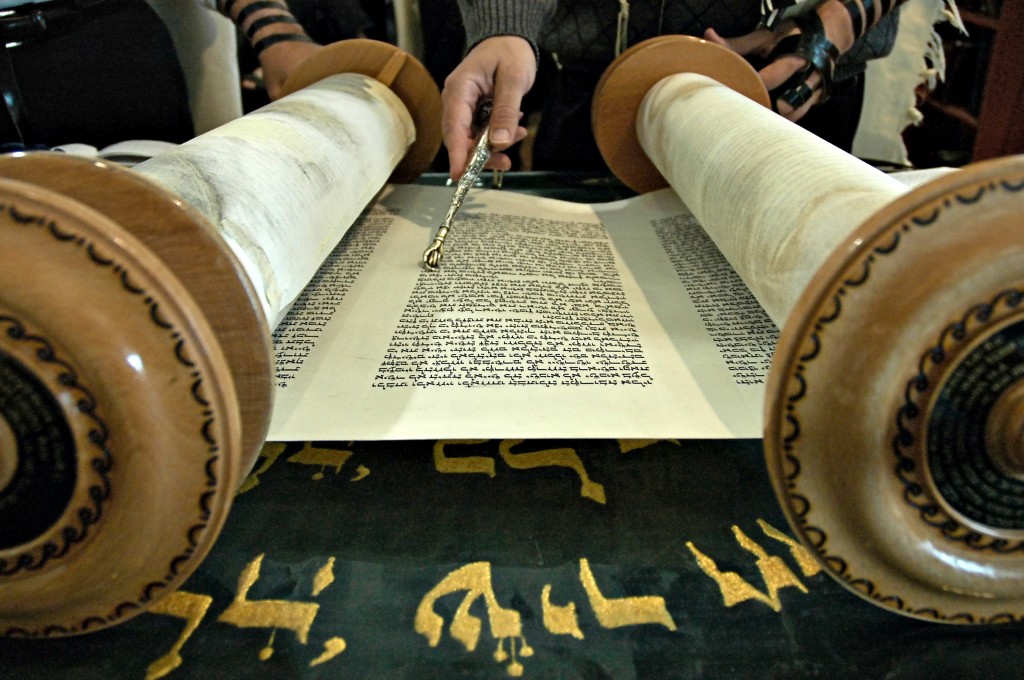
Torah reading in a synagogue with a hand holding a silver pointer

As a test of your understanding (or, perhaps, your preconditioned biases), when you think of the term “the laws” what comes into our mind: good thoughts or bad thoughts? Do you think of a list of dos and don’ts—what you can do and cannot do? Do you think of red and blue lights flashing and a siren? Do you think of a man in a blue uniform with a badge and a gun, or judge in a black robe with a gavel, or a prison? These can be scary thoughts!

Let’s see what the word Torah really means according to the Scriptures.

Let’s start understanding the full scope of this word by first reading Proverbs 13:14. There we read that the Torah is the foundation of life.

Next start reading in Proverbs 1:7 where we read that the fear of YHVH is the beginning of Continue reading →