When do we start the count of the omer?

I got this question emailed to me this morning:

My name is Lisa B— and I have a question for you as I have been “kerfuddled” if you will by the omer count this year. I understand from your website that you’re sighted moon? I really, really thought we would NOT start the Omer count for a week, due to ULB beginning Saturday eve to Sunday eve, but both you, and the Karaites (the other sighted group I know of) started ON ULB. Please, how is that possible? Can you explain?
Here is my answer:
omer_count
From Lev 23:9–15, we learn that we’re to begin the count of the omer toward Shavuot (Pentecost) from the morrow/day after the Sabbath when the barley first fruits were presented to YHVH as a wave offering (called wave sheaf day). The question is whether we start the omer count from the Sabbath, or from the day after the Sabbath? Does the Sabbath or the day after the Sabbath (Sunday) have to fall within the week of the Feast of Unleavened Bread? Normally, this isn’t an issue since both the Sabbath and the first day of the week fall within the week of Unleavened Bread. However, this year (2015), this is the case. If you choose to count from Sunday, then the Saturday, April 4 falls outside of Unleavened Bread, but Sunday, April 5 falls within the Feast of Unleavened Bread, since this is the first day of the feast. If you choose to count from the Sabbath that falls within the Feast of Unleavened Bread (i.e., April 11), then this places wave sheaf day outside of the Feast of Unleavened Bread. Those who begin the omer count toward Shavuot from April 5 will be celebrating Shavuot on Sunday, May 24, while those who begin the count from April 12 will be celebrating Shavuot on Sunday, May 31.
So this brings us back to our basic question of when to start the omer count. Does the Sabbath or the day after the Sabbath (Sunday or wave sheaf day) have to be within the week of the Feast of Unleavened Bread? Some people will say say the Sabbath has to be, and some will say the day after the Sabbath has to be. When reading Lev 23:9–15, you really can’t tell which it is. It seems like it could go either way. It’s a tie.
Enter Josh 5:10–11, which is the tie breaker. Those who believe that you start the omer count from the day after the weekly Sabbath use this passage as their proof. Here is my commentary on  this passage:

Joshua 5:11, And they ate. As the manna ceased, the Israelites ate the fresh barley grain that had already been growing in the land. In Leviticus 23:14, the Israelites were forbidden to eat of the new barley crop of the land of Israel until the day of the omer offering (or wave sheaf day). This year, the omer offering occurred on the next day after the Passover (Nisan/Abib 14), which was Nisan/Abib 15, or the first day of the Feast of Unleavnened Bread. Because the omer offering was to be brought on the morrow or day after the (weekly, see notes at Lev 23:16) Sabbath (Lev 23:11), this means that the Israelite’s first Passover in the land of Israel occurred on a weekly Sabbath, and wave sheaf day occurred on Sunday. This verse also shows us that the morrow after the Sabbath (i.e., wave sheaf day) occurred during the Feast of Unleavened Bread ­— not before or after it. This should be taken into consideration when determining which weekly Sabbath at the time of Feast of Unleavened Bread should be used to determine wave sheaf day and, hence, the beginning the omer count. This passage indicates the wave sheaf day, not the weekly Sabbath, has to fall within the Feast of Unleavened Bread.

This passage is circumstantial evidence that the ancient Israelites calculated the omer count based on wave sheaf day, not the weekly Sabbath, having to fall within the Feast of Unleavened Bread. This is why our ministry begins the count of the omer toward Shavuot  from the day after the weekly Sabbath, and not the Sabbath itself, that falls within the Feast of Unleavened Bread.
As a footnote, by calculating the omer in this manner, this keeps wave sheaf day (the day Yeshua ascended to heaven and was accepted by the Father) within the Feast of Unleavened Bread, which fulfills biblical types and shadows more accurately than if wave sheaf day fell outside of the Feast of Unleavened Bread. For more info on this, please read my detailed article on the subject at http://www.hoshanarabbah.org/pdfs/firstfruits.pdf.
I hope this answers your question.
 

Feast of Unleavened Bread Insights

The Feast of Unleavened Bread Is a Commemorative Ritual

Passover going into the first day of the Feast of Unleavened Bread is the birthday of the nation of Israel. In ancient times, universal Israel came together in Jerusalem to celebrate this event. Today, redeemed Israelites come together to celebrate these divine appointment sacred convocations.

Abstaining from leavened bread for seven days is symbolic of Elohim’s people separating themselves from sin and turning towards a holy relationship with him.

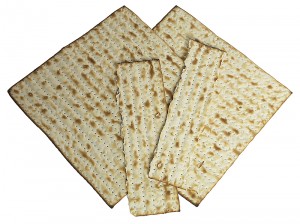
matzah

Removing leavening from our  homes is a symbolic activity just like taking communion, being baptized for the remission of sins, or building a sukkah during the Feast of Tabernacles. As humans, we need symbolic commemorative occasions for several reasons. They give us a sense of history by helping us to understand the past, so that we can move forward into the future knowing who we are and where we’ve come from. They give us guidance so that we’ll learn from the lessons of history, both the good and bad ones. Our culture is full of symbolic rituals and commemorative acts and markers (Christmas, Easter, birthdays, anniversaries, Independence Day, Memorial Day, Veterans Day, Thanksgiving Day, statues, historical markers, monuments, museums, heritage sites, etc.). Likewise, Biblical commemorative rituals help us in several ways.

  • They help us to both recall and commemorate past and future events.
  • They help us to understand who we are by recalling where we’ve come from which in turn helps us to understand where we’re going.
  • They can be something physical that helps us to wrap our minds around difficult-to-understand spiritual principle.
  • They are something physical that help to point us toward a spiritual reality. They help to raise our hopes and our eyes above our mundane existence and strengthen our faith as we move toward the higher goal or reality to which the ritual or commemorative event points.
  • They help us to teach and to pass on to each new generation not only about our past history, but our future hope.

Leavening Is a Picture of Sin

The observance of the Feast of Unleavened Bread is a symbol of our commitment to turn towards righteousness and turn away from sin. How serious we are about removing physical leaven from our homes in compliance Continue reading →


Photos: Our Passover Seder

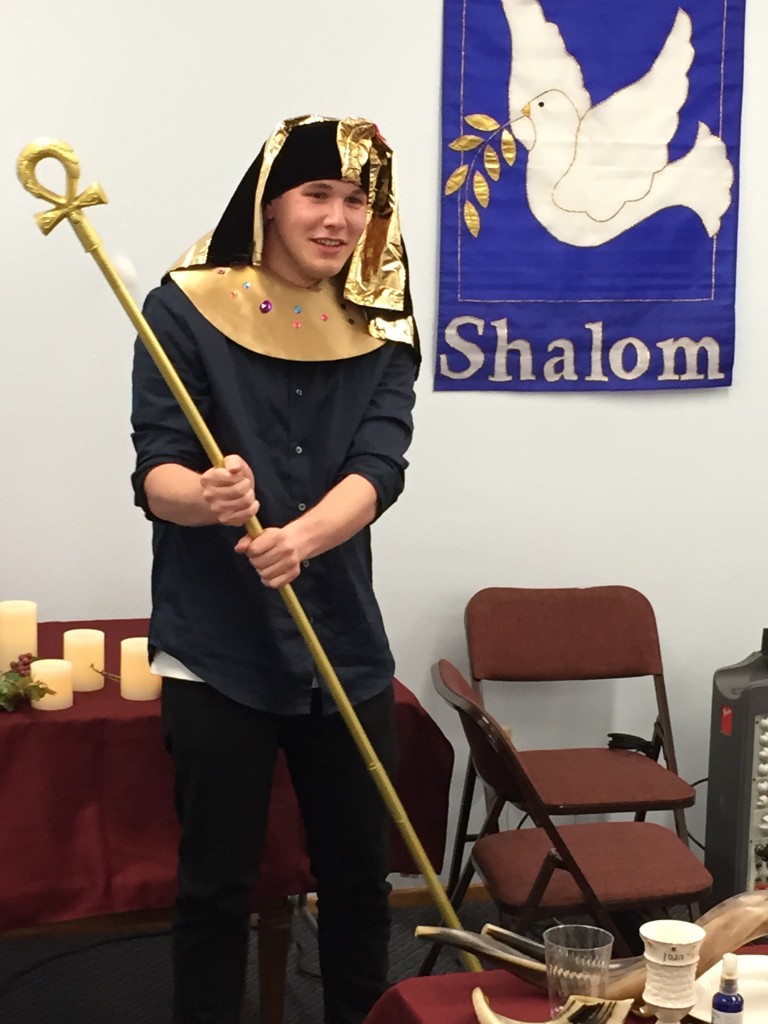
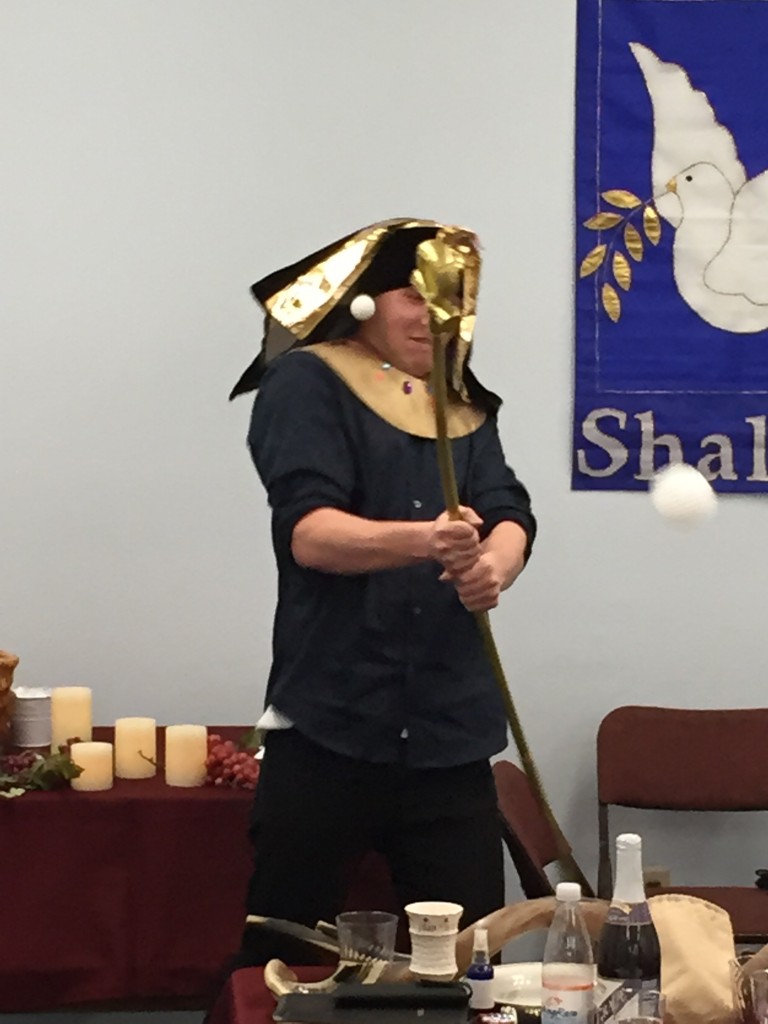
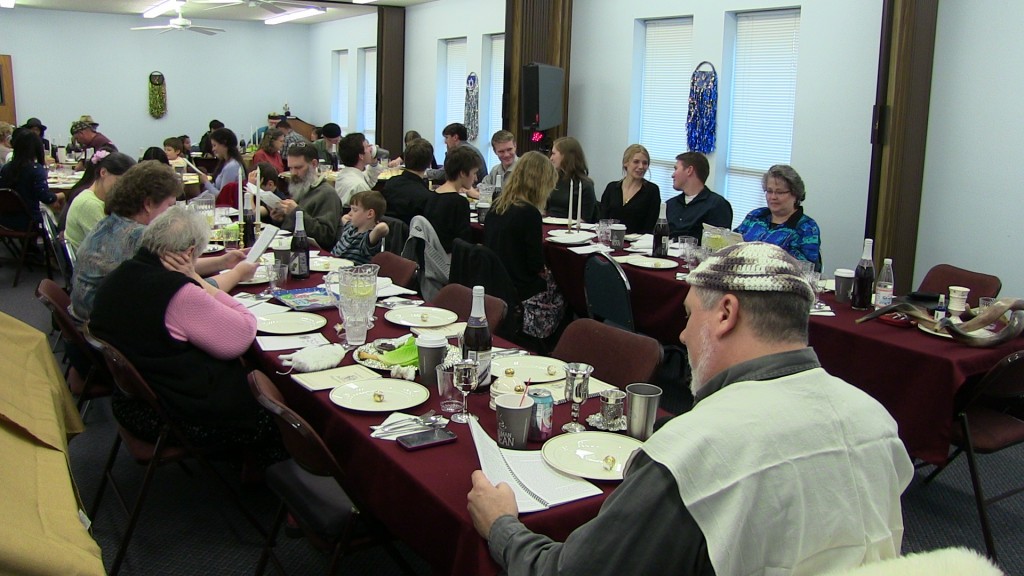
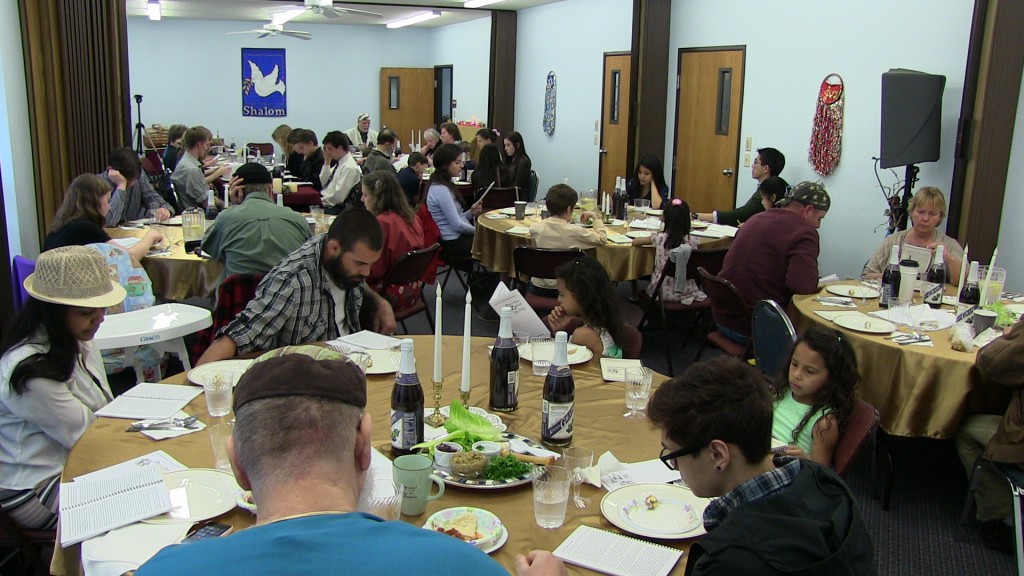
Here are a couple of photos I took of our congregational Passover seder last night.

IMG_0308

IMG_0310

Aaron playing Pharaoh

Aaron playing Pharaoh

Pharaoh Aaron being pelted with hail. How many of you knew that baseball was invented in ancient Egypt during the plague of hail?

Pharaoh Aaron being pelted with hail. How many of you knew that baseball was invented in ancient Egypt during the plague of hail?


Blog Scripture Readings for 4-5 Through 4-11-15

Aside

THIS WEEK’S SCRIPTURE READINGS FOR STUDY AND DISCUSSION:

There are no Parasha or Haftarah Readings this week due to Passover 
Prophets — Isaiah 36:1 – 43:28
Writings — Job 5:1 – 11:20
Testimony — Acts 7:17 – 10:23

Most of this week’s blog discussion points will be on these passages. If you have general comments or questions on the weekly Scripture readings not addressed in a blog post, here’s a place for you to post those. Just use the “leave a reply” link below.

The full “Read Through The Scriptures In A Year” schedule, broken down by each day, can be found on the right sidebar under “Helpful Links.” There are 4 sections of scripture to read each day. One each from the Torah, the Prophets, the Writings, and from the Testimony of Yeshua. Each week, the Torah and haftarah readings will follow the traditional one-year reading cycle.

Weekly Blog Scripture Readings for 4/5 through 4/11/15.


Free Passover and Feast of Unleavened Bread Resources

I invite you to take a look at the Hoshana Rabbah Passover page on our website at http://www.hoshanarabbah.org/pesach.html.

There you will find teachings on what Passover and the Feast of Unleavened Bread are and how to celebrate them.

If you’re not sure when the biblical feasts are, then go to our calendar page for the exact dates: http://www.hoshanarabbah.org/calendars.html

Passover 2

Unleavened Bread


Passover and the Feast of Unleavened Bread are coming—It’s time to get the leavening out…

Dealing With the “Leavening” in Our Lives

Overcoming Sin!

Throughout Scripture, leavening is a spiritual metaphor for sin, pride, hypocrisy, malice, bitterness and false religious doctrine (Pss 71:4; 73:21; Hos 7:4; Matt 16:6; Mark 8:15; Luke 12:1; 1 Cor 5:8–6; Gal 5:9). Even as a small amount of leavening agents in bread (e.g., yeast and various chemical agents) will quickly permeate bread dough causing it to rise, so a little sin can rapidly infect our lives (or like a quick spread cancer disease) and take us away from Elohim’s path of righteous-living.

Unleavened Bread

The Scripture teaches us to be overcomers (Rom 12:21; 1 John 2:13–14; 5:4) eradicating the leavening of sin from our lives. We must overcome the world, the flesh and the devil (Jas 3:15). Yeshua admonished each of the seven Messianic assemblies to be overcomers (Rev 2:7,11,17,26; 3:5,12,21; see also Matt 24:13). For those who overcome, there will be great rewards—a spiritual inheritance; they will be sons of Elohim (Rev 21:7).

The Greek word for overcome is nikao (Strong’s G3528) meaning “to conquer, to get the victory, prevail” and is where the word nike comes from.

What Is Sin?

  • Sin is anything that violates the Torah-instructions/laws of Elohim (1 John 3:4).
  • Sin is unrighteousness (1 John 5:17; YHVH’s Torah commands define what righteousness is, Ps 119:172).
  • Sin is not believing in Yeshua, who is the Torah-Word of Elohim incarnate (John 3:18; 16:9).
  • Sin is failing to do (or not to do) that we which we should be do (or not do) — i.e., sin of ommission (Jas4:17).
  • Sin is putting me-first (my desires, impulses), not YHVH first (his will) in our lives. It is humanism. It is following the lie of the devil: man can have it his way regardless of what YHVH’s Word says, and not suffer any consequences for it. This is the big lie from the serpent in the Garden.
  • Sin is a direct challenge to YHVH’s authority in our lives. It is arrogance and self exaltation against YHVH’s will. It involves lack of belief in his Word. It is putting my will above his Word.

Defining the Types of Sin Spoken of in Isaiah 53

Asham (Strong’s H817/TWOT 180b): means “guilt, offense, guiltiness, Continue reading →