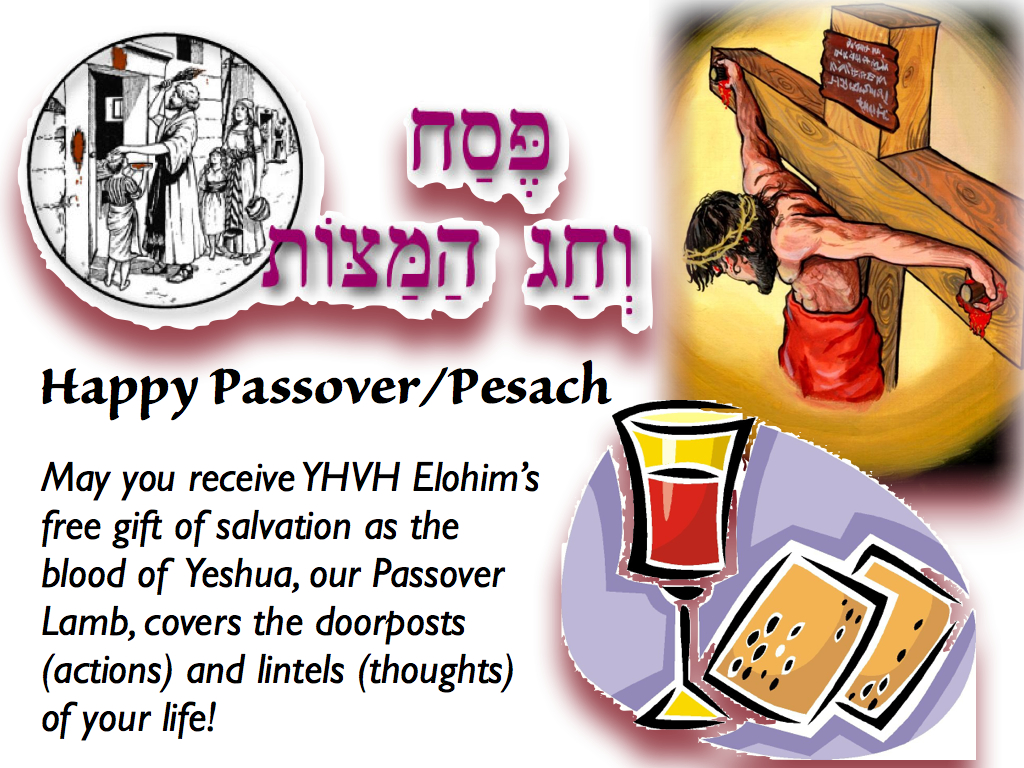


I invite you to take a look at the Hoshana Rabbah Passover page on our website at http://www.hoshanarabbah.org/pesach.html.
There you will find teachings on what Passover and the Feast of Unleavened Bread are and how to celebrate them.
If you’re not sure when the biblical feasts are, then go to our calendar page for the exact dates: http://www.hoshanarabbah.org/calendars.html
Dealing With the “Leavening” in Our Lives
Overcoming Sin!
Throughout Scripture, leavening is a spiritual metaphor for sin, pride, hypocrisy, malice, bitterness and false religious doctrine (Pss 71:4; 73:21; Hos 7:4; Matt 16:6; Mark 8:15; Luke 12:1; 1 Cor 5:8–6; Gal 5:9). Even as a small amount of leavening agents in bread (e.g., yeast and various chemical agents) will quickly permeate bread dough causing it to rise, so a little sin can rapidly infect our lives (or like a quick spread cancer disease) and take us away from Elohim’s path of righteous-living.
The Scripture teaches us to be overcomers (Rom 12:21; 1 John 2:13–14; 5:4) eradicating the leavening of sin from our lives. We must overcome the world, the flesh and the devil (Jas 3:15). Yeshua admonished each of the seven Messianic assemblies to be overcomers (Rev 2:7,11,17,26; 3:5,12,21; see also Matt 24:13). For those who overcome, there will be great rewards—a spiritual inheritance; they will be sons of Elohim (Rev 21:7).
The Greek word for overcome is nikao (Strong’s G3528) meaning “to conquer, to get the victory, prevail” and is where the word nike comes from.
What Is Sin?
Defining the Types of Sin Spoken of in Isaiah 53
Asham (Strong’s H817/TWOT 180b): means “guilt, offense, guiltiness, Continue reading
Acts 3:19–26, Who is the Prophet and what is “the restoration of all things?” The flow of the context (vv. 16–22) seems clearly to point to Yeshua being the prophet of Deut 18 and not another person. This is the opinion of the NKJV Bible translators as well, which take the liberty of capitalizing capitalize the word Prophet in verse 22 — an obvious reference to Yeshua. A quick check of several respected Christian commentaries corroborates this view. In fact, Beale and Carson (Commentary on the NT Use of the OT) point out that Peter’s reference to the seed (singular) of Abraham through which all nations would be blessed is an obvious reference to Yeshua, and Paul concurs with this idea and develops this theme in Gal 3:8, 16–17.
When Peter speaks of the “restoration of all things” before the second coming, he may be using hyperbole here, which was a common biblical literary device to emphasize a point. Will we have a new heaven and a new earth along with the New Jerusalem at the second coming, or does that come at the end of the 1000 year long Millennium as the chronology of Revelation seems to indicate? It seems unlikely to me that everything will be totally restored at Yeshua’s return. However, the regathering of the exiles of the lost sheep of the house of Israel will be certainly finalized around the time of his return or shortly thereafter. This process began with the coming of Yeshua as he states in Matt 10:6 and 15:24, and was to continue as he commanded in Acts 1:8. Truly, Paul, as the apostle to the Gentiles, played a key role in this process, and it has continued to one degree or another to this day in the preaching of the gospel by the church around the world.
I believe that the restoration of Israel to its kingdom is what Peter is referring to in Acts 3:21 when he refers to the “restoration of all things” (v. 21), since this issue was of paramount importance in the disciples’ minds. After all, it was the last question they asked Yeshua before his ascension in Acts 1. This point isn’t lost by Christian commentators like Craig S. Keener and Adam Clarke either.
This video explains the relevance of the ancient Passover ritual to the redeemed believer in Yesua of the the 21st century, and why celebrating Passover brings a special blessing. A free downloadable study guide for this video is available at http://hoshanarabbah.org/blog/2013/03/12/the-passover-and-the-seder/.
There are no Parasha or Haftarah Readings this week due to Passover
Prophets — Isaiah 27:1 – 35:10
Writings — Proverbs 29:1 – 31:31; Job 1:1 – 4:21
Testimony — Acts 3:1 – 7:16
Most of this week’s blog discussion points will be on these passages. If you have general comments or questions on the weekly Scripture readings not addressed in a blog post, here’s a place for you to post those. Just use the “leave a reply” link below.
The full “Read Through The Scriptures In A Year” schedule, broken down by each day, can be found on the right sidebar under “Helpful Links.” There are 4 sections of scripture to read each day. One each from the Torah, the Prophets, the Writings, and from the Testimony of Yeshua. Each week, the Torah and haftarah readings will follow the traditional one-year reading cycle.
Weekly Blog Scripture Readings for 3/29 through 4/4/15.
Is the Book of Enoch a credible source for spiritual truth? How does it compare with the truth of the Bible? Who are the sons of God? Who are the watchers? What about giants or the nephilim? This video answers these questions and much more.