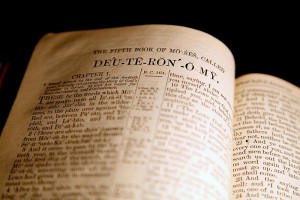
What is the Book of Deuteronomy all about?
More Insights About the Book of Deuteronomy
In stark terms, YHVH warns the Isaelites in Deuteronomy of the struggles Israel will have as it walks between two world: the lower world that attaches itself to man’s soul and attempts to pull him downward, and the upper world that pulls the spirit in man heavenward.
Deuteronomy presents Torah (as does Ps 119) as the way to be spiritually, physically, mentally, emotionally, materially elevated before Elohim and in the eyes of the surrounding nations (Deut 4:6).
In Deuteronomy, YHVH lays out two extremes: blessings for obedience and curses for disobedience; curse for following the ways of this world, and blessings for following the Word of YHVH. But seldom do individuals find themselves in one extreme or the other, for few are either totally worldly or totally heavenly in the orientation of their lives. They are usually caught up somewhere in the middle ground between the two: not totally evil and not totally good. Their lives are a mixed bag of good and evil, blessings and curses, and a double-orientation toward the heaven and the world. The Bible calls this double-mindedness (Jas 1:8; 4:8), and Yeshua decries such an individual (Matt 6:24, “one can’t serve both God and mammon”). The Bible also calls this being lukewarm—being neither hot nor cold, and YHVH hates this as well (Rev 3:15–16). Such an individual, if he isn’t careful, can find himself feeding spiritually more from the tree of the knowledge of good and evil rather than the tree of life.
YHVH lays out the highest spiritual ideal for Israel: to be wisdom in the sight of the nations (Duet 4:6), to be the head and not the tail, to be the greatest and not the least, and to be the lender and not the borrower. Such a position of status is possible thanks to following the Torah. He wants the best for his people, but achieving such is conditional on their obeying him. Many people make claim to believe in the God of the Bible, to love him and many even claim to follow and to obey him—just ask them! But in reality, do they? What are the fruits of their lives? Their true spiritual status is based on what they do, not what they profess with their mouths!
Deuteronomy affirms the sufficiency of Torah. The Torah is the Word of Elohim and nothing more needs to be added to it. It is the full revelation of YHVH when it says not to add to the Word of Elohim (Deut 4:2; 12:32). It is the bedrock of the Scriptures and the bedrock of truth. If Torah is the bedrock of YHVH’s word, then the Ten Commandments are the cornerstone in that foundation of truth, which Moses reiterates in Deuteronomy five. The rest of the Scriptures are just commentary or elucidations on Torah, or Continue reading
Blog Scripture Readings for 7-19 Through 7-25-15
Aside
THIS WEEK’S SCRIPTURE READINGS FOR STUDY AND DISCUSSION:
Parashat D’varim — Deuteronomy 1:1 – 3:22
Haftarah — Isaiah 1:1-27
Prophets — Ezekiel 28:1 – 34:31
Writings —Nehemiah 4:1 – 10:39
Testimony — Galatians 3:29 – 6:18; Ephesians 1:1 – 3:21
Most of this week’s blog discussion points will be on these passages. If you have general comments or questions on the weekly Scripture readings not addressed in a blog post, here’s a place for you to post those. Just use the “leave a reply” link below.
The full “Read Through The Scriptures In A Year” schedule, broken down by each day, can be found on the right sidebar under “Helpful Links.” There are 4 sections of scripture to read each day. One each from the Torah, the Prophets, the Writings, and from the Testimony of Yeshua. Each week, the Torah and haftarah readings will follow the traditional one-year reading cycle.
Weekly Blog Scripture Readings for 7/19 through 7/25/15.
Shabbat Shalom! May your world be at peace.
The Sabbath is a spiritual picture not only of the life in the Garden of Eden before the fall of man, but also of the Millennium when the majority of the earth will be walking in harmony with YHVH Elohim, his Torah-commandments and with other humans. Not only that, the animals will be at peace with humans as well (Isa 65:25). Wild animals will no longer be vicious or have a fear of humans. The whole creation will be dwelling at peace with itself and its Creator.
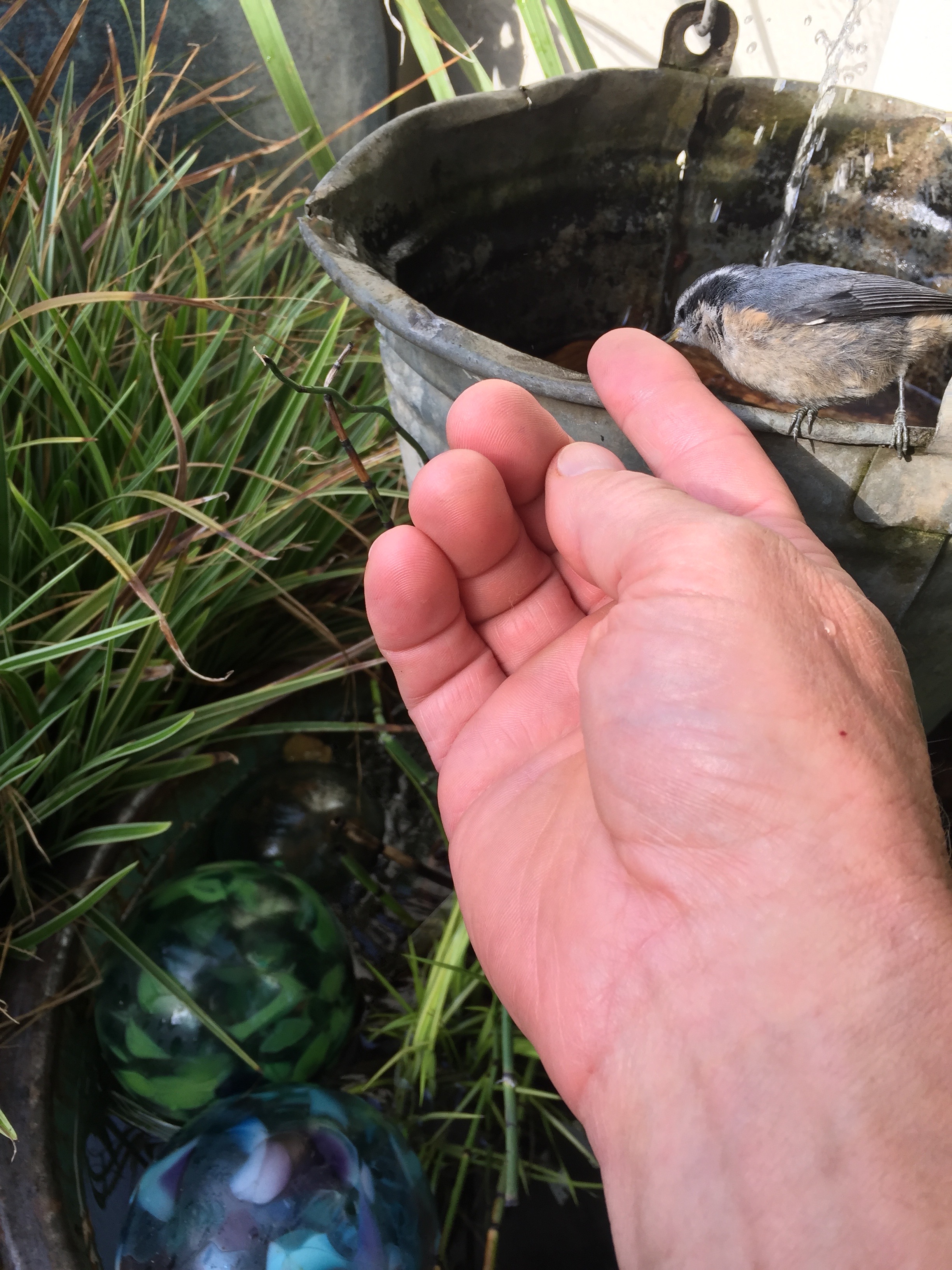
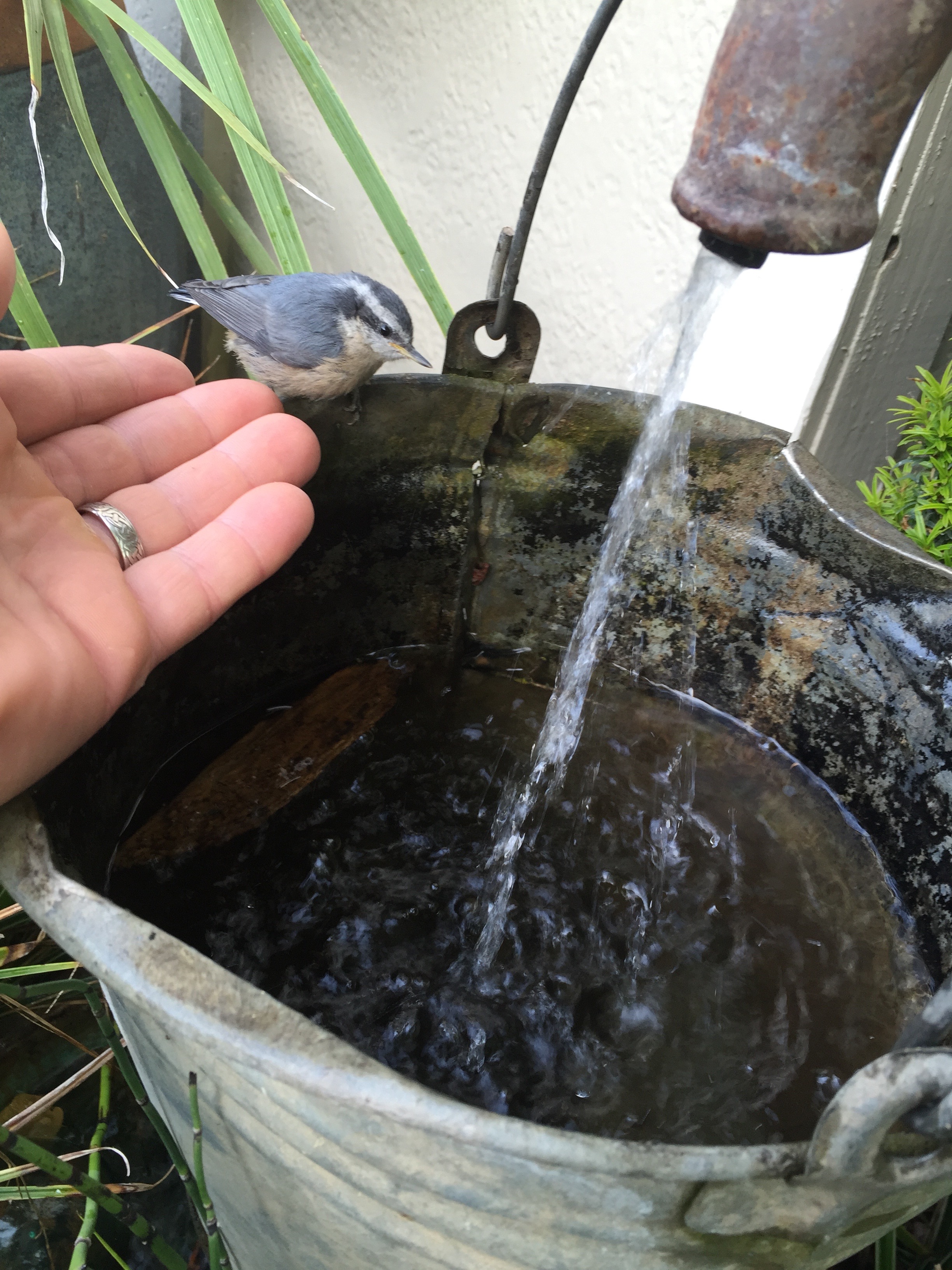
Now take a look at these photos I shot yesterday of me interacting with a baby nuthatch in my back yard who hasn’t yet learned to fear humans. Our backyard is a Garden of Eden containing beautiful shrubs and trees with bird and squirrel feeders, bird baths, and places where birds, squirrels and chipmunks can be at peace. This is in spite of the fact that we live in an urban area.
This baby nuthatch allowed me to pet it and I even touched its beak. I did this at three different times over a period of time! He seemed to be fascinated by a little water feature I have in may back yard.
A Tithe on War Booty and the Holy Half Shekel — A Memorial Pointing to Yeshua’s Atoning Death
Numbers 31:50, Make atonement.
Exploring the Concept of Atonement as It Relates to the Tabernacle and Salvation
In this verse we read, “We have therefore brought an oblation for YHVH, what every man has gotten, of jewels of gold, chains, and bracelets, rings, earrings, and tablets, to make an atonement for our souls before YHVH.” In a similar passage in Exodus 30:15–16, we read, “The rich shall not give more, and the poor shall not give less than half a shekel, when they give an offering unto YHVH, to make an atonement for your souls. And you shall take the atonement money of the children of Israel, and shall appoint it for the service of the tabernacle of the congregation; that it may be a memorial unto the children of Israel before YHVH, to make an atonement for your souls” (emphasis added). The question before us is this: Do these passages in the Torah imply that YHVH grants man absolution based something other than the shedding of blood, and by logical extension, does this call into question our redemption from sin through our faith in Yeshua the Messiah’s blood atonement?

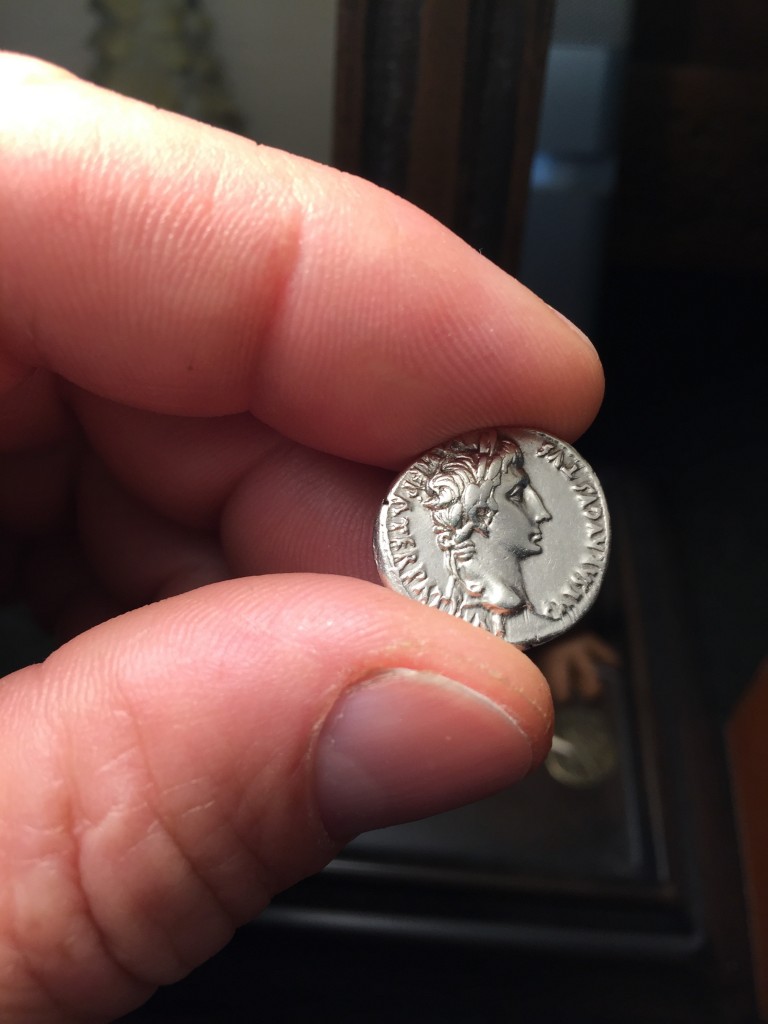
Natan holding an actual 2000 year old silver half-shekel from his biblical antiquities collection. This actual coin likely passed through the temple treasury in Jerusalem. YHVH commanded the Israelites to a pay yearly temple tax of a half-shekel of silver to help fund the sacrificial system that was a prophetic picture of Yeshua’s atoning death on the cross.
The concept of atonement can be a confusing one. Some in rabbinic Jewish circles teach that the Torah (i.e., the first five books of the Bible) does not require the shedding of blood for atonement of one’s sin to occur. According to the above scripture, this could appear to be the case. Before briefly discussing the subject of atonement, let us not forget the stern warnings of the Apostle Peter when he warned end-time saints against false teachers who would lure people away from the simple truth of the gospel:
But there were false prophets also among the people, even as there shall be false teachers among you, who privily shall bring in damnable heresies, even denying the Lord that bought them, and bring upon themselves swift destruction. And many shall follow their pernicious ways; by reason of whom the way of truth shall be evil spoken of. And through covetousness shall they with feigned words make merchandise of you: whose judgment now of a long time lingers not, and their damnation slumbers not…. But these, as natural Continue reading
New Video: Congregation Elim Shabbat Services July 11, 2015
Sun Tzu’s “The Art of War” and the Biblical Principles of Spiritual Warfare
Okay, this is a big one. I wrote what’s below on Sunday under the inspiration of the Spirit of Elohim.
This week we’re reading in 2 Corinthians 10:4–6 on spiritual warfare. It says,
For the weapons of our warfare are not carnal but mighty in Elohim for pulling down strongholds, casting down arguments and every high thing that exalts itself against the knowledge of Elohim, bringing every thought into captivity to the obedience of Messiah, and being ready to punish all disobedience when your obedience is fulfilled.
I got inspired to read Sun Tzu’s The Art of War. The Ruach nudged me to then do a commentary on it in light of what the Bible has to say about spiritual warfare. Perhaps I could learn something from an expert on physical warfare and then apply it spiritually to us. Needless to say, the saints are in a battle for their lives worldwide against the forces of evil. The Bible prophesied this would be the case in the end times. Largely, the church in the West is asleep! It’s time to wake up. I for one refuse to be caught unprepared. I refuse to lie down for the enemy of YHVH Elohim. As a watchman on the wall, I must sound the alarm and help prepare the troops. So here’s my latest contribution to this effort. I hope it helps someone!
Enjoy…
A Guideline to Spiritual Warfare
Natan Lawrence’s The Art of War — An Analysis of and Commentary on Sun Tzu’s The Art of War
Based on the Biblical Principles of Spiritual Warfare
The extracts below of The Art of War are taken from Lionel Giles Translation (www.artofwarsuntzu.com)
Sun Tzu was a Chinese military general, strategist, and philosopher who lived between the sixth and fifth centuries B.C. in ancient China. His work, The Art of War was unearthed in 1972, and since then has become a classic on the art of warfare. It is even used by the U.S. military.
The following are excerpts from this ancient work along with commentary from a biblical perspective giving the spiritual warrior in YHVH Elohim’s (the LORD God’s) army guidelines on how to be victorious over YHVH’s spiritual enemy.
I. — LAYING PLANS
1. Sun Tzu said: The art of war is of vital importance to the State.
2. It is a matter of life and death, a road either to safety or to ruin. Hence it is a subject of inquiry which can on no account be neglected.
3. The art of war, then, is governed by five constant factors, to be taken into account in one’s deliberations, when seeking to determine the conditions obtaining in the field.
4. These are: (1) The Moral Law; (2) Heaven; (3) Earth; (4) The Commander; (5) Method and discipline.
5,6. The Moral Law causes the people to be in complete accord with their ruler, so that they will follow him regardless of their lives, undismayed by any danger.
Comment: The moral law is the biblical Torah and the rest of the Word of Elohim as contained in the Bible. The Torah-word of YHVH Elohim (the God of the Bible) are his instructions, precepts, teachings or laws. The Torah is the foundation of truth for the rest of the Scriptures that follow. YHVH Elohim is the Creator and Supreme Ruler of the universe and is thus the originator of moral law. Since Elohim is the Creator and Sovereign Ruler of all the universe, it is the require of every human (and all the more so of those who claim to be his followers) to follow and obey him regardless of their lives, undismayed by any external threats or danger. Continue reading