Are You a Spiritual Mugwump?

A mugwump is one who tries to sit on both sides of the fence at the same time. There are many spiritual mugwumps out there including some of us as the piece below discusses.

Deuteronomy 31:10–13, You shall read this Torah before all Israel. Verses like this tend to expose the theological confusion that occurs in the minds of many Christian Bible teachers. For example, Christian commentator Matthew Henry on this verse writes about the need to read the Word of Elohim and that doing so will “help us to keep his commandments.” Yet elsewhere he says in the same commentary about the same laws that the commandments or laws of YHVH “are done away with.”

Duck on a fence

Statements like this are representative of a split and incongruous, double-speak thinking on the part of many Christian Bible teachers and people when it comes to the commandments or laws of Elohim. Some laws, they say, we are to keep (e.g., thou shalt not murder, lie, commit adultery, etc.), but other laws we can disobey (e.g., the Sabbath, dietary laws, and biblical feasts). Is it possible to have it both ways: to believe that we need to keep his commandments, yet teach they are done away with? If so, then what is the meaning of such biblical phrases pertaining to YHVH’s Torah or Word as “forever,” “for a thousand generations,” “the same yesterday today and forever,” “till heaven and earth pass away,” “I change not,” and “think not that I came to destroy the Torah-law?” Is ­YHVH’s Word inconsistent and contradictory, or is this, instead, the case with the thinking of men? Is YHVH’s immutable character flawed with regard to keeping his Word, promises and standards or is man the one at fault?

Do we have a high enough view of YHVH Elohim and fear him and tremble at his Word (Isa 66:2), or have we tried to demote him and the veracity of his Word by contorting YHVH and his Word to fit the mindset of changeable and inconsistent man (which the Scriptures define as idolatry)? Have we bought into the lie that the serpent proffered at the tree of knowledge in the Garden of Eden when he told the man and the woman that YHVH really did not mean what he said and that humans can take the “have it your own way” and “pick and choose” approach when it comes to obeying the Word of YHVH (a philosophy that forms the basis for the religious movement called secular humanism, which is at the heart of all the religions of the world—including much of Christianity—except the true religion of the Bible)?

How many aspects of Christian theology are no more than a thinly veiled version of the religion of humanism in disguise? These are tough questions that we as redeemed Israelites need to ponder seriously. Let’s not forget the words of Yeshua in John 14:15, “If you love me, keep my [Torah] commandments” and the words of the apostle in 1 John 2:5–5, “He that says, ‘I know him,’ and does not keep his [Torah] commandments is a liar and the truth is not in him. But whosoever keeps his Word in him truly is the love of Elohim perfected: hereby know we that we are in him.”

The bottom line of why man has a hard time submitting to all of YHVH’s commandments is nowhere stated more concisely in the Bible than in Romans 8:7,

[T]he carnal mind is enmity against Elohim: for it is not subject to the law of Elohim, neither indeed can be.


 

Yom Teruah Videos


Happy Yom Teruah! Happy Resurrection Day!

A Chronological Analysis of Scriptures on the Resurrection of the Dead

Gen 3:2–3, The question of what happens in the afterlife goes back to the very beginning of man’s tenure on this earth as we can see from Eve’s discussion with the serpent. Out of fear of death, Adam and Eve chose not to eat of the tree of knowledge, until the serpent tricked them to disobey YHVH and eat of it. The serpent lied to them by telling them that they could have immortal life and still violate Elohim’s commandments. Most men have believed this lie to this day.

16958554

Job 14:12–15,  Job is likely the oldest book in the Bible, and we see that from early times until now, man has had a perennial interest in the afterlife. Job wonders what his fate will be when he dies. Will he die and that’s all there is, or is there an afterlife?

Job 19:25–27, Job came to a place in his life where he obtained a faith about his fate in the afterlife. He knew that it hinged on his faith in his Redeemer. Biblically speaking, what was the mission of the Redeemer (i.e., Yeshua the Messiah)? It was to redeem man from the sting of death brought on by sin.

Ps 16:9–10,  Though this is usually viewed as a messianic prophecy, it isn’t confined to this interpretation. Who are YHVH’s holy, kadosh or set apart ones? The Messiah fits this catergory, of course, but so also do YHVH’s saints. As the apostolic writers teach us, as Yeshua died and rose again, so the saints who are in Yeshua will die and rise again.

Ps 17:15, The term “awake” as in “awake from the sleep of death” is a Hebraism referring to the resurrection. David knew that YHVH created man in his own image for a purpose. If so, then why? It’s deductive reasoning. The creation of man wasn’t a pointless, dead-end endeavor on the Creator’s part. David knew the heart and character of YHVH well enough Continue reading →


Tonight is the first day of the seventh month…

The new moon was not spotted in the land of Israel yesterday (Monday, Sept 14), which means tonight (Tuesday, Sept 15) will mark the beginning of the seventh month on the biblical calendar. This day also marks the beginning of the fall biblical feast season. HalleluYAH! Time to celebrate. It’s all good news, which we need in these dark times!

Yom Teruah (or the Day of Shouting/Shofar Blasts) is the biblical name for the traditional the Jewish holiday of Rosh Hashanah) is on the first day of the seventh month (Lev 23:23–25). This is a high holy sabbath day.

rosh_chodesh 2

On the tenth day of the seventh month will be Yom Kippur (the Day of Atonement, Lev 23:26–32).This year, it will be on Friday, Sep 25. This too is a high holy sabbath day.

Next, from the 15th to the 21st day of the seventh month (Sept 30 to Oct 6) will be Sukkot (the Feast of Tabernacles, Lev 23:33–43).

Finally, at the end of Sukkot will be an additional holiday called Shemeni Atzeret (or the Eighth Day, Lev 23:36, occurring on Oct 7). Hebrew roots and messianic people often overlook this high holy day sabbath, but it’s part of the Torah, and so we celebrate it.

All of these festivals are significant spiritually for the redeemed believer and are steps in YHVH’s plan of salvation. The fall feasts are also prophetic of events that will happen prior to and after the second coming of our beloved Messiah Yeshua.

For written instructional materials on these feasts, please go to http://www.hoshanarabbah.org/teaching.html#feast. For videos teachings about these feasts, go to our YouTube channel at https://www.youtube.com/user/HoshanaRabbah.

You may wonder why some people are celebrating these feasts on other days than the ones mentioned above. There are several reasons for this. I’ll briefly explain.

The rabbinic and orthodox Jews will be celebrating their feasts two days earlier. This is because their calendar is usually incongruent with occurrence of the visible new moon. How did they get off the biblical calendar, you might ask? For the answer to this questions, please read my article at http://www.hoshanarabbah.org/pdfs/new_moons.pdf.

Some people keep the biblical feasts on the astronomical new moon conjunctions, which is not the biblical way to determine the months. I explain this in the following article at http://www.hoshanarabbah.org/pdfs/vis_moon.pdf.

If you want a comprehensive understanding of the biblical calendar please read the following article at http://www.hoshanarabbah.org/pdfs/cal_demyst.pdf.

It’s important that we understand the biblical calendar issues, since there is a lot of confusion out there on the subject. Also, YHVH calls his feasts moedim or divine appointments, for it is then that he meets with his people. It’s important to do so when he has told us to do so, not when we choose to so.

Get a cup of tea  or coffee, find a comfortable chair and prop up your feet and get to reading on the subject of the biblical calendar. We have provide you some simple to understand resources to understand this subject. You’ll need to concentrate though and have your Bible handy so you can look up the verses yourself and prove that what we’re saying is the truth. You might need to read over some of the material a couple of times to wrap your brain around the concepts. I’ve tried to make it as simple as possible. It’s really not that bad. Once you understand it, you’ll have a firm foundations from which to go onward and upward in YHVH’s truth.

Understanding the biblical calendar and knowing when to keep the biblical feasts is part of the restoration of all things that must occur in conjunction with Yeshua’s second coming (Acts 3:21). By obeying YHVH and keeping his feasts on the calendar he established, you are part of the fulfilling of Bible prophecy and are helping to hasten Yeshua’s coming.


Blog Scripture Readings for 9-13 Through 9-19-15

Aside

THIS WEEK’S SCRIPTURE READINGS FOR STUDY AND DISCUSSION:

Parashat Vayelekh — Deuteronomy 31:1–30
Haftarah — Hosea 14:2-10; Micah 7:18-20; Joel 2:15-27**
Prophets — Nahum 3:1–19; Habakkuk; Zephaniah
Writings — 2 Chronicles 16:1 – 22:12
Testimony — Revelation 2:1 – 8:13

Most of this week’s blog discussion points will be on these passages. If you have general comments or questions on the weekly Scripture readings not addressed in a blog post, here’s a place for you to post those. Just use the “leave a reply” link below.

The full “Read Through The Scriptures In A Year” schedule, broken down by each day, can be found on the right sidebar under “Helpful Links.” There are 4 sections of scripture to read each day. One each from the Torah, the Prophets, the Writings, and from the Testimony of Yeshua. Each week, the Torah and haftarah readings will follow the traditional one-year reading cycle.

** A different haftarah is read when it is a special sabbath in traditional Judaism. The sabbath occurring between Yom Teruah (Trumpets) and Yom Kippur (Atonement) is called Shabbat Shuvah or Shabbat T’Shuvah (Sabbath of Return or Sabbath of Repentance).

Weekly Blog Scripture Readings for 9/13 through 9/19/15.


Mikveh Vs. Baptism for the Remission of Sins

Just got this excellent question about mikveh from someone on this blog:

Doesn’t the blood of Yeshua cleanse us? I am a newbie so please bear with me.

My answer:

Yes, absolutely. Good question.

Hebrews 6:2 talks about the doctrine of baptisms (plural). The Greek word baptism means “full immersion in water.” Baptism for the remission of sins which one does at the beginning of one’s spiritual walk with Yeshua is but one type of baptism. It’s the most important one, but not the only one. There’s the baptism of the Holy Spirit and of fire as well. There’s also the baptism of repentance that John the Baptist did. Once we’re baptized for the remission of sins, do we ever sin again? Obviously yes. What do we do? We repent, ask Yeshua to forgive us, to cleanse us by his blood, and then we turn away from our sin (1 John 1:9). But sometimes it’s good to rehearse the ritual again even as we do communion every year at Passover, even as we do the Sabbath every week and biblical feasts every year. These are memorials of important things past, present and future. Same with the mikveh. It’s not a replacement for baptism for the remission of sins. It’s a rededication of oneself to YHVH.

Each time the priests came into the Tabernacle of Moses to minister, they had to cleanse themselves to be set-apart or holy unto YHVH. It wasn’t for Yah’s benefit. He looks at things from a heart and spirit perspective. It’s for our benefit, so we can better appreciate the difference between the common, profane, physical, polluted, and the earthly compared to the holy, set-apart, spiritual and heavenly realm. When we cross from one realm into the other, we need to stop and take note of it, and enter into the higher realm carefully and slowly through prayer, repentance and spiritual and even physical cleansing. This shows a good and willing heart attitude on our part before our YHVH Elohim, our Heavenly King.

Most us would take more care to come into the presence of the president of the U.S. or the queen of England than we do to come into the Presence of the King of the universe. Think about this for a moment. It’s true isn’t it! This is one of the big problems with modern Christianity. Most believers are too casual when it comes to spiritual things. We don’t take coming into the Presence of the Almighty seriously enough.

Yeshua our Bridegroom is coming back soon, and he expects his bride (that’s us — redeemed Israel) to get ready. That’s what the Parable of the Ten Virgins is all about in Matthew 25. In Revelation 19:7-9, the bride of Yeshua is to be adorned in clean and white garments, not filthy one. What are those white garments? The righteous deeds of the saints (verse 8). Go read it for yourself.

So when I do mikveh, it represents a lot of things to me. Try doing it yourself. See if this one ceremony doesn’t bring you great blessings and bring you closer to Yeshua!


The Lost Sheep of Israel Regathered in the Last Days

Deuteronomy 30:3, From all the nations to which YHVH … has scattered you. The Scriptures over and over again record that the house of Israel (Ephraim) would be scattered over the face of the whole earth (Ezek 34:6, 12; 36:19; 37:21; John 11:52), and that YHVH will regather them in the end times and return them to the land of Israel (Deut 30:3–5). Deuteronomy 32:26 says, “I said, I would scatter them into the corners …” The ArtScroll Stone Edition Chumash comments, “This refers to the exile of the Ten Tribes, who were scattered to an unknown place where they have never been heard from again.

Unknown

On the phrase of the same verse, “I would make the remembrance of them to cease from among men. …” the same Chumash states,

This is a reference to the exile of Judah and Benjamin, the Davidic kingdom from which today’s known Jews are descended.” It goes on to say that though nations would seek to destroy Israel entirely, YHVH would never allow Israel to become extinct or disappear. Israel’s perpetual existence is a constant reminder of YHVH’s plan and eventually Israel will thrive and fulfill YHVH’s intention for it (pp. 1105–1106).

Nineteenth orthodox Jewish scholar S. R. Hirsch in his commentary on the same verse translates the phrase, “I would scatter them into the corners …” as, “I would relegate them into a corner …,” and then says that the Hebrew here refers to the “extreme end of a surface, the side or corner ….” He, too, relates this fate to the Ten Tribes who would be scattered “to some distant corner of the world, where, left entirely to themselves, they could mature towards serious reflection and ultimate return to Me …” (p. 650).

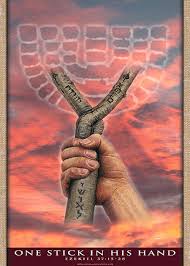
Some in the Christians deny that these Scriptures passages pertain to the ten tribes of the Northern Kingdom of Israel and instead insist that they are speaking about Judah (the Jews) only. They insist that the return of the Jews to the land of Israel starting in 1948 is the fulfillment of these prophecies and the ten tribes of Israel are lost forever. How can this a correct understanding in light of the Scriptures and the Jewish sages interpretations of those scriptures that states again and again that the ten tribes will return at the end of the age to be reunited with the Jews under the reign of Messiah Son of David (Ezek 37:15–28)?

Who are these lost and scattered sheep of the house of Israel? Whoever they are, Yeshua said that he came to regather them, and sent out his disciples on the same mission (Matt 10:6; 15:24. Yeshua then commissioned his disciples not only to go to the Jews in Jerusalem and to Judea, but to all the tribes of Israel scattered through the earth and anyone else who YHVH was calling into his eternal kingdom (Acts 2:8).

The following is a list of references in the Testimony of Yeshua about regathering the lost sheep of the house of Israel.

References in the Testimony of Yeshua to the Regathering of the Tribes of Israel

Yeshua himself made several references to the fact that it was his mission to regather the Continue reading →