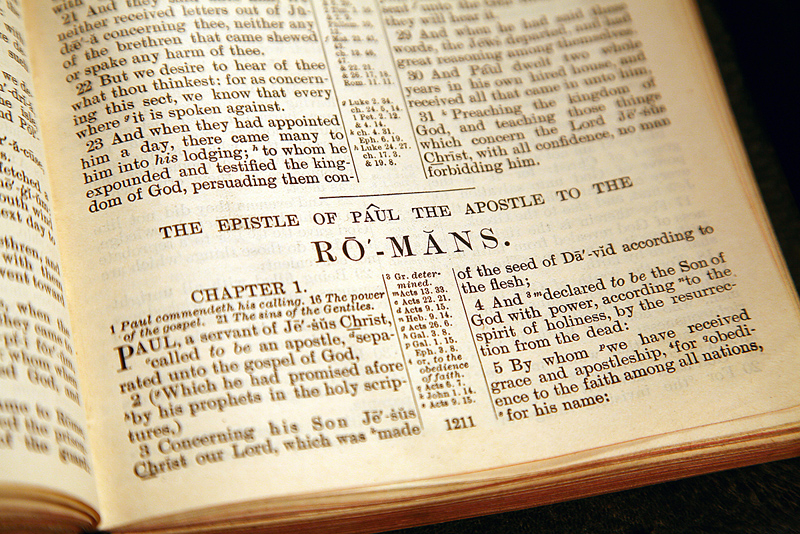
What is Paul really saying in Romans 2?

Romans 2, In this chapter, Paul is trying to level the spiritual playing field by showing what the proper approach to Torah, and hence a right relationship with YHVH, should be. It should be a non-hypocritical and humble-heart approach, which is neither dependent upon one’s race (i.e., Jew or Gentile) nor upon the factitiousness with which one keeps the various prescription of Torah.

Being a Jew or not being one is not the point with YHVH. Rather, what is one’s heart attitude vis-à-vis Torah-obedience. This is lifting Torah-obedience to its proper intent and highest level.

This is the true message of this chapter as summed up in verse 29: But he is a Jew, which is one inwardly; and circumcision is that of the heart, in the spirit, and not in the letter; whose praise is not of men, but of God. The word Jew is the Hebrew word Y’hudi which is related to hodayah which means “praise.” Therefore, a true Jew is a literally a “Yah-praiser,” and Paul is using a wordplay hear to make this point. Why does one want to be a Jew, or why does one want to keep Torah? To please men, or to please YHVH? To keep Torah to be a man-pleaser negates the true intent of Torah and of being a Jew which is to help one to be a hodayah; i.e., a Yah-praiser.


What is grace?—A Simple Explanation

Grace is more than what the mainstream church has taught you. It is also the supernatural power or ability to walk in the Torah-laws of Elohim!

Romans 1:5, Grace … for obedience. Grace is the Greek word charis. The word grace has several subcomponent meanings. It is the removal by Elohim from the individual of guilt caused by sin—the wiping clean of the slate containing a man’s past sins. It is a divine and unmerited favor or pardon of Elohim toward sinful man. Grace indicates favor on the part of the giver (Elohim) and thankfulness on the part of the recipient (man) and is to be distinguished from mercy which is the pardoning or removal of the penalty or consequences of sin. Grace removes guilt, mercy removes misery. But grace is also the divine influence or enablement upon the heart of man (see Strong’s Expanded Concordance). But grace is not only unmerited divine favor, but is also the divine enablement or empowerment to walk righteously before Elohim. It is “the merciful kindness by which Elohim, exerting his holy influence upon our souls, turns men to the Messiah, keeps, strengthens, increases them in faith, knowledge, affection, and kindles them the ability to exercise righteous virtues (see 2 Cor 1:12; 4:15;  6:1; 12:9; 2 Thess 1:12; Acts 11:23; 13:43; 18:27; Rom 6:14; Gal 5:4; Col 3:16; 1 Cor 15:10) according to Thayer’s Greek -English Lexicon of the NT. So in summary, we see that grace is not only the unmerited divine favor that wipes away our past sins, but the divine empowerment or enablement to walk in such a state of righteousness and virtue before Elohim so that one does not sin (i.e., transgress the Torah-law of Elohim — 1 John 3:4) thus incurring upon oneself the penalty for sin (death) and hence the need, once a gain, for unmerited divine favor or pardon.


Overview of Romans — The Gospel, the Torah, & the Israelite Nation Reunited

Romans 65290914

The following overview of Romans is a radical departure from what the mainstream church teaches. Read it and see if what I say doesn’t unite the truth of the Bible from beginning to end, instead of pitting one section of the Bible against the other, which is  the approach the church typically takes when presenting the teachings of Paul.

http://hoshanarabbah.org/blog/wp-admin/post.php?post=6490&action=edit

The Main Themes of Romans

This is perhaps the only book in the Bible that is organized systematically like a theological textbook from beginning to end with each point leading to the next. This is not how biblical books are typically arranged.

Romans 65290914

In this epistle, there are several main themes.

Pre-eminently, Elohim is the Just Judge of the universe to whom all are accountable (both Jews and Gentiles). This concept alone is huge, since most humans don’t want to believe they’re accountable to anyone except their own egos.

The Torah is Elohim’s standard of righteousness by which he will judge the deeds of all men (both Jews and Gentiles) fairly. If people can accept the fact that there is a supreme Being to whom they’re accountable for their actions, then it’s a short next logical step to accept that such a Being (Elohim) has laws that man must follow if he’s not to run afoul of that Being.

Next, Paul counters a religious system that purported to explain who that Being was and Continue reading →


Who were the Levites and what did they do?

Numbers 1:50, The Levites. The role of the Levites was to assist the priests in the tabernacle service (Num 3:6–8; 16:9; 1 Chr 23:28–32; Ezra 3:8) including caring for the tabernacle (Num 1:53) and its furniture, its setting up, dismantling and transporting (Num 3–4). In addition, they assisted the priests by preparing the cereal offering (1 Chr 23:29). They acted as singer and musicians in the temple to offer praise to YHVH (1 Chr 23:30). They were allowed to approach the tabernacle furniture only after the priests had covered and prepared them for transport (Num 4:5–15; 18:3) but they could not touch any of the tabernacle’s set-apart instruments lest they die (Num 4:15), nor could they even see them (Num 4:20).

Not only were the Levites commissioned to attend to the needs of the priests and the things of the tabernacle, but YHVH instructed them “to attend to the needs” or “keep charge” (Heb. mishmereth) of, presumably, the spiritual needs of the whole congregation or children of Israel (Num 3:7–8). Although mishemereth is a noun meaning “charge, function, obligation, service, or watch,” it is often translated into English as a verbs of action such as “to keep, guard, keep charge, or watch” through its root shamar, a verb meaning “to keep, guard, observe, give heed.” Mishmereth principally refers to the Levites’ obligatory duties relating to the service of the temple.

Later on, the Levites were involved in teaching and interpreting the Torah (Neh 8:7, 9; 2 Chr 17:7–9; 35:3). There is no indication that the Levites were permitted to offer sacrifices, with the notable exception of Samuel, who was a Levite, but not a priest (1 Sam 1:1 cp. 1 Chr 6:28).

YHVH chose the Levites as his set-apart ministers to replace the firstborn of the Israelites that he spared when he smote the firstborn of the Egyptians (Num 3:12–13, 41–45).


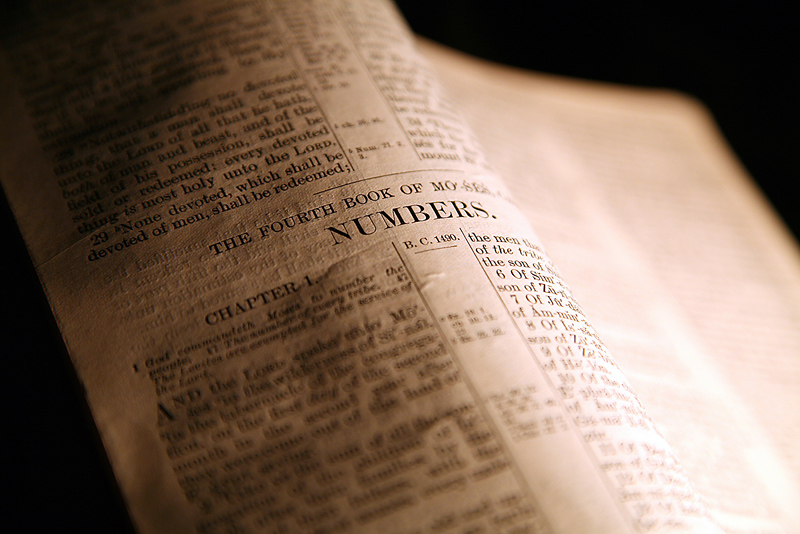
What is the book of Numbers all about?

Numbers, Book of 65289250

General Overview of the Book of Numbers (B’midbar)

The English name Numbers derives from the fact that in this book the Israelites are counted or numbered on several occasions (see chapters 1, 2, 3, 4, 26). Leviticus ends with YHVH instructing his people to count their flocks for tithe purposes, while Numbers begins with YHVH, as the ultimate Good Shepherd (or in Hebrews, YHVH Rohee), counting the Israelites themselves, who are the sheep of his pasture (Pss 74:1; 79:13; 95:7; 100:3). The fact that this counting took place in the wilderness proves that it was not for political or national economic reasons, but was in fulfillment of YHVH’s Torah instructions. Each Israelite was to give a half-shekel of silver toward the maintenance of the tabernacle. The shekels then counted would give the exact number of Israelites (Exod 30:12–16).

The Hebrew name B’midbar meaning “in the wilderness” originates from the fact that this book chronicles Israel’s wandering in the wilderness. The Book of Exodus, on the other hand, records the deliverance of Israel from Egypt, its establishment as a nation, its covenantal relationship with YHVH and the construction of the tabernacle (mishkan), which was the symbol of YHVH dwelling or tabernacling in the midst of his chosen people. The Book of Leviticus deals with the inner workings of that tabernacle and the mechanics of how sinful man could maintain a right spiritual relationship with a righteous Elohim. This was accomplished through the agency of the Levitical priesthood that would function within the tabernacle as a human intermediary between man and his Creator.

The Book of Numbers covers much of Israel’s forty years wandering in the wilderness and recounts the early years of this nation under YHVH’s theocratic rule. Recorded are Israel’s triumphs and defeats, its obedience and disobedience to YHVH’s rule of law and the resulting consequences whether blessing or curses.

In this book, we see several main subdivisions. Chapters 1:1–10:10 cover instructions from YHVH to Israel while still at Mount Sinai. Chapters 10:11–36:13 cover the Israelite’s actual wilderness journey. The second section dealing with the wilderness journey has two main parts: the perishing in the wilderness of the older generation (10:11–25:18), and the preparation of the second generation of Israelites to enter the Promised Land (chapters 26–36).

Reoccurring themes in the Book of Numbers include the continual murmuring of Israelites and the divine punishment on them as a result. YHVH made promises to care for them and lead them into the Promised Land. Instead of having faith and trust in him, with few exceptions, the Israelites exhibited doubt and unbelief in YHVH. As a result, the entire older generation, with the exception of faithful Joshua and Caleb, perished in the wilderness never to realize the promises YHVH had made to them concerning the Promised Land. This is a poignant lesson for all believers in their faith walk. The spiritual application of this lesson is not missed by the writer of the Epistle to the Hebrews in chapter four of that book. When YHVH makes promises, his people need to embrace those promises with enthusiastic and optimistic faith and never let them go. After all, if we cannot trust our Creator, then who or what can we trust?

In this book, we see revealed the grace of YHVH, that he is longsuffering and slow to anger (14:20–38), but that he is also just, and as a father, he disciplines those he loves. His judgments are measured and progressive. The more his children refuse to obey him and resist him, the stronger the judgments. Eventually, the older generation of Israelites died off in the wilderness. This teaches us that death is the final judgment against the sin of rebellion and unbelief. There are no eternal rewards or spiritual inheritance for those who refuse to take hold of YHVH’s promises and to go forward in faith and faithful obedience to him.

We see the work and person of the future Yeshua the Messiah in the Book of Numbers as well. As Provider, he meets all of Israel’s needs both physical and spiritual. Paul reveals that Yeshua was the spiritual Rock that gave them water in the wilderness (1 Cor 10:4). Twice, Israel received water from the rock (Exod 17:1–7 and Num 20:1–13). Additionally, the secular prophet, Balaam, prophesied about the Messiah who was to rise out of Israel like a star (Num 24:17). Leading rabbinic Jews sages, such as Akiva ben Joseph of the early modern era, mistakenly applied this verse to the Jewish zealot, Bar Kokhba, when he endeavored to throw off the yoke of Roman rule over the Jewish people during the Second Jewish Revolt of A.D. 133–135.


Study shows that experiences makes you happier than having possessions

From http://mediarelations.cornell.edu/2014/09/02/experiences-make-you-happier-than-possessions-before-and-after/

Experiences make you happier than possessions – before and after

To get the most enjoyment out of our dollar, science tells us to focus our discretionary spending on experiences such as travel over material goods. A new Cornell University study shows that the enjoyment we derive from experiential purchases may begin even before we buy.

This research offers important information for individual consumers who are trying to “decide on the right mix of material and experiential consumption for maximizing well-being,” said psychology researcher and study author Thomas Gilovich of Cornell University.

Previously, Gilovich and colleagues had found that people get more retrospective enjoyment and satisfaction from their experiential purchases than from their material purchases. And other research has shown that people often hold off on experiences so that they can savor the thought of eventually having them.

Gilovich and co-authors Amit Kumar of Cornell University and Matthew Killingsworth of University of California, San Francisco wanted to bring these lines of research together and investigate whether the enjoyment we get from the anticipation of a purchase depends on what we’re buying.

The researchers discovered that people thinking about impending experiential purchases, such as ski passes or concert tickets, have higher levels of happiness than those who anticipate spending money on things.

In addition, researchers found the act of actually waiting in line to make a purchase may be more pleasant for those intending to spend money on an experience. In one, an analysis of newspaper accounts of crowds of people waiting in line, found that those waiting to purchase an experience were in better moods and were better behaved than those waiting to purchase material goods.

“You sometimes hear stories about people rioting, smashing windows, pepper-spraying one another, or otherwise treating others badly when they have to wait,” said Kumar. “Our work shows that this kind of behavior is much more likely in instances where people are waiting to acquire a possession than when they’re waiting for tickets to a performance or to taste the offerings at their city’s newest food truck.”

The researchers speculate that there may be several factors that could explain these findings. People may think about future experiences in more abstract ways that can make them seem more significant and more gratifying, for example. It’s also possible that waiting for an experience induces less competition than waiting for material goods. Finally, anticipating experiences may confer greater social benefits, making people feel more connected and happier overall.

The findings have clear implications for individual consumers, but they could also inform the way money is spent on a much broader scale:

“Our research is also important to society because it suggests that overall well-being can be advanced by providing an infrastructure that affords experiences – such as parks, trails, beaches – as much as it does material consumption,” says Gilovich.

The findings were published in Psychological Science and supported by the National Science Foundation and by a grant from the John Templeton Foundation through the Greater Good Science Center.


“Marriage isn’t for you…”

From http://www.faithit.com/seth-adam-smith-marriage-isnt-for-you/

1 ½ Years After “I Do,” He Saw Marriage Wasn’t for Him—When He Looked at His Wife, He Knew

They met when they were 15 and were best friends for 10 years—but after being married just 1 year, the truth hit him HARD.

wedding-adam

By Seth Adam Smith

Having been married only a year and a half, I’ve recently come to the conclusion that marriage isn’t for me.

Now before you start making assumptions, keep reading.

I met my wife in high school when we were 15 years old. We were friends for 10 years until … until we decided we no longer wanted to be just friends.  I strongly recommend that best friends fall in love. Good times will be had by all.

Nevertheless, falling in love with my best friend did not prevent me from having certain fears and anxieties about getting married. The nearer Kim and I approached the decision to marry, the more I was filled with a paralyzing fear. Was I ready? Was I making the right choice? Was Kim the right person to marry? Would she make me happy?

Then, one fateful night, I shared these thoughts and concerns with my dad.

Perhaps each of us have moments in our lives when it feels like time slows down or the air becomes still and everything around us seems to draw in, marking that moment as one we will never forget.

My dad giving his response to my concerns was such a moment for me. With a knowing smile he said, “Seth, you’re being totally selfish. So I’m going to make this really simple: Marriage isn’t for you. You don’t marry to make yourself happy, you marry to make someone else happy. More than that, your marriage isn’t for yourself, you’re marrying for a family. Not just for the in-laws and all of that nonsense, but for your future children. Who do you want to help you raise them? Who do you want to influence them? Marriage isn’t for you. It’s not about you. Marriage is about the person you married.”

It was in that very moment that I knew that Kim was the right person to marry. I realized that I wanted to make her happy; to see her smile every day, to make her laugh every day. I wanted to be a part of her family, and my family wanted her to be a part of ours. And thinking back on all the times I had seen her play with my nieces, I knew that she was the one with whom I wanted to build our own family.

My father’s advice was both shocking and revelatory. It went against the grain of today’s “Walmart philosophy,” which is if it doesn’t make you happy, you can take it back and get a new one.

No, a true marriage (and true love) is never about you. It’s about the person you love—their wants, their needs, their hopes and their dreams. Selfishness demands, “What’s in it for me?” while Love asks, “What can I give?”

Some time ago, my wife showed me what it means to love selflessly. For many months, my heart had been hardening with a mixture of fear and resentment. Then, after the pressure had built up to where neither of us could stand it, emotions erupted. I was callous. I was selfish.

But instead of matching my selfishness, Kim did something beyond wonderful—she showed an outpouring of love. Laying aside all of the pain and anguish I had caused her, she lovingly took me in her arms and soothed my soul.

I realized that I had forgotten my dad’s advice. While Kim’s side of the marriage had been to love me, my side of the marriage had become all about me. This awful realization brought me to tears, and I promised my wife that I would try to be better.

To all who are reading this article—married, almost married, single, or even the sworn bachelor or bachelorette—I want you to know that marriage isn’t for you. No true relationship of love is for you. Love is about the person you love.

And, paradoxically, the more you truly love that person, the more love you receive. And not just from your significant other, but from their friends and their family and thousands of others you never would have met had your love remained self-centered.

Truly, love and marriage isn’t for you. It’s for others.