The Hymn of a Ponderosa Pine

I’m not sure if anyone can relate to this poem, but I had fun writing it. Please enjoy. — Natan

By Natan Lawrence 

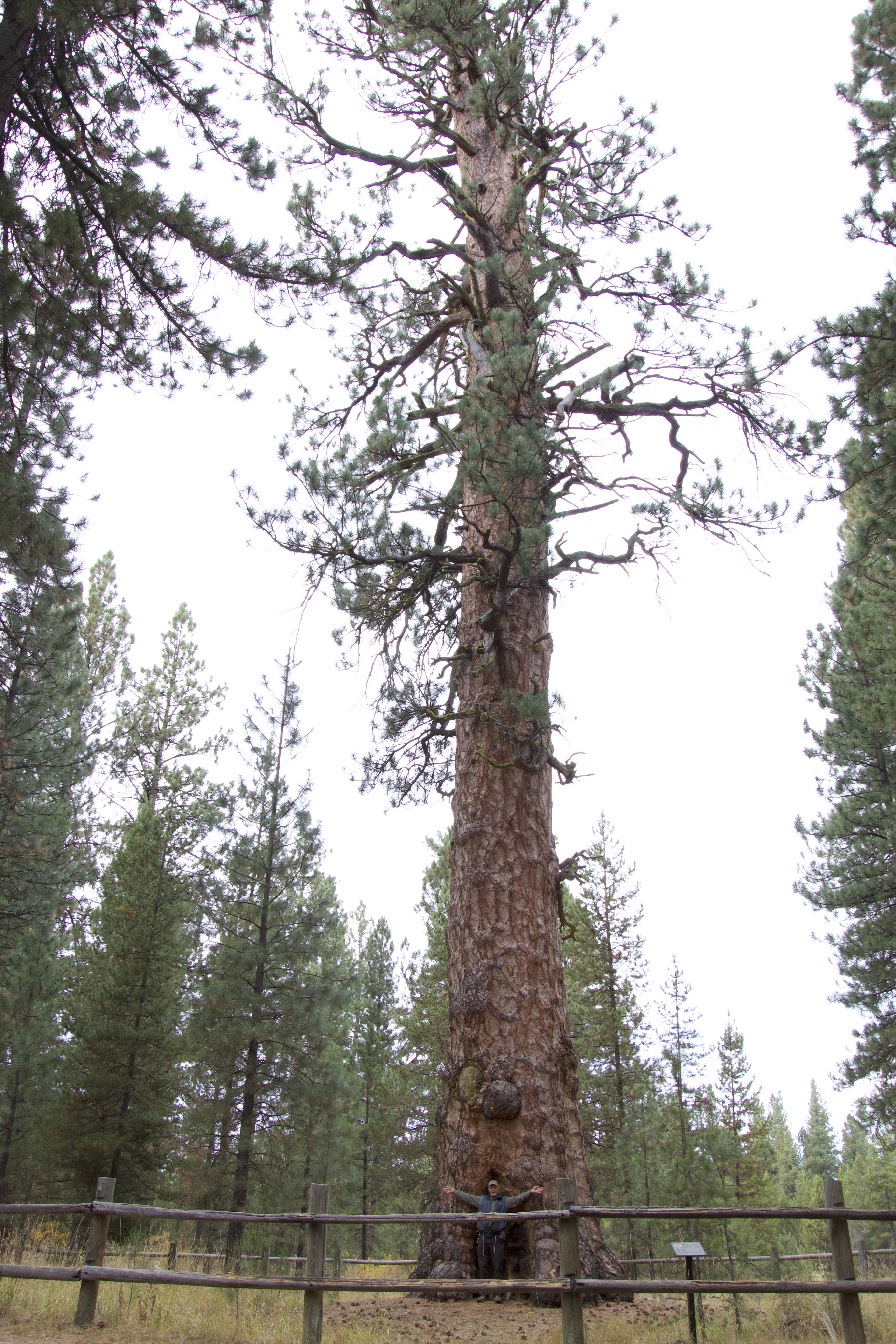
The inspiration of this poem and its birth occurred while sitting next to the Deschutes River in La Pine, Oregon, during Sukkot (the Feast of Tabernacles) in 2018, while gazing admiringly at the mighty, towering ponderosa pine trees (Pinus ponderosa) that stand as sentinels gracing its banks. At the same time, the words of the First Psalm were floating around in the author’s mind.

La Pinus1 ponderosa2 at De Falls3 River waters4;

A weighty5 giant pondering6 heavenly matters. 

Rejecting your former blackjack7 past,

Basking now in heaven’s light at last.

Arms and trunks are tanned a bright orange hue8,

With muscular limbs upraised in praise to You9—

To the Messiah, the radiant Sun of Righteousness10!


O piney tree by the rivers of water,

With crown aimed high—you’re a leafy psalter11.

The still small breath12 of heaven’s heart,

Strums happily your needley harp,

To all who’re attuned in full amaze—

And hear the Spirit’s psalm of praise.


La Pinus ponderosa by De Falls River’s edge—

Precariously planted on the sloping ledge?

Gravity inexorably can’t make you slip,

As you mock the current’s undercutting grip13.

Against the storms you’re resolute, 

Exempt from its slavish tribute.

The desert’s torrid breath can’t make you wilt14.

It underestimates how well you’re built.

For deeply rooted are your hairy feet,

As they sate their thirst from the summer’s heat14.

Anchored firmly against the gale.

From brutal breezes that do assail.

Resting on the solid Rock15,

Heat and wind they can’t you shock16.

To the bank of Truth17 you tenaciously cling,

Imbibing the Spiritual life14 the waters bring.

As Heaven’s wind18 fills your leafy sail,

You clap your hands19 as me you regale.


O Pinus preacher at the River Deschutes,

You cry aloud from roots to shoots.

A riveting sermon loud and clear

To open ears both far and near.

Quietly praising the King above,

Silent shouting of heaven’s love!

Puzzle letters from your massive girth20,

A visible testament fall to the earth.

Of heaven’s radiance they joyously glow,

Trampled by naive hikers there below.

But when combined these letters spell,

The truth of heavens evangel21.

This tree’s a wellspring of worshipful praise,

In every tongue with limbs upraised!


La Pine’s1 ponderosas who grace your river blue,

There is much for me to learn from you.

Your arms point upwards in heaven’s praise,

Past you to Him, my eyes I’ll raise22!

This is my heartfelt prayer to You:

With Your Spirit and Truth23 my heart imbue.

From Your tree of life24 I’ll always feed

Producing an abundance of living seed.

May I be too a tree of life,

That my heart-would25 with your words be rife.

Amein.

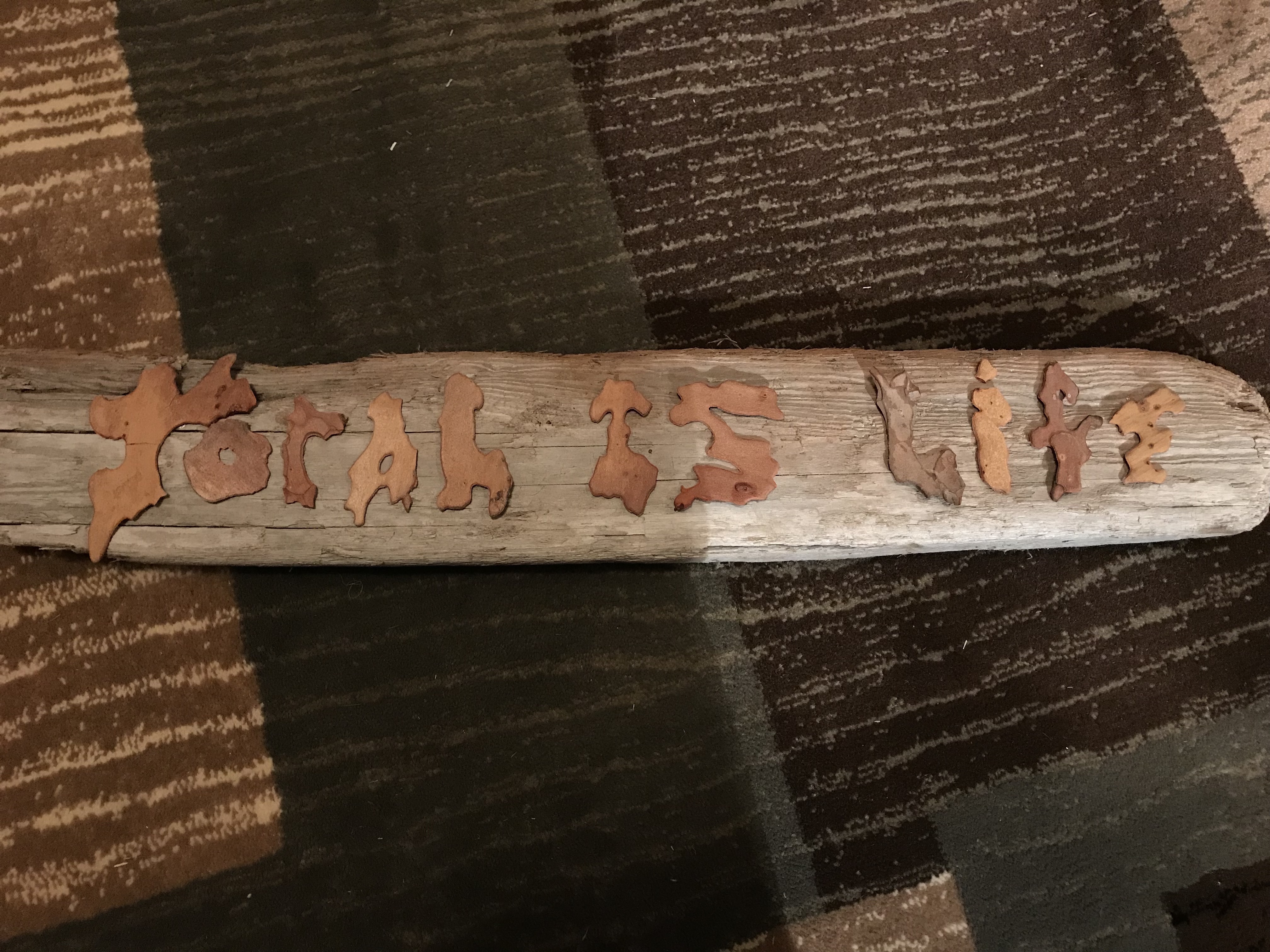
Letters of the alphabet from the bark of the ponderosa pine as found lying on the ground and unmodified.
Footnotes—The Poem Explained

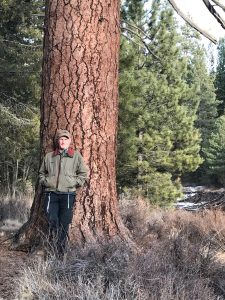
1 A reference to La Pine, Oregon where the mighty ponderosa pines there inspired the author to write this poem. In fact, the ponderosa pine with the largest trunk diameter in the world of nine feet two inches is located in La Pine State Park—the location where the author commenced writing this poem. 
2 The Latin name for the ponderosa pine.

3 The name Deschutes is a French word meaning “of the or some waterfalls or rapids.” The Deschutes River of Central Oregon that flows through La Pine State Park in La Pine, Oregon has plenty of both.

4 The phrases “river waters,” “rivers of waters” and the like throughout this poem are hints to the first Psalm, verse three, which was in the author’s mind when writing this hymn.

5 “Weighty” is a wordplay on the word ponderosa, which derives from the Latin word ponderosus meaning, among other things, “ponderous, massive or weighty.”

6 A wordplay on ponderosa.

7 Juvenile ponderosa pines have black bark and are colloquially known as blackjack pines. This suggests, in poetic terms, a dark, dirty and sinful youthful past.

8 The older a ponderosa pine becomes, and the more exposed to the sunlight is, over time, its bark turns from a dark black to a bright golden red-orange color.

9 Capitalized personal pronouns in this poem are references to Elohim or Yeshua the Messiah (the God of the Bible).

10 This is a biblical reference to Malachi 4:2 where the prophesied Messiah is likened to the sun, for, indeed, as the Bible later reveals, the face of Yeshua the Messiah does, indeed, shine like the sun in its full strength (Rev 1:16). Moreover, the Bible reveals that Messiah is the Light of the world, who shows man the way out of spiritual darkness and into the spiritual light. The implication here is that the more and longer the ponderosa is exposed to the sun, the brighter and sunlight-like its bark becomes. Similarly, the longer a human is exposed to the spiritual light of Messiah, the more like him they will become, and the more they will reflect him in their personality and character.

11 A psalter is a book full of psalms employed for church liturgical purposes.

12 A reference to 1 Kings 19:12.

13 The Deschutes River, like many mountain rivers, is full of trees that have fallen into the river due to the eroding action of the quickly moving river of the bank on which the trees were precariously perched.

14 Again, the first Psalm verse three is in the author’s mind.

15 A reference to Yeshua the Messiah, the Rock of our salvation.

16 Plants can go into damaging or fatal shock mode when exposed too quickly to extreme heat and cold.

17 In several places, the Bible talks about the river of life. A river as two important components without which it couldn’t exist: a bank (or a channel) and water. To the author’s mind, the bank is like Truth, while the water is like the Holy or Set-Apart Spirit of Elohim. To be a true follower of Yeshua, one must have both the Truth of the Word of Elohim along with the Spirit of Elohim to understand it and then to live it. Our Father in heaven is seeking those to worship him in both Spirit and Truth (John 4:23–24).

18 That is, the Set-Apart Spirit of Elohim. There are a number of references in Scripture to the Spirit of Elohim being like wind (e.g. John 3:8; Acts 2:2).

19 The author had Isaiah 55:12 in mind here.

20 The older a ponderosa pine becomes, the more scaly its bark becomes, such that puzzle like scales or pieces of bark are constantly falling off of the trunk. The pieces are in all sizes and shapes. They literally look like pieces of a puzzle, and many of those pieces are in the shape of the letters of the alphabet. In fact, one can pick up letters and spell words. Some people even find the letters of their name and mount them on a board as a decorative plaque.

21 Or gospel.

22 The author here is reminded of Romans 1:20 where Paul tells us that there is much to be learned about the invisible attributes of Elohim from his visible creation that surrounds us and of which most humans are unaware.

23 This is another reference to the Spirit and Truth passage of John 4:23–24.

24 This is an obvious reference to the tree of life in the Garden of Eden. There are a number of other references in Scripture to the tree of life. All of these are metaphors for the Torah–word and wisdom of Elohim that comes through faith in and a relationship with Yeshua the Messiah who redeemed us from our sins by dying on a tree, and from which springs eternal life.

25 This is a play on words. The heartwood of a tree is its central part or most interior core, even as the human heart is at the center of the one’s being both literally and spiritually.
 

Blog Scripture Readings for 10-21 Through 10-27-18

Aside

THIS WEEK’S SCRIPTURE READINGS FOR STUDY AND DISCUSSION:

Parashat Vayera — Genesis 18:1 – 22:24
Haftarah — 2 Kings 4:1–37
Prophets — Joshua 22:1 – 24:33; Judges 1:1 – 4:24
Writings — Psalms 21:1 – 27:14
Testimony — Matthew 14:1 – 18:20

Most of this week’s blog discussion points will be on these passages. If you have general comments or questions on the weekly Scripture readings not addressed in a blog post, here’s a place for you to post those. Just use the “leave a reply” link below.

The full “Read Through The Scriptures In A Year” schedule, broken down by each day, can be found on the right sidebar under “Helpful Links.” There are 4 sections of scripture to read each day: one each from the Torah, the Prophets, the Writings, and from the Testimony of Yeshua. Each week, the Torah and haftarah readings will follow the traditional one-year reading cycle.

Weekly Blog Scripture Readings for 10/21/18 through 10/27/18.


New Video: Exposing the Matrix of the Babylon the Great New World Order


New Video: Tuning into Elohim Through an Experience in Nature


The Parable of the Sower in Context Explained

Matthew 13:14, Hearing you will hear. In Yeshua’s Parable of the Sower (Matt 13:3–23), we are confronted with the difficult issue about who will receive the gospel message and thus enter into the kingdom of heaven and who will not. Put into modern vernacular, Yeshua is discussing who will receive YHVH’s free gift of salvation resulting in immortality and who and who will die in his sins to perish for eternity.

Yeshua’s discussion all started when his disciples asked him why he taught the people using parables. To them, it was as if he were deliberately obscuring the gospel message.

A superficial reading of his response in verse 15 to their question may imply not only a lack of impartiality but a brutal selectivity on the part of Elohim when it comes to determining who he will choose to receive the gift of salvation including the gift of immortality. If this is the conclusion one draws from Yeshua’s response, then what he said contradicts other scriptures that indicate Elohim’s unconditional love for the whole world and his desire that all be saved (John 3:16; 1 Tim 2:4; 2 Pet 2:9).

The fact is that a thorough reading of this passage shows us another important truth, which in no way impugns the character of Elohim, but instead leaves the onus on man.

After giving this parable, Yeshua quotes Isaiah the prophet (Isa 6:9–10), where we learn that it’s up to the individual as to how far they want to go with Elohim spiritually. All humans have eyes and ears to see and hear, but merely seeing or hearing doesn’t equate with understanding or perceiving. Sadly, many people want to dabble in religion, or to have a religious experience, but they don’t want to change their lives spiritually, to give up their sin, and then to submit to the will of Elohim by adhering to his commandments as revealed in his written Word, the Bible. This is because they have willfully hardened their hearts and closed their eyes (Matt 13:15). YHVH isn’t going to cram “religion,” so to speak, down their throats. For example, in the Gospel record, we read that many people followed Yeshua out of curiosity and in hopes of being healed or getting fed physically or seeing a miracle (John 6:26; Matt 12:39), but when he demanded obedience, many turned away from following him (John 6:66). The same is true of people today. Human nature, the condition of man’s heart, remains the same down through the ages. Though Yeshua calls many to follow him, few actually do (Matt 20:16; 22:14). Of the thousands who flocked to see Yeshua during his earthly ministry, only about 120 people remained faithful to him (Acts 1:15).

Why would Yeshua (and Isaiah) express reluctance at having some people come to saving faith in Elohim? The answer lies in the Parable of the Sower itself. Yeshua explains that the good seed of the gospel message is sown on various types of ground. Only that which is sown in the fertile soil produces fruit. Though the seed germinated and began to grow in the bad ground, it eventually died because of unfavorable external factors. Yeshua in explaining this parable to his disciples says that many people receive the good seed (i.e. they hear the gospel message), and they respond favorably to it initially, but they’re not willing to go all the way, for their hearts and minds are only open superficially. Once the excitement and emotions of their spur of the moment decision dies down, they go back to their old lifestyle. Peter describes those who initially respond favorably to the gospel, but turn away in this way in 2 Peter 2:20,

For if after they have escaped the pollutions of the world through the knowledge of the Lord and Saviour Yeshua the Messiah, they are again entangled therein, and overcome, the latter end is worse with them than the beginning.

Of those who are superficially converted but turn away, Yeshua, elsewhere likens such a person to a house that gets cleaned and swept spiritually of evil spirits, but if that person doesn’t guard his house to keep it clean, the evil spirits will come back in greater force than before to repossess the house. Yeshua exclaimed that the latter state of the man is worse than his first state (Matt 12:43–45).

It is perhaps for these reasons that, though Yeshua clearly desires all to be saved in a general sense, he only wants those who will be serious about their spiritual walk actually to be saved. This lessens the possibility of those who are less serious from making spiritual commitments, getting saved, then falling away into a worse spiritual state than before. Yeshua values quality over quantity when it comes to his disciples.

What’s more, he spoke the mysteries of the kingdom in parables, so that those who were serious would be forced to take the step of faith necessary to gain understanding. Those who are unwilling to push forward in the pursuit of truth aren’t worthy to have the mysteries of the kingdom entrusted to them. It would be like casting pearls before swine or giving that which is holy to the dogs, as Yeshua elsewhere states (Matt 7:6). Again, many are called and few are chosen.


The Significance of Circumcision Past and Present

Genesis 17:1, 22, YHVH appears to Abraham and establishes circumcision as a sign of the covenant. 

And when Abram was ninety years old and nine, YHVH appeared [Heb. ra’ah meaning “to see, look, behold, show, appear, observe, have vision, present oneself, be seen”] to Abram, and said unto him, I am El Shaddai; walk before me, and be thou perfect.

YHVH proceeds to lay out to Abraham the terms of the Abrahamic Covenant including circumcision and the fact that Sarah would give birth to a son with whom YHVH would also establish his covenant. When YHVH was done Scripture records the following in verse 22,

And [YHVH] left off talking with him, and Elohim went up [Heb. alah, to go up, ascend, climb, depart] from Abraham. (KJV)

And when He had finished speaking with him, God ascended from upon Abraham. (The ArtScroll Stone Edition Tanach)

And He ceased speaking with him; and the Glory of the Lord ascended from Abraham. (Targum Jonathan)

And when He had ended to speak with him, the Glory of the Lord ascended up from Abraham. (Targum Onkelos)

And be left off speaking with him, and God went up from Abraham. (LXX)

This text does not state how YHVH appeared or spoke to Abraham, just the fact that he did. According to the Hebrew rules of biblical interpretation (and the rules of common logic when reading anything), a scriptural text is to be taken at its literal or plain (peshat) meaning, unless the text itself suggests an allegorical (drash) or mystical (sod) interpretation. The Talmud (the Jewish Oral Law) states this in Talmud b. Shabbath 63a ( … that a verse cannot depart from its plain meaning”) and Talmud b. Yevamoth 24a (“Although throughout the Torah no text loses its ordinary meaning …”). Therefore, it is evident that YHVH appeared to Abraham in some tangible form with which humans are capable of interacting. If he did so once, we have to ask, cannot he do it again in the Person of Yeshua of Nazereth, the Messiah?

Let’s note some reasons why YHVH chose circumcision to be the sign of the Abrahamic Covenant. Remember, physical circumcision is not passé, but is still a requirement for those desiring to be priests in YHVH’s future (spiritual?) temple (Ezek 44:7, 9):

  • It is a token or sign of spiritual things—a sign which always goes before us. (Gen 17:11)
  • It signifies purification of the heart from all unrighteousness by cutting away a piece of the flesh which would otherwise be a carrier of filth and disease.
  • It is a holy seal of righteousness—the foreskin removed is round like a ring. A ring signifies a bond or union and is worn constantly even as the seal of circumcision is worn constantly.
  • Circumcision occurs at eight days of age. Eight is the number meaning new beginnings. A new heart, a consecration of the person to YHVH; the commencement of a covenant. (Gen 17:12) 
  • The rite of circumcision is painful and humiliating. So is repentance and self denial of which circumcision is a picture.
  • From the penis flows the seed of life. Circumcision is a sign that the seed should and could be righteous and consecrated to YHVH.
  • In Romans 4:11, Paul teaches us that circumcision is a sign, mark or token, and a seal (placed on someone) or an impression or stamp made by a signet ring signifying ownership. Circumcision spoke of Abraham’s righteousness and the faith he had in YHVH and YHVH’s “ownership” of Abraham. A modern-day example of this would be the marriage ring. One can be legally married without wearing ring; however, a wedding ring is an outward and visible sign of one marriage covenant. The same is true of circumcision. It’s not a salvational requirement, yet it’s an outward sign of an inward spiritual reality.

The Scriptures make it clear that circumcision is not a requirement for salvation (see Acts 15) or else women couldn’t be saved. Circumcision is, however, an act of obedience that indicates one’s identity with the Abrahamic Covenant model of salvation and with the people of Israel. Additionally, the Torah makes it clear that circumcision is required for all men who desire to take Passover, and those who do not keep the Passover will be cut off from Israel (Exod 12:47–48), although in the New Covenant, circumcision of the heart is now the chief requirement (Rom 2:25–29; Gal 6:15; Col 2:11). 


The Appearance of Christ or the Messiah in Genesis?

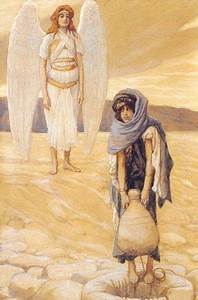
Genesis 16:7–13, Hagar and Ishmael encounter Messenger of YHVH. The first place in Scripture that the term “Angel [Messenger/Malak] of YHVH is used is in Genesis 16:7. Here Hagar flees into the wilderness with her son, Ishmael, escaping from Sarah, her mistress and is resting by a pool of water when the Heavenly Messenger (Hewb. malak) of YHVH suddenly appears to her. He commands her to return to Sarah and then proceeds to pronounce a prophetic blessing upon Ishmael:

10 And the angel of YHVH said unto her, I will multiply thy seed exceedingly, that it shall not be numbered for multitude. 11 And the angel of YHVH said unto her, Behold, thou art with child, and shalt bear a son, and shalt call his name Ishmael; because YHVH hath heard thy affliction. 12 And he will be a wild man; his hand will be against every man, and every man’s hand against him; and he shall dwell in the presence of all his brethren.

What was Hagar’s response (Gen 16:13)? Christian translations of the Hebrew Scriptures (Old Testament) record that she believed that she had (incredibly) seen YHVH and lived:

So she named YHVH who had spoken with her El of Seeing, because she said, “Have I really seen the One who sees me [and stayed alive]?” (adapted from the CJB)

Then she called the name of YHVH who spoke to her, You-Are-the-God-Who-Sees; for she said, “Have I also here seen Him who sees me? (NKJV)

Then she called the name of YHVH who spoke to her, “You are a God who sees”; for she said, “Have I even remained alive here after seeing Him?” (NAS)

So she named YHVH who spoke to her, “You are El-roi”; for she said, “Have I really seen God and remained alive after seeing him?” (NRSV)

As we can see, the Christian translations give the impression that Hagar actually saw YHVH.

The ArtScroll Stone Edition Chumash (the modern Orthodox Jewish translation) translates verse 13 in this manner:

And she called the Name of HASHEM Who spoke to her “You are the God of Vision,” for she said, “Could I have seen even here after having seen?”

The Jewish Soncino Edition of the Pentateuch translates it this way:

And she called the name of the LORD that spoke unto her, Thou art a God of seeing; for she said: ‘Have I even here seen Him that sees me?’

Nineteenth-century Orthodox Jewish sage Samson Raphael Hirsch in his commentary translates this verse as follows,

And she called the name of God that spake unto her: Thou art a God of seeing; for she said: Have I then also up to here too looked after anyone who might see me? [sic]

As we can see, modern rabbinic translations of this verse are ambiguous as to whether Hagar had a vision or actually saw YHVH with her natural eyes.

The Targumim translations (Aramaic translations of the Hebrew Scriptures from the pre-Christian era made by Jewish religious officials) translate verse 13 this way,

And she gave thanks before the Lord whose Word spake to her, and thus said, Thou art He who livest and art eternal; who seest, but art not seen! for she said, For, behold, here is revealed the glory of the Shekina of the Lord after a vision. (Targum Jonathan)

And Hagar gave thanks, and prayed in the Name of the Word of the Lord, who had been manifested to her, saying, Blessed be Thou, Eloha, the Living One of all Ages, who hast looked upon my affliction. For she said, Behold, Thou art manifested also unto me, even as Thou wast manifested to Sara my mistress. (Targum Jerusalem)

And she prayed in the Name of the Lord who had spoken with her; and she said: Thou art Eloha, seeing all: for she said, I also have begun to see after that He hath been revealed to me. [14] Therefore she called the name of the well, The well at which appeared the Angel [Malak] of the Covenant. (Targum Onkelos)

These pre-Christian era Jewish translations of this passage are less obscure and ambiguous about what Hagar saw. The first says that “the Word spake to her” through his manifest Presence in a vision; the second speaks of the Word of YHVH manifesting himself to her as to Sarah; the third says that YHVH spoke to her and revealed himself to her through the Messenger [Malak] of the Covenant. 

So what did the Jews believe in the pre-Christian era? Did she have a vision or see a literal Heavenly Messenger? It would appear that they were more open to the latter interpretation than are some modern, post-Christian, Jewish translations.

How do the Jewish rabbinical commentators explain this verse? Rashi, the preeminent Torah commentator of the modern era says she actually saw a messenger or an angel (Rashi: the Torah – Bereishis/Genesis, p. 159). The ArtScroll Stone Edition Chumash states that an angel or “God’s emissary” spoke to her (p. 73). Hirsch in his commentary claims that Hagar saw an angel (a Messenger or Sent One) (Genesis, p. 289). The ArtScroll Breishis/Genesis commentary also states that YHVH spoke to Hagar through an angel (p. 553).

So these commentaries unanimously agree that a literal Heavenly Messenger visited her, but upon what basis does this Messenger use the first person in pronouncing a blessing upon Ishmael? Here, as in other scriptures where the term “Angel [or Malak] of YHVH” is used, the Jewish sages insist that the Messenger is not YHVH and is not divine, but is only acting as an agent of YHVH and therefore is mandated by divine authority to speak in the first person, as if he were YHVH himself. The Jewish sages have not always had this interpretation—one which seems to have arisen during the Christian era to counteract the Christian concept of the incarnation of deity, and hence the deity of Yeshua the Messiah. Even the venerable Jewish Encyclopedia admits this. The sages of the pre-Christian era viewed this Messenger of YHVH as a manifestation of the Word or Presence of YHVH rather than as simply an angel in the common sense of the word. Many if not most Christian scholars recognize the Angel or Messenger of YHVH to be the Word of Elohim (see John 1:1) who would later be incarnated as Yeshua the Messiah (John 1:14). There is even a Christian theological term for this: a Christophany.