Natan’s Commentary on the Song of Solomon—A Marriage Made in Heaven!

How many times have you read the Song of Solomon? Probably not too many. What do you do this book? How do you interpret it? What’s the significance of it to the life of the redeemed believer? Is it merely a flowery Hebraic love poem or does it contain some hidden, deeper spiritual message? Bible commentators have various views on the meaning and significance of this little book. Most Bible students kind of leave it alone assigning it to the category of somewhat irrelevant Hebraic love poetry, and there it sits, gathering dust on the shelf as we’re not sure what to do with it. Well, it’s time to take his book down off the shelf and blow the dust off it and examine it through enlightened eyes to see what wonderful, hidden, deep spiritual mysteries and truths it contains with regard to our common salvation.

Many years ago, YHVH revealed to me the hidden message behind the Song of Solomon. It has to do with the betrothal, wedding and the happy married life of YHVH Elohim/Yeshua and his bride—redeemed Israel, or the Israel of Elohim as Paul describes the saints in Galatians 6:16. This is the story, the spiritual journey of not only a nation—redeemed Israel, but of the individual as well. You can plug yourself into the continuum of this odyssey.

I’ve been sitting on this commentary for twelve or thirteen years, and this is the first time that I’ve published it. I pray that it blesses you.


The Song of SolomonThe Outline of the Song of Solomon as It Relates to the Biblical Hebrew Wedding

The Three Main Phases to the Jewish Wedding and the Biblical Feasts

1) Betrothal (Shitre Erusin) – Passover, Unleavened Bread and Pentecost

2) Consummation and the Wedding Feast (Nesuim) – The Feast of Trumpets, Day of Atonement and Feast of Tabernacles 

3) Together for Eternity (Olam Haba) – The Eighth Day picturing the New Jerusalem

Overview of the Song of Solomon: The Three Main Phases and Sub-Phases of the Wedding in the Song of Solomon

Song 1:1–3:5 — The Betrothal Phase (Erusin)

a) The Ketubah. The young man prepares a marriage contract or covenant which he presents to the young woman and her father called a ketubah (writing). This is a formal written document which stipulates the terms of the proposal he is making.

b) The Bride’s Price or Mohar. This is the price the young man is willing to pay the father for the father’s permission for the young man to marry his daughter.

c) The Cup of Acceptance. If the marriage contract and the bride’s price are acceptable to the father, the young man would pour a cup of wine for his intended and would hold it out to her. If she would accept it and drink it then this would be her acceptance of his proposal. The bridegroom would then prepare for the joyous occasion of the upcoming marriage by bringing gifts for his beloved which would be tokens of his love for her. After the young man left to return to his father’s home, the bride would begin to prepare herself for the upcoming marriage ceremony. She would start with a ceremonial cleansing (or mikveh) whereby she would purify herself in preparation for her husband. At this point the young couple were betrothed.

The Preparation Phase

a) The groom would go to prepare a place for her. Though the couple was legally bound in marriage they would not cohabit. The groom would return to his father’s house and begin to prepare a wedding (honeymoon) chamber for his wife. This process would take up to a year or more. Only when the father of the groom would approve that the chamber was ready would the groom be released to get his bride.

b) The bride would make herself ready. While the groom was preparing a place for his bride, she would be busy preparing herself by making herself beautiful. When the young bride would leave the house she would wear a veil to show that she was “spoken for” and that she was no longer available since she was “bought with a price”. She was consecrated to her bridegroom.

Song 3:6–6:1 — The Reunion Phase

a) Upon receiving word from the father the wedding chamber was complete, the groom would steal away to fetch his bride. She would not know the day or the hour of his coming, so she had to be continually ready for his arrival. She had to be ready at a moment’s notice. She and her bridesmaids had to make sure they had plenty of oil in their lamps in case he came at night.

b) Coming for the bride. The coming of the groom would be a surprise to the bride. He would come accompanied by his two groomsmen (or two witnesses). When the wedding party would get close to the bride’s house they would give a shout and blow the ram’s horn (shofar) to let the bride know they were coming. They would charge right into the house and carry off the bride and bridesmaids.

Song 3:6–8:4 — The Wedding Phase or Nuptials (Nesuim)

c) The wedding party would arrive at the groom’s father’s house where the newlyweds would enter the wedding chamber and consummate the marriage and honeymoon for seven days. This established their covenant union. During intercourse, blood is spilled proving that the bride was a virgin.

The Celebration Phase

The celebration would last for seven days while the newlyweds are in celebrating their honeymoon. Following this would be the marriage supper which is given in honor of the newlyweds. 

Song 8:5–14 — Eternity Together (Olam Haba)

The newly married couple begins life together.

Erusin/Betrothal/Engagement or Kidushim (i.e. becoming set-apart) (Song 1:1–3:5)


Natan’s Commentary on the Song of Solomon

In this section, the bride and bridegroom are falling in love; getting to know each other, have minimal contact, and are separated from each other except for brief rendezvous.

The Betrothal Phase (Erusin) Part 1—Getting to Know Each Other/Falling in Love (Song 1:1–2:7)

Song 1

Continue reading
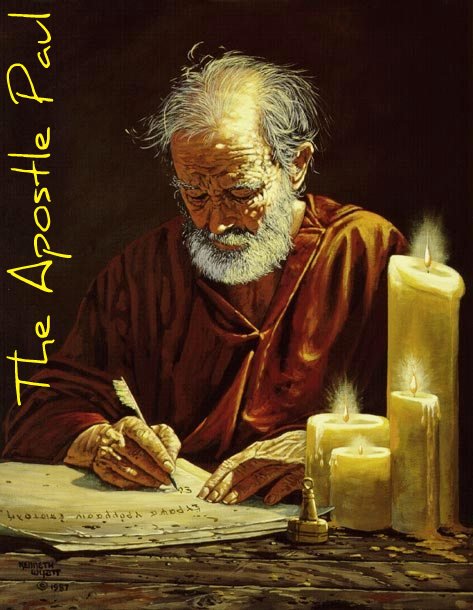
 

How to Easily Understand the Hard Sayings of Paul

2 Peter 3:15–16, Paul…hard to understand. If the writings of Paul are confusing as 2nd Peter 3:15-16 affirms, then why did the Holy Spirit write confusing things through Paul and not through others?


Why Paul Is Difficult to Understand

Paul was hard to understand in the first century as Peter states in 2 Peter 3:16–17, and he’s hard to understand now in the twenty first century, as we will discuss below. In fact, it might be said that if it was hard for Paul’s contemporaries (those who knew him and ministered with him) to understand him, then, logically, it follows that it will be even much harder for those of us to understand him who live 2000 years later and who didn’t know him or work with him. To the former point, Peter writes, 

And account that the longsuffering of our YHVH is salvation; even as our beloved brother Paul also according to the wisdom given unto him hath written unto you; As also in all his epistles, speaking in them of these things; in which are some things hard to be understood, which they that are unlearned and unstable wrest, as they do also the other scriptures, unto their own destruction.  Ye therefore, beloved, seeing ye know these things before, beware lest ye also, being led away with the error of the wicked, fall from your own stedfastness.

Again, if Paul was hard to understand in his day, how much more 2000 years later!

For those living and working with Paul, he was hard to understand because of his intellect and education. He was one of the top Jewish scholars of his day with an intellect to match it. You weren’t taught by Gamliel, the grandson of Hillel the Great, the founder of the Hillel School of Phariseeism and considered by some modern Jews to be the greatest sage of the common era, unless you were the top of your class in Judaism! This was the same Paul who was well-travelled, multi-lingual, could debate with the Greek philosophers of Athens, could quote Greek literature from memory and was from a wealthy and prominent family who were Roman citizens because of their wealth and influence. By contrast, most of Yeshua’s other disciples were from the backwoods regions of the Galilee and were common tradesman. Today it would analogous to a logger from Oregon or a fur trapper from Alaska suddenly linking up into a working relationship with a PhD professor in physics or philosophy from Oxford, Cambridge, Harvard or Yale universities. 

Now scroll forward 2000 years. Since then, we have nearly 2000 years of church history with all of its institutionalized traditions, syncretistic belief systems, man-made doctrines, anti-Semitic theologies and so on to have to wade through. The very purveyors of these church traditions are also the same people (the Christian leaders and “scholars”) who are translating our Bibles. This means that they’ll often be translating the biblical text in ways that agree with their best (often anti-Torah) understandings of Scripture. 

It is this Babylonian mixture of truth and error (man made doctrines and traditions of men along with questionable if not faulty Bible translations) out of which most of us have come. We have to somehow weave our way through this tangled religious theological web and mess and figure out what is truth and what is error, what to keep and what to toss out, who is right and who is wrong, what is wheat and what is chaff. This isn’t easy to do especially when we’ve been indoctrinated, even brainwashed by the church to view Paul, the Torah-law and the rest of the Bible in a certain way through the lenses of those who have taught us their viewpoints be they right or wrong. One’s attempt to separate the precious from the vile and the holy from the polluted promises, justifiably so, to be a daunting and frightening proposition. That’s why the majority of people will prefer to stay in the comfort zones of their churches and man made traditions, rather than to step out into the unknown and unexplored wilderness of being a truth seeker, and, like a modern-day archeologist, to dig down to the bedrock of biblical truth. To step out of the boat of the church system means that, like Peter, you have to have a higher measure of faith than those who will remain safely and comfortably in the boat of their religious traditions. It means that one has to keep their eyes on Yeshua and follow his voice, or else sink into the spiritual watery depths of spiritual confusion. It means that you have to role up your sleeves and get to work, and put on your rubber muck boots and slog through the muddy dung in the barnyard of men’s religious traditions, some of which are good and many of which are vile, to get to the solid high ground of biblical Truth.

Unlocking the Mystery of Understanding Paul

Continue reading
 

And now for sick and disgusting subject…

The filth and depravity of sinful humans is not a subject for the prideful, godless, squeemish or faint of heart!

Jeremiah 17:9, The heart is deceitful above all thing. 

The Utter Depravity of Sinful Man

The Bible is a big book. It contains more than 1500 pages of divine instructions on countless subjects from numerous authors written over a period of more than 1500 years! Within the plethora of subjects contained therein, it is easy to overlook certain ones that are less complimentary to man, but that he nevertheless needs to be reminded of if he is to come into a right relationship with YHVH Elohim (the Creator and ultimate Author of the Bible).

One of these biblical themes pertains to the utter depravity of man in his spiritually unregenerate state. The Bible has a lot to say about this subject, and it’s not a pleasant one. And even after man is regenerated by the Spirit of Elohim, he still struggles with his base, carnal, godless, rebellious, anti-Elohim and sin-bent nature.

Like taking a strong medicinal tonic, from time to time, it is imperative that the redeemed of YHVH review the Scriptures in the Bible that discuss the subject of man’s depravity. As forgetful humans who have the prideful tendency to gloss over our sins (this too is an aspect of man’s depraved and sin-inclined nature), we need to hold the mirror of truth up to our faces to see ourselves as we really are. When we behold this reality, perhaps it will drive us back to the cross of Yeshua in repentance of our sin, and cause us to fall down in contriteness before the mercy seat of Elohim’s throne begging for mercy. Perhaps the fear of Elohim will be perfected in us, and he will be exalted in our sin-stained hearts and minds in the beauty of his absolute righteousness and spiritual perfection. As this occurs, proper spiritual order will be restored in the universe and in our lives as we assume our rightful position on our faces before his throne of mercy. Only then will we find right relationship with the Creator of the universe resulting in true peace, joy, happiness and eternal life and peace on earth among men as we recognize our utter depravity and at the same time the beauty and glory of Elohim’s sublime perfection and holiness. 

Who can bring a clean thing out of an unclean? Not one. (Job 14:4)

What is man, that he should be clean, and he which is born of a woman, that he should be righteous? Behold, he puts no trust in his saints; yea, the heavens are not clean in his sight. How much more abominable and filthy is man, which drinks iniquity like water? (Job 15:14–16)

Behold, I was shaped in iniquity; and in sin did my mother conceive me. (Ps 51:5) 

Elohim looked down from heaven upon the children of men, to see if there were any that did understand, that did seek Elohim. Every one of them is gone back: they are altogether become filthy; there is none that does good, no, not one. (Ps 53:2–30)

Frowardness is in his heart, he devises mischief continually; he sows discord. (Prov 6:14)

This is an evil among all things that are done under the sun, that there is one event unto all: yea, also the heart of the sons of men is full of evil, and madness is in their heart while they live, and after that they go to the dead. (Eccl 9:3)

Then said I, Woe is me! for I am undone; because I am a man of unclean lips, and I dwell in the midst of a people of unclean lips: for mine eyes have seen the King, the LORD of hosts. (Isa 6:5)

All we like sheep have gone astray; we have turned every one to his own way; and YHVH has laid on him the iniquity of us all. (Isa 53:6)

But we are all as an unclean thing, and all our righteousness is as filthy rags; and we all do fade as a leaf; and our iniquities, like the wind, have taken us away. (Isa 64:6)

The heart is deceitful above all things, and desperately wicked: who can know it? (Jer 17:9)

And he said, That which comes out of the man, that defiles the man. For from within, out of the heart of men, proceed evil thoughts, adulteries, fornications, murders, thefts, covetousness, wickedness, deceit, lasciviousness, an evil eye, blasphemy, pride, foolishness. All these evil things come from within, and defile the man. (Mark 7:21–23)

As it is written, There is none righteous, no, not one: There is none that understands, there is none that seeks after Elohim. They are all gone out of the way, they are together become unprofitable; there is none that does good, no, not one. Their throat is an open sepulchre; with their tongues they have used deceit; the poison of asps is under their lips: whose mouth is full of cursing and bitterness. Their feet are swift to shed blood: destruction and misery are in their ways: and the way of peace have they not known. There is no fear of Elohim before their eyes. (Rom 3:10–18)

For we know that the law is spiritual: but I am carnal, sold under sin. For that which I do I allow not: for what I would, that do I not; but what I hate, that do I. If then I do that which I would not, I consent unto the law that it is good. Now then it is no more I that do it, but sin that dwells in me. For I know that in me (that is, in my flesh,) dwells no good thing: for to will is present with me; but how to perform that which is good I find not. For the good that I would I do not: but the evil which I would not, that I do. Now if I do that I would not, it is no more I that do it, but sin that dwells in me. I find then a law, that, when I would do good, evil is present with me. For I delight in the law of Elohim after the inward man: But I see another law in my members, warring against the law of my mind, and bringing me into captivity to the law of sin which is in my members. O wretched man that I am! who shall deliver me from the body of this death? (Rom 7:14–24)

Because the carnal mind is enmity against Elohim: for it is not subject to the law of Elohim, neither indeed can be. So then they that are in the flesh cannot please Elohim. (Rom 8:7–8)

Now the works of the flesh are manifest, which are these; adultery, fornication, uncleanness, lasciviousness, Idolatry, witchcraft, hatred, variance, emulations, wrath, strife, seditions, heresies, Envy, murders, drunkenness, revellings, and such like: of the which I tell you before, as I have also told you in time past, that they which do such things shall not inherit the kingdom of Elohim. (Gal 5:19–21)

And you hath he quickened, who were dead in trespasses and sins; wherein in time past ye walked according to the course of this world, according to the prince of the power of the air, the spirit that now worketh in the children of disobedience: (Eph 2:1–2)

What should be our response before YHVH Elohim to the truth of who we are before him? Let us learn from the wisdom of Job.

Wherefore I abhor myself, and repent in dust and ashes. (Job 42:6)

And said, O my Elohim, I am ashamed and blush to lift up my face to thee, my Elohim: for our iniquities are increased over our head, and our trespass is grown up unto the heavens. (Ezra 9:6)

The sacrifices of Elohim are a broken spirit: a broken and a contrite heart, O Elohim, thou wilt not despise. (Ps 51:17)

Then shall ye remember your own evil ways, and your doings that were not good, and shall lothe yourselves in your own sight for your iniquities and for your abominations. (Ezek 36:31)

This is a faithful saying, and worthy of all acceptation, that Messiah Yeshua came into the world to save sinners; of whom I am chief. (1Tim 1:15)

Be afflicted, and mourn, and weep: let your laughter be turned to mourning, and your joy to heaviness. Humble yourselves in the sight of YHVH, and he shall lift you up. (Jas 4:10)

Now in conclusion of the matter, be encouraged by reading the following Bible passages: Psalms 51:1–17; 103:1–18; 1 John 1:9

But there is hope…

Continue reading
 

Paganism creeps into our lives in many ways, and YHVH’s people love it!

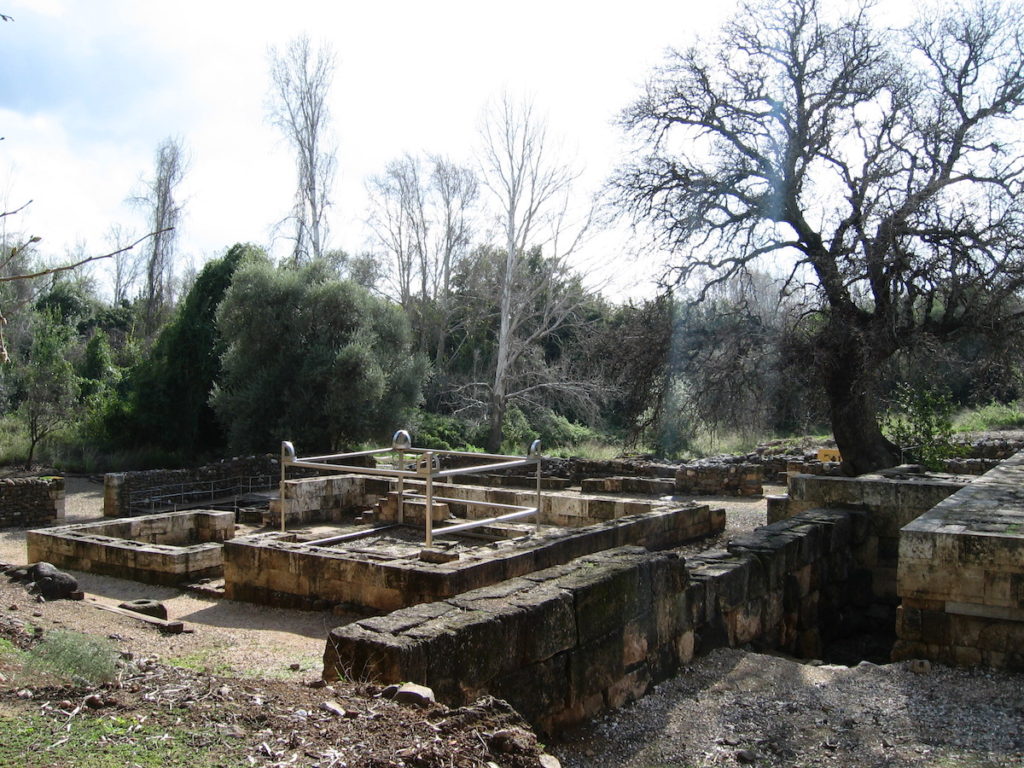
An oak tree at the altar of the pagan Israelite temple at Tel Dan in northern Israel.

Jeremiah 17:2, Wooden images…green trees.In ancient times, sacred tree-like poles (like obelisks called asherah poles) and green trees were set up near pagan altars for the worship of the Babylonian and Canaanite sex goddess, Astarte (or Ishtar from which the Christian festival Easter derives its name).

In Exodus 34:13, YHVH commands the Israelites to destroy the pagan sex worship symbols that the NIV Study Bible describes as wooden poles, or carved images, that were set up in honor of this pagan goddess at pagan worship sites. The International Bible Encyclopedia (vol. 1, p. 317) states that a tree trunk with branches in honor of this pagan deity was often placed next to the altar of YHVH—something YHVH abhorred! (Deut 16:21; Judg 6:25, 28, 30; 2 Kgs 23:6). In Deuteronomy 16:21, YHVH forbids his people from placing wooden images or trees next to their altars. 

You shall not plant for yourself any tree, as a wooden image, near the altar which you build for yourself to the YHVH your Elohim. 

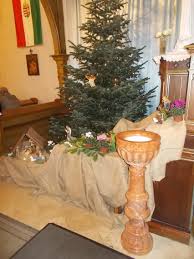
Today, at Christmas time, contrary to the Written Word of Elohim, Christian churches place trees next to their altars of worship.

Jeremiah’s description of such a tree in chapter 10 is eerily reminiscent of our modern Christmas tree, which finds itself placed in significant places where people gather whether it be in Christian churches and in homes. Sometimes this pagan deity was represented by a tree, sometimes by an obelisk type pole. The asherah pole is related to the matstebah, which is defined as “image, pillar, stump, tree or altar.”This type of pagan representation made its way into the religious system of ancient Israel, something YHVH forbad and something he expected righteous leaders to destroy (e.g. 2 Kgs 10:25–27). Have you ever wondered about the origins of the church steeple and about its striking resemblance to the ancient Egyptian obelisk, which was associated with phallic and sun god worship?


Preparing for Shavuot or Pentecost

Celebrating the (Re)New(ed) Covenant Involving YHVH Writing Torah on Our Hearts

Long ago Jeremiah prophesied that YHVH would make a new (or renewed) covenant being with his people Israel, which would involve both houses of Israel (Judah and Ephraim, or, prophetically speaking, the Jews and the Christians), and that he would write his Torah on their hearts.

Behold, the days come, saith YHVH, that I will make a new covenant with the house of Israel, and with the house of Judah: Not according to the covenant that I made with their fathers in the day that I took them by the hand to bring them out of the land of Egypt; which my covenant they brake, although I was an husband unto them, saith YHVH: But this shall be the covenant that I will make with the house of Israel; After those days, saith YHVH, I will put my law in their inward parts, and write it in their hearts; and will be their Elohim, and they shall be my people. And they shall teach no more every man his neighbour, and every man his brother, saying, Know YHVH: for they shall all know me, from the least of them unto the greatest of them, saith YHVH: for I will forgive their iniquity, and I will remember their sin no more. (Jer 31:31–34)

Contextually, in the verses surrounding this prophecy, we discover some other important details.

Verse 27, The houses of Judah and Israel were to be mingled throughout the beast (heathen) nations of the world as punishment for breaking their covenant with YHVH that they made with him on Shavuot (the Feast of Pentecost) at Mount Sinai (Exod 19–20, 24).

Verse 28, At some point in the future, YHVH’s punishment of Israel for breaking their covenant and their resulting exile among the gentile nations will come to the end. He will rebuild and restore the nation of Israel.

Verses 29–30, Whereas in times past, Israel was punished as a collective nation for their sins when they disobeyed YHVH and were similarly blessed when they obeyed him, now each person will be cursed or blessed for his own sins. Salvation is more of an individual matter now.

Verses 31–33, YHVH promises to make a renewed covenant with the two houses of Israel at some time in the future (from Jeremiah’s perspective). It will be different from the covenant he made with Israel at Sinai in two major ways:

  • Though it will be a covenant with Israel collectively (both houses), it also will be made with individuals.
  • He will deal with the heart of each individual Israelite when he writes his Torah on their hearts.

Verse 34, This renewed covenant will involve mercy and forgiveness (grace). It will involve a personal relationship between each person and YHVH (“they shall all know me…”).

Verses 35 and 37, As the sun, moon, stars, the sea, and expanse of the heavens and the earth exist, so YHVH will renew his Torah covenant with Israel. The words of Yeshua in Matthew 5:18 are reminiscent of the this prophecy. Not one jot or tittle (Heb. yud or tag, which are the smallest elements of the Hebrew alphabet) of YHVH’s Torah will pass as long heaven and earth still exist.

Verse 36, The very survival of the nation and people of Israel (and hence the fulfillment of the covenants YHVH made with Abraham), is dependent on YHVH regathering and restoring Israel. If YHVH doesn’t bring this to pass, then YHVH is a liar and his Word is a lie and there is no hope for the world! This cannot be!

This was fulfilled during the time of the writing of the Testimony of Yeshua (New Testament). The author of Hebrews talks about this in Hebrews 8.

But now, Yeshua the Messiah has attained a more excellent public service, since He is the Mediator of a more excellent covenant, one that was legislated with better promises than the former. (Heb 8:6)

The “better promises” is everything that Yeshua taught about salvation and eternal life as a person puts their trust in him. These better promises he taught during his life and ministry, and formalized this at his last supper through the communion elements. It is all these glorious promises to which the whole Levitical and sacrificial system pointed, which, as the author of Hebrews makes clear, was fulfilled in Yeshua.

If the first covenant had been faultless, there would have been no need to look for a second one. Finding fault with THEM He said, “Look, the days are coming, says Yehovah, when I’ll enact a New Covenant with the descendants of Israel, and with the descendants of Judah. It wont be like the covenant that I made with their ancestors during the time when I took them by the hand and brought them out of the land of Egypt, because they didnt remain loyal to My covenant, and I rejected them, declared Yehovah. But this is the covenant that I’ll enter into with the descendants of Israel after that time, says Yehovah; I’ll put My Torah in their minds—inscribing it on their innermost thoughts. I’ll be their Aloha, and they’ll be My people. No one will teach doctrine to their fellow citizens [evangelize], or a friend, or ask: “Do you know Yehovah” [witness to anyone], because they’ll all know Me, from the youngest of them to the oldest. I’ll be merciful regarding their wrongful behavior; and I’ll no longer remember their sins.” When He [Yeshua] mentioned, a New Covenant, He was saying that the first one was old and about to be repealed; and what was then old and failing, was about to disappear. (Heb 8:7–13, GV)

Other Scriptures Relating to the Renewed Covenant and the Heart of Man

The Tanakh is full of scriptures that speak of the renewed covenant where YHVH will write his Torah on the hearts of men. For example, in Jeremiah 32:40, YHVH reiterates his promise to make an everlasting promise with Israel. This new covenant will involve his putting his fear in their hearts. As a result, they will no longer depart from him.

Continue reading
 

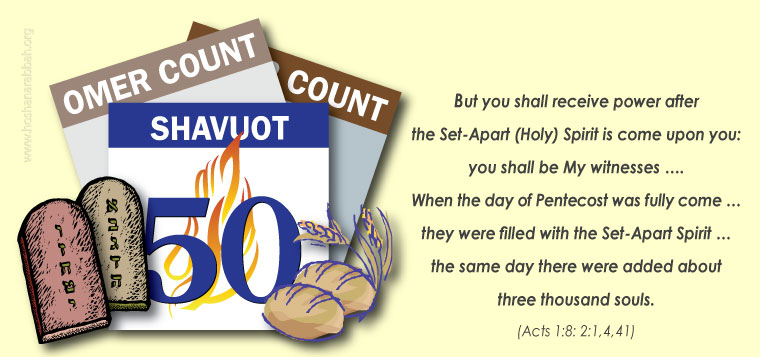
When is Shavuot, the Feast of Weeks or Pentecost?

The short answer to this question is next Sunday, May 31. The long answer to this question and why the biblical feast of Shavuot falls on this day and not some other day is in the article below.


Since Shavuot is the only biblical holiday that involves counting days and weeks (hence its name, the Feast of Weeks), there are different opinions about when to start the count leading up to Shavuot. The Torah tells us to count from the Sabbath associated with the Feast of Unleavened Bread.

And you shall count for yourselves from the day after the Sabbath, from the day that you brought the sheaf of the wave offering: seven Sabbaths shall be completed. Count fifty days to the day after the seventh Sabbath; then you shall offer a new grain offering to the LORD. (Lev 23:15–16, NKJV)

This sounds simple enough. Or is it?

The question and the subject of the debate is which Sabbath do you start counting from? The day after the weekly Sabbath occurring during the Feast of Unleavened Bread or the day after the high holy day Sabbath of the first day of the Feast of Unleavened Bread, which occurs on the fifteenth day of the first month of the biblical year?

In the first century in the time of Yeshua and the apostles, there were two main opinions among the leading Jews on when to start counting the weeks (called “the counting of the omer”) leading up to Shavuot. The religious sect of the Pharisees, whose spiritual descendants are the modern rabbinic Jews started the counting of the omer from the day after first high holy day of the Feast of Unleavened Bread, which is a high holy day Sabbath (John 19:31). On the other hand, the Sadducees, the other main Jewish sects of the first century (along with the Boethusians, which was likely a sub-sect of the Sadducees; see A History of the Jewish People in the Time of Jesus Christ, second division, vol 2, p. 37, by Emil Schurer; Commentary on the NT from the Talmud and Hebraica, vol. 4, p. 23 [commentary on Acts 2:1], by John Lightfoot) counted the omer from the day after the weekly Sabbath that falls within the week of the Feast of Unleavened Bread. Some modern Messianics follow the rabbinic method, while others follow the Sadducean method.

It is generally understood by historical scholars that the Jewish sect of the Pharisees interpreted the written Torah in light of Jewish oral tradition, while the Sadducees rejected oral tradition and adhered strictly to the written Torah (Schurer, pp. 37–38). According to Schurer,

In this rejection of the legal tradition of the Pharisees, the Sadducees represented the older standpoint. They stopped at the written law. For them, the whole subsequent development was without binding power” (ibid. p. 38). To the scribes and Pharisees, in contrast to the Sadducees, oral tradition took precedence over the Written Torah-law. It was intolerable to them that people should “interpret Scripture in opposition to tradition. The traditional interpretation and the traditional law are thus declared absolutely binding. And it is consequently but consistent when deviation from these is declared even more culpable than deviation from the Written Torah. It is more culpable to teach contrary to the precepts of the scribes, than contrary to the Torah itself [according to the B. Talmud, Sanhedrin ix.3]. (ibid. p. 12)

The first century Jewish historian Flavius Josephus (37 AD to 100 AD) confirms this. He writes,

[T]he Pharisees have delivered to the people a great many observances by succession from their fathers, which are not written in the law of Moses; and for that reason it is that the Sadducees reject them, and say that we are to esteem those observances to be obligatory which are in the written word, but are not to observe what are derived from the tradition of our forefathers. (Ant. XIII.10.6)

Commenting on Josephus’ statement, Louis Finkelstein, a noted the twentieth century rabbinic scholar writes,

Continue reading
 

The lost sheep of Israel will be regathered and truth will be restored to them!

Jeremiah 16:15, Children of Israel…from all the lands where [YHVH] had driven them…I will bring them again into their land. This verse corresponds to Leviticus 26:33 of this week’s Torah portion, which states as a result of Israel’s disobedience to YHVH’s Torah-Word: “And I will scatter you among the heathen, and will draw out a sword after you, and your land shall be desolate, and your cities waste.” When did this prophecy come to pass in ancient Israel? To whom did it apply? (On Israel being dispersed among the nations of the world, see Isa 11:12; 56:3, 6–8; Ezek 36:19; Zeph 3:10; John 7:35. On Israel becoming outcasts from its land, see Isa 11:12; 27:12–13; 56:8; Ps 147:2; cp. Deut 30:3–4.)

Jeremiah 16:16, Fishers. Not only this verse, but all of Jeremiah 16:16 is a prophecy about exiled Israel returning from the lands where YHVH had driven them (verse 15). Jeremiah says YHVH would use spiritual fishermen to fish his scattered people out of all the places—even to the ends of the earth (verse 19)—where he had driven them. Some of Yeshua’s disciples were fishermen by trade whom he recruited to become “fishers of men” (John 4:19). Who has that commission now? 

Another way to look at this issue is to compare Israel to lost sheep. How many times does Yeshua liken his mission to that of a shepherd gathering his lost sheep? (Please note Ps 119:176; Isa 53:6; Ezek 34:4, 16; Matt 15:24; cp. Isa 40:11; Matt 18:11; Luke 15:4; 1 Pet 2:25 [cp. 1 Pet 1:1].) When will these lost sheep be regathered? In the end days, YHVH will gather his sheep that have lost their way, been scattered, hurt and wounded by hireling shepherds and self-seeking religionists (Ezek 34:11, 16). YHVH will gather them from the nations where they have been scattered and return them to the land of Israel with David (or Messiah Son of David) as their king (see Ezek chapters 34 and 36–37).

Jeremiah 16:19, The Gentiles…ends of the earth. Who are these “Gentiles” that have been scattered to the ends of the earth? The word gentiles is the Hebrew wordgoyim (Strong’s G1471, Greek: ethnos, Strong’s G1484) This word is translated in the Tanakh (Old Testament) as nation 374 times, as heathen 143 times, as Gentiles 30 times, and people 11 times.

Whenever the word gentile is used in the KJV it is the word gowy or goy. According to Strong’s Concordance, the meaning of goy is “a foreign nation; hence a Gentile; also (fig.) a troop of animals, or a flight of locusts.” According to Gesenius Hebrew-Chaldee Lexicon,the word gowy means “a people, a confluence of men,” and “contextually in holy Scripture it is used to refer to the other nations besides Israel, the foes of Israel, and strangers to the true religion of Israel.”

There are times when goy refers specifically to Israel (e.g., the descendants of Joseph in general: Gen 48:19; of the southern kingdom of Judah when it forsook Elohim and its covenant with him and became like the surrounding heathen nations: Isa 1:4; of the southern kingdom: Isa 9:1; of Israel in general: Isa 26:2; 49:7; Ps 33:12; Gen 12:2; 35:11). There are numerous other instances in Scripture where the words goy or goyim are applied to the descendants of Abraham. Scripture’s use of the term is unbiased and lacks any of the pejorative implications that have been applied to the term subsequently (e.g., Gen 17:4, 5, 6, 16; 18:18; 25:23; 46:3; Exod 19:6; 33:13; Deut 4:6, 7, 8, 34; Ezek 37:22).

As already noted, the word goy simply means “people group.” The Greek word ethnos as found in the Testimony of Yeshua (New Testament) is equivalent in meaning to the Hebrew word goyim. So clearly, in Jeremiah 16:19 gentiles is a reference to lost and scattered Israel who has mixed herself with the heathen (Hos 7:8; 8:8), and who is now returning to YHVH.

Jeremiah 16:19, Our fathers have inherited lies. What are some of the lies (false or pagan religious traditions) that our spiritual (Christian) fathers have inherited and have passed on down to us that we must let go of in order to serve our Heavenly Father in a manner that is pleasing to him and consistent with his Word (including the Torah)? Compare this verse to Revelation 18:4, where YHVH admonishes his people to come out of the Babylonian religious system that would exist on earth in the end times. Keep in mind that many of these religious systems derive from ancient pagan sex and sun worship rituals as we note below under 17:2.

Jeremiah 16:21, They shall know that my name is YHVH. In Hebraic thought, a name is more than just a word. It also refers to one’s reputation, character and authority. But here, it states that Israel will know what Elohim’s name is. Have you found it ironic that our English Bibles, in this verse, translate YHVH as Lord? Lord is not his name! YHVH (pronounced Yehovah, Yehowah, or something similar to this) is his name. It is time the people of YHVH recognize this and start using it!