Acts 15:1, Custom of Moses. My best understanding with regard to the “custom” or “manner” of Moses as mentioned in Acts 15:1 this: The principle of circumcision both of the flesh and the heart is from the Father and speaks to the need of humans to be heart circumcised of which physical circumcision of males (who are the spiritual heads of their homes, thus representing what needs to occur to the whole family both male and female) is but a symbol of a higher, spiritual and more important reality, namely, that of spiritual circumcision. So the overall principle comes from the Father. How it was specifically implemented and applied in daily life, or the exact details of how the law was walked out, was sometimes specific to the era in which humans are living. This is a fundamental distinction between the basic, eternal and over-arching principles of the Elohim’s Torah-law compared to “the law of Moses.” The principles of the former are for all time and for all people, while the latter are the specifics of how those principles are applied in the daily lives of a particular people at a particular time. Some of these specific laws may or may not apply to us today. For example, how many of us now use an ox for work or transpiration? We don’t, but the principle of the ox in the ditch still apply, even though most of us have never even seen an ox much less own or use one. The eternal principles of the Torah, like the ox in the ditch scenario, never change, but exactly how these principles are applied may vary from one generation and culture to another. This concept is very different than what the Christian church teaches about the law of Moses, which they say was “fulfilled” by Yeshua, which they take to mean was “done away with” or abrogated, so that we no longer have to do it. This concept, of course, is fundamentally flawed and illogical and is patently absurd. If it were true, then it would be now permissible to murder, lie, have sex with animals, not have to tithe to your church, etc., etc.
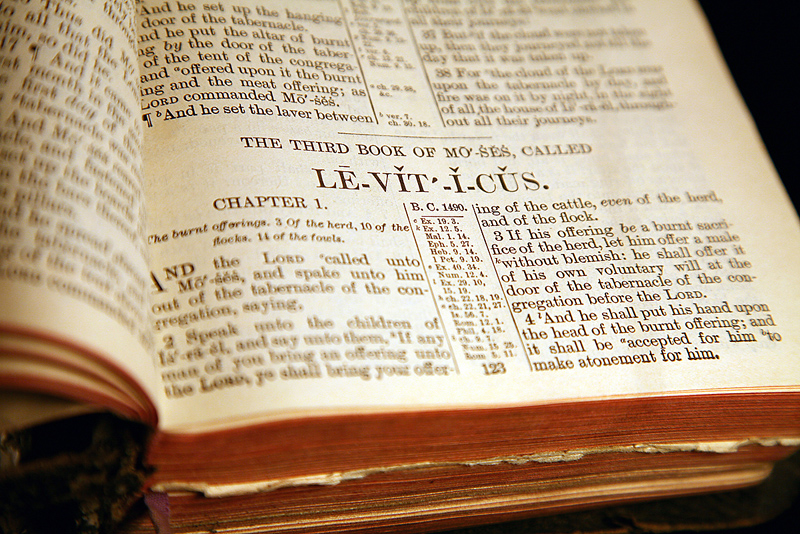
The law of Moses or the customs of Moses (which were also from Elohim) was the Torah put into a written or codified form like a national constitution that could then be referred to as a legal guide for governing a physical nation. That is the fundamental technical distinction, as I understand it, between the Torah and the law of Moses. The over-arching principles of the Torah are in no way nullified or abrogated by the law of Moses, since they really are one and the same, and Scripture uses the terms interchangeably, since one doesn’t contradict the other. However, the law of Moses is the application of those principles to the nation of Israel, which existed thousands of years ago in the Middle East and was basically an agrarian society with a tabernacle and priesthood, and was before the cross. Many of these conditions no longer exist for us today (as the Epistle to the Hebrews) points out, so how some of these eternal principles of the Torah are applied may not be the same for us today as they were in ancient times. For example, we can no longer stone people for willfully breaking the Sabbath, committing adultery or homosexuality, or being a witch, even though the Torah dictates the death penalty for these sins. That doesn’t mean that such people won’t die. The wages of sin is still death, and YHVH will ultimately pronounce a death penalty upon all unrepentant sinners (i.e. the lake of fire) at the white throne judgment. We humans just don’t carry out the death penalty upon offenders here and now as occurred under the law of Moses.
The “custom of Moses” with regard to circumcision is based on Exodus 12:48, where the law required that all males to be circumcised before being allowed to partake of Passover. In other words, be part of Israel, one had to become circumcised and observe the Passover and all Israel was required to do so (Exod 12:47). Foreigners were forbidden from keeping the Passover (Exod 12:43) until they were circumcised. From this, the Pharisees of the first century got the idea that circumcision is a prerequisite for salvation. In opposition to this false concept, Paul points out in Romans chapter four that Abraham was justified by faith, not by the rite of circumcision. After all, Abraham come into a relationship with YHVH 24 years before being circumcised. Therefore, the custom of circumcision as a prerequisite for inclusion within the nation of Israel was merely a physical requirement to be part of a physical nation. It is, however, not a requirement to be part of the spiritual nation of redeemed Israel or, as Paul calls it, the Israel of God (or Elohim, Gal 6:16), of which the saints are a part. Circumcision wasn’t a requirement for Abraham to be saved, and it isn’t a requirement for us to be saved either, again, as Paul points out in Romans chapter four. The custom of Moses requiring Israelite men to be circumcised was necessary in order to protect the sanctity and integrity of the physical nation of Israel from foreign and pagan influences and was not prior to or subsequent to the physical nation of Israel intended to be a prerequisite for eternal salvation as Paul, again, makes clear in Romans chapter four.
Acts 15:10, Yoke on the neck. Many Christian commentators teach that Peter is making a reference to the Torah when he speaks of a yoke being put around the neck of the people of Israel meaning that Torah-observance was an impossibility. Yet, Moses told the Israelites that Torah-obedience wasn’t impossible (Deut 30:11–14), and that it would be a source of life to them (v. 19), and would be a source of wisdom and understanding for them, thus eliciting the curiosity of the surrounding nations (Deut 4:6–8). Were Moses and Peter at odds with each other thus violating the unity of Elohim’s Word (John 10:35)? Or was Peter referring to something else other than the Torah-law of Moses? At issue in the Acts 15 Jerusalem council was whether circumcision was a prerequisite for salvation (Acts 15:1). True, the Law of Moses required all male children to be circumcised on the eighth day (Lev 12:2–3), and all males to be circumcised in order for one to partake of Passover (Exod 12:43–49). This later requirement may be construed to mean that circumcision is a prerequisite for salvation, and evidently some of the Pharisees of that day held to this belief. However, in the Testimony of Yeshua, neither Yeshua nor the apostolic writers make salvation dependent on the rite of physical circumcision. This position is correct, since Abraham come into a spiritual relationship with YHVH some 24 years before he was circumcised, as Paul states in Romans chapter four. The emphasis in the Testimony of Yeshua, rather, is placed on circumcision of the heart, which is the higher spiritual principle—even as it was in Moses’ day (Deut 10:16; 30:6)—to which physical circumcision pointed.
Continue reading