It is highly doubtful that you have before you a clearer and more succinct explanation of how the Old Testament Levitical priesthood and sacrificial systems prophetically pointed the way forward to Yeshua the Messiah and were fulfilled by him, or why the Old Covenant failed and why the new covenant was necessary for man’s ultimate redemption. Although this is a long article (about 12 pages), it is still a short and comprehensive look and this often confusing and difficult subject and includes a complete overview of the Epistle to the Hebrews, which from its beginning to its end is a step-by-step overview of the biblical message of redemption and salvation. Please read on…
The journey from the Old Testament Book of Leviticus to the New Testament’s Epistle to the Hebrews is an epic one spanning several thousand years. The spiritual trek of the Christian church started, not on the day of Pentecost in chapter two of the Book of Acts as is commonly taught, but with the children of Israel leaving Egypt, and then their building of the Tabernacle of Moses with its Levitical priesthood and sacrificial system. This is the saga of a people—the children of Abraham—in search of their God (Yehovah Elohim), their struggles to draw near to him by obeying him, and then their failure to do so with the ensuing cataclysmic and horrific consequences as a result thereof. The Old Testament, which is the story of that ensuring struggle, will, however, have a glorious ending where the King and his children will live happily ever after—and this is no mythical fairy tale! This is the way, the truth and the life, and life more abundantly, to boot, where each recipient is more than a conqueror having defeated death itself as they pass through that thin veil between life and death into something much better in the world beyond.
But there is a larger and deeper backstory to this ancient historical chronicle that has astounding ramifications for the present time, since the roots of the world’s greatest religion that has touched more lives than any other are anchored deeply in the soils of the land of Israel where our story begins. To understand this and its present day implications is to understand one’s own personal, spiritual journey in knowing oneself and, more importantly, in knowing one’s Creator.
Under the lens of our present microscope is the leg of this journey that starts in the Book of Leviticus with the children of Israel building a sanctuary so that Yehovah (YHVH) might dwell among them (Exod 25:8). This journey then ends with the utter destruction of the third iteration of that same sanctuary some 1,500 years later. This seemingly left YHVH’s chosen people high and dry spiritually and without a locus around which to orbit their spiritual quest for the Creator. What then? Enter the Epistle to the Hebrews, written either just before are slightly after the destruction of the Jerusalem temple in a.d. 70. In this book of the Bible, the author lays out line-by-line how the Creator’s had not been caught unawares vis-à-vis his people by this calamitous event. Rather, all along he had been orchestrating a grand and elaborate plan to redeem his people from the spiritual sin pit into which man initially fell in the Garden of Eden. From then until now, every descendent of Adam and Eve has fallen into that same pit, trapped and unable to extricate himself. What was the initial step in heaven’s multi-millennial plan to redeem man from the wages of his sin? We discover it in the Book of Leviticus.
The Old Testament Book of Leviticus with its sacrificial system as administered by the Levitical priests illustratively explains the divinely inspired progressive step-by-step plan to teach sinful man the gravity and high cost of sin, and then to show man the way back to his Creator. The first step in this supernatural process involved teaching man about the destructive, calamitous and eventual lethal consequences of sin. The next step involved transforming man’s heart away from being inclined toward sinful rebellion against YHVH’s commandments resulting in disobedience (Jer 17:9; Rom 8:6–7; 1 John 3:4), and becoming willingly inclined to obeying heaven’s laws of life, love and happiness. It was the failure to achieve heaven’s ultimate aim of transforming the human heart into compliance with the Creator’s commandments where this covenantal agreement (commonly referred to as the old or Mosaic covenant) with the chosen people—the children of Israel—missed the mark. The weakness of the old covenant was not with the terms of the covenant itself that required the people’s obedience to YHVH’s Torah-law resulting in divine favor and blessing, but with the people themselves who promised to obey YHVH, but then failed to do so. This is the message of the writer of the Book of Hebrews as he echoes the same complaint against YHVH’s hapless and rebellious people as had many of his biblical antecedents. It is this failure on the part of the YHVH’s people onto which the author assiduously shines the light of truth (Heb 8:7–13). This is why a new covenant between YHVH and his people was necessary. Why? Because the ancient Israelites had violated the terms of the first or former covenant thus nullifying the agreement between man and Elohim.
Eventually, the larger lesson of the sacrificial system that YHVH Elohim imposed on his children of Israel after their rebellion in the wilderness of Sinai was that man cannot achieve a spiritual transformation from sinner to saint sans outside help from above. Ultimately, this is where Yeshua the Messiah enters the picture. To be reconciled to the Creator—our Father in heaven—each of us needs a transformation of our heart (or a spiritual heart transplant) through the sin atoning and cleansing blood of Yeshua, the Lamb of Elohim, coupled with the subsequent help of the Holy Spirit to give each of person a new heart that willingly complies with YHVH’s will as expressed through his Written Torah. This is what the new covenant is all about.
But until YHVH actuated a new covenant with man through Yeshua the Messiah, man had a few lessons to learn to solidify in the collective conscience of his people the fact that the human heart is so defiled and bent toward sin that nothing can rectify the situation save the intervention of heaven’s mercy and grace itself. Because of man’s pride, arrogance and failure to recognize his own fallen and sinful state, the Levitical sacrificial system was a step-by-step process for YHVH’s people to become collectively aware of this reality. Like a loving father teaching his children how to walk, talk, read and to live life, YHVH began by teaching the children of Israel the ABCs of sin and redemption through the Levitical priesthood and sacrificial system. Shortly thereafter, it became clear to the more spiritually enlightened Israelites like Moses, David the psalmist and the Old Testament prophets that these systems were insufficient to accomplish in man what was necessary for him to come into a right relationship with his Creator. In reality and according to heaven’s ultimate plan, these systems were merely prophetic stepping stones pointing humans toward a permanent fix to the problem, and were part of a larger plan that the Almighty, the Holy One of Israel, was working out among his people including us as example and for our admonition and learning upon whom the ends of the earth are come (1 Cor 10:11; Rom 15:4).
Let’s now explore the transitional steps from Leviticus to Hebrews that paved the way for the formation of a new and better covenantal agreement between YHVH and his people that would achieve the desired results of reconciling man to his Creator and ensuring that he would have a forever family—glorified and immortalized children created in his own image.
Overview of the Sacrificial System?
All the animals slaughtered in the old covenant or Mosaic sacrificial system were similar, in modern terms, to the minimum amount due on a credit card bill that is so huge that one cannot possible pay the balance; therefore, one can only afford to pay the minimum amount due until somehow, miraculously, someone will step in to pay the full amount. Yeshua the Messiah came to man’s rescue and paid that monstrously huge sin debt for each of us at the cross. All of the sacrifices in the Tabernacle of Moses were merely tiny down payments on the vast sin bill that each sinner owed for his sins, and which would ultimately be paid by Yeshua’s death on the cross. The penalty for sin is death, and this debt can only be paid by the death of the sinner. However, once he is dead, then what? This is why Yeshua had to pay the price for man, so that humans might live forever and not die forever. How could Yeshua’s death pay for all of humanity? After all he was only one man. This is possible only because the Bible reveals in numerous places that Yeshua was the Creator of man (John 1:3, 10; Heb 1:2, 10; Col 1:16) thus making his death life more valuable than all that he ever created, even as the builder of the house is more valuable than the house he constructs (Heb 3:6).
The following points give us a quick overview of the Levitical sacrificial system.
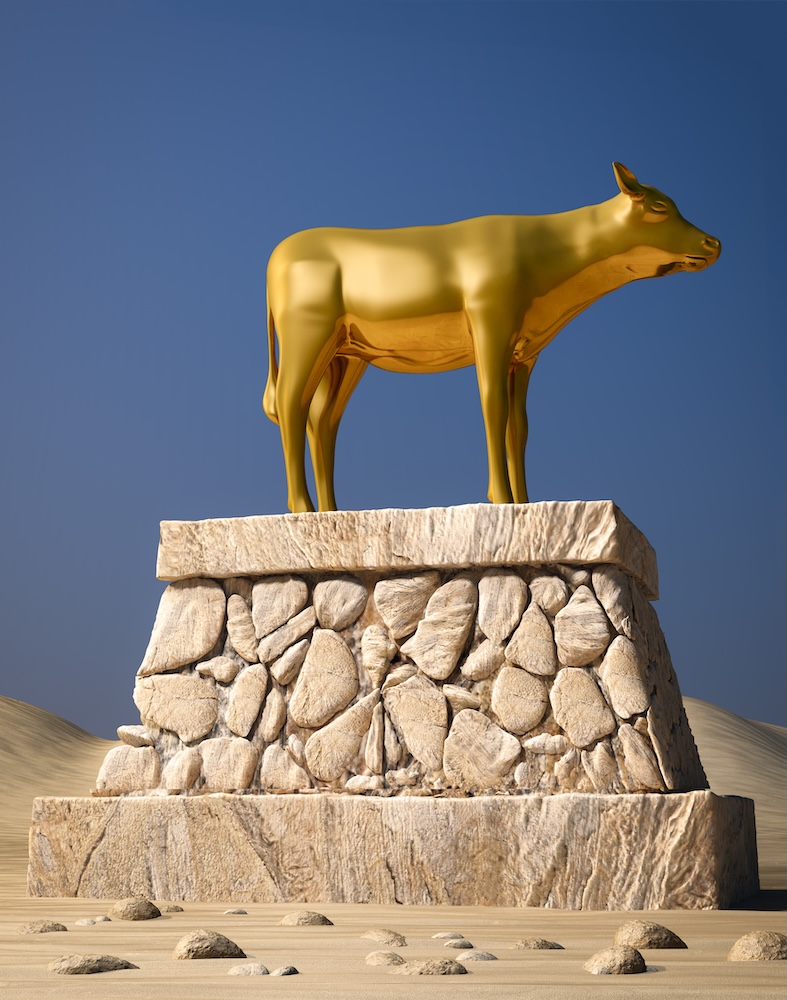
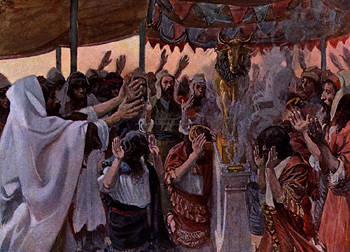
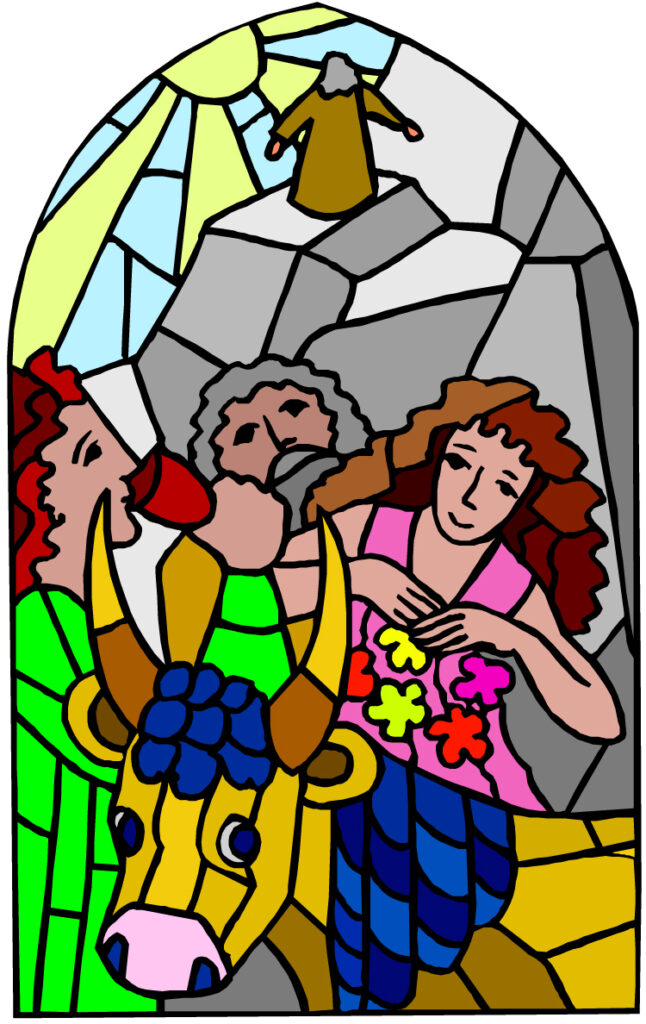
The laws pertaining to the sacrificial system were added to the rest of YHVH’s Torah because of sin, and were in force until the time of Yeshua the promised Seed (Gal 3:19; Heb 9:10). When and why did YHVH add the sacrifices making this system incumbent upon the Israelites? This occurred after and because of Israel’s sin of idolatry when they built the golden calf. It was then that YHVH established the Levitical priesthood and subsequently gave Israel the sacrificial system not only to impress upon them the seriousness and grave consequences of sin, but to point them toward the One who would come to offer ultimate redemption and salvation from sin.
The Levitical system foreshadowed and pointed to the Messiah’s ultimate sacrifice (Heb 9:11–12).
The tabernacle offerings were specifically designed to draw the offerer near to Elohim through the sacrifice of a prescribed animal (Ps 51:16–17; 50:12–15 cp. 1 Pet 2:21).
Elohim commanded offerings to assist the offerer to understand himself better; his attitude, and his personal relationship with Elohim (e.g., Gen 3:21; 4:3–5; 8:20; 22:1–2 cp. 1 Cor 11:28).
As a historical precursor to the Levitical sacrificial system, the patriarchs erected altars in order to honor Elohim through sacrifice after having had direct contact with him (Gen 12:6–8; 13:18; 26:24–25; 35:1; 35:2–4; Exod 17:13–16; cp. Exod 20:12). This presaged the purpose of the Levitical sacrifices.
Proper and regular sacrificial offerings kept the children of Israel in direct contact with the Elohim of the patriarchs (Exod 5:3; 10:25; cp. 1 Tim 2:5).
To make the offerer holy (set-apart) so that he would be allowed to approach and commune with the Set-Apart Elohim of Israel (Isa 43:15; 57:15; Lev 19:2 cp. 2 Cor 6:16–18).
The blood of the animal sacrifices served to cover the offerer’s sins, thereby allowing him to draw near to the holy Elohim of Israel. However, the offerer could only be forgiven for specific sins through full repentance and by returning to Elohim’s way of life as outlined in the Torah (Lev 1:4; 4:35; 23:27–28; Heb 10:3–4; cp. Rom 4:7–8).
Under certain circumstances, blood, as used in the Levitical system, could serve as a sin purification agent for both people and objects (Heb 9:18–23 cp. Luke 2:22–24).
The purpose of the animals sacrificially offered by the Levitical priesthood served as a prophetic shadow picture and antetype of the blood of Messiah, which covers or atones for the sins of the person who accepts Yeshua’s free gift of atonement for one’s sins (Heb 9:11–12, 24–28; 1 Pet 1:18–19; Eph 5:25–27; Lev 25:47–49; Rom 5:11; John 1:29 cp. Heb 13:10–13).
The Higher or Ultimate Sacrifice of Yeshua Messiah Prophesied
The Scriptures clearly teach that the sacrificial system that YHVH imposed upon Israel was temporary—it was never intended to be a permanent fixture in the spiritual economy of the people of Israel. Unlike the ten commandments that formed the cornerstone of the rest of YHVH’s Torah-law and from which the rest of the Torah emanates, the sacrificial system was temporary and was to last until “the time of reformation,” that is, until the time of Yeshua the Messiah (Heb 9:9–10).
The Holy Spirit this signifying, that the way into the holiest of all was not yet made manifest, while as the first tabernacle was yet standing: which was a figure for the time then present, in which were offered both gifts and sacrifices, that could not make him that did the service perfect, as pertaining to the conscience; which stood only in meats and drinks, and divers washings, and carnal ordinances, imposed on them until the time of reformation. But Messiah being come an high priest of good things to come, by a greater and more perfect tabernacle, not made with hands, that is to say, not of this building. (Heb 9:8–11)
Moreover, these verses reveal another truth that the mainstream Christian church system from the time of the early church fathers until now has overlooked. The church’s teaching that the Sabbath along with YHVH’s feasts were a subset of these rites and ceremonies is based on a false reading of Hebrew 9:10, for the former predates the latter—an inconvenient truth that church leaders prefer to overlook and, therefore, fail to teach. The Sabbath and feasts were never part of the Levitical priesthood or sacrificial systems! The context of these verses is clearly speaking of the Levitical priesthood and sacrificial systems, and YHVH’s entire Torah is not even remotely in view in the author’s mind. Again, this is because both the Sabbath and biblical feasts long predate YHVH’s commands to Israel concerning the Levitical and sacrificial systems (Gen 1:14; 2:1–3; Exod chapters 12 and 13; 16:23–30 and YHVH’s giving of his Torah-law on the Feast of Shavuot or Pentecost (Exod 19:1ff). Jeremiah confirms this fact:
For I spake not unto your fathers, nor commanded them in the day that I brought them out of the land of Egypt, concerning burnt offerings or sacrifices: but this thing commanded I them, saying, Obey my voice, and I will be your Elohim, and ye shall be my people: and walk ye in all the ways that I have commanded you, that it may be well unto you. But they hearkened not, nor inclined their ear, but walked in the counsels and in the imagination of their evil heart, and went backward, and not forward. Since the day that your fathers came forth out of the land of Egypt unto this day I have even sent unto you all my servants the prophets, daily rising up early and sending them: yet they hearkened not unto me, nor inclined their ear, but hardened their neck: they did worse than their fathers. (Jer 7:22–26)
Jeremiah informs us that YHVH had (and still does) little interest in animal sacrifices, and that his real interest was in the condition of the heart of his people toward him. Isaiah echoes this truth as well:
Thus saith YHVH, The heaven is my throne, and the earth is my footstool: where is the house that ye build unto me? and where is the place of my rest? For all those things hath mine hand made, and all those things have been, saith YHVH: but to this man will I look, even to him that is poor and of a contrite spirit, and trembleth at my word. He that killeth an ox is as if he slew a man; he that sacrificeth a lamb, as if he cut off a dog’s neck; he that offereth an oblation, as if he offered swine’s blood; he that burneth incense, as if he blessed an idol. Yea, they have chosen their own ways, and their soul delighteth in their abominations. I also will choose their delusions, and will bring their fears upon them; because when I called, none did answer; when I spake, they did not hear: but they did evil before mine eyes, and chose that in which I delighted not. (Isa 66:1–4)
Again, the eyes of YHVH are on those whose hearts are inclined toward him, and who possess a contrite heart and tremble at his word, rather than on outward hypocritical religiosity and heartless performance. Hollywood is full of many excellent actors who can play a scripted role, but such acting is no indication of who the person really is in his or her heart
Thus, we see that YHVH added the sacrificial and Levitical systems to the rest of his Torah law for a limited time until the arrival of the Messiah to which this added system pointed like a highway milage sign or map points a traveler to their final destination. After the advent of Yeshua, what need was there now of this system since the destination to which pointed had been reached? Paul understood this.
Wherefore then serveth the law? It was added because of transgressions, till the seed should come to whom the promise was made; and it was ordained by angels in the hand of a mediator. (Gal 3:19)
But long before Paul arrived on the scene, and longer still before the advent of the Messiah, many Old Testament writers realized the ineffectiveness of the Levitical and sacrificial systems to transform the human heart. They had come to the realization that these systems never were the ultimate intent of YHVH, for they were temporary and only pointed to the higher form of worship that was most pleasing to the Father.
Offer the sacrifices of righteousness, and put your trust in YHVH. (Ps 4:5)
And now shall mine head be lifted up above mine enemies round about me: therefore will I offer in his tabernacle sacrifices of joy; I will sing, yea, I will sing praises unto YHVH. (Ps 27:6)
I will not reprove thee for thy sacrifices or thy burnt offerings, to have been continually before me. I will take no bullock out of thy house, nor he goats out of thy folds. For every beast of the forest is mine, and the cattle upon a thousand hills. I know all the fowls of the mountains: and the wild beasts of the field are mine. If I were hungry, I would not tell thee: for the world is mine, and the fulness thereof. Will I eat the flesh of bulls, or drink the blood of goats? Offer unto Elohim thanksgiving; and pay thy vows unto the most High: And call upon me in the day of trouble: I will deliver thee, and thou shalt glorify me. (Ps 50:8–15)
The sacrifices of Elohim are a broken spirit: a broken and a contrite heart, O Elohim, thou wilt not despise. (Ps 51:17)
I will praise the name of Elohim with a song, and will magnify him with thanksgiving. This also shall please YHVH better than an ox or bullock that hath horns and hoofs. The humble shall see this, and be glad: and your heart shall live that seek Elohim. (Ps 69:30–32)
And let them sacrifice the sacrifices of thanksgiving, and declare his works with rejoicing. (Ps 107:22)
From the rising of the sun unto the going down of the same YHVH’s name is to be praised. (Ps 113:3)
I will offer to thee the sacrifice of thanksgiving, and will call upon the name of YHVH. (Ps 116:17)
Accept, I beseech thee, the freewill offerings of my mouth, O YHVH, and teach me thy judgments. (Ps 119:108)
Ps 141:2 Let my prayer be set forth before thee as incense; and the lifting up of my hands as the evening sacrifice.
Prov 15:8 The sacrifice of the wicked is an abomination to YHVH: but the prayer of the upright is his delight.
To do justice and judgment is more acceptable to YHVH than sacrifice. (Prov 21:3)
And they shall come from the cities of Judah, and from the places about Jerusalem, and from the land of Benjamin, and from the plain, and from the mountains, and from the south, bringing burnt offerings, and sacrifices, and meat offerings, and incense, and bringing sacrifices of praise, unto the house of YHVH. (Jer 17:26)
The voice of joy, and the voice of gladness, the voice of the bridegroom, and the voice of the bride, the voice of them that shall say, Praise YHVH of hosts: for YHVH is good; for his mercy endureth for ever: and of them that shall bring the sacrifice of praise into the house of YHVH. For I will cause to return the captivity of the land, as at the first, saith YHVH. (Jer 33:11)
For I desired mercy, and not sacrifice; and the knowledge of Elohim more than burnt offerings. (Hos 6:6)
Take with you words, and turn to YHVH: say unto him, Take away all iniquity, and receive us graciously: so will we render the calves of our lips. (Hos 14:2)
But I will sacrifice unto thee with the voice of thanksgiving; I will pay that that I have vowed. Salvation is of YHVH. (Jon 2:9)
For from the rising of the sun even unto the going down of the same my name shall be great among the Gentiles; and in every place incense shall be offered unto my name, and a pure offering: for my name shall be great among the heathen, saith YHVH of hosts. (Mal 1:11)
But go ye and learn what that meaneth, I will have mercy, and not sacrifice: for I am not come to call the righteous, but sinners to repentance. (Matt 9:13)
But if ye had known what this meaneth, I will have mercy, and not sacrifice, ye would not have condemned the guiltless. (Matt 12:7)
I beseech you therefore, brethren, by the mercies of Elohim, that ye present your bodies a living sacrifice, holy, acceptable unto Elohim, which is your reasonable service. (Rom 12:1)
And walk in love, as Messiah also hath loved us, and hath given himself for us an offering and a sacrifice to Elohim for a sweetsmelling savour. (Eph 5:2)
But I have all, and abound: I am full, having received of Epaphroditus the things which were sent from you, an odour of a sweet smell, a sacrifice acceptable, wellpleasing to Elohim. (Phil 4:18)
For then must he often have suffered since the foundation of the world: but now once in the end of the world hath he appeared to put away sin by the sacrifice of himself. (Heb 9:26)
By him therefore let us offer the sacrifice of praise to Elohim continually, that is, the fruit of our lips giving thanks to his name. (Heb 13:15)
Ye also, as lively stones, are built up a spiritual house, an holy priesthood, to offer up spiritual sacrifices, acceptable to Elohim by Yeshua the Messiah. (1 Pet 2:5)
And when he had taken the book, the four beasts and four and twenty elders fell down before the Lamb, having every one of them harps, and golden vials full of odours, which are the prayers of saints. (Rev 5:8)
And another angel came and stood at the altar, having a golden censer; and there was given unto him much incense, that he should offer it with the prayers of all saints upon the golden altar which was before the throne. (Rev 8:3)
The Epistle to the Hebrews and the New Covenant
The Israelite’s failure to live up to the terms of the covenant that YHVH made with them at the foot of Mount Sinai necessitated a solution to this human sin problem if YHVH was ever to have a nation that would be a spiritual light to the world. In their present condition, how could he use this rebellious and sin-bent people to bring the message of redemption to the rest of the world and in the process create an everlasting spiritual family? This necessitated a permanent solution to the age-old problem of sinful inclination of the human heart. YHVH began to reveal to his prophets the necessity of a new covenant that would address the stubborn, rebellious, disobedient faithless, sin-bent and hard heart of man. Perhaps no other scripture passage expresses this idea more than one found in the ancient writings of Jeremiah the prophet.
This is the truth of why the old (Mosaic) covenant failed to achieve its aims and why the new covenant had to replace it with better promises and results. It is not what you have been told in church, and it has nothing to do with either the validity or annulment of YHVH’s Torah! This is a sad story with a glorious ending that affects each of person in a positive way who put their trusting and obedient faith in Yeshua the Messiah. In the process, the lies that our church fathers have told us are exposed and refuted, and the YHVH’s pure truth is revealed from the pages of Scripture.
Leviticus 6:9, Shall be on the hearth. It took many hours (also see v. 12)—all night into the morning—to burn up an animal completely. Similarly, Yeshua hung on the cross for many hours—from sometime after the third hour (9 AM) until the ninth hour (3 PM). Not only this, but from the sixth hour (12 PM) to the ninth hour (3 PM) when Yeshua died, darkness come over the earth (Matt 27:45; Luke 23:44). Both the burnt offering and Yeshua’s time on the cross encompassed hours of daylight and darkness.
Leviticus 6:17, No leaven. Why does YHVH stipulate that the bread cooked on the altar of sacrifice for the minchah offering be without leaven? The main Jewish commentaries are unable to answer this question. It is not until we understand the spiritual implications of leavening as revealed in the Testimony of Yeshua that this prohibition makes sense. Leavening is a Hebraism for false doctrines, hypocrisy and sin (Matt 16:1–5, 12; Luke 12:1; 1 Cor 5:1–5). Unleavened bread, on the other hand, is a metaphor for sincerity and truth (1 Cor 5:5, the last words of the verse). This is why unleavened bread is consumed at communion on Passover, for it is a symbol of Yeshua’s sinless life that he offered up on the cross for sinners (Matt 26:26), and it symbolizes what should be the heart of the saint.
Now is time for the righteous saints of the Holy One of Israel to rise up in a spirit of meekness and tough love and shine the light of truth on the obvious. The fact that the communion bread in many Christian churches is often leavened speaks to an sad paradox. While claiming to set-free from sin, too many Christians are in fact the slaves to sin because of the church’s many false doctrines and unbibical teachings. This is because many Christian leaders and laity are either ignorant, ambivalent or outright antagonistic about YHVH’s Torah law which defines sin (1 John 3:4). Next, since leaven is a biblical metaphor for sin, false doctrine and hypocrisy, it is not a small coincidence that Christians often include leavened bread in their communion ritual. Why? This is a subtle indictment against them that their “Jesus,” to one degree or another, is a quasi-Torahless Jesus, who, in their minds, that he not only violated the Sabbath, the biblical dietary laws and many other Torah commandments, but “fulfilled” or “did away with” many of these laws, so that his disciples would not have to “come under,” that is, to obey YHVH’s Torah law. In other words, their Jesus either (a) violated the Torah, or (b) promoted the violation of it by his disciples. Either way, their Jesus is one who approves of Torahlessness or sin; therefore, it is fitting that their communion bread often contains leavening—a biblical metaphor for sin. Make no mistake! This is an indictment against their false and somewhat blasphemous sin-approving theology. The, leavened bread as part of the Christian communion ritual can never represent the sinless, “leaven”-free life of Yeshua. The Christian “Jesus,” yes; the biblical Yeshua? Never!
Backslid Israel (Samaria) Offered Leavened Bread
Amos the prophet rebuked the apostate Northern Kingdom for offering leavened bread to YHVH as part of their sacrificial offering—a practice that the Torah forbids. As a result this and other ungodly acts, YHVH’s judgment came upon Israel. Prophetically, the Northern Kingdom or house of Israel (as opposed to the Southern Kingdom or house of Judah) is a picture of the mainstream Christian church, which often offers leavened bread as part of their communion ritual—a sinful and even blasphemous practice, since (a) it disregards Torah’s prohibition of this and (b) it implies that Yeshua was a sinner.
Hear this word, ye kine of Bashan, that are in the mountain of Samaria, which oppress the poor, which crush the needy, which say to their masters, bring, and let us drink. Adonai YHVH hath sworn by his holiness, that, lo, the days shall come upon you, that he will take you away with hooks, and your posterity with fishhooks. And ye shall go out at the breaches, every cow at that which is before her; and ye shall cast them into the palace, saith YHVH. Come to Bethel, and transgress; at Gilgal multiply transgression; and bring your sacrifices every morning, and your tithes after three years: And offer a sacrifice of thanksgiving with leaven, and proclaim and publish the free offerings: for this liketh you, O ye children of Israel, saith Adonai YHVH. (Amos 4:1–5)
Ultimately YHVH will reject his people who refuse to obey his Torah-instructions (Matt 7:21–23). Sadly, Christians leaders have largely failed to instruct their people in the importance of Torah-obedience; thus, most Christians are ignorant with regard to the Torah’s proscriptions and prescriptions.
My people are destroyed for lack of knowledge. Because you have rejected knowledge, I also will reject you from being priest for Me; Because you have forgotten the Torah-law of your Elohim, I also will forget your children. (Hos 4:6)
Those who reject his Torah commandments will not have a right to the tree of life (Rev 22:14). In the mean time, because YHVH is merciful and gracious, he winks at our Torahlessness. But judgment is coming for those who refuse to come under the yoke of YHVH’s Torah-based covenants (Ezek 20:33–38; Matt 7:21–23).
Leviticus 6:28, Earthen vessel…shall be broken. To this day, there are piles of pottery shards of these earthen vessels in Shiloh in Israel near where the tabernacle once stood. I have several of these shards in my biblical antiquities collection.
Leviticus 7
Leviticus 7:18, 20, 21, 24 (also Lev 6:16, 18, 26, 29; ) Every male…may eat it or every person who eats of it.
The Torah Origins of the Communion Ritual and the Priesthood of All Believers
Why were the priests and the people allowed to eat some of the offerings? What is this all about? Let’s answer this question with a question. Why do believers in Yeshua eat the communion elements, and what do they represent? Is there a connection between the Levitical priests eating of the sacrifice and the saints eating the communion elements? Now let’s explore this idea.
In Leviticus 6:16, 18, 26, 29, only the male priests were allowed to eat of the sin offering; while in Leviticus 7:18, 20, 21, 24 any person may eat of the peace offering. Likewise, YHVH commanded the male priests to eat the baked unleavened bread of the minchah offering (Lev 6:16, 18). Interestingly, some 1,500 years later Yeshua himself not only continued this Levitical practice, but expanded and elevated it to a higher level when he partook of the bread and wine or communion at his last supper Passover seder.
When Yeshua initiated the communion ritual among his disciples, what in essence was he saying? Simply this. His disciples were all now his holy or set-apart priests. This is the origination of the concept of the priesthood of all believers, or the royal priesthood as Peter terms it (1 Pet 2:9), or a kingdom of priests John calls it who will rule with King Yeshua in his millennial kingdom (Rev 1:6; 5:10; 20:6).
It was YHVH’s desire that the children of Israel would become such a priesthood even before he called the Levites to be his set-apart priests (Exod 19:6). However, they failed in this mission when they chose to worship the golden calf instead of YHVH (Exod 32). At that time, YHVH chose the faithful Levites to be his priests instead of the firstborn male leaders from all the tribes of Israel (Exod 32:26, 29; Num 3:11–13, 44).
Moreover, Isaiah prophesied about the priesthood of all believers—a priesthood that would extend beyond the confines of the Aaronic priesthood (Isa 66:21 cp. Dan 7:18). This higher level priesthood would extend beyond the patriarchal male leaders, who were the original priests in Israel (Exod 19:22, 24), to include all the Israelites, both male and female (Exod 19:6), as well as Gentiles who have been grafted into Israel through Yeshua the Messiah (Gal 3:28–29; Eph 2:11–19; Rom 11:11–32), which Paul refers to as the Israel of Elohim (Gal 6:16).
Being a kingdom of priests who will teach the inhabitants of planet earth the ways of Elohim is the role and destiny of all the modern day saints of Elohim who have been washed of their sins (i.e., Torahlessness, 1 John 3:4) in the blood of Yeshua (Rev 1:6), for they will reign with Yeshua on this earth (Rev 5:10) for a thousand years as Elohim’s resurrected and glorified adopted sons and daughters (Rev 20:6; John 1:12 cp. Rom 8:14–15, 23; 9:4; 2 Cor 6:18; Gal 4:5–6; Eph 1:5; 1 John 3:1–2; Rev 21:7).
So saints of the YHVH Elohim, encourage yourself with these immutable promises from the Word of Elohim! Are you presently preparing yourselves now for auspicious and lofty role?
Leviticus 7:13, Leavened bread. The Torah prohibited the offering of leavened bread on the altar (Lev 2:11). There are only two instances where leavening in bread was permitted in the tabernacle service. In this verse, leavened bread was offered in conjunction with the peace offering (Lev 2:13), where it was eaten as part of the sacrificial meal. This was not a sin offering, but the peace offering. Therefore the bread of this offering didn’t represent the body of Yeshua. It was merely part of the fellowship meal representing a peaceful and loving relationship between the offerer and the Creator, and was similar to a family picnic, dinner or barbecue. But it wasn’t placed on the altar, nor was it a part of the sacrifice, therefore, it wasn’t a prophetic picture of the sinless Yeshua dying on the cross.
The second instance of leavened bread being offered in a tabernacle service occurred when the Torah instructs the priests to wave two loaves of leavened bread on Shavuot or Pentecost before YHVH (Lev 23:17). These two loaves are prophetic and symbolic metaphors for the two houses of Israel (the northern kingdom and southern kingdom)—a spiritual picture of Jews and Christians. In this ceremony, the gracious and merciful Creator was demonstrating his acceptance of his people despite their sin.
Leviticus 7:23, Not eat any fat. All the organ fat of the ox, sheep and goats was used as part of the sacrificial service (Lev 7:30–31).The organ fat was given to YHVH as part of the burnt offering (Lev 1:3), the peace offering (Lev 3:3–4), the sin offering (Lev 4:8–10, 19). Fat is the Hebrew word cheleb/CKJ meaning “fat of humans or animals” or metaphorically, “the choicest, best part, or abundance of the land.” Therefore, the fat as one of the choicest parts of the animal, was reserved for sacrifice to YHVH on the altar. By not eating fat, the Israelites in their minds preserved a reverence for YHVH’s altar upon which the fat or the best part was offered to YHVH. To eat the fat was to show irreverence for that best part that belonged to Elohim, which is why the one who violated this commandments was to be cut off from the nation of Israel. As living sacrifices who have been redeemed or bought with the blood of Yeshua, are we giving YHVH the best part of our lives? After all, he so loved us that he gave us Yeshua, which was the best he had to offer.
Leviticus 7:26,Not eat any blood.
The Supreme Significance of Blood
YHVH revealed in his Torah-instructions that the life of flesh is in the blood (Lev 17:11). Therefore, the blood symbolizes the whole life of the living being. This is why the blood being poured upon the altar made atonement for the souls of men (Lev 17:11–12), since it represented and pointed to the shedding of Yeshua’s blood, when he sacrificed his life on the cross in atoning for men’s sins. Respecting the blood is necessary not only because it symbolizes the sanctity of the life of man who was made in the Creator’s image (Gen 1:26 cp. 9:6), but, more importantly, because of the blood of Elohim’s Son that was shed for man’s redemption (Lev 17:11). For one to eat the blood showed disdain for what the blood typifies. In times past, this was so important to YHVH that a violation of this prohibition resulted in one’s banishment from the nation of Israel.
The blood was to be reserved for the sacrificial service, where it was used symbolically to represent Yeshua’s shedding his blood on the cross. Prior to this, the blood of a lamb was put on the door posts to protect men from YHVH’s judgment against sin (Exod 12:7, 13). A little later, Moses sprinkled the blood of oxen on the people symbolizing their coming into covenantal relationship with YHVH (Exod 24:5–8). Additionally, the blood of sacrificed animals was sprinkled throughout the tabernacle, on Aaron and his sons, and all around the altar to sanctify it. All these acts and uses of the blood were illustrative of the unrestricted cleansing power of the blood of Yeshua (Rev 1:5; 7:14; 12:11; 1 Pet 1:2, 19; Heb 9:12; 10:19–22; 12:24; 1 John 1:7; Matt 26:28), which is why YHVH expected his people to treat the blood with a reverence. Those who didn’t evidenced a heart of indifference for the set-apart or kadosh things of Elohim—an intolerable offence in the Creator’s eyes.
On the dark and satanic side, the blood of humans and animals is profaned through demonic rituals involving drinking it and even cannibalism. This is an abominable perversion of holy communion and was an aspect of ancient heathen religions (Ps 16:4; Ezek 39:17, 19 cp. Num 13:32), and is a practice in which the end time Antichrist heathens of the Babylonian whore system will engage (Rev 17:6; 18:13, 24).
Leviticus 8
Leviticus 8:2,Anointing oil … a bull…two rams…unleavened bread. Every aspect of the consecration ceremony of the priests involved the use of one of these elements each of which, in some way, pointed symbolically and prophetically to Yeshua the Messiah and his atoning death and resurrected life. This teaches that we need the work that he accomplished on our behalf both in this death and his resurrected life at every step in our lives “to make atonement for [us]” (v. 34).
Leviticus 8:1–36,The consecration of the priests. See notes at Exod 28:1–29:46.
What Is Holy and What Is Not…Who Determines It?
The Hebrew word kadash signifies “the state of something that belongs to the realm of the sacred, and which is set-apart for divine use and has been separated from the sphere of the secular, common or profane.” The Bible often uses the term holy (meaning “set-apart”) to signify this state of being. The word of Elohim designate many things as being holy orset-apart:
The ground upon which YHVH is standing (Exod 3:5; Josh 5:15)
The people of Israel (Exod 19:6; Deut 14:21; 26:19)
The Sabbath (Exod 16:23; 20:8)
The Tabernacle of Moses (Exod 26:33)
The garments worn by the high priest (Exod 28:2)
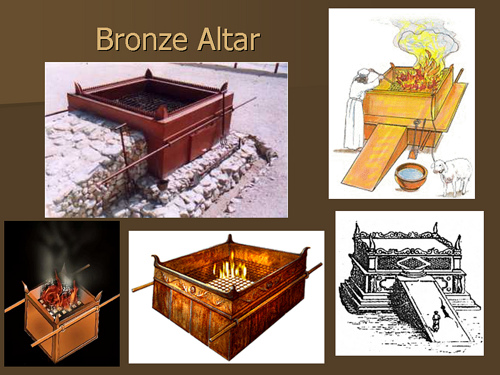
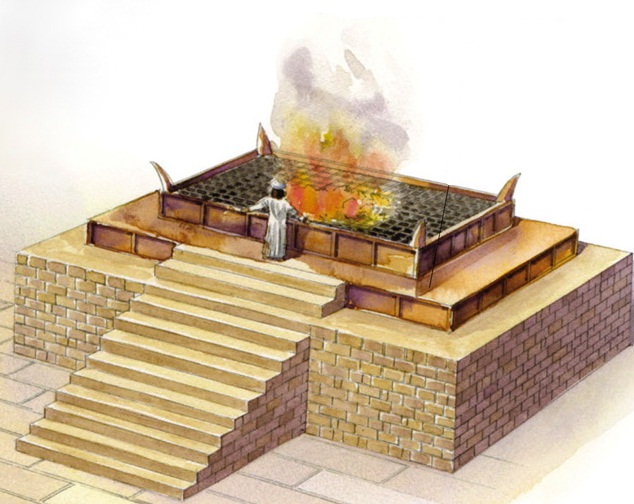
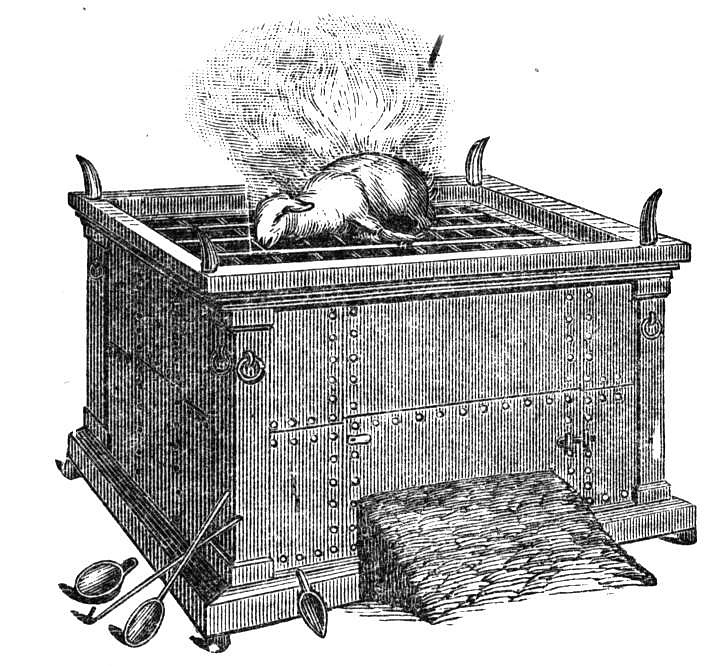
The altar of sacrifice (Exod 40:10)
The offerings made on the altar (Lev 6:18)
YHVH’s feast days (Lev 23:2)
The camp of Israel (Deut 23:14)
Heaven as the abode of Elohim (Deut 26:15)
YHVH Elohim (Job 6:10; Pss 22:3; 78:4; 99:5)
Zion and Jerusalem (Ps 2:6; Matt 27:53; Rev 22:19)
The Spirit of Elohim (Matt 1:20)
The angels (Matt 25:31)
The servants of Elohim (Mark 6:20)
The name of YHVH (Luke 1:49)
Yeshua (Acts 2:27; 3:14)
YHVH’s prophets (Acts 3:21)
The saints (1 Pet 2:9; Rev 22:11)
The Torah (2 Pet 3:21)
The people, times and items listed on this listed are holy because Elohim has designated them as such. Only Elohim has the power and authority to determine what is holy and what is not. Just because men and a religious institution designates or sanctify something as being holy or set apart to Elohim doesn’t mean that it is. The proclamations of men stating that something is holy may or may not agree with Elohim and his Word as to what is holy. If it doesn’t, then it is not holy regardless of the labels that men put on it. Examples of this would be manmade holidays and times of worship, people, places and items. Men’s attempt to elevate something that is otherwise of the world, the flesh or the devil to a state of supposed holiness is nothing more than a ruse to fool people into thinking that something is what it is not. Usually behind these efforts on the part of men to attempt to delude the unwary and unsuspecting masses is the quest for money, power and fame. As Paul notes in 2 Corinthians 11:13–15, there are many religious deceivers who appropriate to themselves religious titles, but who, in reality, are tools of Satan, the arch-deceiver who transforms himself into an angel of light. The devil and his humans agents are masters at counterfeiting Elohim’s truth and taking that which is holy and profaning or polluting it, again usually for money, power and fame.
Here is a short list of things that the Bible does not designate as holy, but some people do.
The holy cross
Holy water
Mary, the holy mother of Yeshua
Sunday
Christian holidays
The holy trinity
The holy sepulchre of Christ
The holy father (i.e., the Roman Catholic pope)
Holy relics
The Vatican (i.e., the Holy See)
Holy Week
Holy mass
Holy cities (e.g., Rome, Mecca, Medina)
The holy grail
Holy moly
Holy guacamole
Holy cow
And the list goes on of the things that humans have designated as holy but are not holy according to Elohim.
YHVH’s people must learn to make a difference between that which he designates as being kadash (holy) andthat which is profane (Lev 10:10; Ezek 44:23). In order to do this, one must know what YHVH defines as set-apart in his Written Word and then align their thinking and lifestyle with that. Again, what the Bible calls holy and what religious call holy may or may not be in agreement.
The act of consecrating someone (or something, e.g. Exod 30:26), as occurs in Leviticus 8:12, often involves the ritual of pouring olive oil on them to signify their being set-apart for a special work or service. This is called anointing (see Exod 28:41; 29:7; 1 Sam 16:12; 1 Kgs 1:34; Isa 61:1; 2 Cor 1:21).
Yeshua’s title is Messiah (Heb. Mashiach) literally meaning, “one who is anointed, smeared or consecrated with (olive) oil.” The English word Christ derives from the Greek word Christos, which is the Greek equivalent of the Hebrew word mashiach. In biblical thought, the Messiah would be One coming from heaven who would possess a super-anointing of the Spirit of Elohim (Isa 11:1–10; 42:1–21; 61:1–3; John 3:34) to accomplish the purposes of Elohim on earth.
Have you placed your trusting faith in Yeshua the Messiah, the Anointed One from heaven? He is the only one who can take away the shame, guilt and penalty of your sin, and the only one who defeated death and the grave and can lead you past the veil of death and into immortality.
Leviticus 8:13, Hats. Hat is the Hebrew word migba’ah meaning “turban or headgear” and from gibah meaning “hill.” From these meanings, we can surmise that these hats were rounded affairs that extended upward above the head like a turban. The TWOT explains that this turban was of a convex shape that was worn by the ordinary priest and was different from that worn by the high priest.
Leviticus 8:23, Right ear. (also Exod 29:29) According to the Jewish sages, the putting of the blood on the right ear, thumb and toe of the priest signified the priest’s covenantal agreement to conform himself to the high spiritual calling to which YHVH had appointed him. He agreed to hear and understand, achieve or act and to walk in the ways of Elohim as a spiritual leader of YHVH’s people. The Jewish sages also stress that blood of the sacrificed animal placed on the priest’s ear, thumb and toe symbolizes the death and giving up of that which is profane in the priest’s life and his spiritual rebirth or revival to the set-apart (holy) work and service of YHVH. This ceremony pictures self-surrender and giving oneself up at the altar of YHVH’s service. This is the greater issue behind the concept of sanctification. Sanctification is more than a label; rather, it is a lifestyle characterized by self-sacrifice, service and obedience to one’s spiritual master. This points forward to the purpose of the spiritually regenerated redeemed believer, who becomes a new creation in Messiah (2 Cor 5:17; Gal 2:20), and who is no longer his own, since he has been bought and paid for by Yeshua’s blood (1 Cor 6:20; 1 Pet 1:18–19). Furthermore, the blood on the ear, thumb and toe speaks to the fact that if and when we sin through hearing or doing something, or going somewhere we shouldn’t, the blood of Yeshua can cleanse us of sin, if we repent (1 John 1:9 cp. Isa 6:5–7).
Leviticus 8:30, Blood…upon his garments. Moses sprinkled blood upon the garments of Aaron. This prophetically points to Yeshua, our Great High Priest, whose garments at his second coming will be dipped in blood (Rev 19:13).
Leviticus 8:33; 9:1, Seven days…eighth day. Aaron and his sons were to camp at the door of the tabernacle for seven days and night next to the altar of sacrifice as they were going through the consecration process before going any further into it. Only after that would YHVH appear to them (v. 4). This teaches us an important lesson. One cannot simply rush into the presence of the Creator of the Universe (see Eccl 5:1–5). A consecration process must first occur. After seven days, when one has “become perfect,” then one can come closer to Elohim on the eighth day (eight is the biblical number signifying new beginning). During the seven days that Aaron and his sons were waiting to approach Elohim, they were no doubt thinking about the seriousness of their divine calling and reflecting on the fear of Elohim. This is an important for each of us to consider as we are learning to enter into a holy relationship with the Holy One of Israel.
Although Jewish and Christian scholars disagree about whether the sacrifices were to cease after the coming of the Messiah, as Edersheim points out, all agree that the object of a sacrifice was substitution for the offender (The Temple—Its Ministry and Service, p. 90). He also notes that the Jewish fathers along with the Scriptures that all of these substitutionary sacrifices pointed to none other than the Messiah. This understanding is especially expressed in the proto-rabbinic biblical Aramaic commentaries or Targumim (e.g., Targum Jonathan and the Jerusalem Targum; ibid., p. 92). Later rabbinic sages, in light of the rise of Christianity, were loath to accept this interpretation and, to this day, pretend it was never the belief of their ancient predecessors.
As the Tanakh progresses, the concept of the substitutionary sacrifice as it relates to the sinner and to the Messiah expands and unfolds. The unity of the Tanakh in this regard and its progression of revelation on this subject must be taken into consideration when studying the sacrifices listed in Leviticus and the rest of the Torah if we are to understand completely the biblical concept of substitutionary sacrifice as well as the Messianic prophecies. The concept of sacrifice in the Tanakh point us prophetically in progressive stages to the sin-atoning death of the Messiah on behalf of sinners. Such passages in the Tanakh as Psalms chapters 2, 22, 35, 69, 72, 89, 110, 118 along with Isaiah 52:13–53:12 (many other scriptural passages could be cited here as well) point undeniably to the Person and work of Yeshua the Messiah including his suffering and glorification. The apostolic writers understood these prophecies and how Yeshua fulfilled them perfectly (e.g., Isa 52:13–53:12 cp. Heb 9:11–15; 10:4–7, 1; etc.), and this understanding forms the basis for the New Testament, which the authors thereof refer to as The Testimony of Yeshua (Rev 1:9; 6:2; etc.).
All the animals slaughtered in the sacrificial system were similar, in modern terms, to the minimum amount due on a credit card statement of a bill so huge one cannot possible pay the balance; therefore, one is able only to afford to pay the minimum amount due until somehow, miraculously, someone will step in to pay the full amount. Yeshua paid that monstrously huge sin debt for each of us at the cross. All of the sacrifices in the Tabernacle of Moses were merely tiny down payments on the vast sin bill that each sinner owed for his sins and which would ultimately be paid by Yeshua’s death on the cross. The penalty for sin is death, and this debt can only be paid by the death of the sinner. Once he is dead, then what? No more life. This is why Yeshua had to pay the price for man, so that we might live forever and not die forever. How could Yeshya’s death pay for all of humanity? After all he was only one man. This is possible only because the Bible reveals in numerous places that Yeshua was the Creator of man (John 1:3, 10; Heb 1:2, 10; Col 1:16) thus making his death life more valuable than all that he ever created, even as the builder of the house is more valuable than the house he builds (Heb 3:6).
Six Types of Offerings (Heb. korban) Offered on the Altar (Lev 1-7)
Burnt or Elevation (Heb. Olah) Offering(Lev 1:3–17)
The olah or ascending offering signified the offerer giving himself up totally, wholly ascending or complete surrender to Elohim. The priests offered up this sacrifice twice daily—the morning and evening (Exod 29:38–42; Num 28:1–8). This offering was always a male animal whose blood was to be sprinkled around the altar. The offerer was to lay his hands on the head of the animal before it was slaughtered symbolizing substitutionary atonement for sins. The offering would be accepted as a sweet aroma by Elohim.
The daily burnt offering was made in conjunction with a meal or grain offering and a wine libation (Exod 29:38–42; Num 28:1–8). Burnt offerings (along with the grain offering and wine offering or libation) were also made on the weekly Sabbath, at the new moon, on the all of the biblical feasts. These burnt offerings (including the one offered on Passover day) were in addition to the twice daily burnt offerings. This was a perfect prophetic picture of Yeshua’s death on the cross and of the communion cup, which memorializes our Savior’s death.
Meal, Grain or Meat, (Heb. Minchah) Offering(Lev 2:1–16; 6:14-23)
This offering was brought in conjunction with the burnt and peace offerings or by itself. The name minchah implies a gift, present or a tribute to a superior and proclaimed the offerer’s acknowledgement that his life is in Elohim’s hands. This offering was made of finely ground flour mixed with oil, salt and frankincense (and water) and could contain no leavening or honey. When part of the burnt offering, it was combined with the drink offering or wine libation, which was poured out on the altar (Exod 29:38; Num 28:5–7).
It was brought by people too poor to afford anything else as a trespass offering (Lev 5:11).
Fine flour represents Yeshua and oil symbolizes both the Set-Apart Spirit of Elohim and the Torah (i.e., Spirit and Truth). This offering could be baked or fried. If fried it was done so in oil and broken into three pieces with oil poured over it. This offering speaks of Yeshua’s death, burial and resurrection with which the believer must identify when he eats the elements of communion.
Sin (Chatat) Offering (Lev 4:1–35; 6:24–30)
This offering was made for general sin (violation of any of YHVH’s commandments), and not specific or special offences (as was the case with the trespass offering). The sin offering symbolized general redemption or atonement for the individual offender (including rulers, priests or common people) or for the whole congregation of Israel, and like the trespass offering, was for only for sins committed in ignorance, unintentionally or because of weakness as opposed to wilful sin or presumptuous sin In all cases, the offender would lay his hands on the head of the animal victim before it was slaughtered as a symbolic act of transferring the person’s sin guilt to the animal.
This offering involved a bull or a lamb offered on the altar and was eaten by the priests. Sin speaks of man’s sinful nature leading to sinful (unintentional) deeds for which man (including believers) needs atoning on an ongoing basis (1 John 1:9).
Trespass or Guilt (Asham) Offering(Lev 5:14–19; 6:5–7; 7:1–7)
This offering was made for specific transgressions committed in ignorance, weakness or unintentionally as a result of one voluntarily confessing his guilt. If one were too poor to bring a lamb, he could bring two turtle doves or pigeons, or on minchah or meal offering.
Peace or Fellowship (Shelam) Offering(Lev 3:1–7; 7:1–36)
This was a joyous sacrifice intended to celebrate one’s happy fellowship with Elohim through covenantal relationship. It’s as if YHVH is the guest of honor at the meal. It was offered voluntarily out of thanksgiving or in honor of a vow made to Elohim (Lev 7:12, 16). The peace offering may be what the psalmist had in view when he speaks of a sacrifice given in grateful fellowship with Elohim (Pss 54:6; 116:12).
This was a voluntary offering expressing the offerer’s desire to express thanks to Elohim and to seek friendship or communion with him. The priests and the offerer consumed the flesh of this offering in a meal that also included unleavened bread with oil and fine flour. This offering was a sign of a healthy and loving relationship between the offerer, the priests and Elohim.
Drink Offering(Gen 35:14; Exod 29:40–41; Num 28:7–10, 14–15, 24, 31)
This offering was poured out upon an existing offering such as the twice daily burnt offering. This offering can signify consecrating to Elohim or pouring one’s life out for his service (Phil 2:17).
Leviticus 1
Leviticus 1:1, Moses ends the word vayikra with a small aleph out of humility before YHVH (Tikkun, p. 225).
Herd…flock.The Hebrew means a herd of cattle (defined in v. 3, 5) or a flock of sheep or goats (defined in v. 10).
Leviticus 1:3,Of his own free will. Acknowledgement of sin, repentance and acceptance of Yeshua the Messiah’s atoning death on the cross, which the burnt offering symbolically represented, is an act of a person’s free will. No one, including YHVH, compels a person to choose the path of redemption, salvation and life that YHVH has offered to humans. Each person has to make that spiritual transaction himself of his own volition, even though YHVH loves the whole world (John 3:16) and desires all to be saved (2 Pet 3:9).
The door of the tabernacle. This is a symbolic and prophetic metaphor for Yeshua the Messiah, who is the door to salvation (John 10:7–10).
Leviticus 1:4,Put his hand on. Acknowledgment and confession of sins is an individual matter.
To make atonement for him. Atonement and salvation is an individual matter.
Leviticus 1:5,He shall kill. In ancient Israel, a sinner was kill the animal to be sacrificed as an atonement for his sin. This act reinforced upon the individual’s heart and mind the gravity of his sin and the consequences there of upon an innocent animal, which symbolically pointed to the death of Yeshua, the Lamb of Elohim, upon the cross, who had to die for each person’s sins. If killing an innocent animal brings grief to a person’s heart, then how much more the death of Yeshua, the Son of Elohim?
Sprinkle. Heb. word zaraq means “to scatter, sprinkle, toss, throw, scatter abundantly, strew.” The sprinkling of the blood of the sacrificed animal on and around the altar of sacrifice (and elsewhere in the tabernacle as well) is mentioned numerous times in the Torah (e.g. Exod 24:6; 29:16; Lev 1:11; 3:2, 8, 13; 4:6,17; 5:9; 7:2). The blood was even sprinkled on the people (Exod 24:8), and on Aaron and his sons (Exod 29:20–21). This is a prophetic picture of Yeshua bleeding, while dying on the cross and shedding his blood as an atonement for our sins. Yeshua’s sprinkling his blood on the cross fulfilled the sprinkling of blood under the sacrificial system in the following ways:
Exodus 35:2, The seventh day…shall be…a set-apart day. In our journey through the Torah, YHVH keeps interjecting instructions concerning the seventh day Sabbath. Why is this? Obviously this an important subject to YHVH, and was to be pivotal component in the life of his people—one that could be easily overlooked, forgotten or profaned.
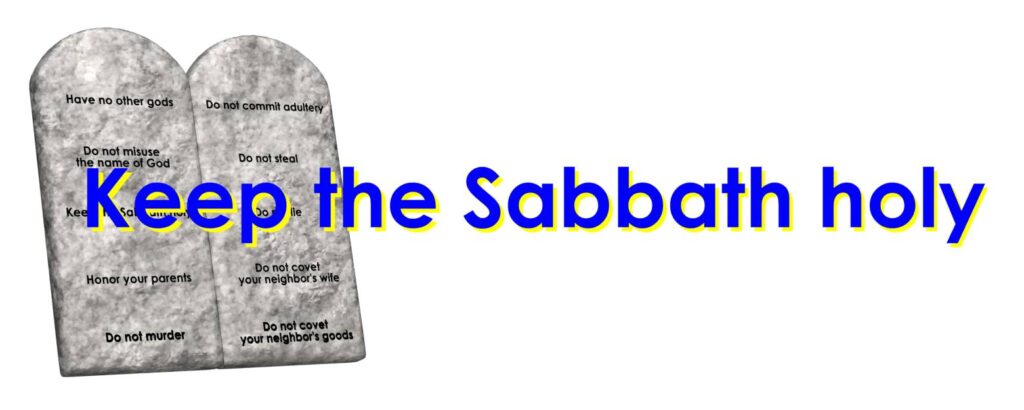
When YHVH instructed his people in Exodus 20:8 to “remember the Sabbath day to keep it set-apart (Heb. kadosh),” he was reminding the Israelites so they would not forget it! But this command has two parts: first, do not forget the Sabbath, and second, do not profane it, that is, keep it holy or set apart or holy by not polluting it with secular activities such as work and normal routine and daily activities. This day is to be special and different from all other days.
But there’s more.
With each reminder to keep the Sabbath, the Creator gives additional instructions about how to keep the Sabbath set-part (see Gen 2:2–3; Exod 16:23–30; 20:8–11).
In this passage, YHVH adds to the list of forbidden Sabbath-day activities not to kindle a fire as a requirement for properly observing the seventh day Shabbat. But the fire YHVH mentions here was not was not just any kind of fire, but a certain type of fire, as we will discuss below. Additionally, keeping the Sabbath was so important to the spiritual welfare of YHVH’s people that he prescribes the death penalty for those who worked on this day. And work is the operative issue, here, when it comes to not building a fire on the Sabbath.
Why is Sabbath-observance so important to YHVH? This is because keeping the Sabbath is a crucial element in helping YHVH’s people to maintain a right relationship with their Creator. Those who observe Sunday as the “Lord’s day” and fail to rest on the seventh day are oblivious to this truth sadly to their own loss and detriment. Sabbath observance, if done according to Scripture, demands that one stop their weekly work routine, take a selah moment (that is to pause and to reflect), and to look heavenward for an entire 24-hour period. This is hardly the case for the majority of Sunday-keepers, who go to church for a couple of hours on that day and for the rest of the day it is more or less business as usual as they indulge in their carnal pursuits.
Much more could be said about the critical value of the Sabbath that helps to keep YHVH’s people lined up spiritually with him and one’s fellow saints, but we discuss this in more detail elsewhere. Suffice it to say here, YHVH never sanctified (made holy or set-apart) or blessed the first day of the week, only the seventh day Sabbath (Gen 2:3). This speaks volumes about the importance the Creator, who never changes, placed and still places on the Sabbath. This day is foundational and axiomatic to the life of YHVH’s people, and when it is neglected or totally forsaken, they deprive themselves of an invaluable gift that heaven has graciously and beneficently bestowed upon work-weary man for his restful rejuvenation and spiritual edification.
On the supreme importance of the Sabbath, the religious Jews have a poignant adage that speaks volumes concerning how this day acts as a spiritual glue that helps to affix YHVH’s people him as well to hold the nation together in the midsts of the swirling toilet bowl of this world. They say, “It’s not that the Jews have kept the Sabbath over the millennia; it’s that the Sabbath has kept the Jews.”
Exodus 35:3, Kindle no fire…on the Sabbath day.
Under What Circumstances Is Starting a Fire on the Sabbath Prohibited?
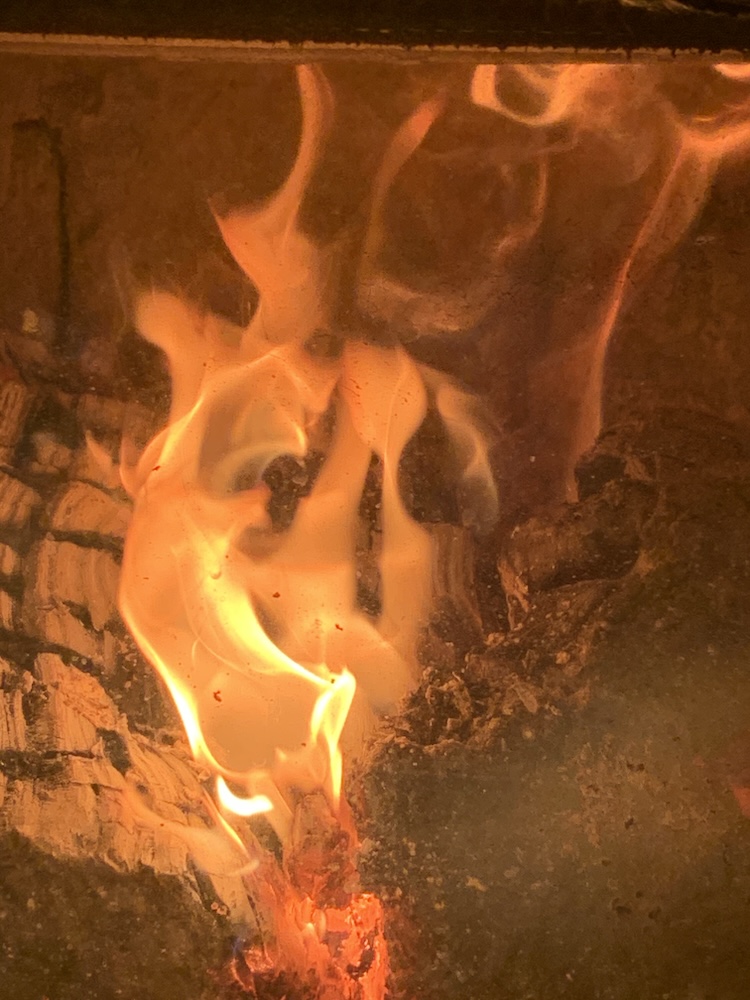
One of the Torah’s commands regarding the observance of the seventh day Sabbath is the proscription about building or kindling a fire on this day (Exod 35:3). There are several prevailing viewpoints as to the exact meaning of this passage. Let us now explore them and discover the true meaning of this important command.
The Orthodox Jews take to the furthest extreme the Torah’s prohibition to kindle no fire on the Sabbath. As such, many Jews refuse even to turn on a light switch or start their cars (i.e., fire occurs in the vehicle’s spark plugs as they ignite the fuel-filled cylinders). They also leave their stoves on for 24 hours, and unscrew the lights in their refrigerators on the Sabbath for fear of violating this command. As a counterpoint this view, the Torah commands the priest to light the menorah in the tabernacle each morning, the Sabbath not excluded (Exod 27:21–21; 30:7), and to prepare meat for the daily offerings to YHVH on the altar of sacrifice requiring a cooking fire. So, for ministry purposes, lighting a fire was not prohibited.
But interestingly, the command not to build a fire on the Sabbath (Exod 35:3) is followed directly by verse four where YHVH gives the Israelites initial instructions on building the tabernacle. What is the significance of the juxtaposition of these two passages as it relates to observing the Sabbath? Much. From this we learn an important truth. All Scripture must be viewed in the context in which it is found. This is a fundamental principle of logic and biblical interpretation. When a Scripture is cherry picked out of its context (called proof-texting), one can easily twist the Bible to make it say whatever one wants. The Bible often places one passage next to another without overtly connecting the two via the use of grammatical connector words. This is not a matter of the Bible throwing disparate and random subjects onto its pages haphazardly. YHVH is not the author of confusion. He is a God of order and purpose. Rather, YHVH teaches his people in ways that invites reflection, meditating, pondering and investigation. This involces a person’s engagement and interaction with the Word of Elohim. In so doing, a person is exploring the mind of Elohim and discovering hidden gold veins of truth and unearthing precious nuggets of understanding. For example, when we read Yeshua’s red-letter Gospel words, many of his ministry episodes and teachings appear to be placed in random order without any connection to each other. But upon closer contemplative, Spirit-led examination, one discovers that when the dots are connected, deeper truths and expansive and panoramic pictures emerge from the supposedly confusing Gospel narratives.
An example in the Torah of juxtaposing two seemingly disparate ideas is the prohibition against the consumption of alcohol and the death of Nadab and Abihu, who offered strange fire in the tabernacle (Lev 10:1–7 cp. Lev 10:8–9). This teaches us that these two sons of Aaron were intoxicated when ministering in tabernacle thus causing them to err in judgment concerning following the strict protocols for coming into YHVH’s presence. We find another example of the Torah jusxtaposing two seemingly disparate topics in Exodus chapters 31 and 32. And the end of the former chapter, YHVH reaffirms the importance of the Sabbath as a sign of his covenant with his people, where they promised to worship him only and follow all of his Torah commandments. Then in Exodus chapter 32, the Torah recounts the Israelite’s declension into golden calf worship resulting in idolatry, debauchery and sexual licentiousness. As we have proven elsewhere, the placing of these two scriptures back-to-back obliquely teach us that the day of their idolatrous revelling and rebellion against YHVH occurred on the Sabbath—a direct violation of YHVH’s Torah-law at multiple levels. Had they adhered strictly to the Sabbath command, they would not have fallen into golden calf worship. Similarly and today, how many Sunday Christians ignore YHVH’s command to keep his Sabbath, while they are involved in the golden calf worship of working on the Sabbath to earn money and pursuing their own, often licentious, pleasures on this sacred and set-apart day?
Thus, the juxtapositioning of Scriptures without an apparent grammatical connection between them is a clever way that the Bible teaches truth, while hiding the deeper understanding of Scripture from the casual and superficial observer, while at the same time rewarding those who expend the laborious and diligent effort to dig out the diamonds and precious stones that lie just beneath the surface. This is a biblical, Hebraic way of teaching deeper truths through human engagement and investigation, and heaven is keen on rewarding those who diligently seek YHVH Elohim (Heb 11:6).
Thus, the immediate context of the Exodus 34 Sabbath-fire passage concerns starting fires that pertain only to one’s trade or job. In Israel’s case, their job was to build the mishkan or Tabernacle of Moses. Fires would have been needed for tanning hides, working with metal, and possibly bending wood and dying cloth along with other activities.
This we know for certain. On the Sabbath, YHVH’s people are not to bake, cook or prepare food from scratch (Exod 16:23), but Scripture does not prohibit reheating food—something that is even permitted in Orthodox Jewish circles today. What is the bottom line issue here? We are to cease our creative activities on the Sabbath, even as YHVH set us an example when he rested on the first Sabbath after having completed his creation activities (Gen 2:1–3). From this we learn that cooking food from scratch (as opposed to reheating), which changes the chemistry of the food, and thus constitutes creating something (i.e., transforming something from its original state into another state) is forbidden on the Sabbath. Thus food must be prepared ahead of time on the sixth day, but can then reheated on the Sabbath.
Does the Torah forbid the lighting of fires for heat and light? Some people would say yes, since part of preparing for the Sabbath involves insuring that your fire for heat and light must stay burning through the Sabbath without having to relight them. But, in reality, was this always possible in ancient times? That is a question we will now explore.
One thing is certain. It is doubtful that YHVH would have expected his hapless people to sit in the cold darkness on the Sabbath were their fire to have gone out—especially in the winter months when the days are shorter and colder, and when snow and cold rain are realities, even in the land of Israel. This would result in the loss of the delight of the seventh day, which, in itself, is a violation the Sabbath (Isa 58:13).
The harsh realities of life in a primitive agrarian culture are evident. The ancient Israelites, obviously, did not possess electric lights or furnaces that lit and heated their homes at the push of a button. If YHVH’s Torah forbad the Israelites from lighting a fire for heat and light purposes, then they would have had to start a fire on Friday before sundown, and then keep it burning all night and through the Sabbath day. This means that if the fire happened to go out during the night because someone slept too soundly and failed to wake up to stoke the fire or add olive oil to their small terra cotta lamps (which burned only for a short time), then they would have been either forced to sit in the cold and dark on the Sabbath, or they would have to fetch some coals from a neighbor, whose fire had not gone out, in order to relight their fire. The Israelite who lived in town had another option as well. Often, there were public ovens built into the earth with clay cooking tubes for baking bread. For those who lived nearby, they could bring back some embers from these public ovens to restart their home fires (Manners and Customs of Bible Lands, pp. 47–48, by Fred H. Wight). Regardless, letting one’s fire go out would have been a great inconvenience and diminished the joy of the Sabbath day.
In modern times, for those who heat their homes with a wood stove, the most energy efficient home-sized wood stove will burn only for six to eight hours if one has access to hardwoods (like oak, maple or fruit wood) as fuel. Despite one’s best efforts to keep their wood stove burning all night to keep the house warm, at times the fire goes out. In most of the land of Israel, large hardwood trees are not prevalent. In ancient Bible times with several million Israelites constantly foraging for hardwood to keep their fires burning, the land would have quickly been depleted of trees—especially in that arid land where trees grow slowly. In reality, the Israelites were more likely to have used sticks (1 Kgs 17:10), thorn bushes, bundles of dried grass (Matt 6:30; Luke 12:28), coals (or charcoal?; John 18:18; 21:9) or dried dung for fire fuel (Ezek 4:15; ibid., p. 30). Furthermore, warming fires were often built in courtyards (John 18:18). Such fires did not burn long. At the same time, making fire would not have been an easy process either before the invention of matches, since this was accomplished by rubbing sticks together or by striking flint and steel (ibid. p. 31).
For sure we know that in days before matches, lighters, push-button furnaces, lights and stoves, starting and maintaining a fire was not a simple task. At the same time, it seems that YHVH would not have expected the Sabbath to end up becoming a miserable, weekly lesson in wilderness survival by having many of his servants forced to huddle together freezing in the darkness on this day of joyful rest because their lights and fires had gone out. He did, however, expect his people to make every possible effort to prepare for the Sabbath ahead of time to keep it from being just another day of laborious work (Exod 16:23). However, it seems hard to believe that the Torah forbids starting a fire for heat and light if necessary—especially during the winter months. Therefore, it is logical to believe that starting fires for work purposes was forbidden, but for heat and light purposes, if unavoidable, was permitted.
Exodus35:5, Whosoever is of a willing heart. In Hebrew, the word nadiyb/CHSB translated as willing means “noble, inclined, generous.” The heart attitude of those contributing to the building materials of the tabernacle was obviously of paramount importance to YHVH. The Torah mentions it again several more times later in chapter (see verses 21–22, 26, 29).
Exodus 36
Exodus36:5–6, The people bring much more. There are two ways to look at the children giving too large an offering of materials for the building of the tabernacle. There were, no doubt, those who contributed because of a willing heart to serve and obey YHVH. On the other hand, there were probably others who viewed this as a way to unburden themselves from some of the loot they took out of Egypt during the exodus. Consider the fact that all of this stuff had to be carted around the wilderness from one encampment to another, which was a lot of work. Gold and silver are heavy metals. So this may have been a good excuse to keep the loot you really wanted and to unburden oneself giving to a good. For these people, it was “charity” for personal convenience rather than a matter of the heart for the work of YHVH.
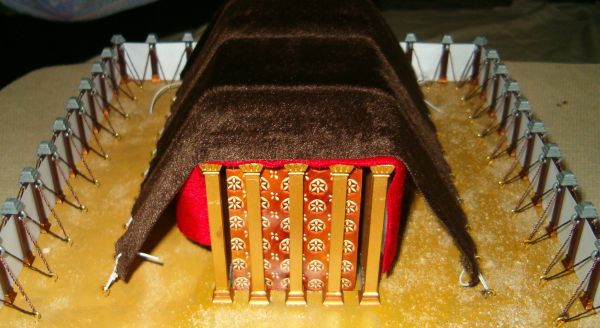
Exodus36:19, Covering for the tent. The tabernacle had four outer coverings. The outermost covering was made of either seal or badger skin (Exod 26:14; 36:19). This covering was ordinary and unattractive. This draws our attention to the fact that Yeshua, the Redeemer, was of ordinary appearance and not overly attractive in physiognomy (Isa 53:2). Likewise, few people are attracted to the gospel message because it is appealing to them. In reality, most people are forced to reach rock bottom in their lives before they are open to hearing the gospel’s message much less acting upon it and making the requisite changes and commitments that it requires of a person. For many people, embracing the gospel message is analogous to a drowning man who frantically grasps a life ring that has been thrown to him from a nearby ship!
Exodus 30:13, Half a shekel. For an explanation, see notes at Numbers 31:50.
Exodus 30:14, From twenty years old and above.This passage suggests that the Torah viewed the age of accountability to be 20 years old (see also Num 1:3, 18, 20; 26:2). That is to say, those who died prior to age 20 were not held eternally accountable for their sins, and presumably might be given a second chance to live out their lives at some latter date. The idea that YHVH held one accountable for their sins after the age of twenty is supported by the fact that all Israelites over age of 20 (with the notable exceptions of Caleb and Joshua) died in the wilderness prior to entering the Promised Land because of sins they had committed during their wilderness journey, while those under age 20 were allowed into the land, presumably because YHVH did not yeet hold them accountable for their sins (Num 14:29; 32:11).
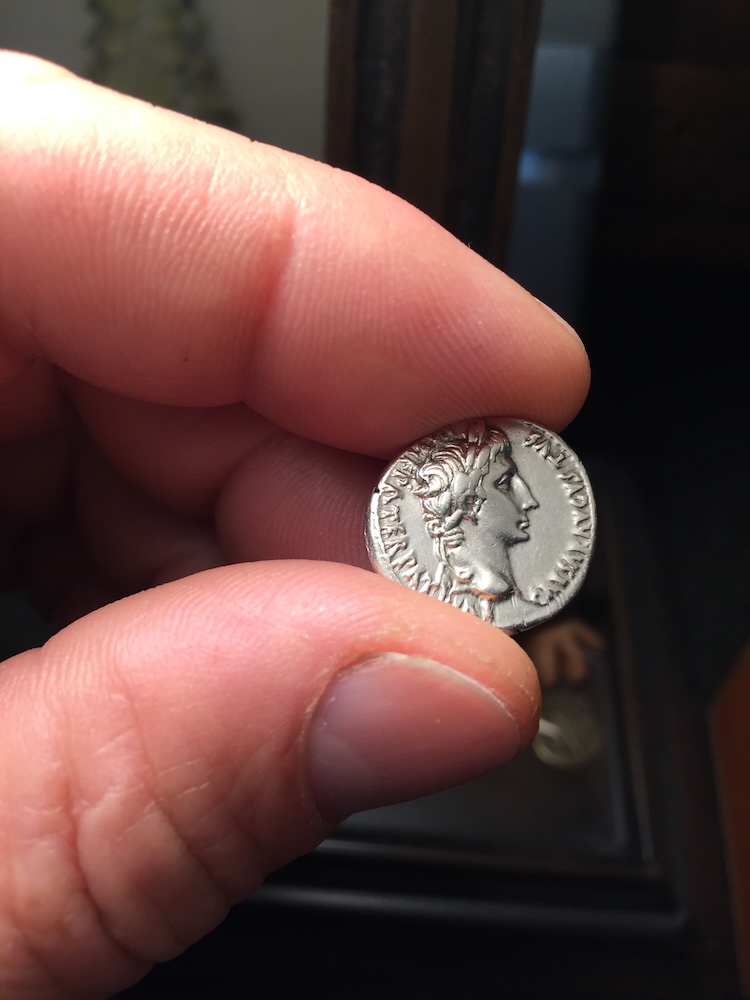
A real 2,000 year old Second Temple half-shekel from the time of Yeshua!
If the age of 20 is the age of accountability, then this begs an obvious question. What will happen to those who died before age 20? It is generally accepted by many in the church that babies or young children who have died before having had a chance to “accept Yeshua” will be given a second chance to do so. But what about those who died “unsaved” prior to age 20 (see notes at 1 Pet 3:6)? Some people have speculated that these people may be resurrected at some time in the future and be allowed to live out their lives during the Millennium (e.g., Isa 65:17–20). Perhaps the reason Satan will be released at the end of the Millennium from the pit where he was held captive for one thousand years will be to give all those living on the earth at that time a chance to accept or reject Yeshua. YHVH will use the devil to test the loyalties of this new crop of potential saints (Rev 20:7–10). Those who remain faithful will inherit eternal life, while those whom Satan seduces into rebellion will have their part in the second death (Rev 20:11–15). One thing we know. At the last judgment or white throne judgment, the books (plural) will be opened, and all dead humans will be resurrected and will stand before YHVH’s judgment sest (2 Cor 5:10; Rom 14:11–12) to be judged based on their works whether righteous or unrighteous (Rev 20:12 cp. Rom 2:12–16). Some will be cast into the lake of fire, while presumably the rest will be given an opportunity to accept Yeshua then and there, thus avoiding eternal annihilation (Rev 20:13–15).
Exodus30:15, Rich…poor.
Are Humans Created Equal?
This passage teaches the equality of all believers. That is, each redeemed Israelite saint is equal in the yes of YHVH. To the Creator of all things and who owns everything, no one is worth more than a half-shekel, and no one is worth less than a half shekel. The rich are not superior to the poor and vice versa. This is also the moral of Yeshua’s Parable of Lazurus and the Rich Man (Luke 16:19–21). Contrary to what many Christians have erroneously been taught, this parable is not a doctrinal statement about the state of the dead and the afterlife. To many people, including the rich Scribes and Pharisees of Yeshua’s day, material success denotes superiority and even divine favor. The Bible dispels this false notion both in the Book of Job and in Yeshua’s parable. Rather, YHVH looks at the heart and character of a person and the righteous fruits of their lives, and not at the outward, physical trappings—the proverbial cover of the book. The Scriptures address this issue in several places:
Judge not according to the appearance, but judge righteous judgment. (John 7:24)
A good tree cannot bring forth evil fruit, neither can a corrupt tree bring forth good fruit.
Every tree that bringeth not forth good fruit is hewn down, and cast into the fire. Wherefore by their fruits ye shall know them. (Matt 7:19–20)
But YHVH said unto Samuel, Look not on his countenance, or on the height of his stature; because I have refused him: for YHVH seeth not as man seeth; for man looketh on the outward appearance, but YHVH looketh on the heart. (1 Sam 16:7)
Now the Torah and the rest of the Scriptures teach us that all the saints are equal. But what about the rest of humanity? Are all humans created equal?
There are many ways to look at this equality issue and as many opinions. But what does the Bible teach on this subject?
The Bible states in several places that all humans are created in the image of Elohim. This implies equality among all humans with regard to their intrinsic and innate value.
The Bible also states that all humans are sinners, that all deserve death and that none are righteous of themselves. This also implies equality among humans with regard to their sinful state.
The Bible states that Elohim so loved all the world that he sent his Son to die for all humanity. This implies equality among humans with regard to the Creator’s love.
The Bible also state that Elohim loved us while we were still sinners. This implies equality among all humans.
Elohim desires all humans to be saved. This also implies equality among humans with regard to Elohim’s intent for humans.
The Bible furthermore states that Elohim is not a respecter of persons. This implies equality among humans in a legal sense in the eyes of YHVH.
The Bible teaches that there is one Torah-law standard of righteousness for all people—Israelites and non-Israelites. This implies equality with regard to YHVH’s standards of righteousness.
Moreover, the Bible states that Elohim will judge all humans by his Torah-law. All humans will come before his judgment seat (2 Cor 5:10 cp. Rev 20:11–15). Thus all humans are equal before heaven’s Torah-law and before the Judge of the universe.
Conversely, there can be no question that the Bible teaches that Elohim favors those who love and serve him. He favors them with a special love and enters into a personal relationship with them. He blesses then in a special way with salvation, healing, answered prayers, special protection, guidance, the wisdom of his Holy Spirit and much more. Eventually he will reward his saints with eternal life, glorification and inclusion into his eternal kingdom as his adopted children.
So as we see, Elohim starts out loving and treating everyone equally, but those who choose to love and obey him he favors them and extends his grace to them. In this regard, not everyone is treated equally. But this is not based on favoritism on YHVH’s part, but upon the choices that humans make with regard to his initial equal treatment of all. In the end, all humans will reap what they sow. If they obey Elohim they will be blessed with immortality. If they disobey him, they will suffer the fate of their ill choices resulting in eternal death or separation from their Creator.
Even though all humans are created equal by Elohim and will stand equal before him, the Bible in no way promotes the idea of economic equality among humans as socialism advocates. But this is another discussion for another time.
Exodus30:15 and 16, To make atonement for your souls. Some Bible students may read Exodus 30:15–16 and conclude that one can buy their redemption through charitable giving and therefore circumvent the need to place one’s faith in Yeshua’s atoning death on the cross. Does this passage suggest a theology where man can save himself from sin’s death penalty by acts of charity? Let’s dig a little deeper to see what these verses are really teaching us.
In this passage, YHVH instructed the Israelites to pay an annual half-shekel temple tax. This money went, in part, toward, to support the service of the Tabernacle of Moses (verse 16) and its construction of (e.g., Keil and Delitzsch Commentary on the OT, vol. 1, p. 459; Exod. 38:21–31), and later toward the purchase of the animals the priests sacrificed therein (The Temple and Its Service, by Alfred Edersheim, p. 48). In this way, the people were participating vicariously in the act of sacrificing an innocent animal as an offering or atonement for their sins. Again, the Scriptures reveal that this sacrificial system merely pointed prophetically toward the Greater Sacrifice that would come later in the Person of Yeshua, the Redeemer of Israel (Isa chapter 53 cp. Heb chapters 9 and 10). On the point that the paying the half-shekel was a merely a temporary solution to the problem of man’s sin, Keil and Delitzsch say in their commentary on this passage,
As an expiation [atonement] for souls, it pointed to the unholiness of Israel’s nature, and reminded the people continually, that by nature it was alienated from God, and could only remain in covenant with the Lord and live in His kingdom on the ground of His grace, which covered its sin (ibid.).
Keil and Delitzsch’s point is further strengthened in Exodus 30:16, which says,
And you shall take the atonement money of the children of Israel, and shall appoint it for the service of the tabernacle of the congregation; that it may be a memorial unto the children of Israel before YHVH, to make an atonement for your souls. (emphasis added)
The giving of the half-shekel was amemorial to what? The Hebrew word for memorial is zikrown meaning “reminder, token, record.” According to TheTWOT, a zikrown is an object or act which brings something else to mind or which represents something else.” Thus the payment of the half-shekel reminded the Israelites of their sinfulness and pointed prophetically to a Redeemer—Yeshua the Messiah, who would come and take away their sins once and for all (Heb 10:10).
For a more detailed study of this subject, please see our teaching article entitled, “The Atonement: Bloody or Bloodless? Understanding the Concept of Atonement in the Torah” located on the Hoshana Rabbah website at http://www.hoshanarabbah.org/pdfs/atone.pdf.
Exodus 30:17–21, A laver of brass. The large bronze basin that was located in the courtyard of the Tabernacle of Moses just in front of the door of the tent of meeting was fabricated from the mirrors the Israelite women donated (Exod 38:8). Perhaps James the apostle had this tradition in view when he speaks of being a doer of the Word of Elohim, not just a hearer, for a hearer and not a doer is like one who sees himself in the spiritual mirror of Elohim’s Word and forgetting what he looks like does not allow the Word to transform him (Jas 1:22–25). We know that water is a poetic metaphor for YHVH’s Word (Eph 5:26; Tit 3:5; Heb 10:22; Deut 32:2).
In the laver, the Levites were to wash their hands and feet before going into the tabernacle, so that they would not die. The hands and feet represent the entire body since they are the highest and lowest parts of the body. They also represent our direction and our action—everywhere we go and all that we do—must be pure before ministering before YHVH.
Constructed of the mirrors of the Israelite women, the bronze laver represents a believer looking into the Torah (YHVH’s instructions in righteousness) as a mirror, seeing himself for who he really is (an unrighteous sinner) in light of the high standards of righteousness presented to us by the Word of Elohim. When we see the differential between the two, this should challenge us to conform our life to who the Word says he should be (Jas 1:22–25).
The laver was the font where the priests washed themselves before performing the service of the tabernacle. The laver represents immersion or baptism for the remission of sins (Rom 6:3–6), and the washing of the water of the Word of Elohim (Eph 5:26), which are the first act of obedience that a new believer is required to take after being “washed” in the blood of Yeshua and having one’s past sins atoned for after having been first saved (e.g., Acts 2:37–39 cp. Matt 28:18–20; Mark 16:16; Acts 16:31–33). The second high Sabbath of the Feast of Unleavened Bread is a prophetic picture of this ritual washing or immersion. This is because it was most likely on this day that the children of Israel crossed through the Red Sea and were “baptized” by Moses (1 Cor 10:12).
YHVH instructed the priests to wash their hands and feet before ministering in the tabernacle or else they would die (Exod 30:19–21). Hands and feet are symbolic representations of our actions and our ways—what we do and where we go. Similarly, Yeshua washed the feet of the disciples at the Last Supper (John 13:4–11), thus ritually cleansing them for the great commission ministry to follow. In the believer’s life, one must be immersed (baptized) for the remission of sins (Acts 2:38; 22:16; cp. John 13:8–10 and 1 Cor 6:11) by the legal and symbolic faith-act of which one identifies with the death, burial and resurrection of Yeshua resulting in the newness of spiritual life that comes to the believer as a result thereof (Rom 6:3–14). As already noted, immersion speaks of the washing of the water of the Word of Elohim (Ps 119:9; Eph 5:26). This is because water in Scripture is a symbolic metaphor for YHVH’s Torah instructions and teachings of YHVH (Deut 32:1–2). Through Yeshua living in the life of a saint via his Holy Spirit, the saint’s actions (hands) and ways (feet) will become more and more righteous.
Additionally, the bronze laver was constructed of the bronze mirrors of the women of Israel. This teaches us that when we look into the water of YHVH’s Word and see our reflection against YHVH’s standards of righteousness (the Torah), we will always come up short. But when the priests washed their bloody hands in the water of the laver the blood and water mingled. When this happens, by YHVH’s grace, we do not come up short. This teaches us that through the blood of Yeshua we measure up to YHVH’s righteous standards and are reconciled to our Father in heaven. Or another way to look at it is that when we look at YHVH’s word through the blood of Yeshua, that is who we really are in they eyes of the Father.
Furthermore, from Yeshua’s side came forth blood and water. This points to the bronze laver where blood and water mixed to redeem sinners from judgment (represented by bronze) against the sins of pride and rebellion (pride is a reference to the mirrors used to make the laver). Blood represents atonement and water represents both the Torah-Word and Spirit of Elohim. The word, Spirit of YHVH and the blood of Yeshua unite to effect salvation or redemption in one’s life. In 1 John 5:8 we read, “And there are three that bear witness in earth, the spirit, and the water and the blood, and these three are one.” The Bible informs us that a legal matter is to be determined in the mouth of two or three witnesses (Deut 17:6; 19:15; Matt 18:16; 2 Cor 13:1; Heb 10:28). John views these three elements as distinct and separate witnesses. Each plays a role in and testifies to man’s redemption by YHVH. The blood points to remission of past sins, water points to the Torah-Word of Elohim washing, renewing and cleansing us in the inner man to conform us into the image of Yeshua, the Word made flesh, and all this occurs through the transforming work of the Spirit in our lives. At the bronze laver, these three elements all come together to form a complete picture of redemptive, reconciliatory and sanctifying work of Yeshua at the cross as well as a the subsequent and ongoing work of the Holy Spirit in the saint’s life to conform him or her into the image of their perfect Messiah.
Exodus 30:23–33, Anointing oil. See notes at verses 34–38.
Exodus 30:34–38,Sweet spices. According to Jewish tradition (b. Talmud Keritot 6a), there were eleven sweet spices (Heb. ketoret bisamim) in the tabernacle incense, four of which are mentioned here. They were balsam, clove, galbanum, frankincense, myrrh, cassia, spikenard, saffron, costus, aromatic bark (a type of cinnamon), and cinnamon. Four thousands of years, ancient cultures relied on the medicinal properties of aromatic plants. Only in recent years, has the West rediscovered the salutary benefits of these plants. Listed below are the suggested healing properties of several of these herbs. In modern times, the oils from these plants are being extracted for use in various ways. (Source of information is from various online sources and Aromatherapy Workbook by Marcel Lavabre.)
Galbanum (Ferula gummosa or Ferula galbaniflua) is an antiseptic (prevents the growth of disease-causing microorganisms), and helps to treat asthma, acne, coughs, cramps, scar tissue, wrinkles. Apparently, the smoke from burning the resin of this plant was used in ancient times to keep flies and snakes away.
Onycha may be referring to cloves, which is an antiseptic, analgesic (pain relief), carminative (for relieving flatulence), or to Styrax officinalis, which is a resin from this tree and is great for kidney support (edema), bronchitis, colds, sinusitis, skin conditions, and is said to relieve stress.
Frankincense is a skin tonic, heals infected wounds and is an anti-inflammatory. It helps to reprogram cellular memory thus promoting permanent healing. It is used against typhoid, allergies herpes, tonsillitis, head injuries, depression, and cancer. Research shows that it will lower cortisol by 40 percent just by deep inhalation. Elevated cortisol contributes to weight problems.
Myrrh (stacte) is a skin tonic or conditioner, anti-inflammatory, cough expectorant, vulnerary (heals wounds), fungicide, antiseptic, astringent (causes the contraction of body tissues—notably the skin). It is especially useful for mouth ulcers and throat infections. In ancient times, pregnant mothers anointed themselves with myrrh for protection against infectious diseases, and they used myrrh during labor to stretch the perineum and on umbilical cords. Myrrh has a long history of use in skin health and hygiene products, and it prolongs the life and scent of other oils. Myrrh helps to combat wrinkles, is antiseptic, aids in balancing the thyroid, clearing athletes foot, ringworm, viral hepatitis, thrush in babies, inflammation and bronchitis.
Cassia (Cinnamomum cassia) is an antiseptic, antibiotic, and immune system builder.
Spikenard is a skin tonic or conditioner.
Aromatic Bark is an antiseptic (against flu and infectious disease), stimulant (circulation, nervous system).
Cinnamon (leaf) is an antiseptic (against infectious disease), relieves skin irritants (e.g., poison oak).
Exodus 31
Exodus31:3, 6, I have filled him…I have put wisdom.
When YHVH is behind a project (as was the case with the Tabernacle of Moses), he brings in the resources to accomplish it (Exod 25:2; 36:5), and he brings the skilled laborers to do the task as these verses demonstrate. When men through their own efforts, strength, ingenuity and resources attempt to make something happen, chances are it is not a project ordained by heaven.
Unless YHVH builds the house, They labor in vain who build it; unless YHVH guards the city, the watchman stays awake in vain. (Ps 127:1)
Exodus31:13–17, My Sabbaths you shall keep.Note that the word Sabbaths is plural. This is a reference not only to the weekly Sabbath, but to the feast day and land Sabbaths as well. However, the seventh day Sabbath remains central to YHVH’s spiritual economy for his people. In fact, it was so central to the spiritual life of YHVH’s people that he designated it to be a visible and outward sign of the special relationship that existed between him and his people. Let’s explore this idea.
Why did YHVH designate the Sabbath as a sign (Heb. owt meaning“signal, distinguishing mark, banner,” Exod 31:12) between him and Israel? As YHVH’s set-apart people, Israel was distinguishing itself from the surrounding nations who did not observe the Sabbath. What distinguishes the saints today as YHVH’s set-apart people from the non-believing heathen around them? Certainly it is their love for one another is a distinguishing mark, according to Yeshua (John 13:35). Yeshua also said that if we love him we will keep his Torah commandments (of which the Sabbath is the fourth of the ten commandments, John 14:15, 21; Exod 20:8). John was inspired to write that those who say they know Elohim and refuse to keep his Torah-commandments (of which the Sabbath is a foundation stone) are liars and the truth is not in them (1 John 2:3–6). And finally, Yeshua told those “Christians” who were Torahless (i.e., workers of iniquity or lawlessness) to depart from him, that he did not know them even though they claimed to be his followers and had done many religious works in his name (Matt 7:21–23). Although the Sabbath and the biblical feasts may not be the exact sign of the New or Renewed Covenant, Elohim’s Sabbaths are foundation stones of the Torah, and the keeping of them remains in effect to this day for the saints of Elohim (Heb 4:9).
The seriousness with which YHVH views the Sabbath is exemplified in TheArtScroll Stone Edition Tanach translation of Exodus 31:15:
For six days work may be done and the seventh day is a day of complete rest, it is sacred to [YHVH]…(emphasis added)
What is complete rest? What is the connection between “complete rest” and the idea of sacredness or being holy or kadosh? The people of YHVH are called to separate the holy or kodesh from the common or profane:
Her priests have violated my Torah, and have profaned my set-apart/kodesh things: they have put no difference between the holy [Heb. kodesh] and profane [common, polluted] neither have they showed difference between the unclean and the clean, and have hid their eyes from my Sabbaths, and I am profaned among them. (Ezek 22:26)
And [the priests] shall teach my people the difference between the holy [Heb. kodesh] and profane, and cause them to discern between the unclean and the clean. (Ezek 44:23)
What is common or profane are those activities which is commonly done on the other six days of the week. It is those thing that YHVH commands his people to rest from completely.
Exodus31:14, Sabbath…profanes it.Profaning or polluting the Sabbath with secular activities is a sin. Sabbath desecration is as much a capital offence in YHVH’s eyes now as it was then. This because the wages of sin is still death (Ezek 18:4; Rom 6:23).
Exodus31:18, Written with the finger.The Sabbath along with the rest of YHVH’s Torah commands were ordained by Elohim and literally written with his finger. How dare men subsequently declare that the Sabbath was changed and that what YHVH wrote with his finger in tablets of stone is now irrelevant or passé! What hubris and arrogance on men’s part to counter the will and laws of Elohim with silly, specious and vacuous justifications for man-made and unbiblical teachings that deign to nullify the validity of YHVH’s Sabbath and the rest of his commandments. No matter how erudite and novel the theological arguments or the multitudes of followers they garner, such edicts and traditions of men will not stand, but will blow away like lowly dust in the wind; they will be burned to ashes in the fiery judgments of Elohim, and will fall by the wayside like all the other traditions of men, which have dared to make the word of Elohim of no effect!
Exodus 32
Exodus32:1, Moses delayed coming.Moses is a prophetic picture of Yeshua. Moses’ descending from Mount Sinai is a prophetic picture of Yeshua descending from heaven to the earth both the first and second times. When the people presumed that Moses delayed his coming, they fell to the temptation to syncretize with the heathen religious system around them by yielding to their baser nature and giving in to the lusts of their flesh as expressed in golden calf worship. The heathens, along with their man-made religious systems, have lower moral and spiritual standards than those of YHVH. In many respects, the mainstream church has done the same thing as the ancient Israelites by acting as if Yeshua has delayed his second coming, and in many ways subsequently acquiesced to conforming to many of the world’s standards and customs. This is a form of golden calf worship, which is an admixture of Torah-truth and pagan practices. Yeshua warned his disciples against this proclivity of humans to grow impatient and spiritually lukewarm while waiting for his return (Matt 24:48).
The golden calf as described in the book of Exodus
Exodus32:2, Break off the golden earrings.The Christian people have generously given the mainstream church much gold and other wealth over the past 1900 years. Just visit any one of the hundreds of cathedrals throughout Europe and around the world and this opulence becomes blatantly apparent. In the mean time, with that wealth, the church system has constructed many huge religious monuments, systems and programs. These all are monuments, in part, to the gods of materialism, and is a form of golden calf worship. Neither Yeshua nor his disciples needed vast sums of money, resources or monuments to spread the gospel message. What they lacked in material resources they made up with passion for the gospel message and confirmed by miraculous power and anointing of YHVH. What the mainstream church largely lacks in passion and the anointing to spread the gospel, they now, sadly, have substituted with wealth, programs and religious monuments to men’s achievements. Despite all of this, in his merciful grace, YHVH has caused the gospel message still to go forth and countless lives have been transformed by the Word of Elohim!
Exodus32:4–5,Your gods…a feast to YHVH. This is the first example in the Scriptures of YHVH’s people mixing pagan practices (i.e., evil) with the divinely revealed Truth of Elohim (i.e., good). We see that Satan the deceiving serpent was the first entity to defile good with evil when he questioned Elohim and tempted the first humans (Gen 2:9 cp. 3:1–6). The Hebrew word babel or Babylon means “confusion or mixture.” It is the mixing of evil with good, error with truth, darkness with light and death with life. In the end times, the saints must first recognize such mixture by knowing the difference between the holy and the profane and then be able to separate the two, and then come away from that which is evil or part of Babylon (Ezek 22:26; 44:23; Rev 18:4; 2 Cor 6:14–17.) Though mainstream Christianity and Judaism are biblically-based religious systems, both have allowed numerous pagan traditions, celebrations and belief systems to insinuate themselves into their religious practices. In these end times, YHVH is calling his people away from everything that is unholy and unbiblical (Rev 18:4). Will you heed the divine call to come out of spiritual Babylon?
Exodus32:5,A feast. Hebrew chag means “festival, feast, festival-gathering, pilgrim-feast or a festival sacrifice.” In the Torah (e.g., Lev 23; Deut 16:16), only three of the seven biblical holidays are referred to as a chag. They are the pilgrimage festivals (e.g., Ps 42:4) called the Feast of Unleavened Bread, the Feast of Weeks or Harvest of First Fruits and the Feast of Tabernacles or Ingathering. Chag can also refer to a pagan festival as is the case in Exodus 32:5 at the golden calf, or to the feast instituted by Jeroboam I to replace the Feast of Tabernacles (1 Kgs 12:32–33; The TWOT).
The verb chaggag, the root of chag, means “to hold a feast, hold a festival, make pilgrimage, keep a pilgrim-feast, celebrate, dance, stagger, to keep a pilgrim-feast or to reel.” Chagag primarily refers to celebrating the three biblical pilgrimage feasts, but can also refer to a pagan festival (1 Sam 30:16), or to sailers reeling to and fro on a ship as if drunk (Ps 107:27; ibid.).
Now let’s discuss the feast or chag that the Israelites made in honor of the golden calf. There is a strong likelihood that the day the Israelites dedicated to the worship of the golden calf was on the weekly Sabbath. The reasons that support this idea. Let us first assume that the Israelites received the ten commandments on Shavuot, which was always falls on the first day of the week (i.e., 50 days after the morrow or day of the weekly Shabbat; see Lev 23:15–16). On the next day—a Monday—(Exod 24:4), Moses built an altar and ratified the covenant with the Israelites (vv. 4–8). After that, Moses celebrated with the elders at the base of Mount Sinai (vv. 9–11). Next, Moses went up onto Mount Sinai to receive the tablets of stone (vv. 12–15). It had been six days since the glory of YHVH had been resting on the mountain (from Sunday to Saturday). On the seventh day or the weekly Shabbat, YHVH called Moses to enter the glory cloud where he remained with YHVH until his descent from Sinai. Moses was on the mountain from sometime Monday until Shabbat, when he entered the glory cloud. All total, Moses was on the mountain for forty days (vv. 16–18). At the end of 40 days, YHVH informed Moses of the people’s sin (Exod 32:7). If Moses ascended the mountain sometime on Monday, then the same time on Tuesday would have been day one. Forty days later was the weekly Shabbat. Moses descended the mountain after YHVH informed him of the people’s sin or after forty days. This means that Moses descended on a Sunday. This also means that the people made a pagan feast to the golden calf on the Shabbat. Although the Bible never calls the Shabbat a chag, nevertheless, as we have seen above, the Bible refers to pagan celebrations as a chag. This is because pagan festivals were not solemn, but were often raucous, lewd, bacchanalian events—hence the term chagcan indicate the festive nature of an event though in a pejorative way.
Furthermore, often the Torah juxtaposes sinful events with instructions against those same sins. In this case, immediately preceding the Torah’s chronicling the gold calf incident are the instructions pertain to the Sabbath including strict admonitions against profaning it (Exod 31:12–18). YHVH goes so far as to condemn to death those who profane it. In accordance with this law, Moses had the sons of Levi slay all the idol worshippers—three thousand in all (Exod 32:26–28). This is further evidence that the so-called “feast to YHVH” that the idolators proclaimed, in a vain attempt to legitimize their evil actions by invoking the name of Elohim, occurred on the Sabbath. This blasphemous act of sacrilege obviously did not go over well with YHVH Elohim!
Exodus32:6,Play. Heb. tsachaq means “to laugh, mock, play, to laugh, to jest, to sport, make sport, toy with, make a toy of.” In this verse, the verb tsachaq is in its piel (intensive active form) and means “to jest, to sport, play, make sport, toy with, make a toy of” (The TWOT). If the Israelite’s festival dedicated to worship of the golden calf occurred on the weekly Shabbat (see notes above on v. 5), then YHVH’s displeasure against the Israelites was not only for their idolatry, but for their profaning his holy Sabbath by using it as a time for partying and for carnal sporting activities. They were mocking, making light of, toying with YHVH’s Shabbat, and were seeking their own sensual and carnal, if not, illicit pleasures on his day! This is something that Scripture forbids (Isa 58:13; 56:6).
Some reading this will justify themselves for their profaning the Sabbath by doing “their own pleasure” on that day as having nothing to do with golden calf worship. In reality, the golden calf was a form of or metaphor for Baal or self-worship—i.e., doing our own will or pleasure over that of Elohim’s. Make no mistake about it, this is the biblical definition of idolatry!
The Word of Elohim must be the final determiner of what we do or do not do when it comes to our walk of righteousness—not our own carnal feelings and desires, which are heavily influenced by our fallen, sin-inclined natures as well as the influence of the world and the devil, which are all antithetical to and rebellious against the will and Word of Elohim. It is the Word of Elohim that will judge us. To be sure, our well-thought out excuses and deeply ingrained self-justifications will not pass muster before the throne of the Almighty and Righteous Judge of the universe on judgment day!
Exodus 32:15, In his hand…written on both sides. A popular misconception is that the two stone tablets were large and were written on one side. However, this verse tells us that they were small enough to fit in one hand, and were written on both the front and back.
Exodus 32:16, The writing of Elohim. The contemporary square script letters of the Hebrew alphabet were likely introduced into Israel by Ezra the scribe after the Babylonian exile. Prior to this, Israelite writers used the Paleo-Hebrew pictographic script, which is of ancient origination and is likely the script that YHVH used when engraving the stones on Mount Sinai.
Most modern linguistic scholars trace the alphabet of the European languages, including English, back to the pictographically-based Phoenicians alphabet of the tenth century bc, which shows striking similarities with the Proto-Sinaitic or Paleo-Hebrew script of nearly one thousand years earlier indicating the our own alphabet likely originates from the ancient Hebrew script of Mount Sinai!
The Scriptures record that the time the Phoenician script came into prominence on the world scene coincides with the Israelite alliance with King Hiram of Tyre, who was the king of the Phoenicians. Theirs was a commercial and military alliances that dominated much of the known world, and Israel was the senior partner in this confederation, since the empire of Israel (under kings David and Solomon) controlled a large area of land from Egypt to the Euphrates River (in modern Iraq). In the eyes of some ancient nations (e.g., the Greeks), the Phoenicians and Israelites were regarded as the same people, and both were known by the label of “Phoenicians”(see The Origins and Empire of Ancient Israel, pp. 148–151, 229–231 by Steve Collins quoting George Rawlinson, nineteenth century biblical scholar and history professor at Oxford University). From this evidence, we can see that it is likely that the script known as “the writing of Elohim” (in Exod 32:16) is likely the root of many of the world’s alphabets including Japanese! (See http://jamesjpn.net/index.php/2010/06/10/japanese-script-compared-with-hebrew/.)
Exodus 32:29,Bestow upon you a blessing.YHVH gave the tribe of Levi the priesthood.
Exodus 33
Exodus 33:1–2, YHVH…my Angel/Messenger.Who is YHVH and who is the Angel? See notes at Exodus 3:2 and 23:20–21.
Exodus 33:7, Moses took his tent.There comes a time when the anointed servant of the Most High can no longer tolerate the sinfulness and faithless of the people he is leading; he is compelled to turn his face away from prideful, rebellious, stiff-necked sinners and liars (see Ps. 40:4). Even Yeshua, in frustration, despaired on several occasions at his disciples for their lack of faith. Once, in desperation, he cried out, “O faithless and perverse generation, how long shall I be with you? how long shall I suffer you?” (Matt 17:17). This frustration on the part of some of the holy servants of the Most High is due to the fact that they are in a different place spiritually than the people they lead. As anointed and divinely appointed leaders tasked to lead YHVH’s people higher, they themselves must be out ahead spiritually of the people they lead, and their walk must be a little, if not a lot, higher. Their job is to lead people into a higher and deeper walk with YHVH. Sometimes, in frustration when they feel they have been less than successful in their mission, they must remove themselves from the people for a season to draw closer to YHVH for strength, wisdom, guidance and spiritual renewal as Moses did in this case.
A man who is holy or set apart unto YHVH cannot abide long in an unholy situation without inner stress and turmoil. Opposition to YHVH is anathema to him and causes every fiber in his being to cry out, sometimes in frustrated disgust. Such a person is in a different, higher world that carnal people know nothing about. This is why Moses had to separate himself from the Israelites—a stiffnecked and rebellious people who did not have a heart to follow Elohim.
Exodus 33:12–13, Grace.The mainstream church places a great deal of emphasis on the “message of grace.” The biblical doctrine of grace, to the surprise of most Christians, actually finds its roots in this chapter in the Torah, and not in the New Testament as the mainstream church teaches.
The noun grace (Heb. chen) is found six times in chapters 33 and 34. The adjective gracious (Heb. chanan and channuwn) as an attribute of YHVH’s character is found three times in chapters 33 and 34. Six is the number of man and three is the number of Elohim or the “Godhead.” That is to say, the grace of the entire Godhead covers man completely even when his children turn away from him and give into golden calf worship. His grace for his people rejoices or triumphs over his fiery and consuming judgments (Exod 33:4; Jas 2:13; Pss 85:10; 89:14; Mic 7:18; Eph 1:7; Rom 5:8) that they deserve for their stiff-neckness and sinful rebellion against his commands (Exod 33:3).
The Hebrew word for grace is chen meaning “favor, grace, charm, acceptance.” The Hebrew word chen (found 69 times in the Tanakh), which is translated as grace, in this verse is equivalent to the Greek word charis, which is found 156 times in the Testimony of Yeshua and is translated as grace 130 times in the KJV.The equivalency of these two words is confirmed by the translators of the Septuagint (the Greek Tanakh) who used charis in place of chen when translating the Hebrew Tanakh into Greek beginning in the third century bc.
According to TheTWOT, in the vast majority of occurrences of chen in the Tanakh, the focus of attention is not on the giver, but on the recipient. The emphasis is on the relationship of the superior to an inferior (e.g., a king to his subjects). What this teaches us is that despite sin and rebellion against him, YHVH (the king) is gracious (to humans, his subjects).
Contrary to what many people in the mainstream church have been led to believe, the grace of Elohim is a very prominent theme in the Tanakh. Examples of this include Noah who found grace in YHVH’s eyes (Gen 6:8), or the children of Israel although dead in their sins in Egypt and deserving of YHVH’s wrath, they were saved by the blood of the lamb. There are a number of other references to the grace of Elohim in the Tanakh as well (e.g., Gen 18:3; Exod 3:21; 33:16,17; 34:9; Ps 84:11; Zech 12:10).
Exodus 33:14, My presence will go with you.YHVH’s presence led the Israelites through the wilderness and into the Promised Land. Yeshua will lead his people through the wilderness of life and into the Promised Land of their eternal inheritance in his kingdom. Where is YHVH’s presence today in and among his people?
Exodus 33:15, If your presence goes not with me.Moses refused to take one step forward without YHVH’s presence leading the way. How earnestly do you seek the presence of YHVH in your life? Is it your heart passion? Is his leading presence more vital to you than life itself? Do you feel spiritually lost, dried up and, in a sense, even dead when YHVH’s presence is absent from your life? What was David’s heart passion in this regard? (Read Ps 84:1–12.) Yeshua taught that his life and presence comes as we abide in him (John 15:1–4). What are the rich benefits of abiding in Yeshua, the true vine? (See John 15:5–17.)
Exodus 34
Exodus 34:1–35, Prophetic pictures of Moses’ second ascension of Mount Sinai.
History frequently repeats itself in curious and interesting ways, and Bible history is no exception except for one thing. When history repeat itself in the Bible, it does so in miraculous and prophetic ways. Moses’ second ascension of Mount Sinai is yet another example of this, for upon close examination, it reveals a prophetic and allegorical picture of the saints’ resurrection and glorification at the second coming of Yeshua the Messiah. Upon exploring the details surrounding this yet one more God-encounter occurrence in the chronicle of the children of Israel, the saints, who are the descendents of those ancient people (Gal 3:29), can gain precious details about their own future encounter with YHVH Elohim.
According to Jewish tradition, Moses ascended Mount Sinai to receive the second set of stone tablets containing the Ten Commandments on the first day of the sixth biblical month on the biblical calendar or 30 days before Yom Teruah, which occurs on the first day of the seventh month. Forty days later on Yom Kippur, Moses descended from the mountain carrying with him the second set of tablets as a sign of YHVH’s forgiveness of the children of Israel after the golden calf incident. This signaled YHVH’s renewing his relationship with Israel after they had repented of their idolatry.
We know that in biblical times an Israelite bride, while waiting for her betrothed to arrive from his father’s house, would hear a shout and the sound of the shofar in the distance as her bridegroom approached (Matt 25:6 cp. Matt 24:31; 1 Thess 4:16; 1 Cor 15:51–52). If she were alert and not asleep (as were the ten virgins of Matt 25:1–13), she would preparing by adorning herself in her wedding robes, be trimming her lamp’s wick (an ancient version of a flashlight), and have it filled with oil and ready to light as soon as he arrived, since he would be coming at night time.
Prophetically, the Scriptures indicate that the saints of Yeshua are to be resurrected and to meet the returning Messiah Yeshua in the air at the seventh or last shofar blast most likely on Yom Teruah (Day of the Trumpets also known as the Day of Shouting or Shofar Blasts, see 1 Thess 4:16; 1 Cor 15:52; Rev 11:15–18). From the time the saints begin hearing the shofar blasts in the distance signaling the arrival of Yeshua the Bridegroom until their ascension (at the resurrection) to meet King Yeshua in the air roughly seems to correspond to Moses’ ascension of Mount Sinai on the first day of the sixth month. That being so, then Moses’ descent with the stone tablets, which were the tokens of a renewed covenant between YHVH and Israel on Yom Kippur (the Day of Atonement), would correspond to Yeshua returning to earth with his recently resurrected saints. As Moses saw the glory of YHVH in the cleft of the rock the second time he ascended Mount Sinai (Exod 33:18–23; 34:5–9), and as he descended in a glorified state, his face shining with the glory of YHVH, so the saints will resurrect to meet Yeshua in the air, see his glory, and will return with him with their own glorified immortal bodies (1 Cor 15:42–54; 1 Thess 4:16–17).
First John 3:2 says, “Beloved, now are we the sons of Elohim, and it does not yet appear what we shall be, but we know that, when he shall appear, we shall be like him; for we shall see him as he is.” These resurrected saints are those who have heeded YHVH’s call to come out of Babylonian, golden calf-type religious systems (i.e., Christo-pagan churchianity, Rev 18:4) where paganism has been mixed with the truth of the Scriptures. These same saints are now waiting to enter into an everlasting (marital) covenant with YHVH-Yeshua (Rev 19:7–9). These are those who love Yeshua and his the Torah-commandments (Rev 12:17; 14:12 cp. John 14:12, 21 and Matt 7:21–23), are not defiled with woman (i.e., spiritual prostitution and adultery with the world), and who have been following the Lamb wherever he goes right to the very end (Rev 14:4). They are the spiritual firstfruits of Elohim and the Lamb (ibid.). There
The resurrection of the righteous firstfruits saints at Yeshua’s second coming.
In the end times there will be a great spiritual revival as many people are saved and come to faith in Yeshua out of the great tribulation period (Rev 7:14). Some of these new converts to Yeshua the Messiah will be native Israelites, along with many Gentiles, who have been spiritually grafted into the nation of Israel (Rom 11:11–33), and all of whom have repented of the golden calf worship of Torahlessness and false religious systems. This group of saints (both biological descendants of the twelve tribes of Israel as well as Gentiles who have been grafted into the olive tree of Israel, Rom 11:11–33) are “the one new man” (Eph 2:11–19) or the seed of Abraham (Gal 3:29; Rom 4:16; 9:8–11). According to the end time prophetic chronology of the fall biblical feasts, we see that this momentous and glorious event will occur in the time period leading up to the Day of the Trumpets when many people will wholeheartedly repent and receive the sin-covering or atoning blood of Yeshua, as pictured by the Day of Atonement. This will be a continuation of the process of the rebirth, regathering and reunification of the two houses of Israel (loosely speaking, Ephraim who is he church, and Judah who are the Jews) that began in the apostolic era and is nearing completion with the second coming of Yeshua the Messiah.
The Bible likens this process to branches being grafted into an ancient olive tree, or to the unification of Jews and Gentiles becoming into the “one new man” Israel of Elohim through faith in and the blood of Yeshua the Messiah (Rom 11:13–24; Ezek 37:15–28; Eph 2:11–19; Gal 6:16).
Exodus34:1,Cut two tablets…I will write. The first set of tablets YHVH not only hewed out of stone himself but he also wrote on them the ten statements (Exod 24:12; 31:18; 32:16). The second set of stone tablets, YHVH had Moses hew out upon which YHVH then wrote the ten statements. Why didn’t YHVH hew out the second set of tablets as he had done with the first ones?
One reason is this. The two stone tablets are symbols of the human heart which is divided into two main sections: the left and right ventricles. In Scripture, the heart represent the essence of a person’s moral character and mind (Exod 9:7; Deut 30:6; Job 38:36; Pss 44:21; 64:6; Prov 12:20; 14:33; 15:14; Jer 9:26; 17:9, 10; Matt 12:34; 15:19; Acts 2:37; Rom 10:10; 1 Cor 2:9; Heb 4:12; 1 Pet 3:4). The human heart can be hard, like stone (Job 41:24; Ezek 11:19; 36:26; 2 Cor 3:3) or soft like flesh (2 Cor 3:3 cp. Acts 2:37; Heb 8:10; 10:16). It is upon the human heart that YHVH writes his laws (Ps 40:8; Jer 31:33; Ezek 11:19–20; 2 Cor 3:3; Heb 8:10; 10:16).
When YHVH creates a person, he initially embeds in the human heart, personal spirit or conscience a basic concept of morality or of right and wrong, that is, the basic tenets of his laws (Rom 2:14–15 cp. 2 Cor 5:11).
Once sin comes into a person’s life and a person chooses to go against the laws of Elohim that he has written in their as yet undefiled heart, their heart is now defiled by sin. Previously, they were a pure vessel like the first set of stone tablets that YHVH made and upon which he wrote his laws.
However, when sin enters a person’s life and they go against their conscience or the laws that YHVH wrote on their hearts when they were created (Rom 2:14–15), man’s heart becomes defiled and hardened by sin (1 Tim 4:2).
At some point along the way, a person has to make a choice either to remain in his sin-hardened heart condition, or to yield to the conviction of the Spirit of Elohim (John 16:8)as they are cut to the heart or convicted of their sin followed by repentance of that sin (Acts 2:37). If a person makes the latter choice, then YHVH will give the person a new or circumcised heart upon which he will write his laws anew, but this time in greater scope and detail.
However the choice to change from a stoney heart to a heart of flesh belongs to each person. That’s why YHVH had Moses cut out the second set of tablets upon which YHVH then wrote his laws again.
The children of Israel are a biblical metaphor representing each of us. YHVH gave Israel his laws at Mount Sinai, and when they subsequently sinned at the golden calf, their hearts became hardened against Elohim. They then had to repent of their sin, and make the choice to obey YHVH’s commandments. This was represented by the second set of tablets upon which YHVH wrote his laws again, but this time on a heart of flesh. After the sin of the golden calf, Israel remained faithful to Elohim until after the death of Joshua (Josh 24:31; Judg 2:2).
Similarly, each of us was created as a pure, undefiled and sin-free vessel at the time of our birth. Eventually we committed our first sin and we went downhill spiritually from there. At some point, we became awakened to our sinful state and chose to repent of our sin and submitted ourselves to obey the Word of Elohim (Yeshua the Messiah) as a result of receiving his Spirit within hearts. This is when YHVH wrote his laws on the second set of stone tablets and also begins to write his laws on our hearts again.
Exodus34:4,Took in his hand. Evidently, the two stone tablets were small enough to fit into one hand. With one hand free, it made climbing the mountain a little easier especially for an aged person like Moses who probably used a staff as a walking aid.
Exodus34:5,Proclaimed the name. YHVH identified himself by name to his name as if he really needed to do so again. Perhaps this was to impress upon Moses the glory and majesty of being in the very presence of the Creator. It would also indicate to Moses the intimate nature of his encounter with the Almighty and Kadosh One, who was willing to share his personal name with his Moses his friend once again even as he had done a few years at the burning bush.
Exodus34:6,YHVH…YHVH. The name YHVH is mentioned twice in this verse defining YHVH’s attributes. Why? Perhaps it was to reveal to Moses that there were two YHVHs: YHVH the Father and YHVH the Son. This is in response to Moses asking him to show him his glory. What Moses saw was the glory and characteristics of both the Father and the Son.
Exodus 34:6–7, The attributes of YHVH’s mercy. YHVH Elohim is:
compassionate
gracious
abundant in kindness
abundant in truth
a preserver of kindness for thousands of generations
a forgiver of iniquity, willful sin (transgression) and error (sin)
cleanser of our sins
Merciful (verse 6)in Hebrew is the word rachuwmfrom the root word racham meaning “to love, love deeply, have mercy, be compassionate, have tender affection or have compassion.” TheTWOT explains that this word refers to a deep love (usually a superior individual for an inferior) rooted in some deep natural bond. It is used for the deep inward feeling we know as compassion, pity or mercy. This word is found 47 times in the Tanakh, and frequently refers to the love of Elohim for his people (see Ps 103:13; Mic 7:17). Often Elohim’s mercy and grace are linked together (note Exod 33:19; 34:6; 2 Kgs 13:23; Pss 86:15; 111:4; 112:4; 145:8). His mercy and graciousness are at times unconditional upon those he chooses to favor (Exod 33:19), and is upon those who repent of their sins as well (Deut 13:17). The Tanakh elsewhere frequently exults in the attributes of YHVH’s mercy or compassion (see Deut 4:31; 2 Chron 3:9; Neh 9:17, 31; Pss 78:38; 102:13; Joel 2:13; Jon 4:2). Again, can there be any doubt that the “God of Old Testament” is just as loving and merciful as the “God of the New Testament?” Yeshua and his Father possess the same character, for they are one in the same Divine Personage—and the character of Elohim is unchangeable (Mal 3:6; Heb 13:8)!
Numerous parallel passages in the Testimony of Yeshua can be found that are built on these foundational Torah principles of YHVH’s grace and mercy ( Heb 4:16; Rom 3:24; Eph 1:17; 2:4, 8; Tit 1:4; 2:11; 3:5; 1 Pet 1:3; Jude 21).
Exodus 34:7 mentions three categories of “sin.” TheArtScroll Stone Edition Chumash describes them as:
Iniquity is an intentional sin that YHVH forgives if the sinner repents.
Willful sin is sin that is committed with the intention of angering YHVH that will be forgiven with repentance.
Error is a sin committed out of apathy or carelessness.
Exodus 34:14,(and Deut 6:4). The phrase another God, resh R in echar RJT (another) is enlarged so as not to confuse with dalet s so that word would read echad sJT (one) in Deuteronomy 6:4 (Tikkun, p. 207).
Exodus34:18,The Feast of Unleavened Bread. Keeping the Feast of Unleavened Bread is a sign of coming out of Egypt and putting the sins of Egypt out of us as symbolized by our removing the leaven from our homes during this feast. It pictures putting off the rudiments of this world and not having anything to do with them any longer. This is why it is apropos to mention this feast directly after the golden calf incident.
Furthermore in verse 20, we see that the donkey—an unclean animal and a metaphor of the Egyptians killed in plague of the firstborn—was to be redeemed by a lamb or killed. This teaches us that without the shedding of the Yeshua the Lamb’s blood, YHVH’s judgment against sin is severe and final.
Month abib. See notes at Exodus 12:2.
Exodus34:20,Firstborn of a donkey. See notes at verse 18.
Exodus34:21,The seventh day. As with the mention of the Feast of Unleavened Bread in verse 18 it is appropriate to mention the Sabbath after YHVH’s warnings not to get involved with the heathens or to go whoring after their gods. This is because the Feast of Unleavened Bread is a yearly reminder of our coming out of Egypt and forsaking paganism to serve and obey YHVH. Similarly, the Sabbath is a weekly reminder for YHVH’s people to come away from the profane things of this world for one day each week, and to realign our focus on him and those spiritual things of his which are holy or set-apart.
Exodus34:22,At year’s end. In Judaism, the fall feast of Yom Teruah (also known as Rosh Hashana meaning “head of the year,” which is the rabbinic Jewish, non-biblical name for this day) marks the beginning of the new year. However, this verse states that the Feast of Ingathering or Sukkot is the year’s end, and thus should mark the new year, not Yom Teruah. At the same time, the Scriptures state that Yom Teruah marks the first day of the seventh month, not the first day of the first month (Lev 23:24) as many Jews erroneously declare. Now add to this the fact that YHVH clearly states that the month of the abib is to be the beginning of the new year for the Israelites (Exod 12:2 cp. 13:4), which occurs in the spring just prior to Passover (Lev 23:5). There is no mention here of the seventh month beginning the new year. Between what the Scriptures say in Exodus 12 and 13, and then in Exodus 34 compared with what the rabbinic Jews teach, when does the new year begin? YHVH’s word is clear. The calendar year begins in the spring, however, the civil or agricultural year ends and begins again in the fall at Sukkot when the last of the year’s harvest was gathered in, and the new crops are planted. The new civil year (not the biblical calendar year) begins when the autumn rains (in the Scriptures called the “former rains”) would began to fall on the parched land of Israel. These rains would soften the top layer of soil allowing the Israelite farmers to sow (literally, scratch in) their grain into rain-softened soil. This harvest would come into fruition in the spring starting with the barley harvest in the early spring and the wheat harvest in the late spring.
Exodus 34:24,Neither…desire your land. YHVH promises to protect the Israelites property (and presumably their jobs and sources of income as well), while they are away keeping the three pilgrimage (aliyah) feasts of YHVH.
Exodus 34:25,The Feast of Passover. Passover is a feast or chag like Unleavened Bread, Pentecost and Tabernacles (see notes at Exod 12:14). This is because the Passover day’s activities (i.e., the seder meal) overlaps into the beginning of the Feast of Unleavened Bread.
Exodus 34:26,Boil a young goat. See notes at Exod 23:19.
Exodus 34:29,His face shone. Moses’ face shone after coming from the presence of YHVH bearing the Word of Elohim is a prophetic type of Yeshua, the Word of Elohim incarnate, who came to bring the spiritual light of YHVH’s Word to this dark, sin-filled earth of which the idolatrous children of Israel were a prophetic picture (John 1:9), and who is the Sun of Righteousness who comes with healing in his wings (Mal 4:2), and whose face shines like the sun (Rev 1:16).
Shone. The Hebrew word qâran means “to push or gore; from qeren, to shoot out horns; figuratively rays; i.e., to have horns or shine.” From this verse, the Renaissance painters got the idea of rays of light emitting from Moses’ head like animal horns after he met with Elohim. For example, it was the mistranslating of this word as horn in the Latin Vulgate that led Michelangelo to place two small horns in his famous statue of Moses had resides in Saint Peter’s Basilica in the Vatican.
The Tabernacle of Moses’ twice daily offering known as the continual burnt offering (Heb. olah tamiyd) as commanded by YHVH Elohim was offered on the bronze altar (Exod 29:42) was the central feature and beating heart of the tabernacle. This sacrificial offering has great spiritual implications for the serious disciple of Yeshua and relates to his or her daily life of devotion, praise and worship to YHVH Elohim. Christians now refer to this time in the saint’s life as one’s “daily devotional.” Let’s now discover the amazing and prophetic parallels between the twice daily sacrifices prescribed under the Torah’s Law of Moses and this quotidian activity in the life of the serious believer.
The word continual (Heb. tamiyd) in verse Exodus 29:38 means “continually.” The Hebrew word for burnt offering is olah meaning “ascent, stairway or steps,” and derives from the basic Hebrew verb, alah, meaning “to go up, climb or ascend.” In this sacrificial offering, the fire consumed the entire animal, and the word olah refers to the smoke of this whole burnt offering ascending to heaven, which to YHVH was a “sweet aroma” (verse 41). Why did the Creator of the universe consider such a mundane thing as smoke from cooking meat to be a pleasant aroma? Let’s dig into this idea and discover the rich and significance implications of this curious religious ritual.
The olah was an offering or gift (Lev 1:2, Heb. qorban)to YHVH and had to be a kosher animal such as a bull, goat, ram, turtle dove or a pigeon as long as it was a perfect specimen without defect (Lev 1:10). What was the point of this sacrificial offering? If an Israelite sinned, he could bring this gift-offering to the door of the tabernacle where he would place his hands upon the head of the animal, after which the priests would slaughter it, and sprinkle its blood around the altar of sacrifice just inside the door of the tabernacle (Lev 1:2, 4, 5). The meat was then prepared and arranged on the altar and entirely burnt (Lev 1:6–17). When the sinner laid his hands on the animal, it was as if he were transferring his sins onto the innocent, blemish-free animal, where upon YHVH accepted it as an atonement for the person’s sin (Lev 1:4). In reality, offering was a down payment on a debt that the sinner owed to YHVH, which prophetically pointed to and would ultimately be paid by Yeshua’s death on the cross.
The writer of Hebrews clearly teaches that this offering (along with all the other offerings in the sacrificial system) pointed to Yeshua, our Great High Priest, whose atoning death on the cross fulfilled all the types and shadows of the Levitical, sacrificial system (Heb 4:14–5:7; 7:1–10:18).
Besides the obvious antetypes pointing to Yeshua’s death on the cross, what else can we learn from the olah tamiyd offering rituals? What are the spiritual implications and the lessons to be learned for the redeemed believer living in the twenty-first century? Matthew Henry in his commentary on Numbers 28:1–8 sums up the main relevant object lesson to be learned from the twice daily sacrifices in this concise way:
The particular law of the daily sacrifice, a lamb in the morning and a lamb in the evening, which, for the constancy of it as duly as the day came, is called a continual burnt-offering (v. 3), which intimates that when we are bidden to pray always, and to pray without ceasing, it is intended that at least every morning and every evening we offer up our solemn prayers and praises to [Elohim]. (emphasis added)
Thus this olah tamiyd sacrifice was connected to the rising and setting of the sun as implied by the words of the psalmist (Ps 113:3). At the same time, the priest was to burn incense on the incense altar (Exod 30:7–8) as part of the olah tamiyd sacrifice. This obviously signifies a spirit of repentance, self-deprecation and humility coupled with praise and worshipful adoration on the part of the saint while engaged in prayer to one’s Father in heaven.
The biblical writers foresaw a time coming when either there would be no tabernacle or temple in which to offer the sacrifices and incense, or a designated place of worship would be inaccessible to the Israelite. In this situation, Hosea admonishes sinful Israel to return to YHVH and to offer up the sacrifices (lit. the calves or young bulls) of one’s lips, while expecting Elohim to graciously receive them and take away their iniquity (Hos 14:2). Paul embraced this idea when he admonished the saints to become as “living sacrifices…unto Eohim” (Rom 12:2). In John’s vision of heaven, he sees the prayers of the saints as being like sweet smelling incense before the throne of the Almighty One (Rev 5:8; 8:3). Not only does YHVH view the prayers of the righteous as incense, but their praises of him as a sacrifice or a thanksgiving offering as well (Jer 33:11; Heb 13:15). The psalmist goes on to connect the dots between the olah tamiyd sacrifice, incense, prayer and praise when he writes,
Let my prayer be set forth before thee as incense; and the lifting up of my hands as the evening sacrifice. (Ps 141:2)
But how is the non-Levite priest supposed to offer incense before YHVH? This is done through prayer and worship as the prophet Malachi indicates:
For from the rising of the sun even unto the going down of the same my name shall be great among the Gentiles; and in every place incense shall be offered unto my name, and a pure offering, for my name shall be great among the heathen, saith YHVH of Hosts. (Mal 1:11)
The Torah prohibits offering sacrifices anywhere YHVH has not placed his name. What’s more, Yeshua has fulfilled the sacrificial system by his death on the cross once and for all as the writer of the Epistle to the Hebrews clearly informs us, and has become the saints’ Great High Priest. So how then do the people of the nations offer up sacrifices in every place as Malachi prophesies except but through prayer and praise? The same is true, of course, for redeemed believers who are now part of Yeshua’s royal priesthood as Peter testifies:
Ye also, as lively stones, are built up a spiritual house, an holy priesthood, to offer up spiritual sacrifices, acceptable to Elohim by Yeshua the Messiah. (1 Pet 2:5)
However, since there is no longer either a temple or a Levitical priesthood, yet the saints are called priest of Yeshua (Rev 1:6; 5:10; 20:6), how shall we as the saints of the Most High fulfill our priestly duties if not by serving our Master Yeshua through our twice daily prayer and praise?