
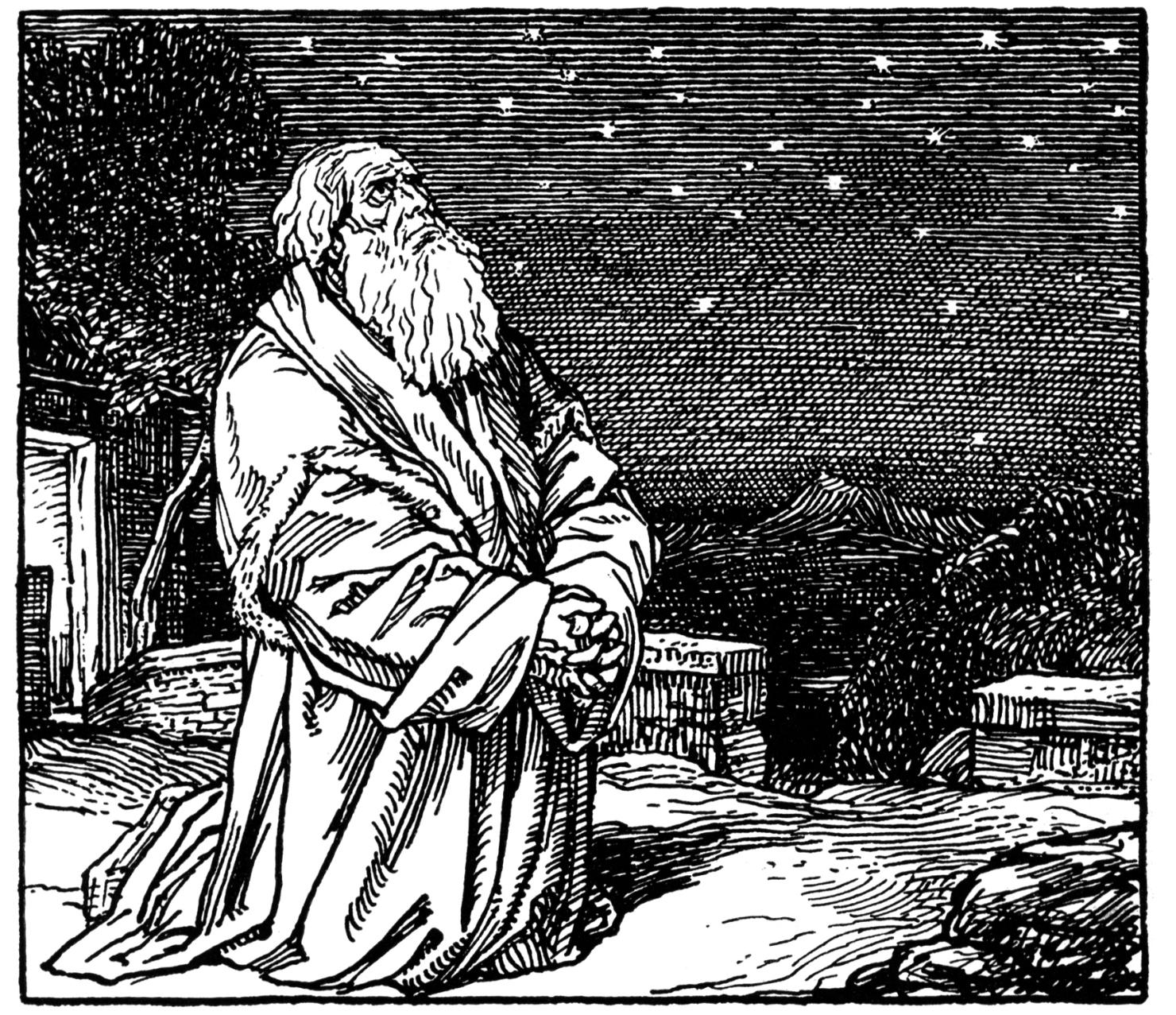
The Abrahamic Covenant—Foundation of the New Covenant

Why should a New Covenant saint care about the Abrahamic Covenant much less study it? What is the relevance of it? According to Paul, the Abrahamic Covenant forms the foundation for the New Covenant. (See his discussion of it in Romans 4.) Moreover, the apostle of Yeshua elsewhere declares that when one comes to Yeshua in faith, he becomes a part of the covenants (plural) of Israel and a member of the nation of Israel (Eph 2:12), becomes a literal child of Abraham (Gal 3:29), and becomes, by definition, the Israel of Elohim (Gal 6:16; Rom 4:16). He is no longer a Gentile without Elohim and without hope (Eph 2:11). He is now grafted into the olive tree of Israel whose roots go back to Abraham (Rom 11:17–24).

Again, notice Eph 2:12 where Paul mentions covenants (plural). The New Covenant is only one covenant. Which other covenants does Paul have in view here that are relevant to the saint? It should hopefully now be obvious that he is referring to the Abrahamic Covenant. This is why we need to study it.

The Abrahamic and Mosaic Covenants Are Subsections of the Torah Covenant (or the Old Covenant)

The Torah, the first five books of the Bible, is the chronicle of YHVH giving man instructions to follow, and of his entering into covenantal relationships with men and men either keeping those agreements or breaking them.

The word Torah means “instructions, teaching or precepts; specifically in biblical context: the teachings or instructions of YHVH to lead men into a righteous relationship with him through covenantal agreement.” The Torah is a giant b’rit or covenant. The Torah in a number of places even refers to itself by the Hebrew word b’rit or covenant. We see this in the following passages:

Exodus 34:27, And YHVH said unto Moses, Write you these words: for after the tenor of these words I have made a covenant with thee and with Israel.

Deuteronomy 29:1, These are the words of the covenant, which YHVH commanded Moses to make with the children of Israel in the land of Moab, beside the covenant which he made with them in Horeb.

The Torah is not unlike an instruction manual that one might receive from the manufacturer of an automobile, computer or some such device to help the buyer to operate his new purchase in a manner that allows him to receive years of trouble-free service. The Torah is YHVH’s instruction manual to help man to live in a way that brings life and blessing; it helps man to enter into a loving relationship with his Creator and to have a trouble-free relationship with his fellow man.

Within the first five books of the Torah-covenant are several smaller covenantal subdivisions such as the Abrahamic and the Sinaitic or Mosaic Covenants. The Theological Wordbook of the Old Testament (TWOT) describes this as follows, “Deuteronomy 29:13–14 shows the Sinaitic Covenant was an extension of the Abrahamic ­Covenant…. The Sinai renewal merely stressed man’s responsibility where the Abrahamic Covenant emphasized Elohim’s promise… The Priestly Covenant of Num 25:12–13, the Davidic Covenant of 2 Sam 7 and the New Covenant of Jer 31:31 are all administrative aspects of the same covenant, Elohim’s Covenant of grace. This covenant reaches its climax at the Incarnation where [Messiah] representing his people fulfilled all the stipulations of the covenant and bore the curse they deserved for breaking it” (p. 129).

The Torah is a covenant with various “administrative aspects” or subdivisions. Each succeeding covenant builds upon the previous covenant without cancelling out the requirements or provisions of the previous covenant. Such is consistent with the character Continue reading


Blog Scripture Readings for 10-22 Through 10-28-17

Aside

THIS WEEK’S SCRIPTURE READINGS FOR STUDY AND DISCUSSION:

Parashat Lekh L’kha — Genesis 12:1 – 17:27
Haftarah — Isaiah 40:27 – 41:16
Prophets — Joshua 15:1 – 21:45
Writings — Psalms 18:25 – 25:22
Testimony — Matthew 12:1 – 15:39

Our new Scripture Reading Schedule for 2017-2018 is available to download and print.

Most of this week’s blog discussion points will be on these passages. If you have general comments or questions on the weekly Scripture readings not addressed in a blog post, here’s a place for you to post those. Just use the “leave a reply” link below.

The full “Read Through The Scriptures In A Year” schedule, broken down by each day, can be found on the right sidebar under “Helpful Links.” There are 4 sections of scripture to read each day: one each from the Torah, the Prophets, the Writings, and from the Testimony of Yeshua. Each week, the Torah and haftarah readings will follow the traditional one-year reading cycle.

Weekly Blog Scripture Readings for 10/22/17 through 10/28/17.


Blog Scripture Readings for 10-15 Through 10-21-17

Aside

THIS WEEK’S SCRIPTURE READINGS FOR STUDY AND DISCUSSION:

Parashat Noach — Genesis 6:9 – 11:32
Haftarah — Isaiah 54:1 – 55:5 | Isaiah 66:1-24; Numbers 28:9-15**
Prophets — Joshua 8:1 – 14:15
Writings — Psalms 11:1 – 18:24
Testimony — Matthew 7:1 – 11:30

Our new Scripture Reading Schedule for 2017-2018 is available to download and print.

Most of this week’s blog discussion points will be on these passages. If you have general comments or questions on the weekly Scripture readings not addressed in a blog post, here’s a place for you to post those. Just use the “leave a reply” link below.

The full “Read Through The Scriptures In A Year” schedule, broken down by each day, can be found on the right sidebar under “Helpful Links.” There are 4 sections of scripture to read each day: one each from the Torah, the Prophets, the Writings, and from the Testimony of Yeshua. Each week, the Torah and haftarah readings will follow the traditional one-year reading cycle.

** A different Haftarah is read when it is a special sabbath in Jewish tradition. This week it is Shabbat Rosh Chodesh on the traditional calendar. Otherwise, Isaiah 54:11 – 55:5 would be read.

Weekly Blog Scripture Readings for 10/15/17 through 10/21/17.


Blog Scripture Reading Schedule for 10-8 Through 10-14-17

Aside

THIS WEEK’S SCRIPTURE READINGS FOR STUDY AND DISCUSSION:

Parashat B’reisheet — Genesis 1:1 – 6:8
Haftarah — Isaiah 42:5 – 43:10
Prophets — Joshua 1:1 – 7:24
Writings — Psalms 1:1 – 10:18
Testimony — Matthew 1:1 – 6:34

Our new Scripture Reading Schedule for 2017-2018 is available to download and print.

Most of this week’s blog discussion points will be on these passages. If you have general comments or questions on the weekly Scripture readings not addressed in a blog post, here’s a place for you to post those. Just use the “leave a reply” link below.

The full “Read Through The Scriptures In A Year” schedule, broken down by each day, can be found on the right sidebar under “Helpful Links.” There are 4 sections of scripture to read each day: one each from the Torah, the Prophets, the Writings, and from the Testimony of Yeshua. Each week, the Torah and haftarah readings will follow the traditional one-year reading cycle.

Weekly Blog Scripture Readings for 10/8/17 through 10/14/17.


Blog Scripture Readings for 10-1 Through 10-7-17

Aside

THIS WEEK’S SCRIPTURE READINGS FOR STUDY AND DISCUSSION:

Parashat V’zot HaBerachah — Deuteronomy 33:1 – 34:12***
Haftarah — Joshua 1:1-18
Prophets — Zechariah 7:1 – 14:21; Malachi 1:1 – 4:6
Writings — 2 Chronicles 30:1 – 36:23
Testimony — Revelation 16:1 – 22:21

Our full Scripture Reading Schedule for 2016-2017 is available to download and print.

Most of this week’s blog discussion points will be on these passages. If you have general comments or questions on the weekly Scripture readings not addressed in a blog post, here’s a place for you to post those. Just use the “leave a reply” link below.

The full “Read Through The Scriptures In A Year” schedule, broken down by each day, can be found on the right sidebar under “Helpful Links.” There are 4 sections of scripture to read each day. One each from the Torah, the Prophets, the Writings, and from the Testimony of Yeshua. Each week, the Torah and haftarah readings will follow the traditional one-year reading cycle..

*** Usually read on Simchat Torah

Weekly Blog Scripture Readings for 10/1/17 through 10/7/17.


Blog Scripture Readings for 9-24 Through 9-30-17

Aside

THIS WEEK’S SCRIPTURE READINGS FOR STUDY AND DISCUSSION:

Parasha — There is no Parasha Reading this week
Haftarah — Isaiah 57:14 – 58:14**
Prophets — Zephaniah 1:1 – 3:20; Haggai 1:1 – 2:23; Zechariah 1:1 – 6:15
Writings — 2 Chronicles 23:1 – 29:36
Testimony — Revelation 9:1 – 15:8

Our full Scripture Reading Schedule for 2016-2017 is available to download and print.

Most of this week’s blog discussion points will be on these passages. If you have general comments or questions on the weekly Scripture readings not addressed in a blog post, here’s a place for you to post those. Just use the “leave a reply” link below.

The full “Read Through The Scriptures In A Year” schedule, broken down by each day, can be found on the right sidebar under “Helpful Links.” There are 4 sections of scripture to read each day. One each from the Torah, the Prophets, the Writings, and from the Testimony of Yeshua. Each week, the Torah and haftarah readings will follow the traditional one-year reading cycle..

** A different Haftarah is read when it is a special sabbath in Jewish tradition. This week it is Yom Kippur on the traditional calendar. Leviticus 16:1-34 & Numbers 29:7-11 is traditionally read as the Torah Portion on Sabbath that falls on Yom Kippur with Isaiah 57:14 – 58:14 for the Haftarah.

Weekly Blog Scripture Readings for 9/24/17 through 9/30/17.