Baptisms—Plural?!

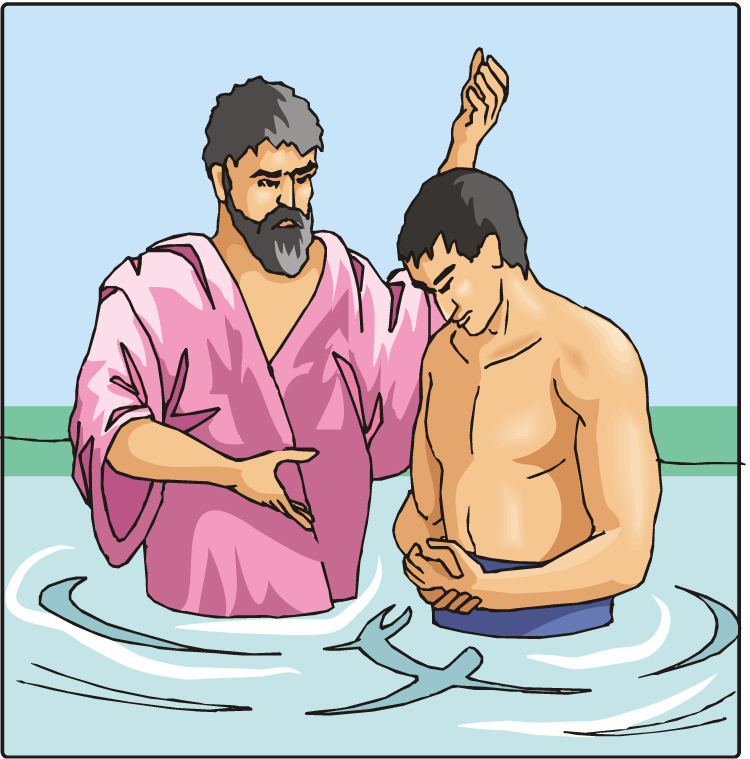
Acts 2:23, Be baptized. (Also see notes at Matt 28:19.) The term baptism in Hebrew is tevilah meaning “immersion,” which occurs at a mikveh meaning “a gathering of waters.” For those coming from a Christian background baptism is something that occurs at the beginning of a believer’s spiritual walk and involves baptism (immersion) in water for the remission of sins (Acts 2:38; 22:16; Rom 6:3–6; 1 Cor 15:29; Gal 3:27; Eph 4:5; Col 2:12; 1 Pet 3:21). Yet Paul the apostle talks of baptisms (plural) in Heb 6:2. What are these other baptisms? Evidently, in biblical thought immersion for the remission of sins is but one of many such ritual immersions.

Indeed, in the Testimony of Yeshua we not only read about baptism for the remission of sins, but the baptism of repentance of John the Baptist (Acts 1:5; 10:37; 13:24; 19:4), baptism (immersion) of the Set-Apart Spirit (Luke 3:16; Acts 1:5; 8:16; 11:16), and baptism with fire (Matt 3:11; Luke 3:16). Here we see the four types of immersions spoken of in the Testimony of Yeshua.

The concept of ritual immersion for a variety of reasons stems from commands in the Torah relating to ceremonial washings signifying spiritual and physical cleansing (Lev 14:1–4, 7, 9; Exod 19:10; Lev 8:6; 15:5, 8, 10–13, 16–18, 21; 16:4).

Moreover, the prophet Ezekiel speaks of YHVH sprinkling his people to cleanse them from their impurities, which is a picture of the new spiritual life of which immersion is e a type (Ezek 36:25).


Blog Scripture Readings for 3-25 Through 3-31-18

Aside

THIS WEEK’S SCRIPTURE READINGS FOR STUDY AND DISCUSSION:

(No Parasha This Week. See **note below.)
Haftarah — Joshua 5:2 – 6:1**
Prophets — Isaiah 27:1 – 35:10
Writings — Proverbs 29:1 – 31:31; Job 1:1 – 4:21
Testimony — Acts 3:1 – 7:16

Our annual Scripture Reading Schedule for 2017-2018 is available to download and print.

Most of this week’s blog discussion points will be on these passages. If you have general comments or questions on the weekly Scripture readings not addressed in a blog post, here’s a place for you to post those. Just use the “leave a reply” link below.

The full “Read Through The Scriptures In A Year” schedule, broken down by each day, can be found on the right sidebar under “Helpful Links.” There are 4 sections of scripture to read each day: one each from the Torah, the Prophets, the Writings, and from the Testimony of Yeshua. Each week, the Torah and haftarah readings will follow the traditional one-year reading cycle.

** A different Haftarah is read when it is a special sabbath in Jewish tradition. This week it is Shabbat Pesach on the traditional calendar with a special Haftarah reading of Malachi 3:4-24 and special Parasha reading of Exodus 12:21-51 & Numbers 28:16-25.

Weekly Blog Scripture Readings for 3/25/18 through 3/31/18.


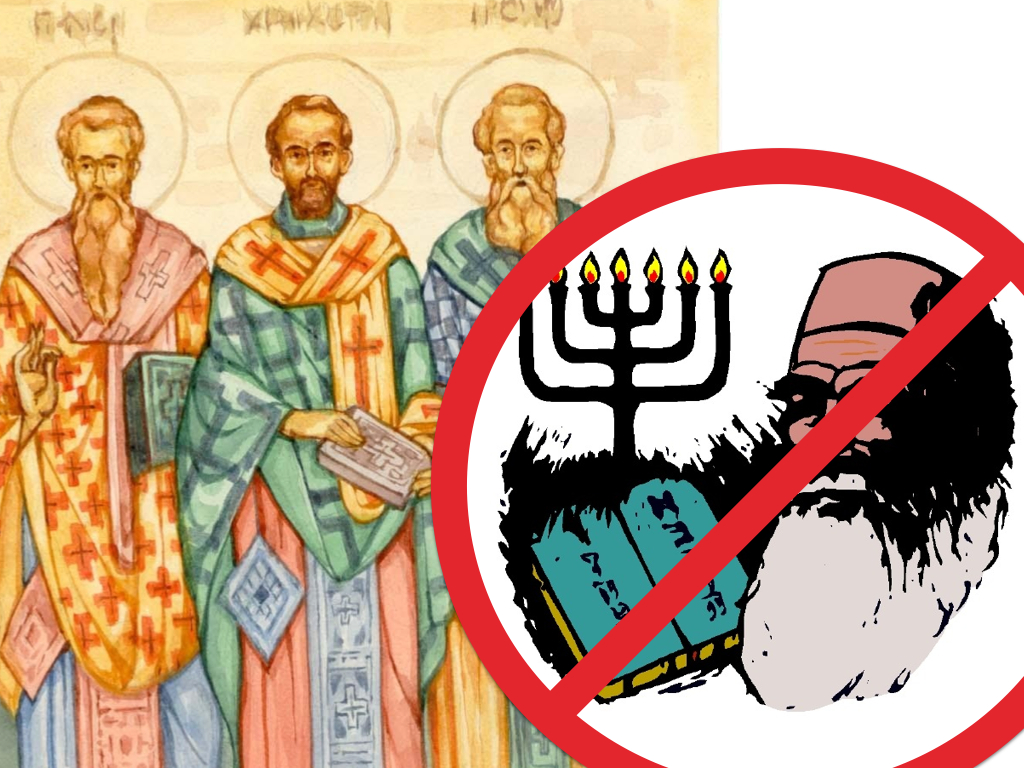
From A.D. 70 to A.D. 135 — How the Church Became Divorced From Its Hebraic Roots

What is called Christianity today in many ways is very dissimilar, and in many respects, outright antagonistic to the religion of the first-century, book of Acts believers. How did this come to be?

Many modern Christian churches prides themselves on being “a New Testament church, yet what they practice and believe is often very different from and even opposed to the teaching and practices of the apostles and primitive, first century church. For example, life for the apostolic believers in Jerusalem revolved around the temple (Acts 2:46; 3:1; 5:19-21; 5:42; Acts 21:26; 22:17; 24:18; 25:8; 26:21), and for those outside of the land of Israel, on most Sabbaths, they attended the local synagogue (Acts 13:14; 14:1; 17:1–2; 18:4, 7, 8, 19, 26; 19:8). Not only did the first apostles and early believers not celebrate any pagan influenced holidays such as Easter, Christmas, Halloween, Lent, and the rest, but they adhered to the Torah or law of Moses (see references below). The Book of Acts record is also clear that early believers kept the Bible festivals (as outlined in Lev 23; Acts 2:1; 18:21; Acts 27:9; 1 Cor 5:8; Jude 12) of Passover, Unleavened Bread, Pentecost, Day of Trumpets, Day of Atonement, Feast of Tabernacles, and the Eighth Day.

What’s more, the book of Acts records that both Stephen and Paul were falsely accused of teaching that the laws and customs of Moses were nullified, and, as a result of this false accusation, both lost their lives defending Torah-obedience.

A hundred other examples could easily be given showing how the Christian church has veered away from the Hebrew or Jewish roots of its faith, but hopefully, the reader gets the point.

So what happened to cause Christianity to veer so widely from the Hebrew or Jewish roots of its faith and to arrive at the place where it hardly resembles that religious faith from which it sprang? This is not an easy question to answer since one must look back nearly 2000 years and attempt to reconstruct the times in which our spiritual forefathers lived. Moreover, we must understand what was transpiring politically, religiously, and socially at the time to answer this question properly. It is also imperative that we understand the contextual social and linguistic fabric, the backdrop of history, and the parade of political Continue reading


Who originally canonized the NT? Definitely not the Roman Catholic Church!

John 21:24, We know. What now follows is discussion of the “we” passages in the writings of John.

James, the brother of John had been martyred in Jerusalem in the early sixties a.d., Peter in Rome in the mid to late sixties, and now it was left up to John, the remaining apostle, to finalize the New Testament canon. What is the proof of his hand in this task, and did he do it alone or did he have helpers—an editorial staff, if you will?

“John did not create the New Testament on his own. He had helpers. If one will read the writings of John carefully, these assistants can be recognized, and they played a very important part in the overall canonization. References to them are found from time to time cropping up within the contexts of John’s compositions. The elders who helped John were very important. … [M]any of them were eyewitnesses to the teachings of [Yeshua] in Judaea and they also saw him alive after his resurrection from the dead. They were a part of those 500 people still alive in a.d. 55 who Paul said were witnesses to [Messiah’s] resurrected body (1 Cor 15:6). This means that they were certainly Jewish Christians” (Martin, p. 398). At this point, Martin directs our attention to the “we” passages in John’s Gospel and epistles.

The first instance of a “we” passage is at the beginning and at the end of John’s Gospel. Chapter one starts with a “we” passage, and then throughout the 21 chapters of this Gospel John has recorded what Yeshua taught him, but then in John 21:24 there is a remark in the text that interjects what others besides John had to say about the Gospel of John. (ibid.)

John 1:14, And the Word was made flesh, and dwelt among us, (and we beheld his glory, the glory as of the only begotten of the Father,) full of grace and truth. (emphasis added)

John 21:24, This is the disciple which testifies of these things, and wrote these things: and we know that his testimony is true.

“Notice the abrupt change from the third person singular to the plural. The last part of this verse is introducing further witnesses, other than John (who are identified only by the pronoun “we”). Who were these men? In the Gospel they are not identified, but it can reasonably be assumed that the first readers of John’s Gospel must have been aware of their identities. They must have represented an officially recognized body of men since they boldly gave their witness to John’s written word, “And we know that the witness he [John] gives is true” (ibid., pp. 398–399).

This is just the beginning of the “we” passages. They occur numerous times in John’s short epistle to testify to the veracity of what John is saying pertaining to his recording of the Gospel account. In these writings, we see that in the middle of John’s narrative there will suddenly be an inclusion of a “we” passage as if to lend credibility to what he is saying. Examples of this are:

1 John 1:1–4, 1 That which was from the beginning, which we have heard, which we have seen with our eyes, which we have looked upon, and our hands have handled, of the Word of life; (for the life was manifested, and we have seen it, and bear witness, and show unto you that eternal life, which was with the Father, and was manifested unto us😉 that which we have seen and heard declare we unto you, that ye also may have fellowship with us: and truly our fellowship is with the Father, and with his Son Yeshua Messiah. And these things write we unto you, that your joy may be full. (emphasis added)

1 John 4:11, And we have seen and do testify that the Father sent the Son to be the Savior of the world. (emphasis added)

3 John 12, … and we also bear record; and ye know that our record is true. (emphasis added)

“It is clear that a body of men, other than John himself, was telling the readers of his [First and] Third Epistle[s] that they too were witnesses to the truth that John was stating. These Continue reading


No Broken Bones

John 19:36, Not one of his bones. The bones in the body of Yeshua couldn’t be broken, for the Living Word of Elohim can’t be broken even as the Written Word of Elohim can’t be broken (John 10:35).

James says that if we break one of YHVH’s Torah commands, we have broken them all (Jas 2:10). Sin is the breaking of the Torah (1 John 3:4).

Yeshua, the Living Torah, was perfect and sinless. He never broke a single Torah command, even as not a single bone in his body was broken. He was the perfect, blemish and sin-free sacrificial Lamb of Elohim with no broken bones (Exod 12:46).


Blog Scripture Readings for 3-18 Through 3-24-18

Aside

THIS WEEK’S SCRIPTURE READINGS FOR STUDY AND DISCUSSION:

Parashat Tzav — Leviticus 6:1(8)* – 8:36
Haftarah — Jeremiah 7:21– 8:3; 9:22-23 | Malachi 3:4-24**
Prophets — Isaiah 19:1 – 26:21
Writings — Proverbs 22:1 – 28:28
Testimony — John 19:1 – 21:25; Acts 1:1 – 2:47

Our annual Scripture Reading Schedule for 2017-2018 is available to download and print.

Most of this week’s blog discussion points will be on these passages. If you have general comments or questions on the weekly Scripture readings not addressed in a blog post, here’s a place for you to post those. Just use the “leave a reply” link below.

The full “Read Through The Scriptures In A Year” schedule, broken down by each day, can be found on the right sidebar under “Helpful Links.” There are 4 sections of scripture to read each day: one each from the Torah, the Prophets, the Writings, and from the Testimony of Yeshua. Each week, the Torah and haftarah readings will follow the traditional one-year reading cycle.

* Verse numbers in parenthesis refer to the verse number in Christian English Bibles when they differ from Hebrew Bibles or the Tanakh.

** A different Haftarah is read when it is a special sabbath in Jewish tradition. This week it is Shabbat HaGadol on the traditional calendar with a special Haftarah reading of Malachi 3:4-24.

Weekly Blog Scripture Readings for 3/18/18 through 3/24/18.


What is truth? Is there one single Truth?

In this age of moral relativism or situational ethics, it is unpopular to believe in, much less purport, that there is one single truth. Most humans live under the notion that every person can determine their own truth for themselves. The problem with this delusion is that when your truth conflicts with my truth there will inevitably be conflict. Ultimately, the result is theft, murder and wars.

The reality that a single truth is better than multiple truths is reflected in the laws of a nation. Ostensibly there is supposed to be one set of laws (or one truth that determines what is right and wrong) for all the citizens of that country, state or city. Obviously, if every person had a different set of  rules or truths when they got behind the wheel of an automobile, mayhem would occur. So at this level, it’s not difficult to see the need for one set of rules or, literally, one truth.

The difference of opinion as to what constitutes truth, however, occurs when we take this discussion to the moral and spiritual level. Truth at this level is less tangible and quantifiable. That’s why there are so many religions and philosophies extant. There seems to be something out there for everyone. It’s like going to an ice cream store with 1,031 flavors. And if you don’t like one of the existing flavors of “truth” you simply make up your own and call yourself “spiritual.” That’s what new ageism is all about! Each person can make up their own truth. This is, in reality, a self-styled religious system where  each person picks and chooses what they will or will not do. It’s the “have it your own way approach” to life. Or to put it another way, “Do what thou wilt,” which is a mantra of modern day satanists. Or “if out feels good, do it,” which was the hippy mantra of a generation ago. The Bible calls it “every man doing what’s right in his own eyes,” and further tells us that “there is a way that seems right to a man, but the end result is death.”

Ultimately, this is the rejection of the one, single divinely revealed Truth of Elohim. It’s the rejection of Torah—the instructions, teachings and precepts of Elohim. In reality, it’s accepting the lie of the serpent in the Garden of Eden at the tree of knowledge when he  told the first humans, in essence, “You really don’t have to obey Elohim. You can pick and choose which of his commands you want to do and reject the rest.” Well, anyone who knows their history and who has their eyes open to reality around them can see how that approach has worked out from then until now.

Make no mistake, the rejection of Elohim’s one truth is, in reality, a flat out rebellion against the Creator and a rejection of his truth, which the Bible defines as witchcraft or satanism (1 Sam 15:23).

Man lost paradise on earth when he rejected Elohim’s truth. The utopian paradise that everyone secretly longs for in their heart will not be regained until Yeshua the Messiah returns and establishes his kingdom on earth with the Torah as the one truth that everyone must live by. Even then, not everyone will accept Yeshua’s rule and truth. Those who don’t  will be condemned at the white throne judgment and cast into the lake of fire at the end of the age. Those humans who have accepted the Truth of Elohim will be allowed to eat from the tree of life and will experience the utopian paradise of the New Jerusalem on the new earth in the new heavens.

This all starts with an understanding of the definition of truth.

John 17:17, Truth. Yeshua, the One sent to this earth from Elohim in heaven, says here, “Thy [Elohim’s] Word is truth.” In Matthew 4:4, Yeshua said, “Man shall not live by bread alone, but by every word that proceeds out of the mouth of Elohim.”

So what is truth? The word in Hebrew for truth is emet (spelled aleph, mem, tav), which is comprised of the first, middle and last letters of the Hebrew alphabet. Truth embodies everything from the beginning to the very end of YHVH’s Word (literally, his Torah or the first five books of the Bible, and secondarily, the whole Bible from Genesis to Revelation).

Interestingly, the Scriptures call Yeshua “the beginning and the end of our faith” (Heb 12:2), and likens him metaphorically to alpha and omega (Rev 1:8, 11; 21:6; 22:13), which are the first and last letters of the Greek alphabet. These letters corresponds in symbolic meaning to the aleph and tav, which are the first and last letters of the Hebrew alphabet.

In Hebrew thought, truth consists of all of the Word of Elohim from the first letter in the Hebrew alphabet to the last letter. This same idea is picked up by the Jewish apostolic writers of the Testimony of Yeshua and applied to Yeshua who was the Word of Elohim sent to humanity in human form. As the human embodiment of the divine Word of Elohim he was referred to as the alpha and omega, or, in Hebraically, the aleph and the tav. We see this idea expressed in John 1:1–5 and 14 where it says of Yeshua,

In the beginning was the Word [Torah], and the Word was with Elohim, and the Word was Elohim. The same was in the beginning with Elohim. All things were made by him; and without him was not any thing made that was made. In him was life; and the life was the light of men. And the light shineth in darkness; and the darkness comprehended it not.… And the Word was made flesh and dwelt among us, (and we beheld his glory, the glory as of the only begotten of the Father) full of grace and truth.


John 18:38, What is truth? 

What Is Truth?

Pilate asked Messiah Yeshua, the Son of Elohim, a question many inquiring minds have Continue reading