Defeating the Unholy Trinity Within Each of Us

Deep within each person there exists an unholy trinity that is warring against that person attempting to pull him down to the lowest pit of man’s baser nature and to make him a captive of sin, darkness and death. This unholy trinity can be summed up in three words: me, myself and I.

22348040

Standing imperiously behind this unholy trinity of self, self and self are three things: the world, the flesh and the devil (Jas 3:15) or, stated another way, the lust of the eyes, the lust of the flesh and the pride of life (1 John 2:16). The world is telling the self that man is the sovereign king of his life. At the same time, the devil is telling the self the same thing and enticing him to rebel against Elohim’s authority. Simultaneously, man’s inner flesh nature with its sinful, rebellious downward bent is all to happy to comply with the siren song of the world and the devil. Literally,  this is the religion of the devil, and at the heart of it is rebellion against the Sovereign Creator of all things — YHVH Elohim. This satanic religion is called secular humanism. This is a fancy way of saying the religion of self exaltation and it’s housed in the Church of Me, Myself and I, and it involves finding one’s identity and fulfillment in the possessing of things, which is another not so subtle way of self-infatuation and adoration and bringing Continue reading →


Blog Scripture Readings for 7-20 through 7-26-14

Aside

THIS WEEK’S SCRIPTURE READINGS FOR STUDY AND DISCUSSION:

Parashat Masei — Numbers 33:1 – 36:13 
Haftarah — Jeremiah 2:4–28; 3:4
Prophets —Ezekiel 32:1 – 38:23
Writings —Ezra 9:1 – 10:44; Nehemiah 1:1 – 4:23
Testimony — 2 Corinthians 12:1 – 13:14; Galatians 1:1 – 5:26

Most of this week’s blog discussion points will be on these passages. If you have general comments or questions on the weekly Scripture readings not addressed in a blog post, here’s a place for you to post those. Just use the “leave a reply” link below.

The full “Read Through The Scriptures In A Year” schedule, broken down by each day, can be found on the right sidebar under “Helpful Links.” There are 4 sections of scripture to read each day. One each from the Torah, the Prophets, the Writings, and from the Testimony of Yeshua. Each week, the Torah and haftarah readings will follow the traditional one-year reading cycle.

Weekly Blog Scripture Readings for 7/20 through 7/26/14.


Exploring the Concept of Atonement as It Relates to the Tabernacle and Salvation

This is a lengthy article that explores the concept of the blood atonement as it relates to the salvation of the sinner. The idea of atonement for sin is rooted in the Torah and is not simply a New Testament concept. Redemption through atonement is the foundation of the gospel message. Understanding this will strengthen your faith in the message of Yeshua’s atoning death on the cross.

Natan

In Numbers 31:50 we read, “We have therefore brought an oblation for YHVH, what every man has gotten, of jewels of gold, chains, and bracelets, rings, earrings, and tablets, to make an atonement for our souls before YHVH.” In a similar passage in Exodus 30:15–16, we read, “The rich shall not give more, and the poor shall not give less than half a shekel, when they give an offering unto YHVH, to make an atonement for your souls. And you shall take the atonement money of the children of Israel, and shall appoint it for the service of the tabernacle of the congregation; that it may be a memorial unto the children of Israel before YHVH, to make an atonement for your souls” (emphasis added). The question before us is this: Do these passages in the Torah imply that YHVH grants man absolution based something other than the shedding of blood, and by logical extension, does this call into question our redemption from sin through our faith in Yeshua the Messiah’s blood atonement?
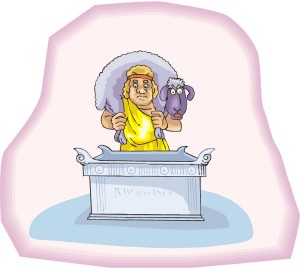
Lamb sacrifice

The concept of atonement can be a confusing one. Some in rabbinic Jewish circles teach that the Torah (i.e., the first five books of the Bible) does not require the shedding of blood for atonement of one’s sin to occur. According to the above Scripture, this could appear to be the case. Before briefly discussing the subject of atonement, let us not forget the stern warnings of the Apostle Peter when he warned end-time Saints against false teachers who would lure people away from the simple truth of the gospel:

But there were false prophets also among the people, even as there shall be false teachers among you, who privily shall bring in damnable heresies, even denying the Lord that bought them, and bring upon themselves swift destruction. And many shall follow their pernicious ways; by reason of whom the way of truth shall be evil spoken of. And through covetousness shall they with feigned words make merchandise of you: whose judgment now of a long time lingers not, and their damnation slumbers not…. But these, as natural brute beasts, made to be taken and destroyed, speak evil of the things that they understand not; and shall utterly perish in their own corruption; and shall receive the reward of unrighteousness, as they that count it pleasure to riot in the day time. Spots they are and blemishes, sporting themselves with their own deceiving while they feast with you; having eyes full of adultery, and that cannot cease from sin; beguiling unstable souls: an heart they have exercised with covetous practices; cursed children, which have forsaken the right way, and are gone astray, following the way of Balaam the son of Bosor, who loved the wages of unrighteousness; but was rebuked for his iniquity: the dumb ass speaking with man’s voice forbad the madness of the prophet. These are wells without water, clouds that are carried with a tempest; to whom the mist of darkness is reserved for ever. For when they speak great swelling words of vanity, they allure through the lusts of the flesh, through much wantonness, those that were clean escaped from them who live in error. While they promise them liberty, they themselves are the servants of corruption: for of whom a man is overcome, of the same is he brought in bondage. For if after they have escaped the pollutions of the world through the knowledge of the Lord and Saviour Yeshua Messiah, they are again entangled therein, and overcome, the latter end is worse with them than the beginning. For it had been better for them not to have known the way of righteousness, than, after they have known it, to turn from the holy commandment delivered unto them. But it is happened unto them according to the true proverb, The dog is turned to his own vomit again; and the sow that was washed to her wallowing in the mire. (2 Peter 2)

In the Testimony of Yeshua (New Testament), there is no question that when the concept of atonement (i.e., to make ransom for or to cover over man’s sins) is presented it is Continue reading →


 

Standing Against the Midianites in Your Life

Numbers 31:3, Take vengeance on the Midianites. YHVH is vehemently opposed to moral looseness. Midian, through its seductive women, nearly destroyed Israel. The decisive actions of a morally straight leadership prevented Israel from going the way of so many nations that have since collapsed due to moral decay. Sexual looseness and perversion must not be allowed to gain even a momentary toehold into our lives.

Do you aggressively resist and fight against the spiritual Midianites that would destroy your life, your family, your marriage and your spiritual destiny, or do you even slightly countenance the enemies of your soul in the secret or hidden areas of your life just to placate the passions of your carnal and sin-bent nature?

The spirit of Midian is to be found everywhere from the magazine rack at the checkout stand to the morning newspaper advertising women’s undergarments, from bumper stickers to billboards, from television ads (not to mention the television shows themselves) to the internet, and among political, religious leaders and entertainment celebrities. How about the modern immodest and decadent clothing styles of our youth, which barely cover the body, and where little is left to the imagination?

How does one defend oneself against this incessant onslaught? Remember, the best defense is a strong offense. Resolve and settle in your heart and mind ahead of time how you will react against the darts of the enemy when you suddenly find them aimed at you, and then stick to your defense plan! Pull down every mental stronghold and take every thought captive to the mind of Yeshua, and flee all lusts. (Strengthen yourself spiritually by reading the following scriptures: 1 Cor 6:18; 10:14; 2 Cor 10:3–6; 2 Tim 2:22.)


Blog Scripture Readings for 7-13 through 7-19-14

Aside

THIS WEEK’S SCRIPTURE READINGS FOR STUDY AND DISCUSSION:

Parashat Matot — Numbers 30:2 (1)* – 32:42 
Haftarah — Jeremiah 1:1 – 2:3
Prophets —Ezekiel 25:1 – 31:18
Writings —Ezra 2:1 – 8:36
Testimony — 2 Corinthians 6:1 – 11:33

Most of this week’s blog discussion points will be on these passages. If you have general comments or questions on the weekly Scripture readings not addressed in a blog post, here’s a place for you to post those. Just use the “leave a reply” link below.

The full “Read Through The Scriptures In A Year” schedule, broken down by each day, can be found on the right sidebar under “Helpful Links.” There are 4 sections of scripture to read each day. One each from the Torah, the Prophets, the Writings, and from the Testimony of Yeshua. Each week, the Torah and haftarah readings will follow the traditional one-year reading cycle.

* Verse numbers in Hebrew Bibles and Christian Bibles can sometimes be different. The verses in the parenthesis refer to the verse number in Christian Bibles.

Weekly Blog Scripture Readings for 7/13 through 7/19/14.


The Significance of Women in the Bible

Numbers 27:1–11, The daughters of Zelophehad. A Torah Commentary For Our Times/ATCFOT (UHAC Press, NY, 1993) has an interesting discussion regarding the incident involving the daughters of Zelophehad (Num. 27:1-11) that may answer some questions that contemporary women have regarding the Torah’s view of women. “Modern commentator Jacob Milgrom contrasts ancient Israelite practices of inheritance with those of their neighbors.” He notes that the practice of equality of inheritance between sons and daughters was upheld in Egypt and Mesopotamia one thousand years before the codification of the Torah. Later on the Greeks can be added to this list of countries that practiced “equal rights.” Milgrom then asks, “In face of such ‘equality’ of treatment how then are we to explain the fact that the Bible gives women no inheritance rights except in the case where there are no sons?” Does the Torah seem to discriminate against women regarding the inheritance of land and property from the estates of their parents, he asks? (p. 80)

21486321

“Milgrom suggest that in contrast to ancient Israel’s neighbors…where ‘centralized urban societies’ already existed, the early Torah laws of the Israelites reflect a nomadic-clan structure. In such a society ‘the foremost goal of its legal system was the preservation of the clan.’ Equity between members of the tribe or family preserves peaceful relationships and strengthens cooperation between all person.” He goes on to say that this explains the justness of the pleas of the daughters of Zelophehad where the principle of upholding the clan is preserved. The Torah sees that the daughters receive their father’s inheritance and at the same time that the clan and father’s name are preserved. (ibid.)

This solution does not promote equal rights, as we know it today, with sons regarding inheritance. Both the Torah and Talmud teach that in most cases inheritance of property is from father to son and that women share the lot of their husbands and do not inherit from their fathers (ibid., quoting from JPS Commentary: Numbers, pp. 482-484).

The Jewish sages further note that though the daughters aired their complaints about Continue reading →


Are you a Phinehas or a Zimri?

Phinehas the priest stood for righteousness by taking a stand against wickedness. At the same time, Zimri compromised morally and followed the lusts of his flesh by succumbing to the ways of this world as he fell into fornication with a heathen woman.

Numbers 25:7, Phinehas…took a javelin. Phinehas, the priest, rose up against evil and took a stand for righteousness and YHVH commended him for it. In this case, the grandson of Aaron the high priest was not acting as a self-appointed vigilante as it may appear. Rather, YHVH had given the priests the authority to act as judges in Israel and to pronounce sentence in criminal matters (Deut 17:9–11). Spear 1-21279897

Additionally, Phinehas was doubly justified in his action against the fornicators (Cozbi and Zimri), since he was an eyewitness of these sexual crimes, and the Torah teaches that the hand of the eyewitness was to be the first to rise up in executing judgment against the criminals (Deut 17:6; Ezek 44:24). So as an eyewitness and as a priest, he was legally justified in his actions. The priests and Levites were to act as Israel’s legal experts (Lev 10:10–11; Deut 24:8; 33:10; 2 Chron 17:9; 30:22; Neh 8:2, 8; Hag 2:11; Ezek 44:23; Mal 2:7) and to make determinations between the holy and the profane (Ezek 22:26; 44:23).

Who are YHVH’s priest on the earth today? According to Peter, and John the saints are those priests (1 Pet 2:7; Rev 1:6; 5:10; 20:6). As such, the saints presently possess the divinely mandated legal authority to fulfill the responsibilities of the priesthood of old when it comes to Continue reading →