
Fear Elohim and You Will Fear Nothing Else

Deuteronomy 3:22, Must fear them. The Scriptures reveal an interesting, and counter-intuitive spiritual principle that humans have a hard time wrapping their heads and hearts around. It is this: When we fear Elohim, we won’t fear our enemies. When we don’t fear Elohim, we will fear and be tormented by our enemies.

What is it to fear Elohim? It is to walk in the wisdom of his commandments or his loving instructions in righteousness. Rebellious humans have a hard time doing this, since their sin nature is opposed to submitting to YHVH legal instructions (Jer 17:9; Rom 8:7). Once, however, one gets their sin nature under control with the help of Yeshua, and one begins to love and fear Elohim by keeping his commandments, suddenly the physical things they once feared no longer have any hold on their hearts and minds.

Having defeated the greatest enemy of all—one’s sin nature—with Elohim’s help effectively empowers and emboldens the saint. He now realizes he can, with Elohim’s help, overcome any enemy.

So now what is there to fear?

Moreover, at the end of one’s life, the overcoming saint has the ultimate victory in his possession. That is the victory over death, which is the mother of all fears!

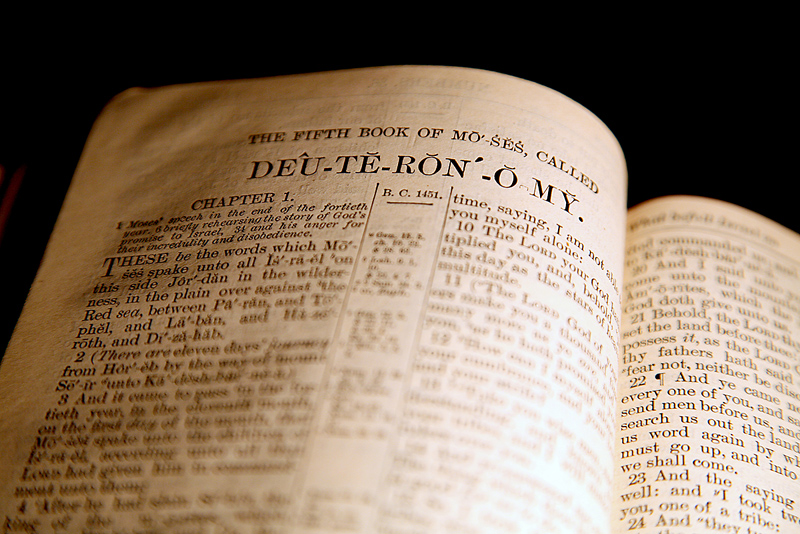
 

Lessons from Deuteronomy on Faith, Fighting and Overcoming

Deuteronomy 1:26–28, Moving forward in the face of obstacles. Many times in our spiritual walk we are just at the point of spiritual breakthrough, but we receive an evil report about some spiritual giants that is blocking our forward movement and our resolve to advance melts. It seems sometimes that if we could just see what the future holds for us that it would be much easier for us to go forward! Yet Yeshua said, Blessed are those who haven’t seen, yet still believe in YHVH’s promises (John 20:29). Do you have what it takes to go on without being deterred by the world, the flesh and the devil? How can one go forward in faith if one cannot see where one is going? It gets down to personal and intimate relationship with your Heavenly Father, through Yeshua. He directs us through his Spirit. Can you hear his voice with your spirit when he tells you, “This is the way, walk you in it,” (Isa 30:21)?

Deuteronomy 1:29, He will fight for you. How does Elohim fight for us? Let’s look at the example of the children of Israel. We can learn a lot from them (1 Cor 10:11). How many examples are there of the Israelites sitting down and doing nothing while YHVH fought for them? Few if any. What then does YHVH require? We must do our part, and he Continue reading


Which biblical covenant(s) apply to you?

Ephesians 2:12, Covenants. The Apostle Paul makes a very interesting and often overlooked statement in Ephesians 2:12. For ­context we will quote the surrounding verses:

Wherefore remember, that you being in time past Gentiles in the flesh, who are called Uncircumcision by that which is called the Circumcision in the flesh made by hands; that at that time ye were without Messiah, being aliens from the commonwealth [citizenship] of Israel, and strangers from the covenants of promise, having no hope, and without Elohim in the world: but now in Messiah Yeshua ye who sometimes were far off are made nigh by the blood of Messiah. (emphasis added)

Paul, talking to the redeemed believers in Ephesus, states that they had been (past tense) Gentiles (comprised of various ethnic or people groups) without Elohim and without hope, but now, through the work of Yeshua at the cross, provision had been made for these alienated people-groups to become citizens of the nation of Israel. Elsewhere Paul refers to these (former) Gentiles as now being Israelites and defines them as heirs to the Continue reading


Why do you still consider yourself to be a Gentile?

Ephesians 2:11, Gentiles. Paul says in a number of places that those who come to Yeshua are no longer Gentiles but are the children or seed (literally “sperm,” which is the meaning of the Greek word) of Abraham (Eph 2:11–19; Rom 4:16; 9:8–11; Gal 3:7,9,14,28–29). The word Gentiles as used in the Scriptures (both in the Hebrew and the Greek languages) simply means “ethnic groups or nations.” There are many places in the Scriptures where Jews and Israelites are referred to as “Gentiles.” There is no class of people called Gentiles in the spiritual body of Yeshua. Scripture uses the following terms for the redeemed of YHVH: the saints, the called out ones (or church), the body of Yeshua (1 Cor 10:16; 12:27; Eph 4:12) the one new man (Eph 2:15), sons of Elohim (Rom 8:14, 19; Phil 2:15; 1 John 3:1, 2), children of Elohim (Rom 8:16, 21; Gal 3:26; 1 John 3:10), or Abraham’s offspring (Gal 3:29), the bride (Rev 18:23; 21:2, 9; 22:17) for example.

Any attempt by anyone to keep the Jew—Gentile division alive within the body of Yeshua is in effect keeping up the middle wall of partition that the Apostle Paul gave his ministry life and eventually his physical life to tearing down (see Eph 2:11–19). It is also going against Continue reading


The Book of Deuteronomy: of Moses’ Farewell Address

Deuteronomy 65289264

Outline of Sefer Devarim/The Book of Deuteronomy

Chapter 1:1–5, Introduction

Chapters 1:6–4:40, First Discourse

Moses gives a veiled rebuke for sin and disobedience, and gives a review of the journey from Mount Sinai to Kadesh with exhortations to obedience.

Chapters 4:44–11, Second Discourse, Part 1

The religious foundations of the covenant, the spirit in which it is to be kept and the motives to right obedience are discussed. Moses shows how the covenant defines the relationship between YHVH and Israel and emphasizes the basic spiritual demands that such a relationship imposes upon Israel.

Chapters 12–26, Second Discourse, Part 2

The code of law dealing with:

Worship, Chapters 12:1–16:17

Government, Chapters 16:18–18

Criminal Law, Chapters 19:1–21:9

Domestic Life, Chapters 21:10–25

Rituals and the Sanctuary, Chapter 26

Chapters 27–30, Third Discourse

The enforcement of the Torah-law with its blessings and curses; establishment of a fresh covenant between YHVH and Israel (i.e., the younger generation).

Chapters 31–34, The Last Days of Moses

Chapter 31, Committal of the law to the keeping of the priests.

Chapter 32, The Song of Moses (a prophecy about Israel’s future).

Chapter 33, Moses’ patriarchal blessing over the tribes of Israel.

Chapter 34, The death of Moses.

Overview of the Book of Deuteronomy/Devarim from Various Commentators

This last book of the Torah starts out with “These are the words which Moses spoke ….” The Hebrew name for Deuteronomy is Devarim meaning “words,” which is the plural form of devar meaning “word, speech, a matter or thing, a commandment, a report, a Continue reading