Galatians three: What was added?

Galatians 3:19, It was added/sent again. This refers to the Torah in its codified form as given to the Israelites at Sinai, and to the sacrificial system that was imposed on the rebellious Israelites until the time of Yeshua’s death on the cross (see notes at Jer 7:22). Let me explain.

The Levitical priesthood (along with the elaborate tabernacle sacrificial system) was a temporary institution that YHVH added (Gal 3:19 cp. Jer 7:21–22) to the nation of Israel’s legal system because of the firstborn Israelites’ (who YHVH commissioned to be the priests of their families, Exod 19:22 cp. Exod 13:2, 11–16) failure to prevent Israel from worshipping the golden calf and to sin by faithlessly grumbling and murmuring against Elohim. In a general sense, YHVH didn’t give the Israelites the Torah at this time—the principles of which they and their forefathers already knew (e.g. Gen 26:5), and which were in existence since the foundation of the earth. These eternal and inviolate principles had already been passed on down to successive generations by men like Enoch, Noah and the patriarchs. So what other law was added? At Mount Sinai, the eternal principles of the Torah were codified into an administrative legal system (with civil penalties including the institution of a sacrificial system as a penalty for sin, which the Bible calls this system “the law of Moses”), and this codified system became the constitution of the nation of Israel. At the same time, YHVH gave them the institution of the Levitical priesthood and the sacrificial system (Gal 3:19), which (along with the rest of the Torah) pointed them to their need for Yeshua the Savior (Gal 3:16, 24). An example of such a codified system of law would be the American Constitution, the principles of which the founding fathers gleaned from many sources (including the biblical Torah, the ancient Greeks, English common law, the English Magna Carta and the French philosophers), which they then combined to make the legal code that now governs the United States (in theory). A similar situation occurred with the law of Moses, except the source for it was the Word, will, heart and character of Elohim, which he had revealed his servants of antiquity, and which then had been passed on down as well as additional laws that were given to Moses pertaining to governing the nation of Israel.

The civil penalties that the law of Moses prescribes along with the sacrificial and Levitical systems were temporary institutions that pointed, like a schoolmaster, tutor or pedagogue (to use Paul’s analogy in the latter part of Galatians chapter four), to Yeshua the Messiah, and which were completely fulfilled by the Messiah as the writer of Hebrews goes on to explains in great detail (see Hebrews chapters 5–11). 

The general principles of the Torah are inviolate and have never changed. This includes the ten commandments, the biblical feasts, the Sabbath, the dietary laws, and all the laws and principles that regulate moral behavior as well as tell us how to love Elohim with our total being and our neighbor as ourselves. These are the eternal principles of the Torah of which Yeshua said that not one jot or tittle would pass away, that we must obey (both letter and spirit), and that obedience to will determine the saint’s rewards in the kingdom of Elohim. Yeshua explains all these things in his landmark and pivotal teaching that history now refers to as the Sermon on the Mount (i.e. Matthew chapters five through seven). Read it, believe it and follow these principles as they lead and guide you into the kingdom of heaven through Yeshua the Messiah!

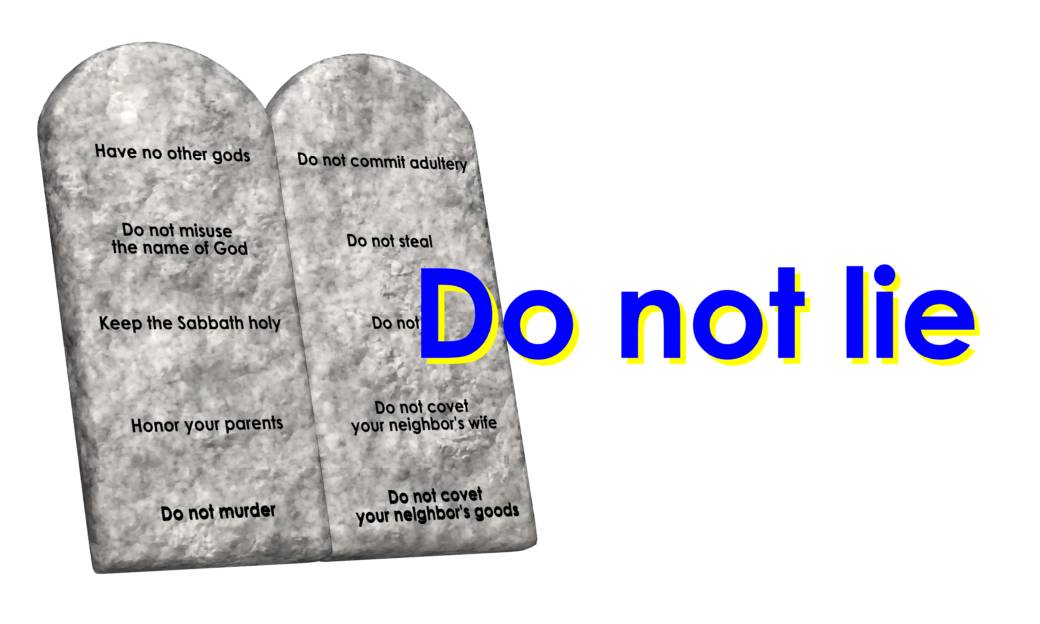
 

What Is the Biblical Definition of Legalism?

Galatians 3

A Wild and Crazy Place to Be

The spiritual Babylon of the church system is a warm and comfortable place in which to live. Within its comfort zones, it has fixed boundaries and clear delineations. When one steps out of the mainstream church system, however, and into a more Hebraic and Torah-pursuant spiritual orientation, it can becomes the shooting gallery of the wild, wild west of doctrines and ideas. 

Outside the so-called organized church system, or churchianity for short, it’s a free-for-all wilderness of every man doing what’s right in his own eyes. In this wilderness outside of organized religion, one has to determine which church beliefs to hold on to and which ones are lies and unbiblical traditions our spiritual fathers have passed on down to us. Here one must learn to separate the spiritual wheat from the chaff. As one’s eyes are opened to the pro-Torah Hebrew roots of the Christian faith, there are many new ideas and doctrines to consider. When coming onward and upward to a fuller knowledge of the truth, one must determine priorities without falling prey to more false doctrines and legalism. This includes determining which biblical truths are the trunk of the tree issues, and which areas are the twigs and the branches. 

In the midst of this confusion, there are many winds of doctrines blowing around capturing people’s attention. People often get sidetracked from the trunk of the tree issues and get hung up on nonessential issues. Paul warned about this.

That we henceforth be no more children, tossed to and fro, and carried about with every wind [violent agitation, very strong tempestuous wind] of doctrine [teaching, instruction], by the sleight [deception] of men, and cunning craftiness, whereby they lie in wait to deceive [to delude, lead astray from the right way]. (Eph 4:14)

If one is not grounded firmly on the foundation of essential biblical truths, one can get hung up on side-issues that can become nonessential pet doctrines. Those who fall prey to this tendency will often gravitate toward biblical teachers who agree with them. A pet doctrine can become so important to a person that it can become a spiritual idol in one’s heart. One can become so convinced of the importance of a nonessential doctrine or belief that one will begin to demand that others around them conform to it, and then view those who don’t as somehow inferior spiritually. This is legalism. These pet doctrines often lead to pride and exclusivism toward those who do not agree with us and our pet doctrines. If not careful, we can develop an us versus them mentality, and become prideful because we posses a truth that the next guy doesn’t. 

For the time will come when they will not endure sound doctrine; but after their own lusts shall they heap to themselves teachers, having itching ears; and they shall turn away their ears from the truth, and shall be turned unto fables. (1 Tim 4:3)

What Is Legalism?

When one begins to emphasise pet doctrines there is a tendency toward exclusivism (wanting to hang out with others who also hold to these same pet doctrines), which can lead to legalism. 

Continue reading
 

Who Is the Real Judaizer?

Galatians 2:14, To live as a Jew. The Greek word here is Ioudaidzo from which the term Judaizer derives. This is the only occurrence of this work in the Testimony of Yeshua. Biblically speaking, who and what is a Judaizer?

Mainstream Christians often label those believers in the gospel and who adhere to the Torah Judaizers. Is this a correct label and is the biblical historical origin of this term? 

The term Judaizing or Judaizer as the mainstream church understands it today isn’t found in the New Testament per se. However, church historians and Bible teachers have applied this term retrospectively to those in the primitive Christian church as well as to modern saints who advocated adherence to the Torah. This is ironic since Paul advocated Torah obedience to the believers in Rome (who were both Jewish and Gentile). So while Paul teaches Torah observance on the one hand, many believe that Paul was teaching liberty from the Torah (in book of Galatians, for example) on the other hand. This has led to much confusion about what Paul really believed. Was he conflicted in his beliefs being both for and against the Torah? Or maybe he gradually changed his opinion from pro-Torah to anti-Torah. This latter proposition seems unlikely since Bible scholars tell us that Romans and Galatians were written nearly at the same time. So the term Judaizer as used by modern Bible scholars seems to be a canard ­— a fabricated concept, or a concept built on a false premise. 

The term Judiazer is found only in two verses in the entire Bible. The first place is in Esther 8:17 where the Greek Old Testament (LXX) uses the Hebrew verb yachad meaning “to become a Jew,” or “to profess oneself to be Jewish.” It was used in reference to those Persians who suddenly “converted” to Judaism to escape Jewish persecution. The final reference is found in Galatians 2:14 were Paul was accusing Peter, not of being Torah-obedient, but rather of adhering to non-biblical Jewish traditions, which forbad Jews and Gentiles from eating together. In reality, adherence to these extrabiblical Jewish traditions was Judaizing — a fact that seems to be missed by the majority of Christian scholars from the second century to this day! This isn’t a new thing, for Yeshua accused the learned Jewish religious leaders of his day of the same thing: “making the word of Elohim of no effect through your traditions which you have handed down” (Mark 7:15). Earlier he said, “You reject the commandment of Elohim, that you may keep your tradition” (Mark 7:9).

In reality, what Paul was fighting against was not the Torah, which he advocates, defends and claims to follow himself in a number of places in his writings, but he rejects the idea that one can be saved by their works including circumcision. After all, this issue was the focus of the debate of the first Jerusalem council in Acts 15. In combatting the false notion that circumcision, for example, must be a prerequisite to salvation, Paul opposes this idea in a grand and logical step-by-step fashion in the book of Romans, and again in the book of Galatians in a knock-out-the-opponent-quickly manner. So if we’re to apply the term Judaizer to anyone, it must be applied to those advocating a works-based salvation formula, not to those who teach that salvation is by grace alone through faith in Yeshua with the spiritual fruits of conversion being love toward Elohim and one’s fellow man as defined by the Torah — something this author strongly advocates. Sadly, this fundamental truth of who a Judaizer really was seems to have been missed by the majority of early church fathers and modern mainstream church theologians who have continued to repeat the anti-Semitic theological viewpoints handed down to them starting with the second century church fathers onward, and who fear rejection from their peers and supporters if they go against millennia of church tradition.


Confronting the Lies About Paul—Galatians Explained from a Hebraic Perspective

You have been lied to about Paul and his epistle to about the Book of Galatians!

An Important Question

When addressing the lies that the mainstream church has been dishing out like a load of dung against Paul and the Word of Elohim (i.e. Yeshua the Messiah, the Word of Elohim) since the time of the early church fathers, let us first ask an important question that has far-reaching implication including whether you can trust the Bible and whether you are saved or not. In the Epistle to the Galatians. It is this: Is Paul advocating the abrogation of the Torah-law as mainstream Christianity teaches or not?

This is the lens through which most Christians view Galatians. For example, the chapter subheadings in my NKJV Bible reveal the antitorah bias of mainstream Christianity. The heading above Galatians 2:11 reads, “No Return to the Law,” and the heading over Gal 3:10 reads, “ The Law Brings a Curse.” When Christians study their Bibles and encounter these subheadings that are written by men and not inspired by the Spirit, what are they to think? Most don’t questions the scholars who translate the Bible or the publishers sell the Bibles. Most readers will automatically thinks to themselves, “After all, these translators and publishers are Bible experts, they know more than I do, so who am I to question them?”

Interestingly, the same author of Galatians elsewhere admonishes us to, “Prove/test all things; hold fast to that which is good” (1 Thess 5:21). This is the responsibility of each saint as he studies the word of Elohim. Therefore, it behooves us to have a touch of intellectual scepticism when studying the Scriptures to insure that we’re not unwittingly putting our faith in the traditions and doctrines of men by which the word of Elohim has been made of none-effect (Mark 7:913), and that we haven’t inherited lies that have been passed on down to us from our spiritual fathers (Jer 16:19). Let us instead be like the righteous Bereans who “searched the Scriptures daily to find out whether these things were so” (Acts 17:11).

Continue reading
 

Dear Natan: Can a Woman Lead a Congregation?

This question was asked by Charity in the Philippines. I answered her briefly in the comments section of this blog, but below is a more thorough answer.

The Bible, both the Tanakh (OT) and the Testimony of Yeshua (NT), promote male leadership, eldership and priesthood as normative. However, there have been times when men were not available to fulfill the plans and purposes of Elohim, so he used woman. A most notable example was Deborah who was both a prophetess and a judge in Israel (although she was most likely the wife of Barak who was a military leader in Israel, which would have made her the co-leader of Israel with her husband). Huldah was a prophetess, a judge and a counselor to kings. 

The Testimony of Yeshua carries the idea of male leader into the church. In the apostolic era, the Head Leader, of course, was Yeshua himself, then there were his twelve male apostles, and then there were male elders over each congregation (1 Tim 3:1–7; Tit 1:5–9), and the head over each family was the husband and father (Eph 5:22–33). 

The apostolic writings also promote the idea of the priesthood of all believers (e.g. 1 Pet 2:9; Rev 1:6). When it comes to salvation and spiritual equality, in YHVH’s eyes there is neither male or female, Jew or Gentile. All are equal and one in Messiah (Rom 10:12; Gal 3:28; Col 3:11). 

However, the New Testament Scriptures record that the church was still led by male elders. Nevertheless, there are examples of husband and wife ministry teams. In Romans we see the husband and wife apostolic team of Andronicus and Junia (Rom 16:7). Another example of such a evangelistic-pastoral team was Aquila and Priscilla. They worked so closely together that sometimes Scripture mentions wife first, and sometimes the husband (Acts 18:2, 8, 26. Rom 16:3; 1 Cor 16:19; 2 Tim 4:19). 

One example of a likely woman pastor is Lydia who, apparently, led a church in her home (Acts 16:40). The Bible reveals that if there is no man to do fulfill YHVH purposes, he will raise up a woman to do it. The only caveat is that to follow a biblical authority structure, she needs to be under the authority of or accountable to a male elder in some way. Lydia would have been under the eldership of Paul who led her to Yeshua and baptized her (Acts 16:14).

If a woman is leading a congregation and she is married, she should be doing so in conjunction with her husband, with his blessing. If she is not, then she is out of order spiritually. If she’s not married, then she needs to be working in conjunction with male eldership.


Hoshana Rabbah Ministry Update July 2019

This video is for those who feel a special spiritual connection with Natan Lawrence and Hoshana Rabbah ministry. Since I haven’t made any videos in a while, it may appear that we (my wife, Sandi, and I) have ceased our ministry activities. Au contraire! In this video, I briefly discuss our past and present ministry activities and our plans for the future. Thank you for watching and for your encouragement and support. BTW, I will continue to make videos as the Spirit of Elohim directs me to do so. Please stay tuned…


Blog Scripture Readings for 7-28 Through 8-3-19

Aside

Parashat Matot-Masei — Numbers 30:2 (30:1)* – 36:13 
Haftarah — Jeremiah 2:4-28; 3:4
Prophets — Ezekiel 25:1 – 31:18
Writings — Ezra 9:1 – 10:44; Nehemiah 1:1 – 4:23
Testimony — 2 Corinthians 12:1 – 13:14; Galatians 1:1 – 5:26

Most of this week’s blog discussion points will be on these passages. If you have general comments or questions on the weekly Scripture readings not addressed in a blog post, here’s a place for you to post those. Just use the “leave a reply” link below.

The full “Read Through The Scriptures In A Year” schedule, broken down by each day, can be found on the right sidebar under “Helpful Links.” There are 4 sections of scripture to read each day: one each from the Torah, the Prophets, the Writings, and from the Testimony of Yeshua. Each week, the Torah and haftarah readings will follow the traditional one-year reading cycle.

* Verse numbers in parenthesis refer to the verse number in Christian English Bibles when they differ from Hebrew Bibles or the Tanakh.

Weekly Blog Scripture Readings for 7/28/19 through 8/3/19.