Should you vote for the “lesser of two evils”?

Deuteronomy 9:4–5, Do not think. YHVH chose the lesser of two evils when he chose the Israelites. His choice was between the more sinful pagans and the less sinful Israelites. Let’s be real here. He made the same choice when he chose you and me! Yes I get the fact that he chose the Israelites ultimately because he was bound to his covenant with Abraham, but let’s not forget one thing. After the golden calf incident, YHVH threatened to destroy all the Israelites and fulfill his promises through Moses’ seed. So he could have circumvented the majority of the sinful Israelites and still fulfilled his promises to Abraham through Moses’ offspring. Bottom line. But for the grace of Elohim none of us stand a chance. When he extended a call to you and me to receive salvation, he made a choice between the lesser of two evils!

Now let’s kick this ball into a different arena.

When voting for elected officials, we will never have the perfect candidate. It will always be a vote for the lesser of evils until King Yeshua returns to this earth and sets up his world-ruling government at which time voting won’t even be an option. His government will be forcibly imposed on humanity and enforced with a rod of iron! But you hopefully get my point. When voting, I usually have to vote between the lesser of two evils. If YHVH sometimes has to make the choice between the lesser of two evils, who am I to say that I’m better than the Creator by refusing to vote, while waiting for the perfect candidate? I wasn’t the perfect candidate, yet he “voted” for me?


Gallery of Alpine Tree Art

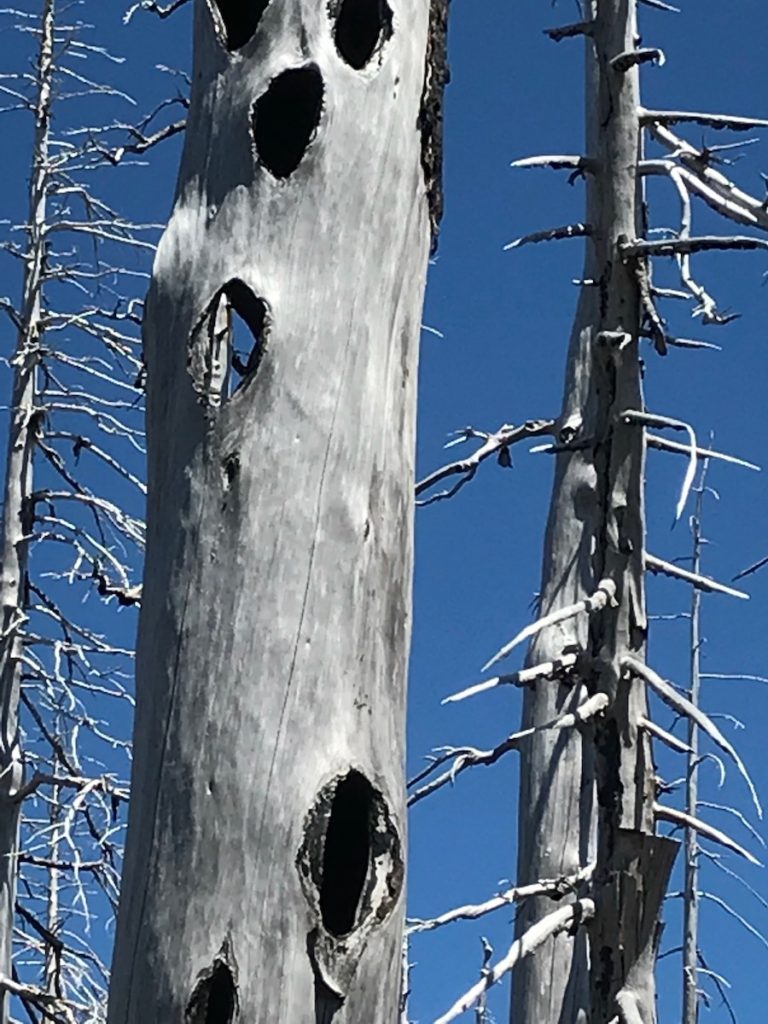
Trees plus extreme weather conditions plus high alpine elevations equal a high level of art that the world’s foremost human sculptures and painters down through the ages could only dream of emulating.

Be honest. What is more exquisitely beautiful? The photos below of the some of the world’s greatest art or what follows?

I took this photo of the Mona Lisa by Da Vinci when I was in Paris this spring.
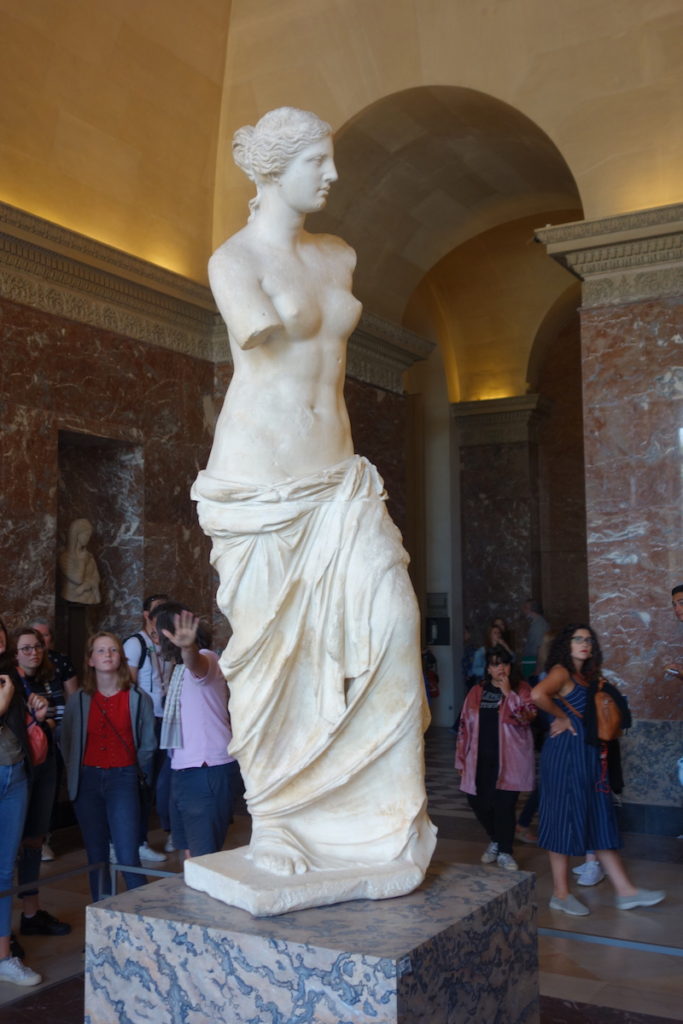
Here’s my photo of the Venus de Milo in the Louvre in Paris.
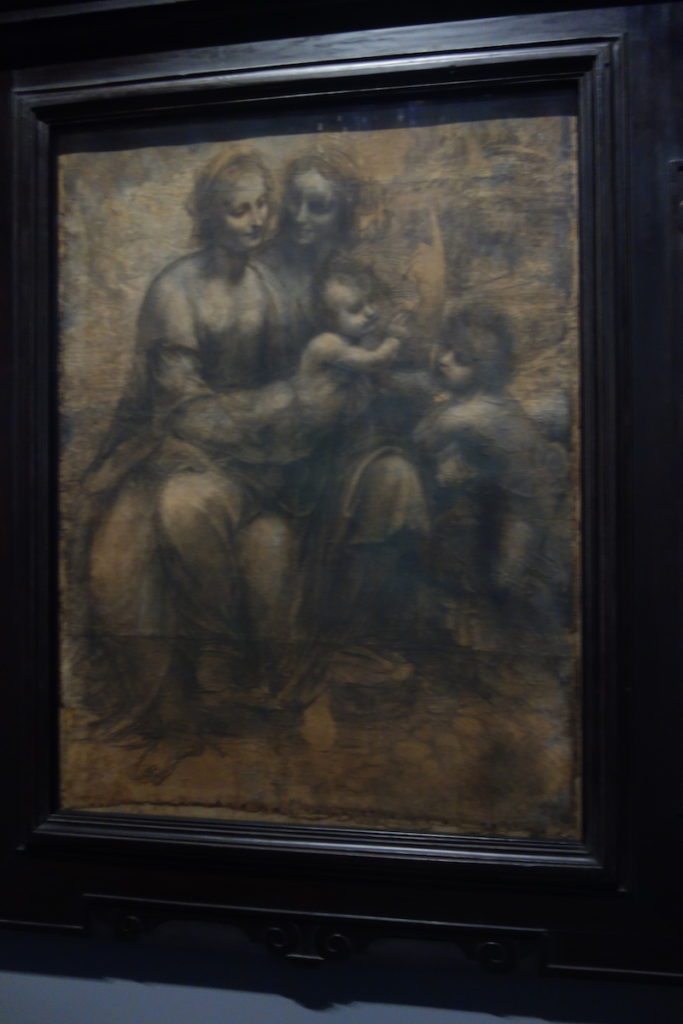
Here’s a drawing by Michelangelo or DaVinci that I saw on my recent trip to London’s National Art Gallery.
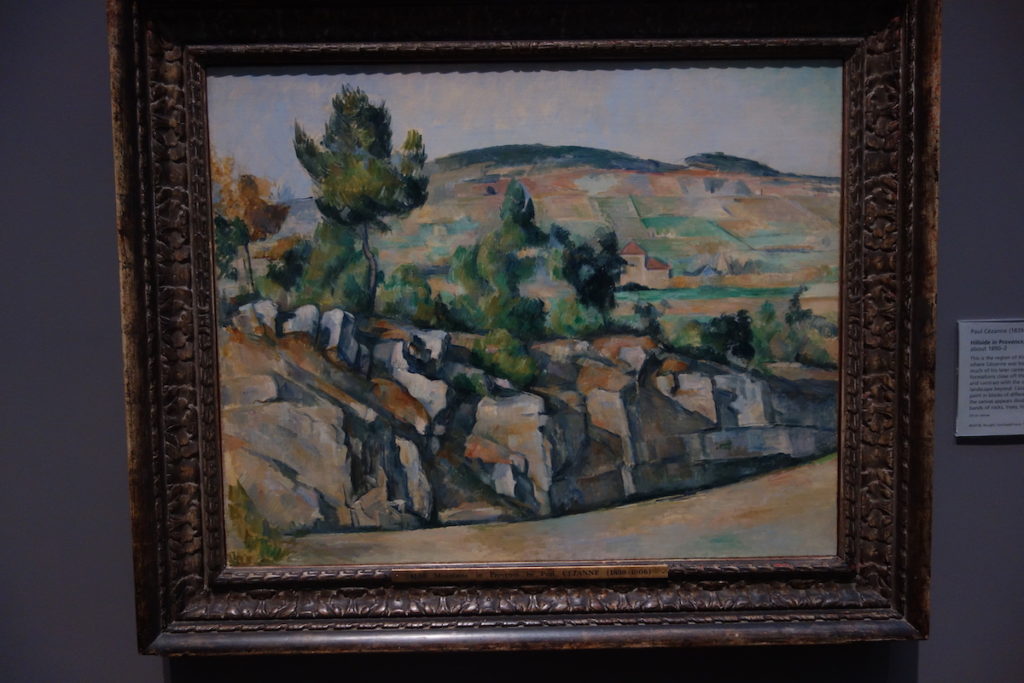
How about this painting by the French impressionist Paul Cézanne that I took in London’s National Gallery several months ago?

I recently took this photo of a glass sculptor by Seattle’s Dale Chihuly in London’s Royal Botanical Gardens at Kew.

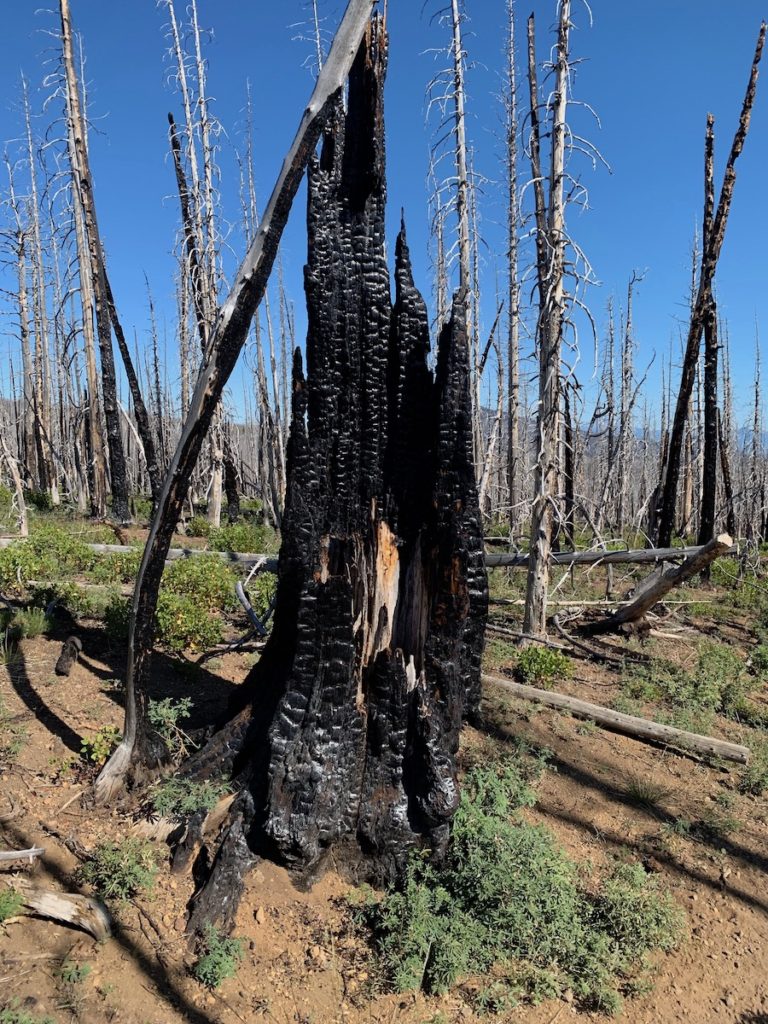
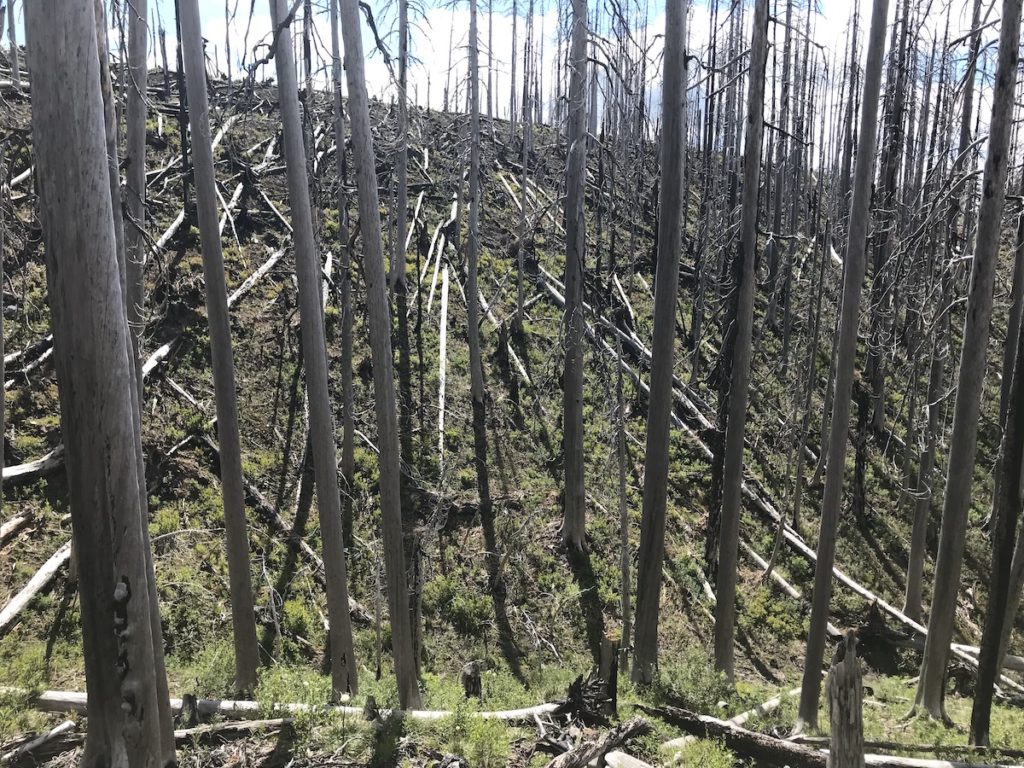
… or these photos I took of nature’s tree art in the high Cascade Mountains of Oregon near Mount Hood and the Three Sisters?

The mountains and the hills shall break forth into singing before you, and all the trees of the field shall clap their hands. — Isaiah 55:12

Praise the LORD/Yehovah! Praise Yehovah from the heavens; praise Him in the heights! Praise Him, all His angels; praise Him, all His hosts! Praise Him, sun and moon; praise Him, all you stars of light! Praise Him, you heavens of heavens, and you waters above the heavens! Let them praise the name of Yehovah, for He commanded and they were created. He also established them forever and ever; He made a decree which shall not pass away. Praise Yehovah from the earth, you great sea creatures and all the depths; fire and hail, snow and clouds; stormy wind, fulfilling His word; mountains and all hills; fruitful trees and all cedars; beasts and all cattle; creeping things and flying fowl; kings of the earth and all peoples; princes and all judges of the earth; both young men and maidens; old men and children. Let them praise the name Yehovah, For His name alone is exalted; His glory is above the earth and heaven. And He has exalted the horn of His people, the praise of all His saints—of the children of Israel, a people near to Him. Praise Yehovah! — Psalm 148I took this photo of the Mona Lisa by Da Vinci when I was in Paris this spring.


Hosea: The Story of YHVH’s Unfailing Love for His People

Natan’s commentary on Hosea 2:1–22

The prophet Hosea, a native of the northern kingdom of Israel, ministered to that nation (called Ephraim or the house of Israel, as opposed to the southern kingdom, called Judah or the house of Judah) for about 38 years during the middle part of the eighth century b.c. (from about 770–725 b.c.). He lived in the final tragic days of the house of Israel and prophesied that Israel’s enemy, the Assyrians, would be instruments in YHVH’s hands to bring judgment against Israel if that nation did not repent and cease its spiritual harlotry and idolatry. That the book contains references to the kingdom of Judah is probably due to the fact that the northern kingdom fell in 721–722 b.c. while Hosea was still ministering and that he most likely transplanted to Judah where he may have finished writing his book (NIV Study Bible, p. 1312).

The theme of the Book of Hosea revolves around the prophet’s personal family life. YHVH’s prophets were often required to act out in their personal life something that would serve as a prophetic allegory of what would happen to the people of Israel if they failed to repent of their sin and return to YHVH. In Hosea’s case, YHVH required him to act out what had already happened to the northern kingdom. Because they had turned from YHVH, their spiritual husband, and taken to consorting with foreign spiritual lovers characterized by their forsaking the Torah, turning to serve pagan gods, and succumbing to heathen religious rituals and lifestyles, YHVH instructed the prophet to marry a harlot. In this way, the family life of Hosea would become a spiritual mirror that could be held up in front of the nation so that it could see itself as YHVH’s saw it. Furthermore, being married to an unfaithful wife gave Hosea direct insight into the emotional turmoil a husband endures when married to an adulterous woman that would provide the passion and impetus when defending YHVH in writing about the spiritual plight of adulterous Israel.

Continue reading
 

Blog Scripture Readings for 8-18 Through 8-24-19

Aside

Parashat Eikev — Deuteronomy 7:12 – 11:25
Haftarah — Isaiah 49:14 – 51:3
Prophets — Hosea 5:1 – 11:12
Writings — 1 Chronicles 5:1 – 9:44
Testimony — Colossians 3:1 – 4:18; 1 Thessalonians 1:1 – 5:28

Most of this week’s blog discussion points will be on these passages. If you have general comments or questions on the weekly Scripture readings not addressed in a blog post, here’s a place for you to post those. Just use the “leave a reply” link or the “share your thoughts” box below.

The full “Read Through The Scriptures In A Year” schedule, broken down by each day, can be found on the right sidebar under “Helpful Links.” There are 4 sections of scripture to read each day: one each from the Torah, the Prophets, the Writings, and from the Testimony of Yeshua. Each week, the Torah and haftarah readings will follow the traditional one-year reading cycle.

Weekly Blog Scripture Readings for 8/18/19 through 8/24/19.


What was “wiped out” and “nailed to the cross”?

Colossians 2:14, Having wiped out. Here Paul mentions that Yeshua blotted out the handwritings of legal decrees that were against us when he died on the cross (Col 2:12–15). What was against us? It was the Torah law that specified that the sin of adultery carried the death penalty (Lev 20:10). For those who are washed in Yeshua’s redeeming blood and have been buried with him by water immersion or baptism (Col 2:12 cp. Rom 6:3–11), the devil, who is the accuser of the brethren (Rev 12:10), no longer has any legal basis against which to lay the charges of the sin of unfaithfulness against us before the Almighty (Col 2:15). Likely, there is a heavenly record of each man’s sins written in one of the books (which are in addition to the book of life) mentioned in Revelation 20:12. These books be opened at the last judgement and will be used to determine one’s eternal rewards based on one’s works of righteousness (v. 12). Some will be granted eternal life, while others will be destroyed in the lake of fire (v. 15). As mentioned, those who are under the blood of Yeshua and whose names are written in the Lamb’s book of life, there is no condemnation. 

In this passage, Paul may be alluding to the law of the jealous regarding an unfaithful woman (Num 5:11–31). In this case, the Torah instructs a man to bring his wife whom he suspects of adultery before the priests along with an offering of barley meal. What follows is one of the Torah’s more curious rituals. The priests, in front of the woman, sprinkle some dirt from the door of the tabernacle into an earthen vessel filled with holy water. Her head is uncovered, and she is then made to hold the barley meal, while she is put under oath and questioned about her alleged extramarital sexual activities. A curse is put on her if she has been unfaithful, and the curses are written in a book. The words are then scraped from the book and put into the water. The woman is then made to drink the bitter waters. If she is guilty, the curse takes effect causing her belly to swell and her thigh to rot. 

The sad thing is that not only was ancient Israel guilty before Elohim of spiritual adultery (see Ezek 16:1ff), but all humans, like an adulterous woman, have followed in Adam and Eve’s unfaithfulness and sinned (tantamount to spiritual adultery) by being unfaithful to the Creator by going his Torah-laws. The good news is that Yeshua took the curse of the adulterous woman upon himself when he died on the cross. He was given cup of bitter gall to drink, which he refused, but he drank symbolically from the bitter cup of death and even his side was split open by the Roman soldier’s spear.

Continue reading
 

Make the World a Better Place—Invest in Your Children

Deuteronomy 6:7, 10–16, 20–25, Instruct your children in the Torah, so they don’t fall into idolatry. YHVH is constantly warning his people against idolatry; idol worship is anything that gets in the way of our relationship with him. 

If you’re not sure whether you have idols in your life, then ask yourself this question: What is of higher priority in your life than serving YHVH? What in your life takes more of your time, energy and money than serving YHVH? What draws your heart away from the study of his written Word, from prayer and fellowship? What or who hinders you from moving forward in your spiritual walk? What in your life keeps YHVH from getting out of a spiritual box in your life? This is idolatry!

Our children follow our example more than our words. By our actions, if YHVH isn’t first in our life our children will follow our example and will be prone to perpetuate our idolatrous ways down the generational line.

Several times YHVH instructs the children of Israel to be certain to instruct their children in the ways of Torah-righteousness. In the Shema, YHVH commands, “And you shall teach them [i.e. his Word] diligently to your children, and talk of them when you sit in your house, and when you walk by the way, and when you lie down, and when you rise up” (6:7). Then in verses 20–25 of the same chapter we read, 

“When your son asks you in time to come, saying, ‘What is the meaning of the testimonies, the statutes, and the judgments which YHVH our Elohim has commanded you?’ Then you shall say to your son: ‘We were slaves of Pharaoh in Egypt, and YHVH brought us out of Egypt with a mighty hand; and YHVH showed signs and wonders before our eyes, great and severe, against Egypt, Pharaoh, and all his household. Then He brought us out from there, that He might bring us in, to give us the land of which He swore to our fathers. And YHVH commanded us to observe all these statutes, to fear YHVH our Elohim, for our good always, that He might preserve us alive, as it is this day. Then it will be righteousness for us, if we are careful to observe all these commandments before YHVH our Elohim, as He has commanded us.’”

Too often in the church-system the children have had to take the backseat when it comes to discipleship and ministry. They get a few table scraps thrown at them called “Vacation Bible School” (once a year) and a little “Jonah and the Whale” type teaching on Sunday morning accompanied by some, often inane, craft project. Seldom does the head pastor of the church bother with the children’s ministry. Usually, this function is relegated to the younger associate pastor. Typically, the position of “Youth Pastor” is viewed as nothing more than a stepping stone to the “top dog” position of “Head Pastor.” Furthermore, seldom do parents spend any meaningful time during the week instructing their children in the ways of YHVH. As redeemed Israelites, it is our opportunity to follow the Torah and to place the highest ministry priority on instructing our children in the truths of the written Torah, in the truth of Yeshua the Living Torah, and in the fundamentals of who they are as members of the commonwealth of Israel (Eph 2:12) and in preparing them for the kingdom of Elohim. If we don’t, who will? As parents, what are you doing on a regular basis to diligently instruct your children all day, every day? As grandparents, aunts and uncles and members of gospel-orientated Torah community, what are you doing to help in teaching the children? What was the attitude of the disciples when they attempted to shoo the children away from Yeshua. What was Yeshua’s response? Read and compare Matthew 19:13–15 with 18:1–5 and go and do likewise, for they are our future and our legacy!


 

Yeshua in Us: The Power to Obey Torah

Philippians 1:11, The fruits of righteousness which are by Yeshua the Messiah.

It is impossible for a man to keep the Torah on his own strength as Yeshua’s encounter with the rich young ruler proves (Matt 19:16–22). When the young man asked Yeshua what he must do to have eternal life, Yeshua seems to set the man up for a fall when he declares, “If you want to enter into life, keep the commandments.” Yeshua is not being disingenuous here. Were one to keep the Torah perfectly without sinning, hypothetically, one would not fall under the death penalty for violating the laws of Elohim (i.e. sin). Presumably one could earn eternal life by one’s own good works. But no man has ever accomplished this superhuman feat except the superhuman Yeshua! Continuing, when the young ruler proudly declares his perfect Torah obedience, Yeshua shows him that he was, in fact, violating the Torah in at least one area—covetousness and greed. Yeshua shows him how to come into Torah compliance, and then admonishes him to come and to follow him. What Yeshua is teaching here is that it’s impossible to keep the Torah perfectly without factoring Yeshua, the Living Torah, into the equation. The point that we can’t keep the Torah without Yeshua directly intervening in our lives, I hope to conclusively demonstrate below.

One way that Yeshua helps his followers obey the Torah is by sending us his Spirit as an internal spiritual force into our hearts to nudge and lead us into Torah-obedience. 

What’s more, Yeshua also gives us the divine gift of his grace to accomplish the same thing. His grace removes the guilt, stain and penalties for our past sins, and with a clear conscience and a clean spiritual slate before YHVH, minus the past baggage of sin weighing us down, we are able to go forward under the power of YHVH’s Spirit to walk in accordance with his Torah. Praise Yeshua! An illustration of this would be a runner who trains wearing a backpack filled with rocks. Once the weight is removed from his back, when he runs, he feels as if he were flying through the air. 

Continue reading