NathanTalks: There is no shalom like shabbat shalom!

Years ago there was a soft drink that had the catch phrase, “Try it, you’ll like it.” The Bible says something like this: “Taste and see that YHVH/the LORD is good.” The same is true of the seventh day Sabbath (or Shabbat in Hebrew). This is the only day of the week that YHVH blessed and sanctified (set it aside for a special purpose) and made into a divine appointment where he promised to meet with his people. He never did this with Sunday or any other day of the week. That’s why there’s a special blessing on the Sabbath—and with it comes a joy and peace unlike any other day. Until you start honoring or “tasting” the seventh day Sabbath, you’ll never understand or experience this special blessing. This video explains this and encourages you to try it, you’ll like it!


Is Elohim a harsh and unjust Judge???

Luke 18:2, A judge. In this parable of the Persistent Widow and the Unjust Judge, Yeshua is using a Hebraic form of reasoning or argument called kol v’khomer where a point is made from a lesser weight argument, logically-speaking, to heavier weight one. In other words, if premise A is correct, then how much more so is premise B correct? 

In the Jewish religious thinking of the first century, this is one of the seven laws of biblical interpretive laws of Hillel the Great (ca. 32 b.c. to a.d. 7) who was one of the greatest Jewish religious leaders of Yeshua’s day and a main leader of the sect of Pharisees. (Hillel was also the grandfather of Gamaliel the elder, the mentor of Paul, the apostle, Acts 5:34; 22:3.) 

In this parable, Yeshua is making the point that if an ungodly, secular judge who cares little about the needs of a widow will grant her wishes because of her persistent pleas for justice against her enemies, how much more will Elohim hear and answer the prayers of his elect saints who have faith in him and cry out to him continually to avenge them of their enemies.

A day of judgment is coming when the scales of justice will be balanced in favor of the saints of the Most High Elohim, the Just Judge of the universe. Certainly Elohim presently attends to the needs of his servants and gives them victory over their enemies in many small ways. But many believers are still suffering greatly at the hands of the wicked who don’t fear Elohim. 

The day is coming, however, when YHVH will move with a mighty hand and universally avenge his servants of all their enemies small and great. Until then, the righteous martyrs continue to cry out asking Elohim, “How long, O YHVH, holy and true until you judge and avenge our blood on those who dwell on the earth?” (Rev 6:10). His answer to them is to wait just a little longer (verse 11), for the great day of YHVH’s wrath, the wrath of the Lamb, which is coming upon the wicked (verse 17) is coming soon. Until then, YHVH promises to never leave nor forsake his servants (Heb 13:5), so be strong in him!


How Love I Thy Torah!—Exploring Psalm 119

Spiritual Insights from the Hebrew Language

If you were to open your King James Bible (or any other similar Bible, e.g. the NAS, NIV, NKJV, etc.) to the exact middle of the Bible, where would you land? Somewhere in the Book of Psalms at or near Psalm 119. Actually, by chapters, either Psalm 117 or 118 is the exact center of the Bible—so Psalm 119 isn’t too far off. 

Interestingly, Psalm 117 is the shortest chapter in the Bible with only two verses, while Psalm 119 is the longest. In this chapter, David exuberantly declares that all people everywhere should be praising YHVH because of his merciful kindness (or his grace) toward us, and for his truth (i.e., his Word or Torah, which is the biblical definition for truth, see Ps 119:142,151).

The mercy of YHVH and having faith in him is the theme of the first part of Psalm 118. The latter half of the chapter goes on to teach about the salvation of YHVH, and many understand this to be a messianic prophecy pointing to Yeshua, our heaven-sent Savior and Redeemer, who is the Living Torah–Word (John 1:1,14).

Then we come to Psalm 119, which, for 176 verses divided into 22 sections (one for each of the letters of the Hebrew alphabet), extols the supreme and inimitable virtues of the Word of Elohim (i.e., the Torah). David treats the Torah as if he were a jeweler who, after discovering the world’s rarest, largest and most beautiful diamond, carefully and in awe scrutinizes its every facet and all of its unique qualities, and then expresses his unspeakable delight over its supreme virtues.

In Psalm 119, David discusses Torah in all of its ramifications, and he uses many different terms for Torah. The most common is the word law, which in most cases is the Hebrew word Torah meaning “teaching, instruction, precept or law” of Elohim, which are his instructions in righteousness that when followed lead man to life, blessings, peace, joy, favor with Elohim and deliverance from evil. Beside the word law, Psalm 119 contains many other words that are synonymous with the Torah. They include:

  • your way
  • your testimonies
  • your precepts
  • your statutes
  • your commandments
  • your righteous judgments
  • your word
  • your wondrous works
  • the path of your commandments
  • the word of truth
  • your ordinances
  • everlasting righteousness
  • the truth

Overview of Psalm 119

Continue reading
 

An Overview of the Ten Words or Commandments

Exodus 20:1–17,

The Ten Words or Ten Commandments by which they are more commonly known are but the mighty cornerstone of the 613 commandments of the Torah. The Jewish sages teach that all 613 are implied in the Ten; or that the Ten can be expanded into 613. The Tanakh (Old Testament) and Jewish writings contain a number of phrases that express the quintessential essence of the Torah. One of these best-known passages naming several of these phrases is in the Jewish Talmud: “[R.] Simlai said, ‘613 commandments were given to Moses—365 negative mitzvot (commandments), the same as the number of days in the year, and 248 positive mitzvot, the same as the number of parts in a man’s body. David came and reduced them to eleven (Ps 15), Isaiah to six (Isa 33:15), Micah to three (Mic 6:8), Isaiah again to two—“Observe and do righteousness” (Isa 56:1). Then Amos came and reduced them to one, “Seek me and you shall live” (Amos 5:4)—as did Habakkuk, “The righteous one will attain life by his trusting [or by faith] faithfulness (Hab 2:4)”’ (Makkot 23b–24a, abridged, from the Jewish New Testament Commentary, by David Stern, p. 565). 

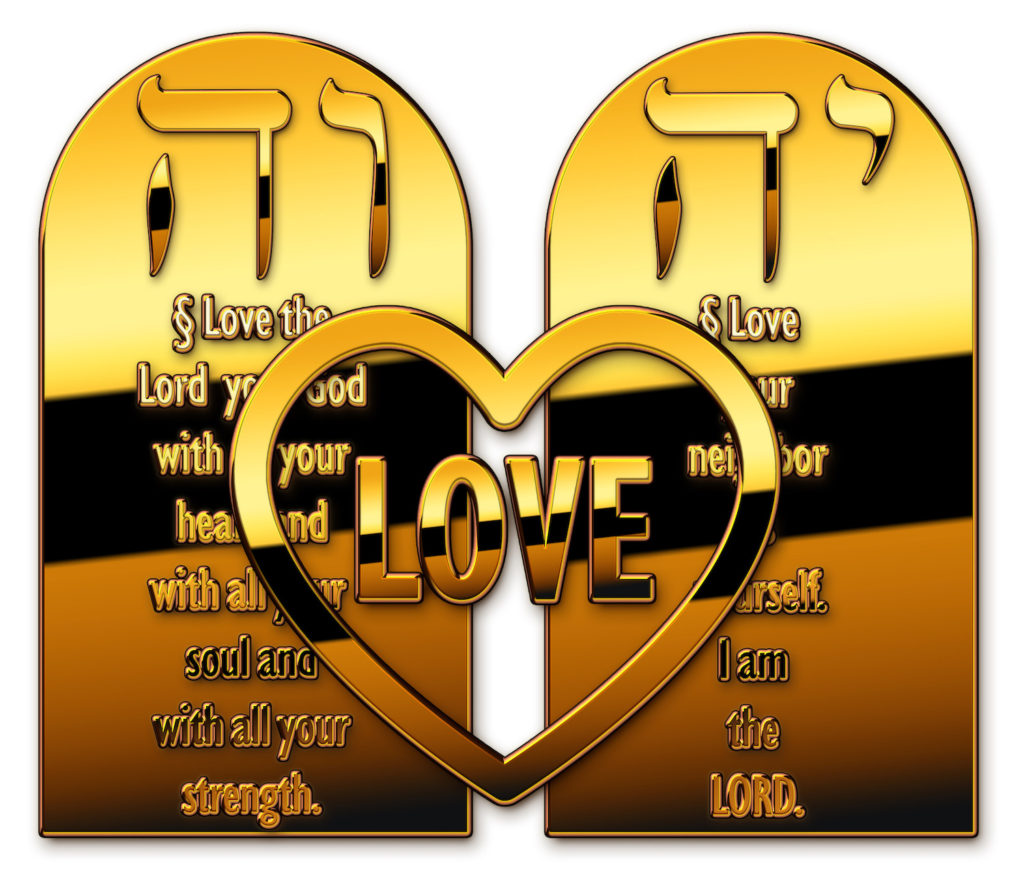
We see some of these same Torah summation-type statements in the Testimony of Yeshua. For example, the phrase, “the just shall live by faith” is found in three passages of the Testimony of Yeshua (Rom 1:17; Gal 3:11; Heb 10:38); In Leviticus 19:18, we find the phrase, “you shall love your neighbor as yourself,” which is the summation of the last five of the famous Ten Commandments. This in itself is a summation of all of the 613 Torah commandments that relate to human relationships, which we see in Yeshua’s famous “Golden Rule” passage of Matthew 7:12, “Therefore all things whatsoever you would that men should do to you, do you even so to them, for this is the law and the prophets.” Paul echoes this concept in Romans 13:8, “Love does not do harm to a neighbor; therefore love is the fullness of the Torah.” Love is the foundation and quintessential concept behind the Torah-law of Elohim. Yeshua states this in Mark 12:29–31, 

“And Yeshua answered him, ‘The first of all the [Torah] commandments is, Hear, O Israel; YHVH our Elohim is one Master: And you shall love YHVH your Elohim with all your heart, and with all your soul, and with all your mind, and with all your strength. This is the first commandment. And the second is like, namely this, you shall love your neighbor as yourself. There is none other commandment greater than these.’”

Love must be the motive behind all our righteous deeds or else our actions count for nothing (1 Cor 13:1–13). The concept of love and the keeping of YHVH’s Torah-law are codependent actions. One cannot exist without the other. John, in his epistle, discusses this idea at length in 1 John 2:7–11; 3:11–24; 4:7–21 where he states that “Elohim is love” (1 John 4:8, 16), and that one’s love of Elohim and man is linked to obedience to the Torah commandments (1 John 2:3–11; 3:11–18). As YHVH first loved us, we should love our fellow man (1 John 4:7–11), in word, deed and in (Torah) truth (1 John 3:18). This relates to Yeshua’s admonition to his disciples in John 14:15, “If you love me, keep my Torah-commandments.”

Lest one recoil at the thought of having to keep 613 commandments of the Torah please be advised of the fact that there are approximately 1050 commandments in the Testimony of Yeshua!

The 18 Benefits of Studying and Obeying YHVH’s Torah

Continue reading
 

What’s so significant about the shofar and its sound?

Exodus 19:16,19 Voice of the trumpet [shofar]. In Jewish thought, the Scriptures speak of three great shofar blasts that have historical and prophetic significance: the first, last and great or final shofar blasts. These are: 

The First Trump (or shofar blast) occurred on Shavuot at the giving of the Torah (Matan Torah) at Mount Sinai (Exod 19:16, 19). This shofar blast was of heavenly origin and is the first time the Bible records the sound of the shofar being heard.

The Last Trump (or shofar blast) occurs on Yom Teruah (the Day of Trumpets/Shofar Blasts, commonly called Rosh Hoshana) is the day of the awakening blast calling the saints to prepare their spiritual garments in preparation for the coming Messiah or Bridegroom. This shofar blast corresponds to the last trumpet blast of Revelation 11:15 after which the resurrection of the righteous occurs (1 Cor 15:51–53).

The Great Trumpet or Final Trumpet (or shofar blast called the Shofar HaGadol) is blown on Yom Kippur (Day of Atonement) signifying the Elohim’s day of judgment and the return of Messiah Yeshua as the King and Judge of the earth. At this time, it seems likely that he will destroy Babylon the Great with its new world order religious, political and economic system (Rev 19:1–21 cp. Rev 18) just before the establishment of his millennial kingdom (Rev 20:1–10). Historically on the Day of Atonement, the jubilee trumpet sounded in Israel on the fiftieth year. At this time, the captives were set free, debts were forgiven and all land was returned to its original owners. Matthew says that Yeshua the Messiah will return with a great sound of a shofar (trumpet, Matt 24:30–31; 1 Thess 4:16). Perhaps this is a reference to the shofar ha-gadol when Yeshua returns to earth, will set the spiritual captives free from enslavement to the enslaving economic, religious and political tentacles of end time Babylon the Great.

What’s So Mystical About the Sound of the Shofar?

The Shofar

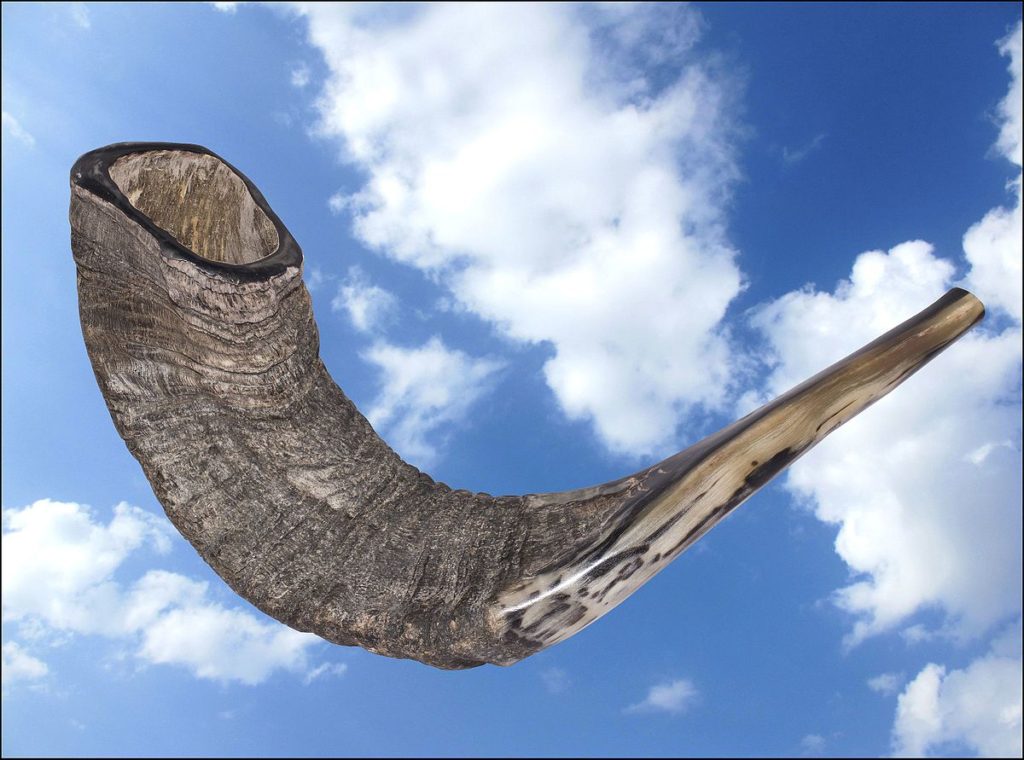
The ram’s horn shofar is a uniquely biblical instrument. Although the enemies of Elohim’s truth have misappropriated, counterfeited or perverted much of what is found in the Bible, so far as this author knows, the shofar is one thing that Satan, the adversary of all that is good, and his followers have left alone. It’s like the proverbial “hot potato” that’s too hot to touch. Why is this? What is it about the shofar that causes Elohim’s enemies to leave well it alone? Let’s explore the mystical qualities of this biblical instrument of divine origination that has the ability to stir the human heart at its deepest level, to pierce the heavens, to bring man back to Elohim and vice versa, and to send spiritual shock waves through the devil’s camp.

The Word Shofar Defined

Continue reading
 

What does it take to be YHVH’s “special, peculiar treasure”?

Exodus 19:5, If…then. (See also Exod 23:22.) This verse shows the conditional nature of the Mosaic Covenant. The blessings of YHVH upon the people are conditional upon their obedience to his commandments. 

Peculiar treasure. This term or treasured people (Heb. am segulah) is used several times in the Torah. Here (Exod 19:4–6) YHVH betrothed himself to and married the people of Israel and they became his am segulah or treasured possession among all the peoples of the nation, a kingdom of priests and a kadosh or set-apart nation. Later Moses restates this same idea to the younger generation Israelites about to enter the Promised Land (Deut 14:2); and finally in Deuteronomy 26:18 (see also 7:6) he again calls Israel his “treasured people” and admonishes them to keep his Torah-commands that he might “make you high above all the nations which he has made, in praise, and in name, and in honor, and that you may be a set-apart people unto YHVH your Elohim.” In the Testimony of Yeshua, this theme is again picked up by Peter in his first epistle (1 Pet 2:9) when he refers to the saints as “a chosen generation, a royal priesthood, a set-apart nation, a peculiar people.” 

Am segulah means “possession, treasure, valued property, peculiar treasure.” The basic meaning of the word is “personal property.” Well attested in Hebrew, Ugaritic, and Aramaic, the Akkadian sakalu, ‘to acquire property’ and sikiltum ‘personal property’ are also doubtless related. While the word occurs only eight times, it is filled with theological and spiritual treasures. The preacher in Ecclesiastes reports that the accumulation of the finest of personal possessions is sheer vanity. Those who fear the Lord become his peculiar possessions whom he will never forget, even in that time of great judgment (Mal 3:16–18, see TWOT).

“Israel was God’s personal possession (Ps 135:4). Moses reminded Israel that God chose her and redeemed her from bondage not because of her goodness, but solely because he loved her and was faithful to the promises given to the patriarchs. Israel should reflect God’s holiness and live out his commandments (Deut. 12:2ff), reflecting his standards in a life of wholehearted compliance with the terms of the covenant made at Sinai (Ex. 19:5-6) and renewed at their entrance into Canaan. Then would they have good success (Deut. 26:16-19). So it should be with all believers. These verses are doubtless alluded to in Titus 2:14 and 1 Peter 2:9” (Ibid.).

How do you view yourself spiritually? How does Elohim view you? How are these two views different from each other? How you view yourself should be determined by what the Scriptures say about you. What does Elohim’s Word say, and do you believe it?

  • I am complete in Yehshua who is the head of all principality and power. (Col 2:10)
Continue reading
 

What is the past and prophetic significance of “the third day”?

Exodus 19:1, 11, In the third month…the third day. 

In Exodus 19:1 we read that the Israelites arrived at Sinai in the third month, and according to Jewish tradition, a very significant event occurred on the third day of third month that was not only pivotal in the history of the Israelite people, but has profoundly influenced YHVH’s people, including you and me, to this very day. It was the giving of the ten commandments on Shavuot or the day of Pentecost. Now let’s connect some dots or put some pieces of the puzzle together to form a prophetic picture of an amazing biblical truth regarding the third day and explore the past, present and future implications of this.  

The biblical holy day of Shavuot, when YHVH gave the ten commandments to Israel and the world, was also when YHVH, for the first time in recorded biblical history, sounded the heavenly shofar—known as the first trumpet. Amazingly, this shofar event relates back to Abraham’s willingness to offer up Isaac as an offering to YHVH and to the ram that was caught in the thicket by his horns. 

While en route to the place where YHVH had instructed Abraham to offer up his only beloved son, he could see “the place” (Mount Moriah) afar off in three days (Gen 22:4). As we shall see later, this prophetically points to Messiah’s sacrificial death at the same location three millennia later. 

As we have just read, the Israelites were to be ready “on the third day” to receive the Written Torah thundered from the lips of the pre-incarnate Yeshua the Messiah (Acts 7:38; 1 Cor 10:4) at Mount Sinai. But the term the “third day” in Exodus chapter 19 also occurs in reference to Abraham and the akeidah or the binding of Isaac (Gen 22:1–18). What is the connection between these two events? Namely this. The near death of Isaac on Mount Moriah (Jerusalem) and YHVH providing Abraham a ram to sacrifice instead of his only beloved son prophetically pointed to the death of the Yeshua the Messiah the Redeemer at the same spot about 2,000 years later. Similarly, the Israelites, on the day of Pentecost when they received the ten commandments, were living out their own prophecy that also pointed to the same time when Messiah would come as the Living Torah culminating on the day of Pentecost or Shavuot, when he would write his Torah-laws on their hearts. Therefore, the “third day” reference for both Abraham and the Israelites had a similar relevance, for both were living in the second millennia B.C. or before the birth of Yeshua the Messiah, who was born near the beginning of the first century A.D. or in the third millennia, or on third day prophetically from both the time of Abraham and the Israelites.

Though a bit tangential to the subject of Shavuot, let’s look at another concept relating to the prophetic implications of the third day. As Yeshua, the Living Torah, came on the third day, so he will return on the third day after his first coming or in the third millennia after his first coming. That is, he came in the first millennium of our common era, and we have just passed into the third millennia of the same era and are now in the twenty-first century. According to biblical prophecy, Messiah will return in this third millennia, or third day as we read in Hosea.

Continue reading