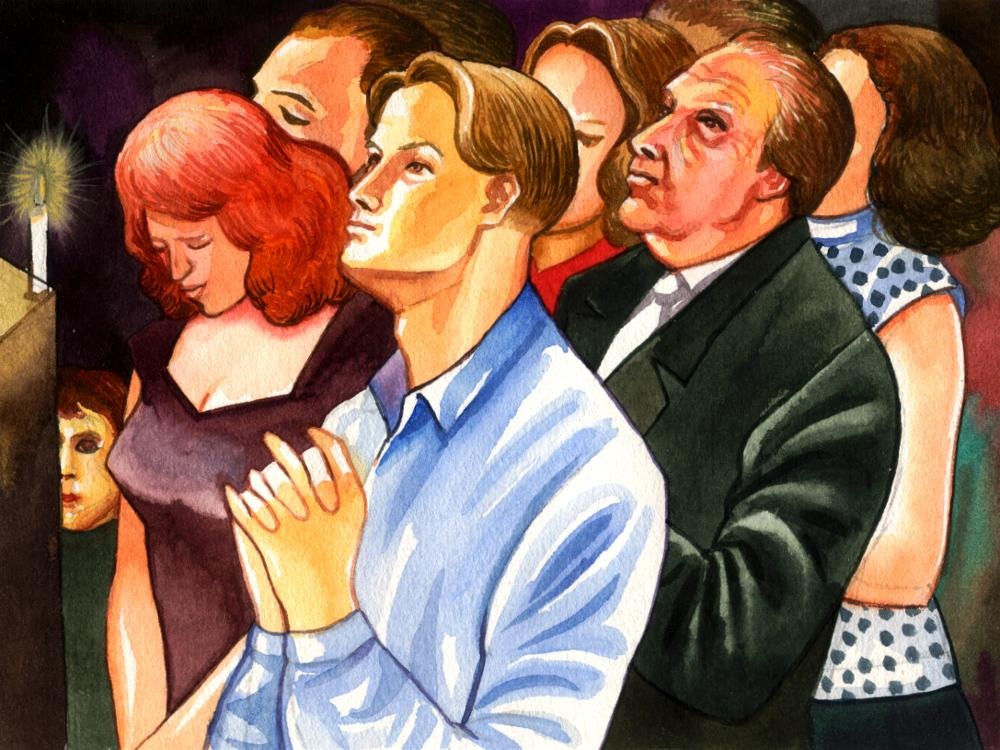
Finding the Will of Elohim for Your Life


A Study on Romans 12:1–2

I beseech you therefore, brethren, by the mercies of Elohim, that ye present your bodies a living sacrifice, holy, acceptable unto Elohim, which is your reasonable service. And be not conformed to this world: but be ye transformed by the renewing of your mind, that ye may prove what is that good, and acceptable [well-pleasing], and perfect, will of Elohim. (Rom 12:1–2)

Let’s first define some words in verse one.

  • Prove is the Greek word dokimazo signifying “to test, examine, prove, scrutinise (to see whether a thing is genuine or not), as metals, to recognise as genuine after examination, to approve, deem worthy.” 
  • Good is the Greek word agathos meaning “of good constitution or nature, useful, salutary, pleasant, agreeable, joyful, happy, excellent, distinguished, upright, honourable.”
  • Acceptable is the Greek word euarestos  and means “well pleasing, acceptable.” 
  • Perfect is the Greek word teleios (related to telos, see note on 10:4) signifies “a goal-oriented action, that which is complete, whole, brought to its end, lacking nothing necessary to completeness, that which is perfect.”

In this passage of Scripture, Paul’s juxtapositioning of these three words suggests the grammatical construction of the good (the nominative), better (the comparative) and best (the superlative).

What does this teach us? An amazing truth regarding the merciful graciousness of YHVH Elohim! Within the limits of the plan that YHVH has for each of our lives, there are different paths that we can take as Romans 12:2 indicates. The choice is ours. We can take the good path, the acceptable or better path or the best or perfect path. 

As to which path is the perfect will of Elohim for us, we have a clue in verse one as to which path that is. Let’s unpack verse one, so that we’ll better understand verse two. 

What Paul is teaching here us here is that to the degree that we become a living sacrifice for Yeshua by denying our sinful passions and submitting to the will of Elohim (v. 1), and to the degree that we allow the Spirit of Elohim to renew our minds into conformity to the mind of Yeshua by the “brainwashing” influences of his Spirit and the washing of his word (Eph 5:26) is the degree to which we will find ourselves walking in the perfect will of Elohim. This is a process. As we become deconformed or deprogrammed to the ways and thinking of the world (v. 2), and as we accept the wisdom from above, which is pure, peaceable and gentle as opposed to worldly, sensual and demonic resulting in bitter envying, self-seeking and resistance to the truth of Elohim (Jas 3:13–18), is the degree to which we will be able to prove or determine YHVH’s complete or perfect will for our lives (Rom 12:2).

In the bigger perspective, YHVH Elohim has a path for each of his saints to walk in. That path is based on Torah as David discusses in Psalm 119 (e.g. Ps 119:30, 32, 33, 35, 105), as well as the rest of YHVH’s written word from Genesis to Revelation. Within that path, YHVH gives a person room or liberty to wander from one side or the other without falling into the ditch on either side of the road. On several occasions, Moses urged the Israelites to go neither to the left or to the right (Deut 5:32; 17:11, 20; 28:14). Moreover, Yeshua talked about a narrow and a wide path—one leading to life and other leading to destruction (Matt 7:13–14). The wider our spiritual walk, the more likely we are to veer off the path and fall into the ditch of destruction on either side of the path of life. When we veer too far to one side or the other, we begin feeding from the tree of the knowledge of good and evil. This is a dangerous place to be spiritually, for we know to do good and are drawn to the good, but, at the same time, we are enticed by the evil and may begin to find pleasure in it. Unless something wakes us up, the evil will eventually win out leading to eternal death. Adam and Eve found this out the hard way.

Yeshua characterized the narrow path that is pleasing to the Father as being spirit and truth (John 4:23–24). Truth taken to the extreme produces legalism, judgmentalism and a letter-of the-law approach to obedience. Spirit taken to the extreme results in licence to sin based on the false idea of extreme grace.

There are perhaps no examples in the entire Bible of a person walking consistently in the perfect will of Elohim. For example, Job was a righteous—the most godly, righteous and blameless man on the earth (Job 1:8). He was definitely a good (Gr. euarestos, Rom 12:2) man, but not perfect or complete (Gr. teleios, Rom 12:2) in the eyes of Elohim. YHVH allowed him to be tested to bring Job to a higher level in his spiritual walk. Similarly, Lot was anything but a perfect man. He may well have been the epitome of a lukewarm, world and flesh-appeasing believer, yet he had enough faith in YHVH to leave wicked Sodom and the Scriptures refer to him as a “just” and “righteous” man (2 Pet 2:7). Both Jephthah and Samson committed some glaring sins for which they paid a dear price, but Scripture commends them for their faith (Heb 11:32). Likewise, David failed on several occasions to walk in YHVH’s perfect will and even gave in to the temptation to commit murder, and adultery and to number Israel in direct violation of Elohim’s commandment, yet he repented of his sin and the Bible deems him a righteous man. Moreover, Peter denied Yeshua thrice—a grave sin against the Messiah—but was forgiven.  All of these saints fell short in one way or another of Elohim’s highest standards of righteousness, but they did the best they could and YHVH blessed them for it.

It is the heart of Elohim for his servants to achieve the highest standard of righteousness possible. For example, Yeshua instructed his disciples to “be becoming perfect” (Gr. teleios, Matt 5:48), and told them that their righteousness must exceed that of even the Pharisees (Matt 5:20). Attaining to this high level is a process that will last a person’s lifetime, and will likely never be achieved by anyone. How many humans ever consistently attain a spiritual walk that can be characterized as “the perfect will of Elohim” (Rom 12:2). Only one that we know of: Yeshua the Messiah!

In the mean time, Elohim is dealing with imperfect humans, which is why we need his never-ending grace and mercy (and the righteousness of Yeshua to be attributed to our spiritual account). 

The fact is that to the degree that one submits to the word and will of Elohim is to the degree that one will find Elohim’s perfect will for their life. When we fail to live our lives as a living sacrifice before Elohim (Rom 12:1) meaning that we are willing to lay down our own will and accept the will of Yeshua even as he accepted his Father’s will for his life when he went to the cross (Luke 22:42), then we’ll have to spend more time in the wilderness of our spiritual wanderings learning some hard lessons before the Father can bring us into the Promised Land of his perfect will for our lives. 

When we choose to go against the will of Elohim and choose our own sinful will instead, we’re treading on dangerous ground. We may eventually come back to our Heavenly Father’s good or perfect will for our lives, or we may not. At times, we may be pulled away from Elohim and his righteous standards by the sinful influences of the world, the flesh and the devil as was the prodigal son in Yeshua’s parable (Luke 15:11–31). Hopefully, we’ll repent of our unrighteousness and return to our Father in heaven as the son in the parable did and not remain a spiritually lost prodigal forever.


 

Hoshana Rabbah Bible Reading Schedule for 2018-2019

Join in on the fun as you read through the whole Bible in a year with the Hoshana Rabbah online Bible study family! 

Spread the good news, participate and tell a friend. 

The Bible reading schedule for 2018–2019 is NOW available for free download at https://hoshanarabbah.org/pdfs/read-bible-in-a-year_2018-19.pdf 

While following the Bible reading schedule, also follow along with this blog where we share biblical teaching articles on various subjects from each week’s Bible reading schedule and then discuss them in the comments section of this blog.

Everyone is welcome to share their insights and questions as we all learn and grow together in our understanding of the word of Elohim.


Do I really need to go to church?

From the Christian Post at https://www.christianpost.com/news/why-are-millennials-leaving-church-millennials-explain-192845/

Why Are Millennials Leaving Church? Millennials Explain

Nearly one year ago, Sam Eaton, a millennial from Minneapolis, wrote a blog post detailing “12 reasons millennials are over church.” Since then, he has received thousands of hateful and angry comments. But what he wants Christians to know is that that was his love letter to the American church.

“I got a lot of hate for this,” said Eaton, an elementary school music teacher and founder of a suicide prevention ministry called Recklessly Alive. “I love the church like Christ loved the church. I want to see it prospering and I look around and I see my generation has left.”

Eaton was joined this week by two other millennials to discuss his controversial blog post on “The Table” podcast, hosted by Dr. Darrell Bock, executive director for Cultural Engagement at the Hendricks Center at Dallas Theological Seminary.

Bock invited them to try to better understand what millennials are thinking and why so many are leaving church.

For one, millennials want to be mentored, not preached at.

“Preaching just doesn’t reach our generation like our parents and grandparents. See: millennial church attendance. We have millions of podcasts and Youtube videos of pastors the world over at our finger tips,” Eaton wrote on his 2016 blog.

“Millennials crave relationship, to have someone walking beside them through the muck. We are the generation with the highest ever percentage of fatherless homes. We’re looking for mentors who are authentically invested in our lives and our future. If we don’t have real people who actually care about us, why not just listen to a sermon from the couch?”

Eaton clarified on the podcast that he’s not advising churches to stop preaching the Gospel to the younger generation.

“But if you’re relying on that to drive millennials into your church, it’s just not going to work because if I’m struggling with fear today, I can sit at home with my sweat pants and find 50 sermons by Francis Chan about fear,” he explained. “Yes, keep preaching but also come around us … teach me how to live these things out.”

Millennials not only want to be mentored but they also want to be heard and valued for who they are in a world that says they’re not good enough.

Another reason millennials are “over church” is that they’re sick of hearing about values and mission statements.

“Stop wasting time on the religious mambo jumbo and get back to the heart of the gospel,” Eaton wrote.

Expanding on that, Eaton said this week that though churchgoers need a common mission, they’re not impressed when the church spends more time talking about the mission statement than putting it into action.

Kat L. Armstrong, executive director of Polished, a ministry for young professional women, believes integrity is a big issue among millennials.

“I think millennials are serious about integrity in a way we’ve never seen before,” she said on the podcast. “Let’s have some integrity behind our words.”

Part of that includes serving the “least of these,” Eaton noted.

While many churches schedule countless “church-type activities” such as Bible studies, social functions and planning meetings, very little time is being devoted to helping the poor or least fortunate, Eaton argued.

“I’m not saying we shouldn’t be studying the Word of God; we should be studying that every single day. You should be in a Bible study … [or] in a small group but if that’s it, you’re kinda missing the point of this book (Bible),” he explained.

“I just don’t know how you can read James or Matthew 25, the least of these, and just go back to your normal American life and not live it out.”

Millennials are also tired of the church blaming the culture for everything, Eaton noted.

Nika Spaulding, director of Women’s Equipping and Curriculum at Watermark Church in Dallas, said the young adult generation needs help interpreting the culture.

“Rather than hearing it’s evil and dangerous, help us interpret it,” she said on the podcast. “That kind of teaching requires nuance … to help you navigate this world that is utterly broken and yet has redemptive value throughout it that we can find.”

The church also needs to start addressing controversial issues rather than avoiding it.

Issues include career, education, relationships, marriage, sex, finances, children, purpose, chemicals and body image.

“We don’t like how the world is telling us to live, but we never hear from our church either,” Eaton, who once struggled with suicidal thoughts, lamented.

“Tell us what the Bible says about these issues and then give us some space to wrestle with it ourselves and let us talk to God about what the Bible says,” he said.

Another big issue millennials have with churches is distrust and misallocation of resources.

“Over and over we’ve been told to ‘tithe’ and give 10% of our incomes to the church but where does that money actually go? Millennials, more than any other generation, don’t trust institutions for we have witnessed over and over how corrupt and self-serving they can be,” Eaton wrote.

What millennials want is “painstaking transparency” — such as a document on the church website tracking every dollar, he suggested.

Spaulding noted, “We’re being lectured all the time, ‘you’re living beyond your means’ and then you look at this $5 million debt of a [church] building.”

She said her church has a rule “where if my budget went on the front of the Dallas Morning News, would I be comfortable with that?”

“I think that holds me to a different level of accountability,” she noted. “Would I feel comfortable telling the 20-year-old who gave 10 percent of their $12,000 salary and the 60-year-old who … also gave me 10 percent of their $150,000 salary, am I valuing their contributions?”

According to a 2013 Barna survey, 59 percent of millennials (born between 1984 through 2002) who grew up in the church have dropped out at some point. Over a third said they left because of the church’s irrelevance, hypocrisy and moral failures of its leaders. Meanwhile, two out of 10 said they feel God is missing in church.

Armstrong said she hopes that churches can put “some defenses down” and “take some ownership on this” as they try to bring millennials back to church.

Bock agreed that change is needed.

“How can we preach and teach transformation and then not be willing to change? That doesn’t make sense at all,” he said. “So to be challenged to do better is not something that should threaten the church, it’s something the church should welcome.”

–––––––––––––––––––––––––––––––––––––––––––––––

Consider this. Perhaps if the “church” was being the church instead of simply going to church, as the Bible teaches, more young people might see the validity of gathering together regularly as the Bible instructs.

Hebrews 10:25, Not forsaking the assembling. The broader scriptural context of this verse gives us some valuable clues about the importance of believers in Yeshua assembling together on a regular basis.

What was in the mind of the writer of Hebrew that caused him to place this admonition about assembling together after his discussion about the earthy versus heavenly tabernacle, how Yeshua is our Great High Priest, and how the blood of Yeshua is much more efficacious in cleansing us from sin then the sprinkling of animal blood on the mercy seat in the tabernacle?

What’s more, the writer goes on to talk about the saints boldly entering the most holy place of the heavenly sanctuary by way of the blood of Yeshua and being washed by the water of the Word of Elohim.

After this, he admonishes the saints to not forsake assembling together, and so much more so as they see “that Day” (i.e. the day of Yeshua’s coming) approaching.

What does all this have to do with the saints assembling together? It is this: The saints coming together (on the seventh day Sabbath, biblical feasts and any other times) should be a holy of holies experience — the nearest thing to heaven on earth this side of heaven! In as much as the holy of holy, in Hebraic thought, is a prophetic picture of the bridal chamber where YHVH will meet and spiritually commune with his people, by the saints assembling together, they are rehearsing the soon coming reunion between Yeshua and his bride (redeemed believers who love Yeshua by keeping his commandments) at his second coming. This is the larger context behind the admonition to “not forsake the assembling of ourselves together.”

The Benefits of Being Part of a Local Congregation

Church attendance is plummeting in America. Though roughly 85 percent of Americans claim to be Christian, only a very small percentage of these people attend church services weekly. Those who do, spend only one or two hours a week in church at the most. Even many Messianics or Hebrew roots-type believers have become victims of these trends. There seems to be a lack of discipline about regular church attendance, and many seldom go if at all. For many, church attendance has become a perfunctory ritual; people feel that they need to go to church, but they’re not sure why they do it.  

In Israel in the time of Yeshua and earlier, the synagogue was the heart and soul of each community. It was  the place of spiritual and secular education, prayer, fellowship, and acted as a sort of community center. We see that this was the case among the first century redeemed believers as well.

As many of us return to the spiritual and Hebraic roots of the Christian faith, then perhaps we need to reevaluate the role the local congregation played in the lives of our spiritual forefathers, and what the Bible teaches about this to see if our lives are mirroring the Word of Elohim. If not, then we need to ask ourselves some hard questions as to why so many Continue reading


The blood of animals vs. the blood of Yeshua

Hebrews 9:13–14, Purifying the flesh…cleansing your conscience. The Levitical sacrificial system was never able to atone for sin in the full sense. These sacrifices were effective only temporarily in that they had to be continually repeated.

In reality, these sacrifices never mitigated YHVH’s judgment against sin. The Levitical sacrifices simply covered over sin, so that the sinner could stand before Elohim without being consumed by his righteous judgments. But only Yeshua’s death could satisfy Elohim’s judgment against sin permanently in the life of the believer. Only his atoning sacrifice can thoroughly wash away our sins, remove the death penalty, which is the wages or penalty of sin, and cleanse the sinner of the guilty conscience which resides in his personal spirit, so that one could “serve the living Elohim” with a clean slate.

Sin can contaminate the spirit of man, which houses the conscience of man (2 Cor 7:1; see notes at Col 3:10). Only the blood of Yeshua can miraculously cleanse our soul (the mind, will and emotions) and spirit of a person and bring us to perfect holiness in the fear of Elohim (ibid.) This Yeshua did in a spiritual sense in the spiritual temple in heaven, which is greater than the physical temple on earth, which was a mere copy or shadow of the one in heaven (Heb 8:3–6).

The cleansing that the Levitical sacrificial system offered was physical and external, while the one Yeshua offers through the heavenly temple gives internal cleansing.


Blog Scripture Readings for 9-2 Through 9-8-18

Aside

THIS WEEK’S SCRIPTURE READINGS FOR STUDY AND DISCUSSION:

Parashat Nitzavim — Deuteronomy 29:9(10)* – 30:20
Haftarah — Isaiah 61:10 – 63:9
Prophets — Micah 3:1 – 7:20; Nahum 1:1 – 2:13
Writings — 2 Chronicles 9:1 – 15:19
Testimony — Hebrews 10:1 – 13:25; Revelation 1

Our annual Scripture Reading Schedule for 2017-2018 is available to download and print.

Most of this week’s blog discussion points will be on these passages. If you have general comments or questions on the weekly Scripture readings not addressed in a blog post, here’s a place for you to post those. Just use the “leave a reply” link below.

The full “Read Through The Scriptures In A Year” schedule, broken down by each day, can be found on the right sidebar under “Helpful Links.” There are 4 sections of scripture to read each day: one each from the Torah, the Prophets, the Writings, and from the Testimony of Yeshua. Each week, the Torah and haftarah readings will follow the traditional one-year reading cycle.

* Verse numbers in parenthesis refer to the verse number in Christian English Bibles when they differ from Hebrew Bibles or the Tanakh.

Weekly Blog Scripture Readings for 9/2/18 through 9/8/18.


Hebrews 8:8—Who was at fault? Elohim or the Israelites?

Hebrews 8:8, Finding fault with them. What was the fault of the first covenant? The Torah-law of Elohim, or the people who failed to abide by the terms of the covenant, i.e, the Torah? The next verse gives us the answer: “because they continued not in my covenant…” The Israelites were at fault.

YHVH gave Israel his Torah-laws (or instructions in righteousness) to teach them how to love him and to love their neighbors (Mark 12:29–31). If they followed his Torah-instructions, he promised to bless them (Deut 28:1–14), and declared that all would go well with them (Deut 4:30).

Of course, we know the sad history of ancient Israel and how they rebelled against YHVH again and again. There was nothing wrong with his Torah laws, which said, you shall not murder, steal, commit adultery, lie, covet, kidnap, commit homosexuality or incest, worship false gods, take YHVH’s name in vain, keep his Sabbaths, don’t practice divination, honor your parents and so on. What’s wrong with these? Nothing. The fault was with the people who failed to abide by these standards of righteousness, and this is exactly what the author of Hebrews is saying here.

Because the people broke their contractual or covenantal agreement with YHVH and literally abandoned him for false gods, he was forced to make a new covenant with other people who would have the heart and love and obey him.

This is exactly what Jeremiah prophesied would occur, and the writer of Hebrews is simply quoting Jeremiah in this passage.

What is the main difference between the first and second covenants? As the Israelites of old didn’t have the heart to obey YHVH because of the hardness (or carnality) of their hearts (Heb 3:8, 15; 4:2, 7), YHVH promised through Jeremiah to renew his covenant with the descendants of the ancient Israelites (i.e. the house of Israel and the house of Judah, Jer 31:31; Heb 8:8), but this time, by his Spirit, he would write his Torah-laws on their hearts and in their inward parts, so they wouldn’t resist obeying him, but would desire to be pleasing in his sight. So the fault was with the hard-hearted Israelites, not with YHVH standards of righteousness called his Torah-laws!


Hebrews 8:6 — “A better covenant…”?

Hebrews 8:6, Better covenant … better promises. In the Greek, the word better is kreitton meaning “more useful, more serviceable, more advantageous, more excellent.”

The Renewed Covenant is a better covenant for the reasons discussed in the notes in verse eight. In 2 Cor 3:7 calls it “the ministry of the Spirit” and refers to it as “more glorious” than the former covenant.

The Renewed Covenant comes with Yeshua’s promise that from within our heart the Set-Apart Spirit will empower and lead us into all truth.

Moreover, under the Renewed Covenant, the promise of salvation resulting in eternal life in the kingdom of Elohim is spelled out more clearly.

The Renewed Covenant also carries with it relief from the penalty of the law, which is death, for those who put their faith in Yeshua’s atoning and substitutionary death (see notes at 2 Cor 3:7). Through the Spirit and blood of Yeshua, one’s sin conscience is now cleansed in that the guilt from sin is removed (Heb 9:14).

Also, as discussed in the verse eight notes, the covenant (or contract) is the actual agreement between two parties. The terms and conditions of a covenant (or contract) are something else. Torah was the terms and conditions of YHVH’s agreement between himself and his people.

When the author here uses phrase like “better covenant,” this in no way implies that the Torah has been abrogated. If this were true, then this flies in the face of what is said elsewhere in the Testimony of Yeshua to the contrary (e.g. Matt 5:17–19; Acts 21:24; 24:14; 25:8; Rom 3:31; 7:14; 1 John 2: 3–6; 3:4; Rev 12:17; 14:17; 22:14).