Exodus 25:8–9, A sanctuary … tabernacle.
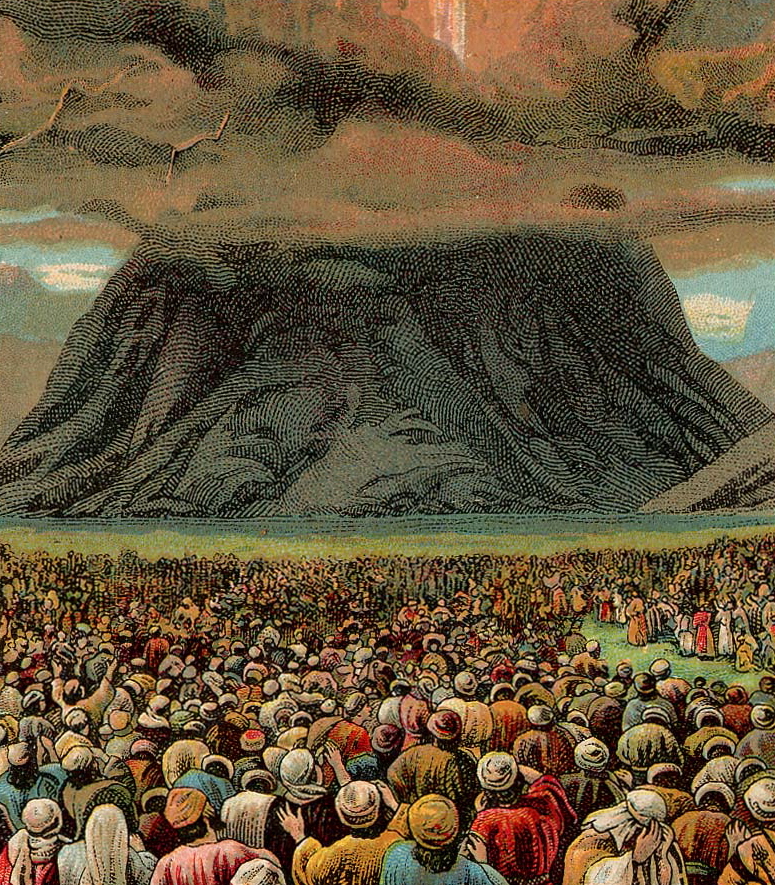
If you were the Creator of the universe, what means would you use to communicate with those that you had created through love in your likeness and image? In a remote way, it’s like a human standing over an anthill trying to communicate with the ants. How do you do it? Similarly, how does an all powerful, Spirit Being, loving Father in heaven relate to his mortal children who are but mere specks of dust without vaporizing them with his raw power? The difficulty is compounded when fearful humans don’t want to hear the voice of Elohim, which is what happened when YHVH Elohim’s voice thundered from Mount Sinai. The children of Israel begged him not to talk to them, lest they die. They asked the Almighty One to speak to them instead through Moses (Exod 20:19).
When man sinned at the tree of knowledge, and YHVH kicked them out of the Garden of Eden, direct communications between man and his Maker were hampered, if not all but cut off. However, Elohim had a plan to restore the loving relationship he had with man before the rebellion. But if men refuse to hear you when you speak, what are you do?
For certain, the Almighty doesn’t lack for ways to communicate with men. Man is without excuse when it comes to hearing Elohim, for even the heaven’s declare the glory of the Creator and the plans he has for mankind. The visible things of this creation shout loudly about the spiritual mysteries heaven desires to reveal to its earthly subjects. Furthermore, from time to time over the millennia, Elohim has chosen to speak directly to some select servants through dreams, visions, signs, wonders, angels, and even once through a donkey! But how does he speak to a whole nation, if that nation is plugging its ears and refusing to hear its Master’s voice?
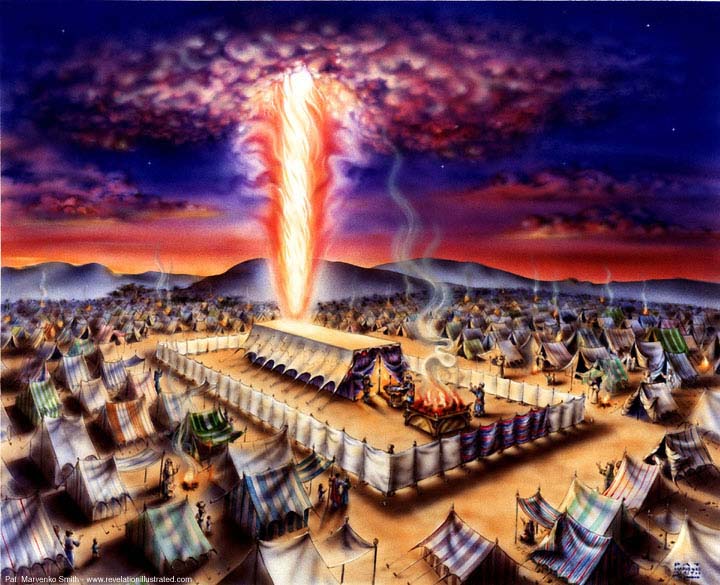
Enter into the picture the Tabernacle of Moses, which was literally a three-dimensional gospel message tract. It is the visual demonstration of the whole salvation message of the Bible in a building—the blueprint of the plan of redemption of wayward, sinful man. It was a functioning masterpiece of artwork demonstrating the Father’s love for his people, and of his desire to commune and to communicate with Israel—his treasured possession, those he had hand picked and called out from the 70 nations of the world. Not only did the tabernacle involve the sense of sight, but the other four senses as well: sound, smell, touch, and taste. It also engaged and even challenged the heart, emotions, mind and spirit of man to focus on his need to be spiritually reconciled to his Creator. The Tabernacle of Moses was a vehicle for the Creator of the universe to communicate with man using a panoply of communication devices all of which pointed to the coming Messiah, the Redeemer of mankind who would die for the sins of the world to restore man into a loving relationship with his ever-loving, gracious, and longsuffering Father in heaven.
This is the story of the tabernacle, which, in every way, resembles a theatrical play, even a pageant, containing costumed actors each performing his carefully choreographed role on cue. Even a child can comprehend the message of this play, yet it contains mysteries and truths so deep that only in eternity itself will they be revealed to those who have been initiated into higher spiritual levels through the tabernacle’s spiritual paradigms of which its rites and ceremonies were mere prophetic shadows of things to come. To understand it, is to understand the message of the whole Bible from Genesis to Revelation.
Let’s now enter into the world of the Tabernacle of Moses. Welcome! (Please note, over the next several parshiot, we will be discussing the tabernacle in great detail. Later, when we get into Leviticus, we will explore the sacrificial system as well as the other tabernacle rites and ceremonies, and we will learn how they all pointed to Yeshua and how it relates to us.)
Why Study the Tabernacle (or Temple)?
Elohim commanded his people to study it. In Ezekiel 43:10–11, YHVH tells Ezekiel to explain to his people the layout of the temple “that they may be ashamed of their iniquities [Torahlessness]” and presumably repent or return to a spiritual relationship with him.
Elohim commanded his people to build the tabernacle (and latter the temples, see Exod 25:8; 29:43; 1 Chron 17:11–15); therefore, it must be important, and we should study it to understand its significance. After all, one-half of the Torah and one-third of the 613 Torah commandments deal with the temple, so it behooves us to understand it’s spiritual significance.
Elohim’s name resided in the tabernacle (and temple, Deut 12:5–6), and it’s where he chose to abide with man on the earth (Exod 25:8).
Both the tabernacle and first and second temples in Jerusalem were the spiritual centers for the nation of Israel. Elohim’s manifest presence was found within the Tabernacle of Moses and Solomon’s Temple, and this phenomenon powerfully unified the 12 tribes of Israel making them feel as though they were one nation under YHVH’s divine protection Continue reading