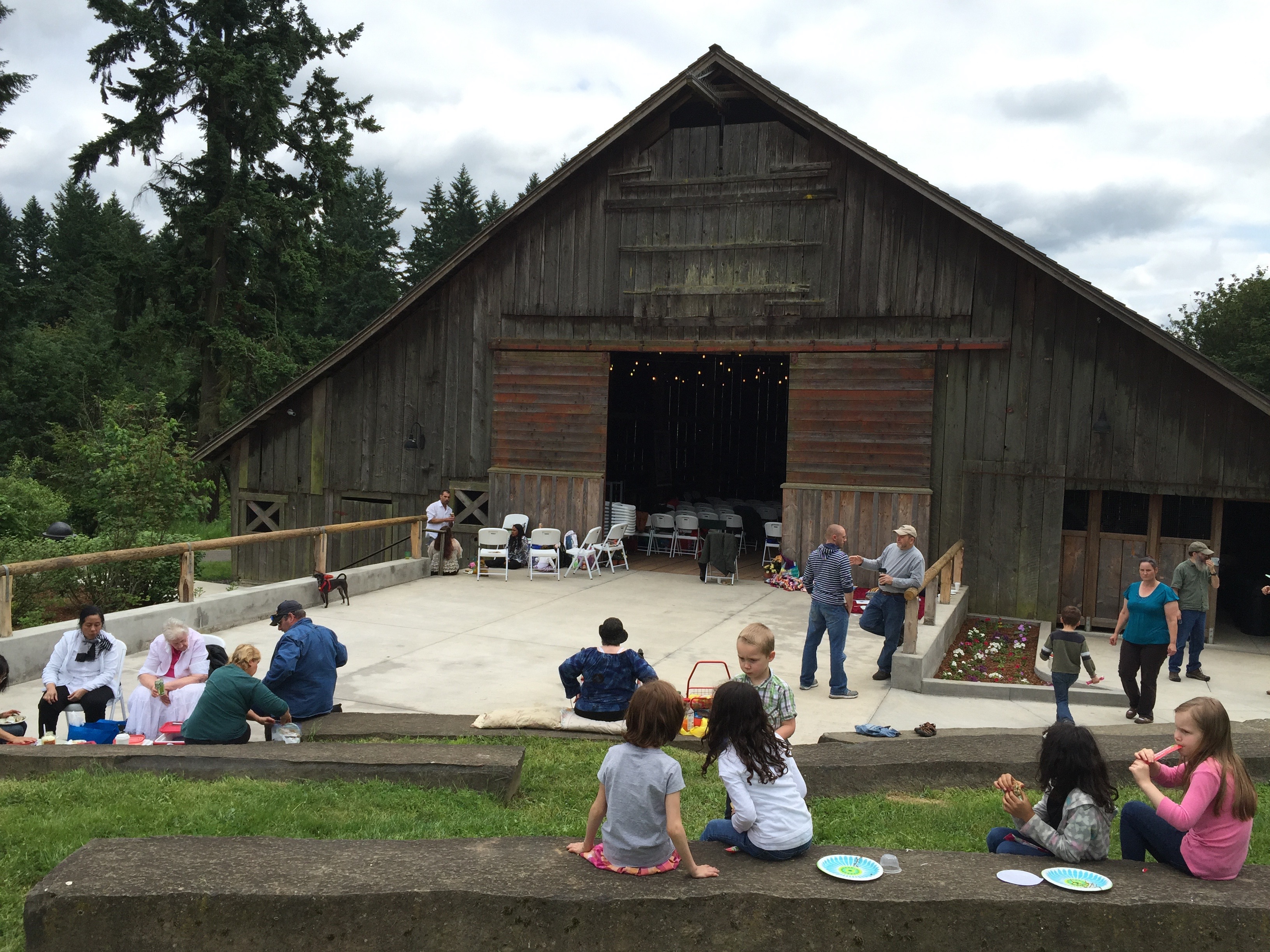
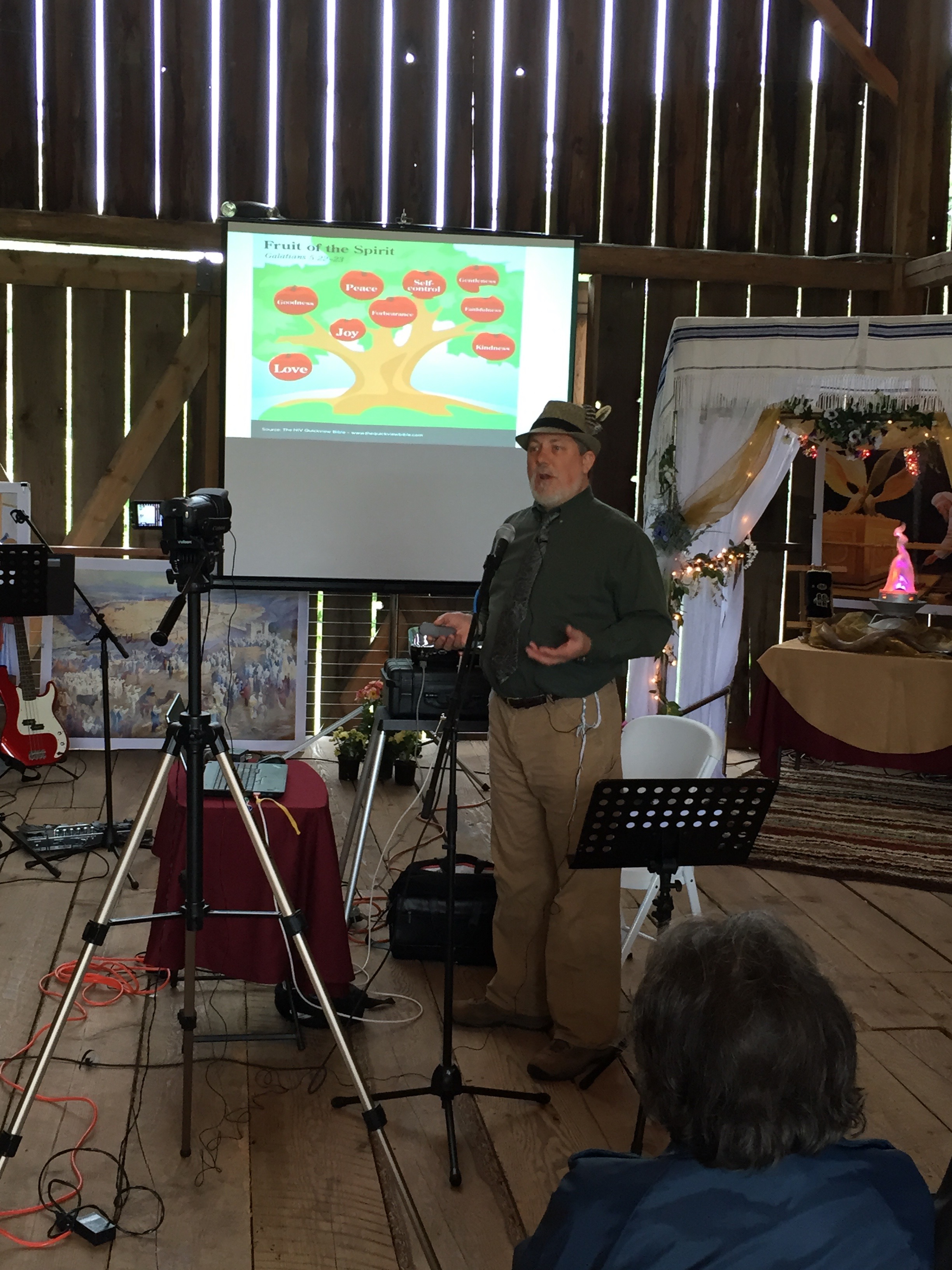
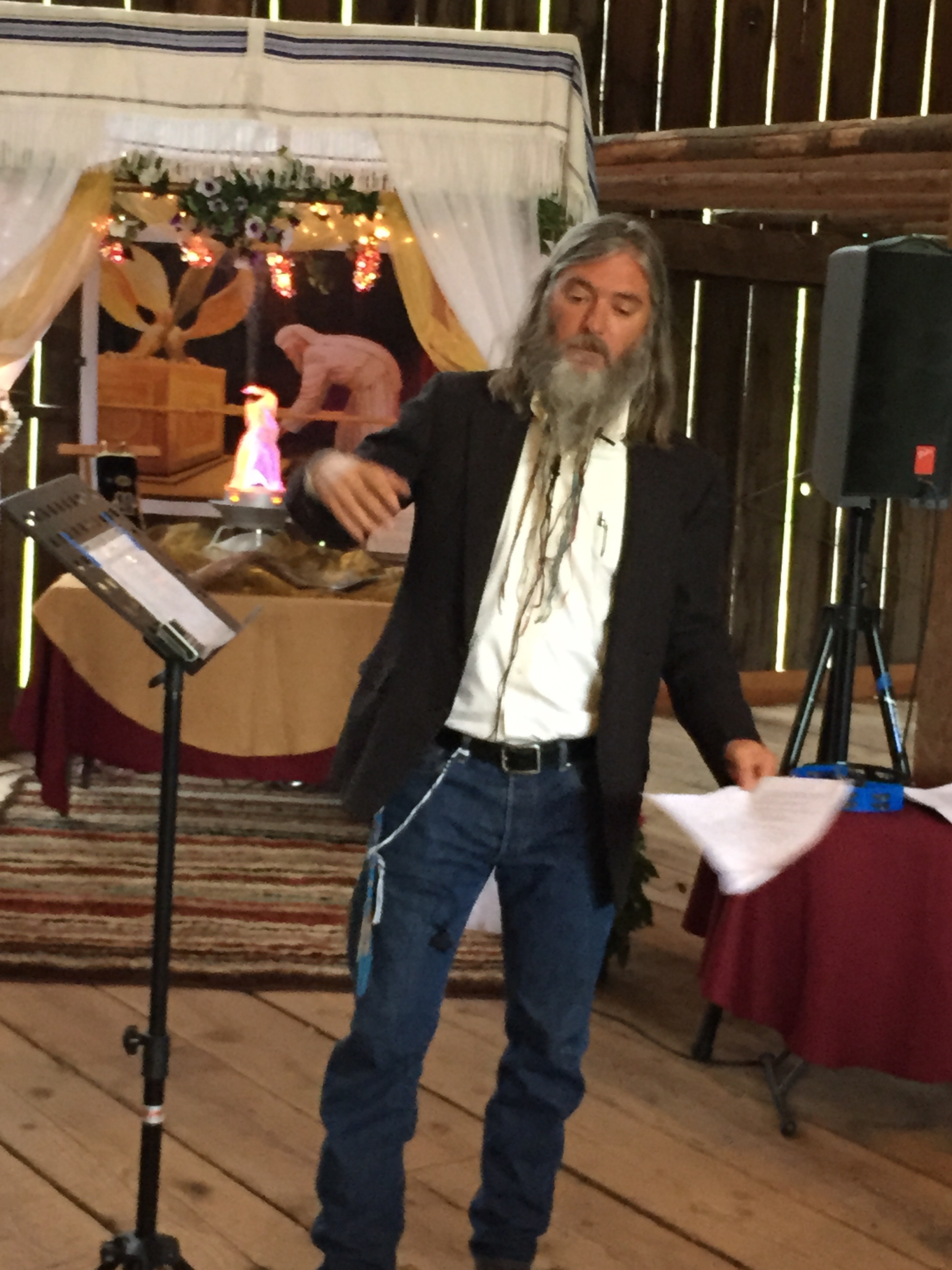
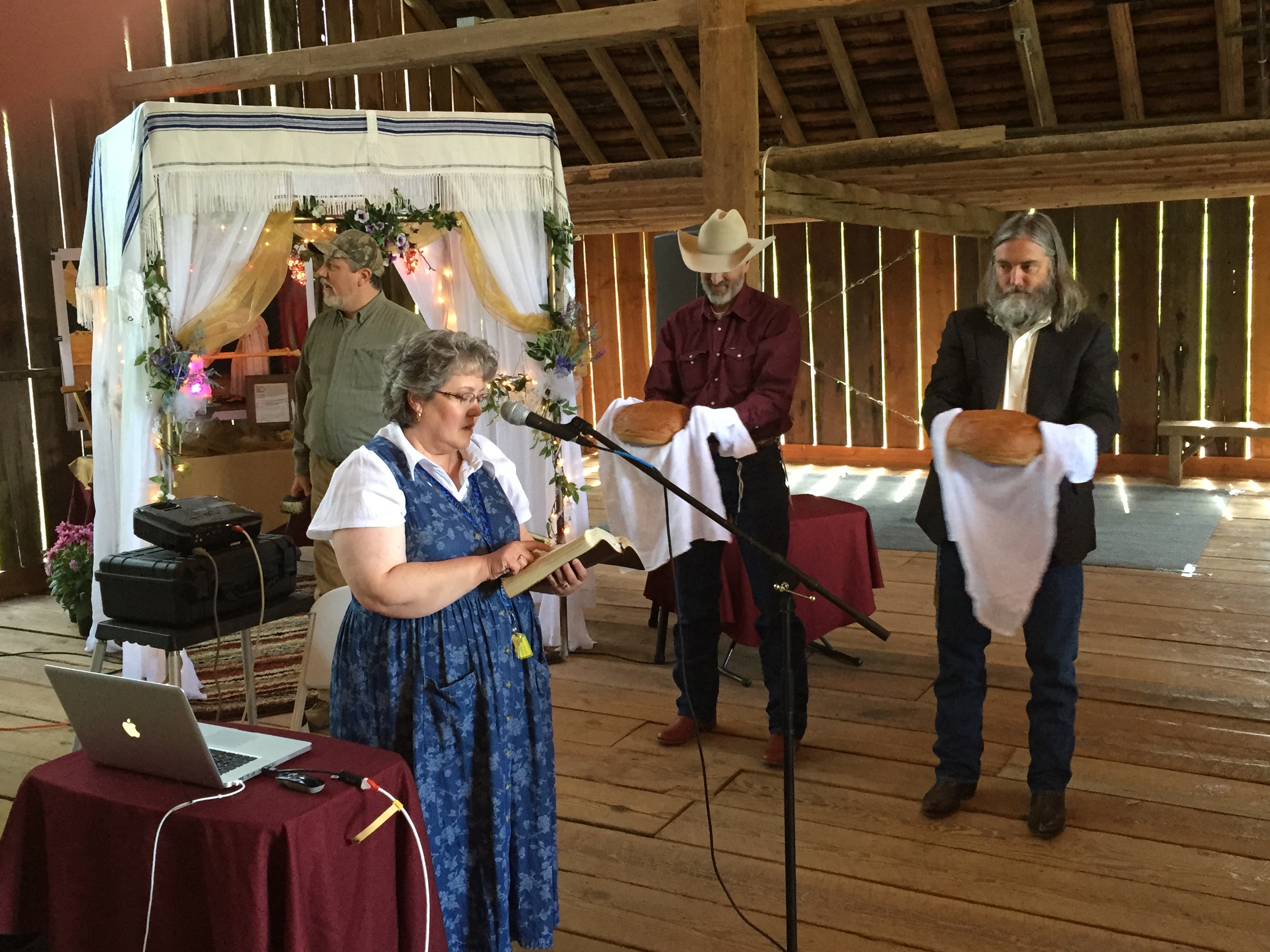
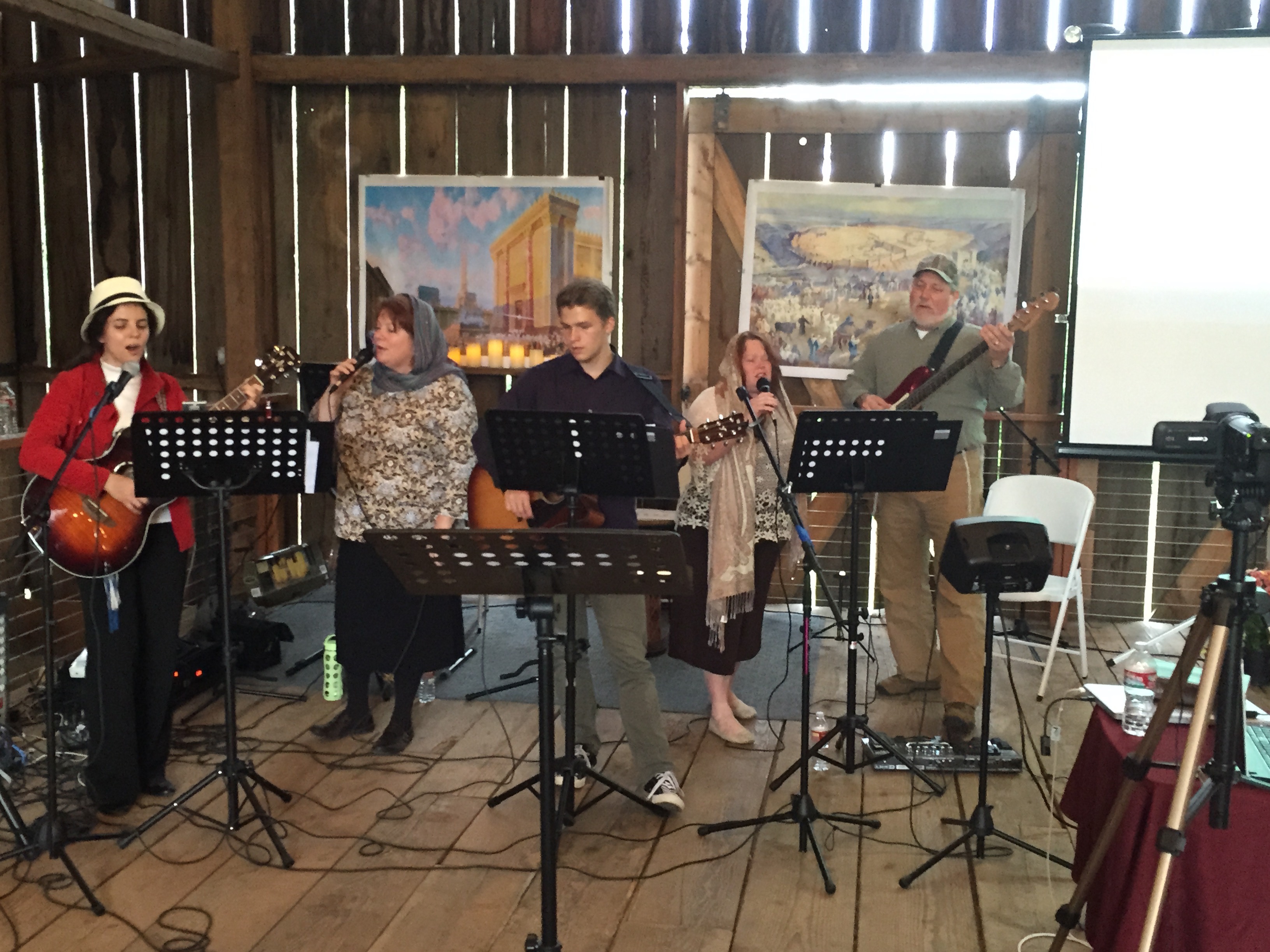
Shavuot Northwest 2015 in the barn at Wilsonville, Oregon, USA…together in one accord…the nations and tribes come together…gathering around Yeshua the Messiah — the Living and Written Torah…spiritual and physical food…rejoicing…worship…spiritual rededication…the bride preparing herself to meet her Heavenly Bridegroom…repentance…spiritual breakthroughs…healing…prophetic words…baptism of the Ruach HaKodesh…restoration of relationships…spiritual community…outpouring of love … there’s always next year for those who missed it!
Category Archives: Feasts
Cleansing the Temple; Preparing the Priesthood
The following are the talking points of Natan’s Shavuot message that he gave at Shavuot NW 2105. I hope you find these thought provoking and edifying. Natan
YHVH Is Preparing a Kadosh (Set-Apart) Priesthood
- Ezekiel 43:8 teaches us that man’s religious thresholds (standards) must be the same as YHVH’s, and man’s entry points into relationship must correspond with those of YHVH. Usually, men’s standards are lower than YHVH’s. Men’s low spiritual standards are abominable in the eyes of YHVH and prevent us from coming into close relationship with him. Men’s lower standards can even bring YHVH’s fiery and fierce judgment against us as this verse teaches us.
- In Numbers 18:7 and 20 we learn that the Levitical priesthood of old who had no inheritance in the land and had no share among Israel. Similarly, we as YHVH’s holy priesthood have no inheritance or share in this world. Our inheritance is in YHVH and in his world to come.
- Elohim exists outside of the physical dimension and transcends human understanding and is unknowable except by divine revelation. Religious systems tend to reduced Elohim’s righteousness down to more manageable proportions and trivialize his glory and transcendence. In so doing, we risk making and worshipping a god in our own image, which is idolatry.
- Before Yeshua went to the cross, he went in and cleansed the outer courtyard of corporatism and greed. When Yeshua returns, he’s going to come suddenly to his temple and to cleanse the sons of Levi (Mal 3:1–4). He’s coming back for pure priesthood who’s not part of a corporate, greedy religious system and everything that defiles, profaned it. All syncretistic systems and traditions of men will be eliminated. He wants living stones in his new temple, not dead ones that are spiritually lifeless. Those who abide in the outer court will be judged. The outer court is for the gentiles (Rev 11:1–2). It’s a place of an unholy mixture of worldly and religious affairs. Gentiles need to cease being Gentiles and become grafted in redeemed Israelites. The Laodiceans are those who are unacceptable to YHVH. They haven’t progressed past the outer court.
- In Malachi’s day, the priests were to bring only perfect, undefiled, unblemished and worthy of YHVH’s holiness (Mal 1:6–7, 10–13). Today YHVH’s royal priesthood is to bring him the kadosh sacrifice of a broken, contrite spirit and circumcised heart and the offering of their dedicated Continue reading
Who May Ascend the Mountain; Who Is Yeshua’s Bride?
The following will be my talking points for the message I will be giving this afternoon to the brethren assembled in Wilsonville, Oregon for Hoshana Rabbah’s 2015 Shavuot NW regional gathering. Tomorrow is Shavuot (the Feast of Weeks, Pentecost), and this message is helping to prepare ourselves to meet YHVH on his festival.
Natan
Who May Ascend?
YHVH dwells in a high place (heaven), which is metaphorical represented as a mountain in the Scriptures. It’s high because it’s higher than man and this earth. Mount Sinai was where YHVH spoke to the Israelites from. Moses had to ascend the mountain to come into YHVH’s Presence. The temple in Jerusalem was YHVH’s abiding place among his people. One always went up to Jerusalem to meet with Elohim at this appointed times. When Yeshua returns, the righteous will go up to meet him — the king. In the Millennium, all nations will go up to Jerusalem to meet YHVH on his feast days.
David asks the question: Who may ascend and dwell in your holy hill or abide in your tabernacle (Ps 15; 24)? What keeps us from the Presence of YHVH? It is obvious from this question that not everyone has the right to go up into YHVH’s Presence. YHVH as the Almighty Holy King of the universe has established the criteria for who may come up to meet him or not. Only those who meet his condition, will he allow to come up to meet him. Only those who have been taken prisoner by their own innate pride think that they can waltz into the King’s Presence anytime and any way. It doesn’t work this way. This is self-delusion. Only those who have died to their own pride and have humbly submitted themselves to do the will of Elohim will come into his Presence.
Do we really want to do the will of YHVH? Or are we listening to the lie of the serpent who tempted the first man to give in to the lust of his flesh and eyes and the pride of life when he questioned the word of Elohim and said, “Hath God [really] said?”
The older generation of carnal man Israelites couldn’t enter the Promised Land because of their stiff necks and hard hearts of rebellion and wilfulness. Like our ancient forefathers who died in the wilderness, we need to have the hard and fallow ground of our unrepentant and prideful hearts needs tilled up (Jer 4:3; Hos 10:12). Our hearts need to be circumcised. The filth of this world that has wrapped itself around us needs to be cut off. We need to be cut to the heart and find a heart of repentance (Acts 2:37). We need to put off our lukewarm, carnal Laodicean ways (Rev 3:15–20).
We must ask ourselves an important question: Is Yeshua really the Lord or Master of our lives, or only when it doesn’t get in the way of the things we’d rather do than obey his commands?
What does it really mean to follow the Lamb wherever he goes (Rev 14:4)?
What did Yeshua mean when he said, Lose your life (John 12:25), pick you cross and follow me (Matt 16:24)?
There is a group in the last days who will be walking righteously with Yeshua. They are the Continue reading
Shavuot/Pentecost is next Sunday. Are you ready?
To help you get ready for the biblical feast of Shavuot or Pentecost, I invite you to read my teaching article on the subject.
From Mount Sinai to Acts 2; From Faithlessness to Miraculous Empowerment
Ya’acov Natan Lawrence
Waters in the Wilderness, A Teaching Ministry of Hoshana Rabbah Biblical Discipleship Resources
What is Shavuot All About?
In the roughly 49 days between Passover (Pesach) and the Feast of Pentecost (Chag haShavuot), a momentous spiritual dynamic occurs. This period of time is comprised of forty-nine days or seven days of seven weeks, which is seven times seven—the biblical number for complete or full perfection. Add one day and you arrive at Pentecost. Fifty is the biblical picture of jubilee picturing redemption from the enslavement to this world.
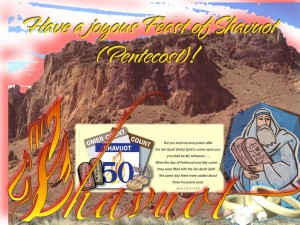
Historically, the children of Israel were redeemed from their sins by the blood of the lamb on the first Passover in Egypt. At this time, YHVH betrothed himself to Israel (Exod 6:7). YHVH then led them out of Egypt into the wilderness, and on Shavuot he married them at Sinai (Exod 24 cp. Ezek 16:8; Jer 2:2; 31:32). At the same time, YHVH gave them his Torah, which was their ketubah or marriage vows.
Shavuot is a picture of the bride of Yeshua the Messiah coming into full maturity spiritually and coming to marriageable age. She has gone from being a spiritual child and slave in Egypt to becoming the fully mature spiritual bride and queen of the King of the universe.
At the time of Yeshua, he betrothed himself to both houses of Israel on Passover. Then, on Pentecost, he then sent his Spirit, the Comforter, as a seal of this covenant. He hasn’t married this bride (that’s you and me) yet — something that occurs at his second coming. In the mean time, he has placed her in a 2000-years-long wilderness to get ready for him — to fall in love with him (to love him by keeping his Torah commands; John 14:15) by receiving his Torah into their hearts.
In the end times, he’s going to bring his bride (the saints) out of the wilderness of Babylon (called the Second Exodus), and they will repent of their Torahless ways. We are now getting ready for this day.
Understanding the prophecies of the Bible that speak of these end-time events, and understanding who the principal players are (the two houses of Israel) is the key to insure that we’re ready for our Messiah — that we’ll be wise and not foolish virgins who have our lamps full of oil (the Torah and Spirit of Elohim).
Shavuot, along with Passover (Pesach) and the Feast of Tabernacles (Sukkot) are three times each year when YHVH commands his people to gather together to celebrate before him (Exod 23:14–17).
To fully comprehend Shavuot, we must step back and view this feast in its context with the other six biblical feasts that YHVH gave to Israel.
YHVH’s Seven Biblical Feasts
The seven annual biblical festivals of YHVH Elohim (or, in our English Bibles, the LORD God), of which Shavuot (Pentecost) is the third of seven, Continue reading
Video: The Omer Count & Our Destiny
The Israelites’ Passover exodus from Egypt as ex-slaves and their journey to Mt. Sinai where they received the Torah 50 days later and become the Priest-Wife of YHVH prophetically parallels our spiritual journey out of the world to become the bride of YHVH-Yeshua. This video, like a road map, explains the count of the omer, so you’ll understand where you’ve come from, where your at, and what spiritual destiny is.
Blood on the Mercy Seat…Facing Mount of Olives
Leviticus 16:14, Mercy seat eastward. What possibly could be the significance of YHVH’s command to specifically sprinkle the blood of the sacrificed animal on the east side of the mercy seat? Simply this. If one has ever had the privilege of standing on the Temple Mount in Jerusalem, it all makes sense. The east side of the mercy seat faces directly toward the Mount of Olives, where the altar of the red heifer was located. It was likely near this exact spot that Yeshua was crucified just outside of the Jerusalem city gates (Heb 13:12), and where he sprinkled his blood as an atonement for men’s sins (Heb 11:24).

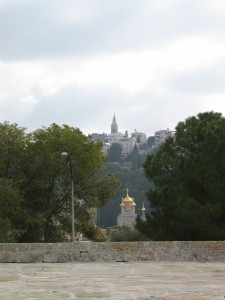
View of the Mount of Olives taken from the Dome of the Spirits on the Temple Mount. Some scholars believe this was the location of the holy of holies in the original Temple of Solomon.
At this same spot, one had a full frontal view of the temple, which is why those attending Yeshua’s crucifixion were able to see the rent veil in the temple from the spot where he was crucified (Matt 27:51 cp. 54).
Therefore, the high priest sprinkling the blood of the bull and goat sin offering on the east side of the mercy seat on Yom Kippur was a prophetic act pointing to what would take place some fifteen hundred years later on the Mount of Olives.
Yeshua’s shedding of his blood there as an atonement for men’s sins was a fulfillment of the high priest sprinkling blood on the mercy seat on Yom Kippur. When Yeshua was crucified, although his cross faced the mercy seat in the temple, the holy of holies no longer contained that item. To this day, no one knows what became of it.
The sprinkling of blood on the east side of the mercy seat is a small detail that’s easily overlooked in the Scriptures, but it has profound spiritual and prophetic significance. This detail meshes with other seemingly insignificant details found elsewhere in the Scriptures. When these puzzle pieces are placed together, they form another picture of Messiah’s work. This is another proof that only the hand of YHVH Elohim could have inspired the writing of the Bible. May your faith in the divine origination of the Scriptures be strengthened to the glory of Elohim!
The Story of Two Goats
Leviticus 16:8, The scapegoat. The Soncino Pentateuch says of the azazel goat of Leviticus 16:10 that the word scapegoat, as used in the KJV, is a poor translation and should be rendered as dismissal. In the Septuagint it is translated as the one to be sent away which agrees with the term used in the Mishnah. Azazel is not a proper name, but a rare Hebrew noun (kZtZG from ZG meaning goat and kZt meaning to go away) meaning dismissal, or entire removal. It is the technical term for the entire removal of sin and guilt of the community, that was symbolized by the sending away of the goat into the wilderness.
There is some difference of opinion as to the symbolic meaning of the azazel goat. Some say it is a picture of Satan who initially tempted man to sin or to rebel against Elohim, and has been doing so ever since. Since he is the source of sin and since he is responsible for man sinning, he must consequently bear the responsibility for his actions which he will do when he is bound and thrown into the bottomless pit at the beginning of the millennium. The azazel goat being dismissed into the wilderness is a picture of this. On the other side, there are those who teach that the azazel goat is a picture of Yeshua who bore our sins upon himself and died alone in our place. Which view is correct? Well, both. Sort of…
The most important key to determining who this goat represents is found in Lev 16:10,
But the goat, on which the lot fell for Azazel, shall be set alive before YHVH, to make atonement over him, to send him away for azazel into the wilderness.
Note the highlighted portion. Who made atonement for our sins? Satan or Yeshua? Scripture does not reveal the devil as the redeemer of mankind. Of Yeshua being our atonement the Scripture say:
And not only so, but we also joy in Elohim through our Master Yeshua the Messiah, by whom we have now received the atonement. (Rom 5:11)
Who being the brightness of his glory, and the express image of his person, and upholding all things by the word of his power, when he had by himself purged our sins, sat down on the right hand of the Majesty on high. (Heb 1:3)
Who needeth not daily, as those high priests, to offer up sacrifice, first for his own sins, and then for the people’s: for this he did once, when he offered up himself. (Heb 7:27)
For then must he often have suffered since the foundation of the world: but now once in the end of the world hath he appeared to put away sin by the sacrifice of himself. (Heb 9:26)
Furthermore, the act of laying on of hands (Lev 16:21) onto the azazel goat symbolizes the transference of sins from the guilty party (the children of Israel) to the innocent azazel goat. The innocent becomes the sin-bearer. Of course, who can deny that this is a perfect picture of Yeshua, and not Satan!
Spiritually, the azazel goat represents the entire removal of sin’s defilement from the camp of Israel into the wilderness. In Psalms 103:12 Elohim removes our sins from us as far as the east is from the west. YHVH does this, not Satan!
In Lev 16:22 we read, “And the goat shall bear upon him all their iniquities unto a land not inhabited: and he shall let go the goat in the wilderness.” Throughout the Scriptures there are numerous references to Yeshua bearing our sins.
All we like sheep have gone astray; we have turned every one to his own way; and YHVH hath laid on him the iniquity of us all. (Isa 53:6)
Therefore will I divide him a portion with the great, and he shall divide the spoil with the strong; because he hath poured out his soul unto death: and he was numbered with the transgressors; and he bare the sin of many, and made intercession for the transgressors. (Isa 53:12)
So Messiah was once offered to bear the sins of many; and unto them that look for him shall he appear the second time without sin unto salvation. (Heb 9:28)
Who his own self bare our sins in his own body on the tree, that we, being dead to sins, should live unto righteousness: by whose stripes ye were healed. (1 Pet 2:24)
I believe that the azazel goat has a secondary meaning, as well. Though it doesn’t outrightly represent Satan, but Yeshua, we will see that our Savior, blessed be him, while hanging on the cross represented sin in its totality and in its extreme, and so for a brief moment took on the image of the serpent himself. Yeshua said of himself in John 3:14: “And as Moses lifted up the serpent in the wilderness, even so must the Son of man be lifted up.” In Scripture, the serpent is a picture of the Satan, the adversary (Gen 3:1, 2, 4, 13, 14, 15: Rev 12:9; 20:2).
In Lev 16:8 we see that as the two goats stood before the high priest, one on his right hand and one on his left, the lots would be cast and one would become the azazel goat and one would be the goat that would be sacrificed in the tabernacle sanctuary itself. An interesting note that may have a bearing here: Hebraically, the right hand is the hand of strength, power and judgment, while the left land is the hand of mercy and grace.
Both Adam Clarke and Matthew Henry in their commentaries say that both goats refer to a different aspect of Yeshua’s atonement. Henry says, “Thus [Yeshua] was prefigured by the two goats, which both made one offering: the slain goat was a type of [Messiah] dying for our sins, the scapegoat a type of [Messiah] rising again for our justification…[after which] the entrance into heaven which [Messiah] made for us is here typified by the high priest’s entrance into the most holy place (Heb 9:7)” (Matthew Henry’s Commentary On the Whole Bible, vol. 1, p. 509). Henry doesn’t explain just how the goat going into the wilderness typifies Yeshua’s redeeming us, but I should like to offer an alternative idea in this regard. Perhaps, the azazel goat represented Yeshua’s soul descending into hell and there taking the keys of death (1 Pet 3:18–20; Rev 1:18). Some fun speculation to contemplate!