

Exodus 18
Exodus 18:2–3, After he had sent her back.This verse suggests that Moses divorced his wife after their altercation over the circumcision of their sons (Exod 4:24–26). If so, what are the spiritual implications of this for us today?
The phrase sent away/back in verse two is the Hebrew shilluach which according to Strong’s Concordance and Gesenius’ Hebrew Lexicon can be a biblical term referring to divorce. Shilluach is from shalakh, a basic verb meaning “to send,” where in Isaiah 50:1 and Jeremiah 3:1 the prophets use it referring to YHVH’s divorce from the house of Israel or Ephraim.
Though rabbinical commentators Rashi and Hirsch fail to note the possibility of Moses’ divorce (Jewish Torah commentators tend to gloss over the faults of their great biblical heroes), Medieval Jewish Torah scholar Baal HaTurim notes this possibility in his commentary.
Yet in Exodus 18:2, YHVH still views Zipporah as Moses’ wife. What is going on here? Before this, Zipporah seems to have evidenced reluctance at obeying YHVH’s command to circumcise their sons (Exod 4:25), so did Moses put her away (divorce her) as a result? Was Moses, as the human “savior” of Israel from Egypt and an antetype (or prophetic forerunner) of Yeshua the Messianic Savior (Deut 18:15–19) in that he had to deal with a rebellious wife, even as Yeshua (in his preincarnate state as YHVH of the Tanakh) had to deal with his rebellious Israelite wife and eventually had to put her away?
Zipporah is never again mentioned in the Torah and, in fact, we see the possibly that the divorced Moses even married another woman (Num 12:1)—apparently a black woman from Ethiopia. Is this a prophetic picture of Yeshua remarrying his former wife (Israel) during the time of the Renewed/New (Marriage) Covenant (Ketubah), who has adulterously mixed herself with the nations and returns to him in a mixed racial (spiritually and biologically-speaking) condition (Hos 7:8)?
Thus, it is possible that Moses had to divorce his wife because she not only was reluctant to circumcise her sons, but there is no biblical record that she followed Moses in his divine commission to lead the children of Israel out of Egypt much less into the wilderness. If this is the case, then this is reminiscent of Lot’s wife who refused to follow her husband at YHVH’s command and chose instead to return to Sodom. It happened in Bible times and still does in our time that YHVH gives a ministry commission to a man and the wife refuses to follow with the marriage ending in divorce as the two go their separate ways.
If Moses led Israel as a divorced and remarried man, does this change your perspective about him? This could also affect our perspective on divorced people in ministry whose unsaved spouses are adversarially opposed to their spouses divinely commissioned ministry calling.
Moses and the Ethiopian Women. Moses’ marriage to the Ethiopian woman can be found in Josephus Antiquities of the Jews, book 2, chapter 11 (Ant. 2:11.1–2). According to Josephus based on Jewish tradition, she was one of the “spoils” of war when Moses, on behalf of the Egyptian monarchy, led an Egyptian army triumphantly against the Ethiopians who had invaded Egypt. The Ethiopian woman was a daughter of the king of Ethiopia. So quite possibly after Moses fled Egypt for Midian as a wanted criminal, he must have assumed that he would never return to Egypt and see his Ethiopian wife again, which, in his mind, freed him up to marry Yitro’s daughter, Zipporah. This marriage would have been before Moses was “saved” and before Elohim called and commissioned him at the burning bush in Exodus chapter three. So, when Zipporah refused, apparently, to follow him on his divinely appointed mission to Egypt, she abandoned him, which is why Moses had dismissed, divorced or sent her back (see Exod 18:2 where we read that Moses had “sent her [Zipporah] back,” Heb. shillûach meaning “dismissed, i.e., divorced”). It also appears that the righteous and YHVH-fearing Yitro tried to reconcile Moses and Zipporah when he brought her to Moses in Exodus 18:6. Moses implored Yitro to remain with him and accompany him in the wilderness (Num 10:29). However, the aged Yitro, and presumably along with his daughter, refused Moses’ plea ostensibly preferring the safety, security and familiarity of his own home in Midian over the uncertainties and inconveniences of wandering like a nomad in the wilderness. So Moses let Yitro return (Exod 18:27) evidently taking Zipporah with him, for it appears based on the textual evidence that she wanted nothing to do with Moses’ mission. Therefore, Moses, being left alone without a marital partner to accompany him on his divine mission, may have called back his former Ethiopian wife to join him, which she obviously did causing the scandal we read about it Numbers 12. If these suppositions are correct which the biblical and secular historical evidence seems to suggest that they are, this all goes to show that love, marriage and divorce and remarriage can lead to difficult, complex, sticky and divisive issues. Nevertheless, and obviously, YHVH’s merciful grace prevailed and Moses went forward approved of Elohim on his mission of leading the Israelites to the Promised Land.
To be sure, divorce and remarriage is not YHVH’s ideal for people because of all the attendant and problematic issues it engenders. The Bible is clear. YHVH’s perfect will from the beginning has always been one man for one woman until death separates them. But humans are imperfect, and YHVH’s grace is sufficient, and so there for his grace go each of us, as the saying goes.
Exodus 18:24, Chose able men. Here we see Moses choosing elders or judges over the congregation of Israel. These were “able men of accomplishment” in Israel. Compare this with Paul’s instructions about the qualifications of an elder in 1 Timothy 3:1–13 and Titus 1:5–9. If Moses was divorced at the time of his choosing the elders of Israel, does this clarify Paul’s statement that an elder must be “the husband of a [often mistakenly misunderstood to mean “one’s first and only wife” —a meaning not suggested by the Greek] wife”(1 Tim 3:2)? It would appear that the Scriptures do not prohibit divorced and remarried people from holding leadership positions (if the grounds for divorce are biblically legal) in the household of faith as some churches teach.
Exodus 19
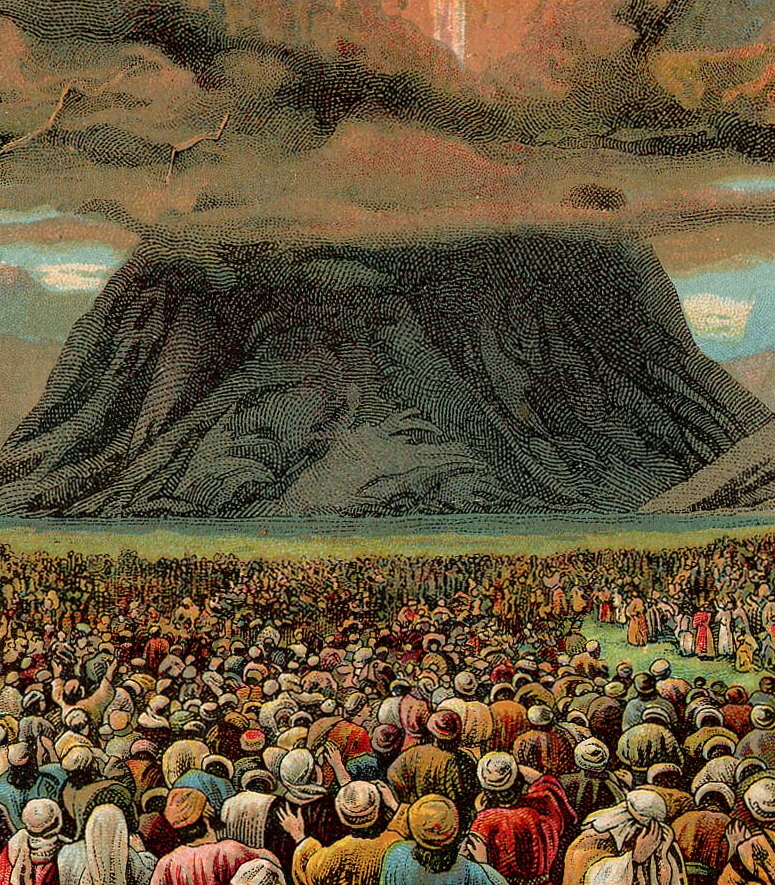
Exodus 19:1, The third month. YHVH gave his Torah-instuctions in righteousness to Israel at Mount Sinai most likely on the Feast of Weeks (Chag haShavuot or Pentecost; Lev 23:15–21), which occurred in the third month of the biblical year. On the very same day, some 1,500 years after YHVH gave the Israelites his Torah-law at Mount Sinai another momentous event occurred. On the day of Pentecost in Acts chapter two, the Spirit of Elohim descended upon Yeshua’s disciples—the literal descendants of the children of Israel—who were gathered in one accord, and on that day YHVH wrote the very same Torah on the hearts of the disciples in fulfillment of Jeremiah’s prophecy (Jer 31:31–33 and Acts 2:1, 37 cp. Heb 8:7–13). There is a continuity of theme and purpose between these two events: a legally delineated standard of righteousness. YHVH does not change, for he is the same yesterday, today and forever!
Exodus 19:2, Mount Sinai. Mount Sinai, also known as “the mountain of Elohim” (Exod 3:1; 4:27; 18:5; 24:13; 1 Kgs 19:8), and is a geographical symbol of YHVH’s exalted earthly presence and heavenly government here below. Israel camped at the base of this mountain, positioning themselves through a process of sanctification to receive YHVH’s Torah. Empowered with the word of Elohim, YHVH commissioned the Israelites to be his special people, his kings and priests or, in other words, earthly evangelistic ambassadors to take his instructions in righteousness to the world. Likewise, Yeshua instructed his disciples to tarry or position themselves on another mountain—Mount Zion in Jerusalem—until they were endued with power from on high (Luke 24:49). For what purpose? Once empowered by the Spirit, and with the Torah written on their hearts (Acts 2:37), and as devoted followers of Yeshua the Living Torah-Word of Elohim (John 1:1, 14), they would be heaven’s spiritual salt and light to the nations (Matt 5:13–14; Acts 1:8), while walking out the Torah as his own chosen, special people as well as YHVH’s holy and royal priesthood (1 Peter 2:5, 9–10). Yeshua’s promise of empowerment and the commission he gave to his disciples leading up to and on the day of Pentecost has never changed from then until now. As redeemed believers in Yeshua, we are not only his disciples, but are the spiritual descendants of the ancient Israelites (Gal 3:29; Rom 4:16; 9:8–11 cp. Eph 2:11–19), and our mission is to pick up where our failed forefathers left off and finish the job of taking YHVH’s Torah (both the Written Torah and Yeshua the Living Torah) to the nations (Matt 28:18–20; Mark 16:15–18 cp. Matt 10:6)—a job that ancient Israel failed to accomplish because of disobedience to the Torah brought on by hardness of heart and unbelief (Ps 95:7–10; Heb 4:1–7).
Before the mountain.The children of Israel coming to Mount Sinai, preparing themselves to meet YHVH Elohim, and to receive his instructions in righteousness is symbolic of the spiritual path that all humans must take if they want to meet their Maker as we will learn in the brief study below.
Throughout history, humans have invented a myriad of religions and philosophical ideologies in an effort to reconcile man to heaven or some great power that is above him. This is because the Creator made man in his own image, made man to be connected to and dependent upon his Creator and placed eternity in the heart of man (Eccl 3:11); therefore, humans instinctively know that there is something more to this physical life—there is something “out there” beyond each of us that beckons us to a higher place—something eternal and spiritual. Humans instinctively know that they must improve themselves morally in order to get there. Some people follow that instinct and some reject it. In either case, the Creator has given each of us a conscience, that like the needle on a compass, points us to true north. The problem is that (a) man does not know how to get there and (b) he has internal (i.e., his rebellious and lawless sin nature; Jer 17:9; Rom 8:6–8; Jas 3:15) and external forces (i.e., the world the devil, as well as all the invented, non-biblical religions of the world; Jas 3:15) that keep him from find the way. All of these false paths lead everywhere else but to “true north.” In an effort some reach their Creator and to fulfill the inner longings of their hearts, man has invented religions and philosophies to get him to “heaven” through his own efforts but without dealing with the root reason that has prevented man from coming into the presence of his Creator. One thing keeps man bound to this earth, lost and confused; it is sin. No matter what his or her religious or philosophical efforts may be, it is impossible for one to pull oneself up by one’s own bootstraps. Until each human deals with the sin issue in his or her life, he will not progress one inch toward upward toward his higher destiny.
Only one religion, ideology, philosophy or whatever else you want to call it deals with the sin issue, and that is the Truth of the Bible. Until each man recognizes that his sin has separated him from a perfect, holy (totally pure, holy or seet-apart, righteous, all-loving and transcendent Elohim and that only by going through the spiritual cleansing process that heaven prescribes for the disease called sin can one find the answers to the deeper questions of life, resolve the sin issue that separates earth from heaven, and then eventually come into the presence of one’s Creator during and after this physical life.
Through Moses, a man who was prophetic picture of Yeshua the Messiah, YHVH led the Israelites to the foot of the Mount Sinai representing the presence of Elohim; it was an earthly metaphor for of heaven itself and the very throne room of the Creator.
To experience the presence of Elohim, humans are required to consecrate themselves before hand, and only then is one allowed one to climb upward spiritually to meet YHVH. This is done through a process of spiritual consecration or sanctification and involves getting cleansed from the defilements or rudiments of the world, flesh and devil (Jas 3:15; Col 2:8, 20), even as the Israelites cleansed or consecrated themselves physically in preparation to meet their Maker (Exod 19:10–11, 14).
A spiritual relationship with Elohim through the cleansing blood of Yeshua is the only cleansing process which is acceptable to YHVH Elohim by which humans can transcend spiritually. There is no other way (1 Pet 1:2; 18–19; 1 John 1:7; Rev 1:5; 7:14; Heb 10:19–22; 9:12; 12:24; Matt 26:28; Eph 1:7). Yeshua is literally the only way to the Father in heaven (John 14:6; Acts 4:12). He is the spiritual ladder that each person must climb (John 1:51) to attaint the summit of Mount Sinai representing the exalted presence of Elohim (Gen 28:12). Yeshua is literally the gateway or door to heaven (Gen 28:17; John 10:7–9; 14:6).
The Book of Exodus’ account of the children of Israel coming into the presence of Elohim is an illustrative example of the process that each of us must go through to meet our Maker on his terms, not our terms.
Of course, this cleansing process or spiritual journey did not start at Mount Sinai for Israelites. It started back in Egypt when they put their faith in the blood of the lamb to save them from Elohim’s judgment against sin, and when they had then deleavened their lives of sin, and then passed through the Red Sea—a picture of baptism for the remission of sins. These are all symbolic and prophetic pictures that point to the steps that each person must take if they want to see Elohim. These steps include acceptance of Yeshua the Messiah, the Lamb of Elohim and his death on the cross, putting sin out of one’s life, and then being baptized for the remission of sins.
To the spiritually astute whose eyes are opened to heaven’s light, these truths should be as plain as day, but human pride and rebellion against the Truth of Elohim have blinded most humans from reality.
Now that you know this simple Truth, what will you do about it?
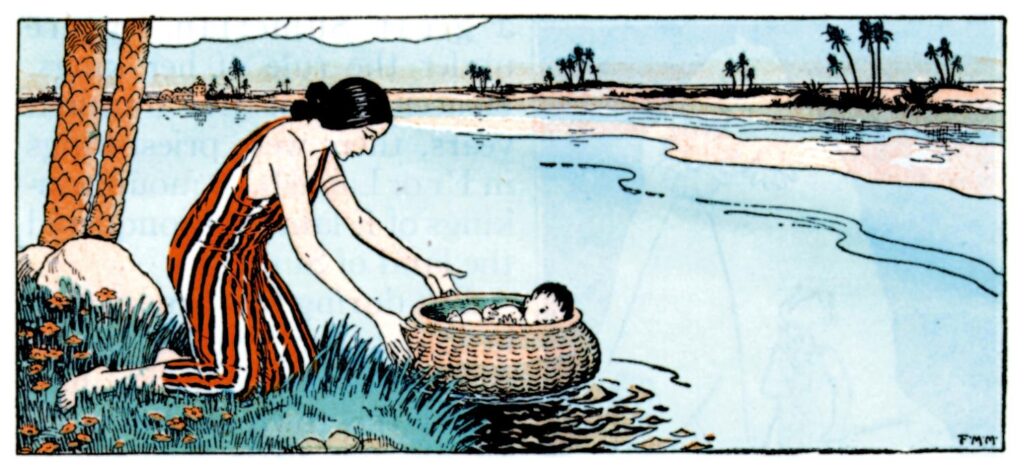
Exodus 19:3, Moses. The name Moses/Moshesh literally means “drawing out or rescued.” What was Moses drawn out of or rescued from? From the waters of the Nile River in Egypt. Water can be a biblical metaphor for humanity, and Egypt a metaphor for Satan’s world. That is to say that Moses was drawn out of or rescued from the seas of humanity. YHVH then used Moses to rescue, draw forth or fish the children of Israel out of the same sea of Satan’s world and lead them to YHVH, which brings us to Mount Sinai. There YHVH gave his people laws that would help to bring them into a loving relationship with him.
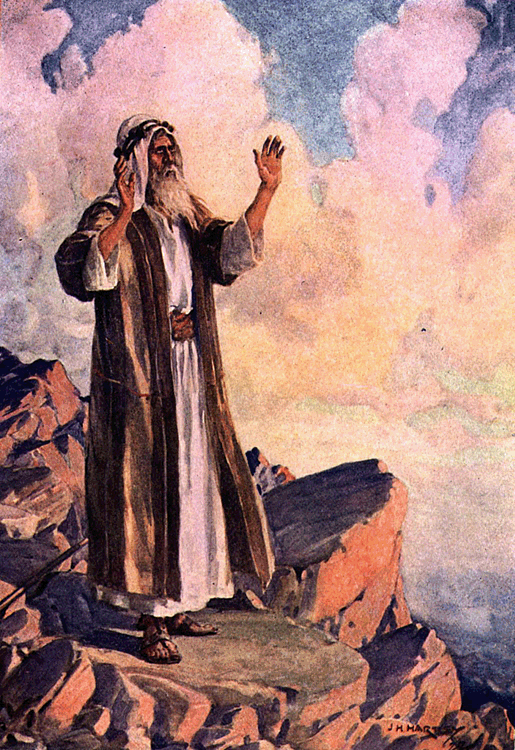
Moses went up to Elohim. Moses acted as YHVH’s intermediary to prepare the Israelites for their “marriage” to him. In a repeat of history, Malachi prophesied that in the last day YHVH would send other intermediary forerunners to turn the hearts of the children back to the foundations of their faith including the Torah before the return of Yeshua, thus preparing the saints to be the bride of Yeshua (Mal 4:1–6). As YHVH gave the children of Israel, his spiritual bride, three days to prepare themselves to meet him (Exod 19:11), so YHVH is likewise giving his end time saints time to prepare themselves to meet Yeshua, their heavenly Bridegroom at this second coming. As Malachi prophesied and Yeshua alluded to in his Parable of the Ten Virgins, returning to the ancient Torah-roots of the saints’ faith is central to this preparation process.
Continue reading