The Ancient Ritual of Two Doves … and Yeshua??

Leviticus 14:4–32, Read this scripture passage and see how many clues you can find that point to Yeshua. We’ll give you hints along the way by providing you with the scripture verses to look up that will give you the answers. The purpose of this exercise is to show you that all the ceremonies and rituals that were part of the sacrificial system all prophetically pointed to Yeshua the Messiah, who fulfilled them all. This means that if we place our trusting faith in him, we no longer have to do the laborious and involved rituals that our ancient forefathers had to do in order to atone for their sins—we simply have to repent and believe in, love, follow and obey Yeshua and his word.

Now let’s look at the ritual for cleansing a metzora (one with a skin disease—a picture of our sinfulness) who had tzaraas (an infectious skin disease caused by sin).
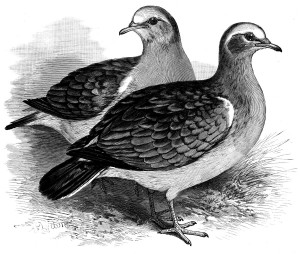
Verses 4–7, two birds: One bird (likely a dove or pigeon) was killed in a clay pot over running water. The other bird along with the cedar wood, scarlet cloth and hyssop were dipped into the clay pot containing the blood from the killed bird and the running water. The water-blood mixture was then sprinkled on the diseased person (metzora) who was being purified, and the living bird was let loose and allowed to fly away. There is a lot going on here, but it all prophetically pointed to Yeshua’s death, burial and resurrection. Before deciphering this ritual out, perhaps it would help to understand the spiritual meaning of the wood, scarlet and hyssop, which we will explain next.
Continue reading →


How Is Your Lot in Life?

Psalms 16:5–6, Lot… lines. The English word lot means “a portion that is assigned to someone” and may refer to the idea of randomly drawing lots as part of a decision making process. Likely, our English word lot as in a piece of land, or a land lot, derives from these concepts. In ancient Israel, the tribal land allotments were determined by the casting of lots once the children of Israel came into the Promised Land (Josh 13:6; 14:2).

Part of this ancient process of surveying land involved measuring parcels of land with a cord (Manners and Customs of Bible Lands, pp. 245–246, by Fred H. Wight; also Ps 78:55; Amos 7:17). When lots were cast for land allotments, pebbles were placed in a bag with marks on each stone to represent each parcel of property. Pebbles were drawn, and each man received his lot. Each individual soon discovered whether his portion of land was desirable or not.

David used this as an illustration of Elohim’s goodness to him when he makes the praise declaration in verse 6 that “the lines have fallen to me in pleasant places” (Ibid.). No doubt, David is referring to the spiritual inheritance of the righteous, for he proclaims that YHVH is his portion and his inheritance (v. 5).

How has YHVH blessed you with favorable lot lines? Do you know Yeshua, and has he redeemed you from your sins and placed your name in his Book of Life? Rejoice! Even if you’re struggling with your physical lot in life, please remember the prayer of Habakkuk who praised YHVH regardless (Hab 3:17–19).


Happy Last Day of the Feast of Unleavened Bread

Days of Unleavened BreadHag HaMatzot or the Feast of Unleavened Bread is the second annual festival on YHVH’s biblical calendar, and occurs on the fifteenth day of the month of the Abib, which is the day immediately following Passover (or Pesach, Lev 23:5–8). Because both of these occur back-to-back, the Jews often refer to Passover and Unleavened Bread simply as Passover Week or some similar term that places the main emphasis on the Passover. But it must be noted that, though related, these two festivals are separate in meaning and purpose. Passover pictures Israel coming out of Egypt. Upon separating from Egypt, YHVH (the LORD) then commanded the Israelites to put all leavened food products out of their houses and to eat unleavened bread (flat bread) for seven days, hence the origins of the Feast of Unleavened Bread. Additionally, the first and seventh days of this week-long event are Sabbaths, and YHVH commanded his people to hold a set-apart convocation (or gathering) on these Sabbaths.

What, you may ask, is the purpose of putting leavening out of one’s home and eating unleavened bread products such as matzoh for one week? This seems like a curious request by YHVH of his people. Not surprisingly, the Creator of the universe has a reason for everything. The spiritual implications are enlightening and highly relevant to the disciples of Yeshua. In commanding his people to deleaven their homes and lives, YHVH was/is teaching us an object lesson, which applies to us as much today as to the Israelites of long ago.  Continue reading →


Blog Scripture Readings for 4/9–4/15/12 Midrash

Aside

Leviticus 11–18; Isaiah 55–66; Jeremiah 1–2; and Psalms 11–17

Most of this week’s blog discussion points will be on these passages. The full year’s Bible Reading Schedule can be found on the right sidebar under “Helpful Links.”

If you have general comments or questions on the weekly Scripture readings not addressed in a blog post, here’s a place for you to post those. Just use the “leave a reply” link below.


He Is Risen!—Proven from the Tanakh (OT)

An Analysis of Tanakh Scriptures That Predict the Resurrection of the Messiah

Psalms 16:10, For thou wilt not leave my soul [nephesh] in hell [sheol]; neither wilt thou suffer thine Holy [chaseed or faithful, kind, pious, devout, saint, godly] One to see ­corruption [shakhath or decay of the grave according to The Theological Wordbook of the Old Testament (TWOT)].

Commentary: To whom is this verse referring? Obviously not normal humans whose bodies and souls go into the grave at the time of death (so says this verse) (to await the resurrection) and where they decay? Who in Scripture, but Messiah Yeshua resurrected after three days before his body could corrupt (start to decay)? According to Jewish thought bodily decay starts after three days.

Continue reading →


When Did Easter Originate?

When Did the Early Christians First Celebrate a Day Commemorating the Resurrection?

In A History of Christianity, vol. 1, Kenneth Scott Latourette states that notice of Easter as a festival occurs in the middle of the second century, but that festivals commemorating the resurrection of Messiah were presumably observed by at least some Christians from much earlier times (p. 137). Philip Schaff also attributes the beginning of the Easter festival to the middle of the second century (History of the Christian Church, Vol. 2, p. 207). He states that the Christian Passover naturally grew out of the Jewish Passover, as “The Lord’s Day” (Sunday) grew out of the Sabbath. “It is based on the view that Christ crucified and risen is the centre of faith. The Jewish Christians would very naturally from the beginning continue to celebrate the legal Passover, but in the light of its fulfillment by the sacrifice of Christ, and would dwell chiefly on the aspect of the crucifixion. The Gentile Christians, for whom the Jewish Passover had no meaning except through reflection on the cross, would chiefly celebrate the Lord’s resurrection as they did on every Sunday of the week.” He notes that the early Christians commemorated the entire period between the death and resurrection of Yeshua with vigils, fasting, special devotions, meetings culminating in a resurrection feast celebrating the whole work of redemption. The feast of the resurrection gradually became the most prominent aspect of the Christian Passover (Easter celebration), but the crucifixion continued to be celebrated on Good Friday” (Ibid., pp. 207–208).

Continue reading →


What Is the Midpoint of the Torah?

Leviticus 10:16, Diligently sought or inquired insistently (ASET). According to one Jewish tradition, these two words are the exact halfway mark of the words of the Torah. “This is to teach us that the entire Torah revolves around constant inquiry. One must never stop studying and seeking deeper and broader understanding of the Torah” (The ArtScroll Vayikra/Leviticus Commentary, p. 159).

How many times have you read a passage in the Word of Elohim only to receive a fresh revelation or to find a new nugget of understanding? This is because the Word of Elohim is spiritually alive! (Heb 4:12; John 14:25–26; 16:13; also Ps 119:30; Isa 55:11.)

It must be noted that other Jewish traditions place the center of the Torah in other passages. (These options are discussed in the Babylonian Talmud, Kiddushin 30a.)