Some good news (?) … I think: The Case Against Economic Collapse

The following is from http://www.shtfplan.com

The Case Against Imminent Economic Collapse: “They Can Keep Bailing Things Out for Several More Years Without Fear of Collapse”

February 16th, 2015

By Joel Skousen

This week, I’m going to diverge from my normal preparedness tips and switch to my geopolitical expertise as the editor of the World Affairs Brief (www.worldaffairsbrief.com) .  I feel the need to address the root controversy about what we are preparing for. I field more questions from subscribers and preppers each week on the subject of economic collapsethan any other topic, and despite the failure of all these collapse predictions since 2010, they are back again in 2015.

And, it’s no wonder. There is an unending flow of predictions of complete and imminent collapse coming from both the uninformed and some very bright financial newsletter writers on the conservative/libertarian side such as Jim Rickards, Peter Schiff, Michael Snyder, R.G. Allen, Robert Kiyosaki, John Williams (shadowstats.com), Mike Maloney, and Mike Dillard (who’s been pushing the collapse of the EURO for years now and still won’t stop despite the failure of his predictions).

I’m not going to tell you that things are fine.  They are not. The financial collapse writers are well informed about the problems of excessive debt, fiat money, and deficit spending that politically cannot be stopped nor solved now that the benefit corrupted voters can out-vote those of us who want government to stop these suicidal redistribution schemes.

But they have not thought out clearly the specifics of how and why it’s so difficult for an actual collapse to occur.  Historically, no nation has ever collapsed financially outside of the destruction of war—none (even the so-called “collapse of the Soviet Union” was a carefully crafted deception, as outlined in this piece).  Only when people are thrust into the most abject circumstances of survival, such as in WWII in Europe with the combination of allied bombing and the Russian invasion does an economy cease to function and turn into a mob of pillaging people.

Let me cover the various collapse scenarios that are being hyped constantly and why they aren’t necessarily imminent:

Electric Grid collapse: It is true that the nation would descend into massive social unrest should the electric grid go down and stay down for more than two weeks.  That said, there are a lot of uninformed predictions about a massive solar flare, or EMP strike by some terrorist or rogue nation that could cause a grid collapse.  The solar flare scenario is really only a threat to the grid in high northern latitudes since charged particles are channeled by the earth’s magnetic field toward the North Pole.  Canada is much more at risk from a massive solar flare.

And, contrary to a lot of arm-chair tacticians, a single nuclear EMP strike over the US by some terrorist group is not capable of taking down the entire grid.  It takes at least six simultaneous high altitude nuclear bursts to blanket the US, and only Russia and (to continue http://www.shtfplan.com/headline-news/the-case-against-imminent-economic-collapse-they-can-keep-bailing-things-out-for-several-more-years-without-fear-of-collapse_02162015.)


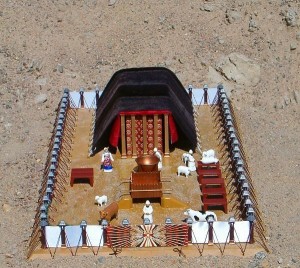
The World of the Tabernacle of Moses

If you were the Creator of the universe, what means would you use to communicate with those that you had created through love in your likeness and image? In a remote way, it’s like a human standing over an anthill trying to communicate with the ants. How do you do it? Similarly, how does an all powerful, Spirit Being, loving Father in heaven relate to his mortal children who are but mere specks of dust without vaporizing them with his raw power? The difficulty is compounded when fearful humans don’t want to hear the voice of Elohim, which is what happened when YHVH Elohim’s voice thundered from Mount Sinai. The children of Israel begged him not to talk to them, lest they die. They asked the Almighty One to speak to them instead through Moses (Exod 20:19).

tabernacle aerial5

When man sinned at the tree of knowledge, and YHVH kicked them out of the Garden of Eden, direct communications between man and his Maker were hampered, if not all but cut off. However, Elohim had a plan to restore the loving relationship he had with man before the rebellion. But if men refuse to hear you when you speak, what are you do?

To be certain, the Almighty doesn’t lack for ways to communicate with men. Man is without excuse when it comes to hearing Elohim, for even the heaven’s declare the glory of the Creator and the plans he has for mankind. The visible things of this creation shout loudly about the spiritual mysteries heaven desires to reveal to its earthly subjects. Furthermore, from time to time over the millennia, Elohim has chosen to speak directly to some select servants through dreams, visions, signs, wonders, angels, and even once through a donkey! But how does he speak to a whole nation, if that nation is plugging its ears and refusing to hear its Master’s voice?

Enter into the picture the Tabernacle of Moses, which was literally a three-dimensional gospel message tract. It is the visual demonstration of the whole message of the Bible in a building — the blueprint of the plan of redemption of wayward man. It was a functioning masterpiece of artwork demonstrating the Father’s love for his people, of his desire to commune and to communicate with Israel — his treasured possession, those he had hand picked and called out from the 70 nations of the world. Not only did the tabernacle involve the sense of sight, but the other four senses as well: sound, smell, touch, and taste. It also engaged and even challenged the heart, emotions, mind and spirit of man. The Tabernacle of Moses was a vehicle for the Creator of the universe to communicate with man using a panoply of communicative devices all of which pointed to the coming Messiah, the Redeemer of mankind who would die for the sins of the world to restore man into a loving relationship with his ever-loving, gracious, and longsuffering Father in heaven.

This is the story of the tabernacle, which, in every way, resembles a theatrical play, even a pageant, containing costumed actors each performing his carefully choreographed role on cue. Even a child can comprehend the message of this play, yet it contains mysteries and truths so deep that only in eternity itself will they be revealed to those who have been initiated into higher spiritual levels through the tabernacle’s spiritual paradigms of which its rites and ceremonies were mere prophetic shadows of things to come. To understand it, is to understand the message of the whole Bible from Genesis to Revelation.

Let’s now enter into this world of the Tabernacle of Moses. Welcome! (Please note, over the next several parshiot, we will be discussing the tabernacle in great detail. Later, when we get into Leviticus, we will explore the sacrificial system as well as the other tabernacle rites and ceremonies, and we will learn how they all pointed to Yeshua and how it relates to us.)

To read Natan’s entire teaching on the Tabernacle of Moses, please go to http://hoshanarabbah.org/pdfs/tabernacle.pdf.


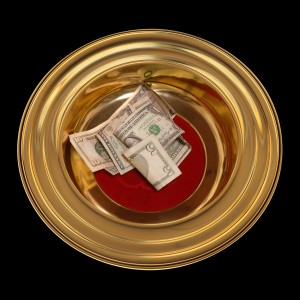
Now let’s pass the offering plate…

As often as you hear the phrase (or something like it), “and now let’s pass the offering plate,” in modern churches, you’d think that this phrase occurred a gazillion times in the pages of the Scriptures. In fact, it only occurs twice.

Exodus 25:2, That they may bring me an offering. Interestingly, this is the only place in the Scriptures where an offering was taken of YHVH’s people to support the work of the ministry. In one other place in the Bible, a collection was taken, but what was its purpose and who was it for? (See 1 Cor 16:1–3 and Acts 11:27–30.)

Offering Plate This is not to say that the saints should not give of their substance to help support their spiritual leaders. What did Paul teach about the saints supporting the work of the ministry—especially those who are spiritually feed them? (Read 1 Cor 9:1–18; 1 Tim 5:17–18; Gal 6:6–9.)

The main point we wish to make here is that the taking of offerings or the passing of the plate isn’t a biblical norm. People were expected to give, but of their own freewill and without pressure or coercion from their spiritual leaders.

What did Yeshua say about giving? (Note Acts 20:35; Luke 6:38.) What did Paul say to those who do not share their substance with (or sow sparingly to) those who teach them? (Look at 2 Cor 9:6.)

What should be our heart attitude when giving to the ministry of Elohim? (See 2 Cor 9:7.)

What are the blessings from Elohim that one can expect from giving cheerfully? (Read 2 Cor 9:8–11.)


Blog Scripture Readings for 2/15 through 2/21/15

Aside

THIS WEEK’S SCRIPTURE READINGS FOR STUDY AND DISCUSSION:

Parashat Terumah — Exodus 25:1 – 27:19
Haftarah — 1 Kings 5:26 – 6:13
Prophets — 2 Kings 5:1 – 11:21
Writings — Psalms 132:1 – 141:10
Testimony — Luke 24:13 – 24:53; John 1:1 – 3:36

Most of this week’s blog discussion points will be on these passages. If you have general comments or questions on the weekly Scripture readings not addressed in a blog post, here’s a place for you to post those. Just use the “leave a reply” link below.

The full “Read Through The Scriptures In A Year” schedule, broken down by each day, can be found on the right sidebar under “Helpful Links.” There are 4 sections of scripture to read each day. One each from the Torah, the Prophets, the Writings, and from the Testimony of Yeshua. Each week, the Torah and haftarah readings will follow the traditional one-year reading cycle.

Weekly Blog Scripture Readings for 2/15 through 2/21/15.


New Video: Seven Keys to Studying the Bible

This video presents seven easy steps to experiencing more productive Bible study.


Three Feasts, Three Parts of the Tabernacle, Three Subdivision of Man

Exodus 23:14–19, Three times you shall keep a feast. Conventional Jewish wisdom teaches us that during the three biblical pilgrimage festivals of Passover/Unleavened Bread, Pentecost and Tabernacles all the individuals of the nation are to leave their place of individual isolation and are to rendezvous in the presence of the one God of Israel in the festival circle (or chag) around the common sanctuary (where YHVH has chosen to place his name, Deut 16:2, 11, 15), thereby becoming conscious that each one is connected to all the other members of the nation, with YHVH Elohim, and with the Torah (The Pentateuch—Deuteronomy, p. 310, by S. R. Hirsch). In biblical times, the Israelites would gather wherever the Tabernacle had been placed. When the temple was built in Jerusalem, this city became the destination of the Israelite pilgrims on these three biblical feasts.

But there is much more to this spiritual picture if we add Yeshua the Messiah of Israel into the picture, for each of the three feasts point directly to him. Passover and the Feast of Unleavened Bread, the Feast of Weeks or Pentecost, and the Feast of Tabernacles all point to Yeshua, since the first two festal periods point to Yeshua’s first coming, while the last fall feast points to his second coming. Each of these feasts represent milestones in the spiritual journey of the redeemed believer from initial redemption to glorification and eternal life in the presence of YHVH Elohim.

There were three sections in the Tabernacle of Moses (Heb. Mishkan): the outer courtyard, the holy place and the holy of holies. These three correspond with the three parts of man, which are his body, soul and spirit (1 Thess 5:23). The feasts of Passover (Heb. Pesach) and Unleavened Bread (Heb. Chag haMatzot) are the first two feasts the righteous believers are to celebrate in the spring and represent the first steps in a new believer’s spiritual walk. This corresponds with the outer courtyard and relates more to the spiritual cleansing of the outer parts or body of man. It is here that one begins their spiritual walk and relationship with Yeshua, who is the Word of Elohim. The Feast of Weeks or Pentecost (Heb. Shavuot) is the next step one takes in their spiritual walk as one  goes inside the Tabernacle of Moses. The tabernacle’s holy place speaks of bringing the soul (the mind, will and emotions) into submission to the will of YHVH as one advances in their spiritual walk and learns about the fruits and gifts of the Spirit of Elohim, who they are as redeemed Israelites, and about worship and praise.

Finally, the holy of holies corresponds to the Feast of Tabernacles (Heb. Chag haSukkot) and the spirit part of man. This part of the tabernacle speaks more to man’s ultimate spiritual relationship with Elohim. It is here that man relates to Elohim, who is a Spirit, on a deeper spirit to Spirit level (John 4:24; 1 Cor 2:10–13). This prophetically points to man’s ultimate destiny as glorified beings in the New Jerusalem as adopted members into the family of Elohim (John 1:12; Rom 8:14–15, 23; 9:4; 2 Cor 6:18; Gal 4:5–6; Eph 1:5; 1 John 3:1; Rev 21:7).


What Was Yeshua’s View of the Torah?

A Study of the Sermon On the Mount

Understand the Bible in Its Proper Context

The Bible was written, for the most part, if not totally, in the Hebrew (or Aramaic) language by Hebrew people who spoke Hebrew, lived in a Hebrew culture, practiced the Hebrew religion and worshipped and served YHVH Elohim, the God of the Hebrews. What defined the Israelites’ spiritual relationship to their God—YHVH Elohim? It was the Torah, a Hebrew word that literally means “the teachings, precepts or instructions in righteousness of Elohim” as delivered through his servant and prophet Moses to his people, the children of Abraham, Isaac and Jacob (Israel), known as Israelites. The Torah is recorded in what is commonly called the Books of the Law, the Books of Moses, the Pentateuch or the Chumash, or what we would call the first five books of the Hebrew Bible: Genesis, Exodus, Leviticus, Numbers and Deuteronomy. These books, called the Torah, or instructions in righteousness of Elohim, were delivered word-for-word and letter-for-letter to Moses and the Hebrew Children of Israel and forms the foundation for the entire Bible: both sections, the former and latter covenants referred to in Christian circles as the Old Testament (i.e., Hebrew Scriptures) and the New Testament (i.e., Apostolic Scriptures). For the people of Israel in Yeshua’s day, the Torah of Elohim, given through Elohim’s servant Moses, formed the central teaching document that regulated and governed every aspect of life, culture, family relationship, marriage, society, religion and its relationship with surrounding nations.

The Torah: Central Teaching Document for Israel and Messiah Yeshua

If the Torah is the central teaching document around which the nation and people of Israel, including the writers of the Bible, revolved, then what did the long awaited Messiah of Israel think of the Torah? After all, the Jewish rabbis and sages for hundreds of years had believed and taught that the Messiah would be the ultimate expositor of the Torah, that he would answer all of their unanswered questions about the Torah, and that he would be a righteous Torah-observant and Torah-teaching king who would rule the nation of Israel, like King David, and bring the nation into a one-thousand-year era of prosperity and peace called the Messianic Age (i.e., the Millennium).

Did that Messiah, who we know to be Yeshua (Jesus), uphold or abolish the Torah of Elohim given to Israel? How did he view the Torah? What did he teach his disciples and followers about the Torah? These are very important questions with which each of us must deal, for if we claim to be followers of Yeshua the Messiah (or Jesus Christ) and if you call yourself a “Christian,” which literally means “a little Christ,” hadn’t you better know what he thought of the Torah so that you can line yourself up with your own namesake?

Let us take an exploratory journey through the pages of the Sermon on the Mount. Let us Continue reading →