Blog Scripture Readings for 6-12 Through 6-18-16

Aside

THIS WEEK’S SCRIPTURE READINGS FOR STUDY AND DISCUSSION:

Parashat Nasso — Numbers 4:21– 7:89
Haftarah — Judges 13:2-25
Prophets — Jeremiah 38:1 – 44:30
Writings — Lamentations 1:1 – 5:14; Ecclesiastes 1:1-18
Testimony — Romans 6:1 – 11:10

Most of this week’s blog discussion points will be on these passages. If you have general comments or questions on the weekly Scripture readings not addressed in a blog post, here’s a place for you to post those. Just use the “leave a reply” link below.

The full “Read Through The Scriptures In A Year” schedule, broken down by each day, can be found on the right sidebar under “Helpful Links.” There are 4 sections of scripture to read each day. One each from the Torah, the Prophets, the Writings, and from the Testimony of Yeshua. Each week, the Torah and haftarah readings will follow the traditional one-year reading cycle.

Weekly Blog Scripture Readings for 6/12 through 6/18/16.


SHAVUOT — Getting in Tune With the Heavenly Philharmonic

Orchestra conductor hands

This is a story — not just any story, but our story — yours and mine. It’s the story of our lives, the  story of our people. It’s an old story, yet a new story. Only the faces and places have changed. The plot remains eternally the same. It’s the story of the Creator reaching out to humans, who struggle to accept his love, yet who end up largely refusing it. It’s a never-ending cycle going from one generation to the next.

This story started a long time ago. When in Egypt, the children of Israel were in tune spiritually to the rhythms and beat of Egypt (a biblical metaphor for this world).

YHVH led the Israelites out of Egypt into the quietude of the wilderness. The Hebrew word for wilderness is midbar and is from dabar meaning “to speak, declare, converse” and is related the word d’bar meaning “to hear.” Thus, one could say that YHVH led the Israelites into the wilderness to hear him speak his word,  and to enter into conversation with him — an impossibility in the noise and confusion of the environment of Egypt where man is at the center of everything and a lot is going on. The wilderness was a sterile and neutral environment devoid of the noise and confusion of man-made stuff.

The first place YHVH brought the Israelites to was the foot of Mount Sinai so he could speak to them face to face.

Before they could hear him, they had to prepare themselves. They had to make themselves clean and set apart from the physical and carnal impurities and distractions of the world and the flesh, which impede one’s ability to hear YHVH -— to connect with their Creator (Exod 19).

YHVH spoke to them, but it was too much for them to hear. It frightened them because they weren’t ready to hear him and to get their lives in sync with his Word — the Torah (Exod 20:19). They still had too much carnality in them. They were still too much in tune Continue reading →

 

The Feast of Pentecost & the Bride of Yeshua


Understanding the Feast of Pentecost


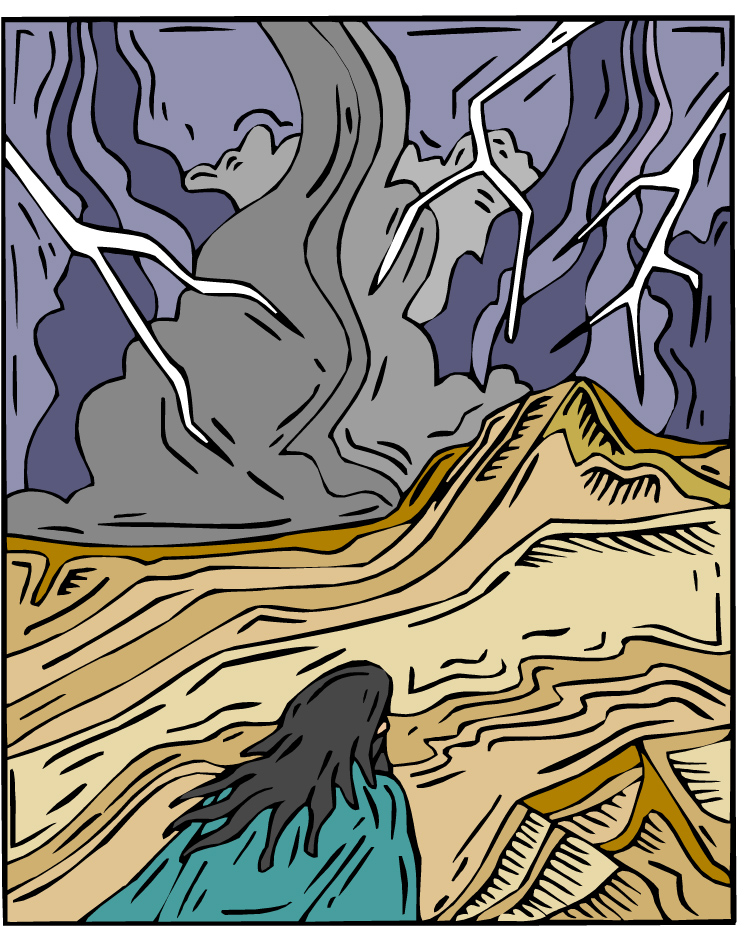
Did the Torah “enter” at Mount Sinai?

Mt. Sinai 2-20474010

Romans 5:20, The law [Torah] entered. The Scriptures reveal that the Torah pre-existed Moses and Mount Sinai. So what is Paul talking about in this passage when he says that “the Torah entered”? Obviously, he is referring to the Torah in its legally codified form as given to the nation of Israel at Mount Sinai. For the nation of Israel to function in a righteous, orderly and cohesive manner, it needed the Torah in written form (in a legal format), so that the leaders of Israel could refer to it even as lawyers and judges refer to a nation’s written legal code when practicing law or making legal judgments.

The offence might abound. Of course, with the Torah written down in black and white, so to speak, and with an established and recorded legal code in place to which legal judges could refer and to which all of Israel’s citizens were held accountable, the knowledge and awareness of what constituted sin (remember, Scripture defines sin as “the violation of the Torah” in 1 John 3:4) would increase. The result was that all became painfully aware of what human actions constituted sin, and that man would have a harder time getting away with sins now that Torah was the legal code of the land with fines and penalties for its violation, and a judicial system in place to enforce the Torah.

Sin abounded…grace did much more abound. As the sinner became painfully more aware of his sin or his violation of the Torah, he also became more aware of YHVH’s mercy and grace toward the sinner—when the sinner would repent and fulfill the requirements necessary to receive atonement for his sins.


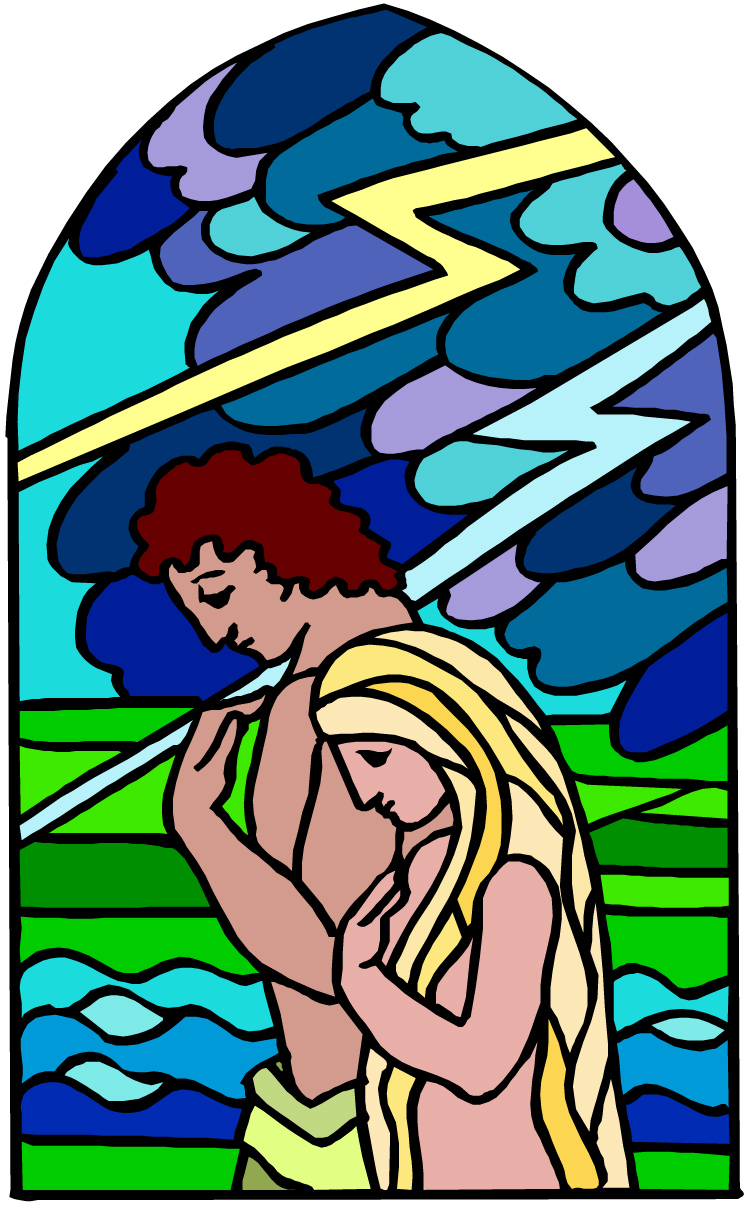
What’s the truth about “original sin”?

Adam:Eve leaving Eden 2 20691268

Romans 5:12–19, It is difficult for our minds to comprehend the concept that as death came to all men because of the sin of one man (Adam), so life can come to man through the righteousness of one man (Yeshua). In these verses, Paul attempts to logically and legally lay out this concept to his readers in a way that they can understand.

Let us first retranslate verse 12 by using biblical definitions for the terms Paul uses in this verse:

Wherefore, as by one man sin [i.e., Torahlessness — See 1 John 3:4] entered into the world, and death [separation from communion or relationship with YHVH because of sin; i.e., Torahlessness]; even so death [separation from YHVH] passed upon all men, for all have sinned [violated the Torah; i.e., the righteous instructions, teachings, precepts of YHVH as outlined in the Pentateuch or law of Moses].

We know from the Scriptures that the Torah (the righteous instructions, teachings and precepts of YHVH Elohim) not only existed prior to Moses, but prior to the creation of the world (Rom 7:14; Ps 119:142,151; Gen 26:5; John 1:1–2, 14; Gen 1:3 cp. 14). Yet in verse 13 Paul states (in the KJV), “For until the [Torah] sin was in the world; but sin is not imputed where there is no [Torah].” The CJB renders this verse as follows: “Sin was indeed present in the world before the Torah was given, but sin is not counted as such when there is no Torah.” Joseph Shulam rightly states in his commentary on this text that though the Torah existed prior to Mount Sinai, the Continue reading →


Shabbat Shalom…from Alaska!

Please enjoy this short movie I made of our recent cruise to Alaska. The scenery is spectacular beyond words as we visited Glacier Bay, the Yukon and saw dozens of bald eagles diving for fish all at the same in right in front of us.