Apostasy, Exile, Repentance and Regathering of the Twelve Tribes

A Last Days Prophecy

Deuteronomy 4:25–32, Apostasy, exile, enslavement, repentance and regathering of lost and scattered Israel to the Promised Land in the last days.  This passage deals with the exile and return of the Israelites. Because of syncretism with the idolatrous practices of the nations around them, YHVH prophesied that the Israelites would be scattered among the nations of the world. Conversely, YHVH prophesies that “in the end of days” (verse 30)—a metaphor for “the last days” or “the end of the age”—he would hear their pleas for help, have mercy on his people, and remember his covenant with them. According to some noted Jewish sages, “the end of days” refers to the period just before the coming of Messiah, and this repentance is the same as that which Moses mentions later in 30:1–2 (The ArtScroll Stone Edition Chumash, p. 965). Here are some additional quotes from some noted Jewish scholars on the subject of Israel returning to YHVH from its exile among the nations:

The future King Messiah (Messiah Son of David) will not only redeem the Jews from exile, but will restore the observance of the Torah-commandments to its complete state, which will only be possible when the Israelites are living in the Land of Israel. At this same time, “there will be an ingathering of the dispersed remnant of Israel. This will make it possible for the Davidic dynasty to be reinstated and for the observance of the Torah and its mitzvot [commandments] to be restored in its totality” (I Await His Coming Every Day, p. 35, [see also p. 38 quoting Rambam] by Menachem Schneerson, emphasis added). According to the Rambam (also known as Maimonides) in his Thirteen Principles of the Jewish Faith the resurrection of the dead will occur just after the coming of the Messiah and that the resurrection of the dead is a key element of the Final Redemption (ibid., p. 59).

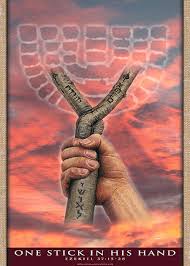
The Jewish sages recognize that the ingathering of the exiles, including the ten tribes of the Northern Kingdom, will also return, be reunited with Judah and that the whole house of Israel will serve YHVH together (Ezek 20:32–37, 40–42) (Mashiach—the Principles of Mashiach and the Messianic Era In Jewish Law and Tradition, pp. 20-22, by Jacob Immanual Schochet quoting from Sanhedrin 110b; Bamidbar Rabba 16:25).

The ArtScroll Bereishis/Genesis Commentary, vol. 1(b) states in its commentary on Genesis 48:19 regarding Ephraim: “R. Munk explains: ‘while it is true that the dispersion [of the descendants of Ephraim and Manasseh] was caused by the unfaithfulness and sinfulness of Ephraim’s descendants (Hos 7:8ff), Jacob’s blessing was not in vain for “they will return to God” and will have their share in the world to come (Talmud Sanhedrin 110b).’ And R. Eliezer adds: ‘Even the darkness in which the Ten Tribes were lost will one day become as radiant as the day’ (according to the version of Avos d’Rabbi Nosson 36). And in the perspective of history, did not these exiled children of the Patriarchs enlighten the nations among whom they were scattered? They did so by teaching their conquerors the fundamental ideas of the knowledge and love of God, ideals they had never forsaken. Hence they too have a messianic vocation and their Messiah the Maschiach ben Yosef, Messiah son of Joseph (Talmud Succah 52a), also called Messiah son of Ephraim (Targum Yonasan on Exodus 40:11), will play an essential role in humanity’s redemption, for he will be the precursor of the Maschiach ben David, Messiah Son of David. It is therefore not surprising to find that the prophet Jeremiah (3:12) speaks affectionately of Ephraim. In this light, Jacob’s words, ‘his offspring will fill the nations,’ assume the significance of blessing” (pp. 2121–2122).

The regathering of not only the Jewish people (largely from the tribe of Judah), but Israelites from the other eleven tribes is predicted by Yeshua and the apostolic writers as well (see Acts 3:21; Matt 10:6; 15:24). 

Now note how the following phrases or concepts are used in Scripture, who they relate to, and how this relates to the statements of the Jewish sages and to our text under consideration as pertaining to Israel (including both the houses of Israel (i.e. Ephraim/Samaria or the Northern Kingdom and Judah or the Southern Kingdom) being scattered among the nations for their disobedience to YHVH, and then their being regathered and restored as a united kingdom and obedient people under the rule of King Messiah:

  • Dispersed: The house of Judah was dispersed out of the Land of Judah into Babylon because of her spiritual adultery (Isa 11:12; 56:3, 6–8; Ezek 37:21; John 7:35).
  • Far and Near: Solomon prophesied the Israelite/Ephraimic exile, that Judah would be exiled to a near country (Babylon) and Ephraim would be exiled to a far country (Assyria) (1 Kings 8:46; see also Dan 9:7). Paul makes reference to the purpose of his ministry being to preach peace to those who were afar off and them that are near that through Yeshua both may have access through the Spirit unto the Father (Eph 2:16–17).
  • Gather/Regather(ing): Ezek 34:13; 36:24; Isa 56:8
  • Israel, Assimilated Into the Nations: Isa 7:8: Hos 1:10; 4:1,6; 5:3; 2:23; Deut 28:64; 
  • “Lost” (assimilated, but not lost): Hos 8:8; Amos 9:9; Deut 28:64; Hos 5:3 
  • Mixed With the Nation: Ephraim mixes himself with the nations: Hos 7:8; 8:8
  • Outcasts: The House of Israel are outcasts (YHVH cast them out of the Land of Israel for their spiritual adultery, Isa 11:12; 56:8)
  • Return: In the last days, the sons/children of Israel (both Ephraim and Judah) shall return to YHVH and his Torah (Hos 3:5).
  • Scattered/Sown (Jezreel): YHVH would sow or scatter the descendants of the House of Israel (Ephraim) (throughout the nations, Hos 1:4).
  • Scattered Sheep of Lost Israel to Return By YHVH’s Hand: Ezek 34:11,16
  • Scattered: Ephraim scattered over the face of the whole earth, Ezek 34:6,12; 36:19; 37:21; John 11:52. In regards to Deuteronomy 32:26 which says, “I said, I would scatter them into the corner …” The ArtScroll Stone Edition Tanach Chumash comments, “This refers to the exile of the Ten Tribes, who were scattered to an unknown place where they have never been heard from again. On the phrase of the same verse, “I would make the remembrance of them to cease from among men…” the same Chumash states, “This is a reference to the exile of Judah and Benjamin, the Davidic kingdom from which today’s known Jews are descended.” It goes on to say that though nations would seek to destroy Israel entirely YHVH would never allow Israel to become extinct or disappear. Israel’s perpetual existence is constant reminder of YHVH’s plan and eventually Israel will thrive and fulfill YHVH’s intention for it” (pp. 1105–1106). Samson Raphael Hirsch in his commentary on the Pentateuch on the same verse translates the phrase, “I would scatter them into the corners …” as, “I would relegate them into a corner…” and then says that the Hebrew here refers to the “extreme end of a surface, the side or corner …” He, too, relates this fate to the Ten Tribes who would be scattered “to some distant corner of the world, where, left entirely to themselves, they could mature towards serious reflection and ultimate return to Me …” (p. 650).
  • Swallowed Up Among the Nations (Gentiles): Hos 8:8
 

Torah Is Our Light to the Nations!

When I say “Torah” I’m referring to both the Written Torah and Yeshua the Messiah, the divine Son of Elohim who is the Living Torah-Word of Elohim!

Deuteronomy 4:6, Keep. Keeping Torah (YHVH’s instructions in righteousness) was the means for YHVH’s chosen people to be salt and light to the surrounding nations. Torah is literally a “witnessing tool.” What kind of righteous witness are you (via your Torah lifestyle) to those around you who are lost in spiritual darkness?

Wisdom [Heb. chokmah] and understanding [Heb. biynah]. Chokmah means “intelligence, skill (in war); wisdom (in administration); shrewdness, wisdom; prudence (in religious affairs); wisdom (ethical and religious). It derives from the verb chakam meaning “to be wise, to be or become wise, act wisely; to make wise, teach wisdom, instruct; to show oneself wise, deceive, show one’s wisdom.” According to the TWOT, chokmah and it’s root verb represents a manner of thinking and attitude concerning life’s experiences including matters of general interest and basic morality. These concerns relate to prudence in secular affairs, skills in the arts, moral sensitivity, and experience in the ways of YHVH. In the Tanakh, chokmah is used in relationship to the whole gamut of human experiences whether it be technical artisan skills, military tactics or political and administrative leadership. It is expressed in shrewdness as opposed to foolishness or silliness. Prudence is another aspect of chokmah as it relates to how one speaks, uses his time carefully and in the practical affairs of life. The Bible reveals that Elohim is the source of all wisdom, and wisdom is not to be found in human speculation. Elohim alone provides wisdom for man’s guidance, so that he can live the best possible moral and ethical life (Ibid.).

Biynah means “discernment or insight” or “the ability to understand something, comprehension, the power of abstract thought, an individual’s perception or judgment of a situation.” According to the TWOT, biynah refers to knowledge that is superior to the mere gathering of data. It is necessary to know how to use the knowledge one possesses. This is where perception or judgment comes into play. One must properly interpret the data and make wise and discerning decisions as to how to act.

Torah is your wisdom in the sight of the nations. Consider the following:

  • Your life may be the only Bible some people read.
  • Torah is light. Light quietly does, it is silent. It doesn’t talk about doing, it does! YHVH is looking for doers, not talkers.
  • What kind of reputation do you have in the community?
  • People may not be turning to the light of Torah as a result of your example YET, when times get tough in this country (“when you are in tribulation … in the latter days, Deut 4:30), they may well turn to you for the answers because they remembered that there was something different about you—something pure, pristine and holy. That’s when they’ll be looking for answers.
  • Torah makes us a great people. YHVH measures greatness differently than the world does. Are you great by the world’s standards or YHVH’s standards?
  • How does YHVH measure greatness? Love, faith, truth, obedience, servanthood, giving, selflessness, self-sacrifice.
  • Comparatively speaking, how does the world measure greatness? Money, power, fame, possessions, intellect, physical appearance, good sounding words.
  • Which type of greatness will last into eternity?

Never forget this: The Bible reveals that Yeshua the Messiah is the spiritual light of the world that came from heaven to guide men through the spiritual darkness of this world and lead them to his Father in heaven. He is not only the Light, but the Word of Elohim made flesh. In other words, he is the Living Torah Word of Elohim. He was the exemplification and personification of the Written Torah. Only through him living in us through is Set-Apart Spirit can we properly obey YHVH’s Torah commandments. This we will do by his power in us and out of a loving relationship with him. The Testimony of Yeshua (or New Testament) makes these truths very clear for those who have eyes to see and hearts to comprehend!


Do Not Add or Subtract to or From the Word of Elohim

Deuteronomy 4:2, You shall not add to the word that I command you, nor shall you subtract/diminish from it. YHVH warns his people against adding or subtracting from his written Word elsewhere as well (Deut 12:32; Rev 22:18–19).

Men seem inclined to ignore YHVH’s command in this regard. Whole religions have been founded based on disregarding this prohibition. Some claim to be Bible-based (e.g. Mormonism with their Book of Mormon and rabbinic Judaism with its Talmud), and some have supplanted the entire Bible with their own book (Islam with its Quran).

Who is the author of and real power behind adding to and subtracting from or twisting YHVH’s Word? It is Satan the serpent. (See Gen 3:1ff and Matt 4:3ff.) Make no mistake, adding or subtracting from the Word of Elohim is to fall for the lie that the devil told the first humans at the tree of knowledge.

What did Yeshua warn the religionists of his day against in this regard? He said, “Thus have you made the commandment of Elohim of none effect by your tradition” (Matt 15:6) and, “Howbeit in vain they do worship me, teaching for doctrines the commandments of men” (Mark 7:7).

What are some examples of traditions and theologies in the modern-day Christian and Jewish religions where YHVH’s Word has been superseded by man’s traditions? What are some traditions and doctrines of men you have turned away from in order to bring yourself into greater alignment with YHVH’s Word? How is your life better for it? What has been the reaction of those around you in response to your aligning your life more closely with the truth of YHVH?


Know Elohim, No Fear; No Elohim, Know Fear

Deuteronomy 3:22, Must fear them. The Scriptures reveal an interesting, and counter-intuitive spiritual principle that humans have a hard time wrapping their heads and hearts around. It is this: When we fear Elohim, we won’t fear our enemies. When we don’t fear Elohim, we will fear and be tormented by our enemies.

What is it to fear Elohim? It is to walk in the wisdom of his commandments or his loving instructions in righteousness. Rebellious humans have a hard time doing this, since their sin nature is opposed to submitting to YHVH legal instructions (Jer 17:9; Rom 8:7). Once, however, one gets their sin nature under control with the help of Yeshua, and one begins to love and fear Elohim by keeping his commandments, suddenly the physical things they once feared no longer have any hold on their hearts and minds.

Having defeated the greatest enemy of all—one’s sin nature—with Elohim’s help effectively empowers and emboldens the saint. He now realizes he can, with Elohim’s help, overcome any enemy. So now what is there to fear?

Moreover, at the end of one’s life, the overcoming saint has the ultimate victory in his possession. That is the victory over death, which is the mother of all fears!


Blog Scripture Readings for 7-22 Through 7-28-18

Aside

THIS WEEK’S SCRIPTURE READINGS FOR STUDY AND DISCUSSION:

Parashat Va’etchanan — Deuteronomy 3:23 – 7:11
Haftarah — Isaiah 40:1-26
Prophets — Ezekiel 35:1 – 41:26
Writings — Nehemiah 11:1 – 13:31; 1 Chronicles 1:1 – 3:24
Testimony — Ephesians 4:1 – 6:24; Philippians 1:1 – 4:23

Our annual Scripture Reading Schedule for 2017-2018 is available to download and print.

Most of this week’s blog discussion points will be on these passages. If you have general comments or questions on the weekly Scripture readings not addressed in a blog post, here’s a place for you to post those. Just use the “leave a reply” link below.

The full “Read Through The Scriptures In A Year” schedule, broken down by each day, can be found on the right sidebar under “Helpful Links.” There are 4 sections of scripture to read each day: one each from the Torah, the Prophets, the Writings, and from the Testimony of Yeshua. Each week, the Torah and haftarah readings will follow the traditional one-year reading cycle.

Weekly Blog Scripture Readings for 7/22/18 through 7/28/18.


A Gentile Christian Is an Oxymoron

For a Christian to claim to be a Gentile is like claiming to be a pagan or a heathen as Paul defines the term in Ephesians chapter two.

Ephesians 2:11, Gentiles. Paul says in a number of places that those who come to Yeshua are no longer Gentiles but are the children or seed (literally “sperm,” which is the meaning of the Greek word) of Abraham (Eph 2:11–19; Rom 4:16; 9:8–11; Gal 3:7,9,14,28–29). The word Gentiles as used in the Scriptures (both in the Hebrew and the Greek languages) simply means “ethnic groups or nations.” There are many places in the Scriptures where Jews and Israelites are referred to as “Gentiles.” There is no class of people called Gentiles in the spiritual body of Yeshua. Scripture uses the following terms for the redeemed of YHVH: the saints, the called out ones (or church), the body of Yeshua (1 Cor 10:16; 12:27; Eph 4:12) the one new man (Eph 2:15), sons of Elohim (Rom 8:14, 19; Phil 2:15; 1 John 3:1, 2), children of Elohim (Rom 8:16, 21; Gal 3:26; 1 John 3:10), or Abraham’s offspring (Gal 3:29), the bride (Rev 18:23; 21:2, 9; 22:17) for example. 

Any attempt by anyone to keep the Jew—Gentile division alive within the body of Yeshua is in effect keeping up the middle wall of partition that the Apostle Paul gave his ministry life and eventually his physical life to tearing down (see Eph 2:11–19). It is also going against the clear teaching of the Scriptures, which say that within the spiritual body of Yeshua, there is no longer Jew or Gentile/Greek (Rom 10:12; Gal 3:28; Col 3:11). 

The Scriptures reveal that there are only two classifications of people: Israelites and non-Israelites or Gentiles. The former has eternal life because of their relationship with the Elohim of Israel through the Messiah of Israel. The latter group, unless they repent of their sin (i.e. lawlessness or Torahlessness, see 1 John 3:4), will burn in the lake of fire because their names weren’t written in the book of life (Rev 20:11–15). 

Whenever Paul uses the term Gentiles, he is either referring to ethnicity, and not using the term as a spiritual designation, or he is using the term Gentile to mean “worldly.” In the latter case, it is a moniker referring to those who are carnal in that they act like gentiles (heathens) who are “without God and without hope” (Eph 2:12). 

Throughout the Epistle to the Ephesians (and elsewhere) Paul, when speaking to the believers in that congregation, uses terms like saints, we, us, sons, the church, his body, one new man, one body, fellow citizens, members of the household of Elohim, the whole building, a holy temple, body of Messiah, a perfect man, the whole body, children of light, her, she, and members of his [Yeshua’s] body. In Ephesians, Paul uses the term Gentiles only five times (Eph 23:11; 3:1, 6, 8; 4:17), and this not as the ultimate spiritual designation for redeemed believers who had come from a non-Jewish background. Rather, Paul uses the term Gentiles as he was either referring to their past spiritual history (Eph 2:11; 4:17), to his mission to evangelize non-Jewish people (Eph 3:1, 8), or in stating that Gentiles should take their place as fellow spiritual heirs along with the Jews within the spiritual body of Yeshua (Eph 3:6).

The term Gentile is not a spiritual designation for a redeemed believer, for they have been called out of the Gentile world and have become a member of a special group the Testimony of Yeshuas labels as “the called out ones” or “church” (Gr. ecclesia). Scripture also calls called out ones or redeemed believers saints meaning “set-apart” (Gr. hagios) from the Gentile world that is without Elohim and without hope. Scripture teaches that those who are redeemed or who are “in Messiah” are no longer Gentiles, for they have been grafted into and become part of the nation of Israel (Rom 11:13–24 and Eph 2:11–19). They have become the one new man about which Paul speaks in Ephesians 2:15.

Now that we know that we are really part of a people group called “Redeemed Israel” what does one do with this information? That is up to you. Pray and ask your Father in heaven to help you to live out your new identity as an Israelite. 

Many people upon finding out that Scripture actually defines them as Israelites (through the blood of Yeshua, Eph 2:11–16) and not Gentiles, begin to sense a need to begin acting more like Israelites in their lifestyle and beliefs. They become interested in the biblical feasts and Sabbaths of Israel and their life takes on a more Hebraic or Jewish flavor as they see themselves more in the light of the Book of Acts believers. This is a path that you will need to begin to explore. As you go down this journey, please keep in mind the words of Yeshua in Matthew 5:17–19; John 15:15 and the words of the apostles in 1 Corinthians 11:1 and 1 John 2:3–6 along with Romans 7:12,14 and 3:31.

We must also keep in mind that there are only twelve gates through which one can enter the New Jerusalem, and these gates are named after the twelve tribes of Israel (Rev 21:12). There is no Gentile gate! The only way that one will be able to enter the New Jerusalem will be through spiritually identifying with the tribes of Israel. So which tribe are you?

Finally, YHVH, the God of the Bible, never made any covenants with non-Israelite nations—only with the nation of Israel. To be in covenantal relationship with YHVH, one has to accept the Jewish Messiah, and be grafted into the Israelite olive tree through the Messiah and become an Israelite—PERIOD! For example, the writer of the Epistle to the Hebrews clearly states that the New Covenant is made with the two houses of Israel—not the Gentile nations (see Heb 8:8 and Jer 31:31,33). This may come as a shock to some people reading this, but this is the truth of Scripture.


Salvation by Works or Grace?

Ephesians 2:8, 10, Saved … good works. Are we saved by faith through grace or by our good works? This verse clearly answers this question. One is saved by the free gift of YHVH’s grace through faith (in Yeshua). Salvation isn’t based on good works (Torah obedience), or else prideful man would boast about how good his is, and that YHVH must have saved him on the merits of his good works. However, once one is saved, and a result of his salvation one will produce the fruits good works, which is Torah-obedience. This is the definition of biblical righteousness (Ps 119:172) and shows us how to walk in the Spirit by loving YHVH with our all and our neighbor as ourself. When we live out this pattern, we become Elohim’s workmanship through Yeshua.